By Suchitra Naidu | Project Leader
Our forest conservation strategies have always tried to repair and renew the relationship between forests and the communities living in and around them. The reason behind this is simple - those closest to this asset have the maximum impact on it and that power needs to be wielded in a positive way to conserve and restore them.
Very often, our community surveys related to open-access and privately owned forests have indicated a sense of detachment and indifference in the community towards their own forests. Many people look at them as a liability that will never be able to add monetary value to their lives. This is also why we see rampant deforestation on these privately owned forest lands because they are chopped off by logging contractors offering a one-time seemingly good amount to the owners.
AERF’s Conservation Agreements changed this perspective and has been successful in showing the community that they can derive good, sustainable income from nurturing their forests and keeping them standing! Certified NTFP value chains, training of community members as certified NTFP collectors and market connections to international buyers through Nature Connect India Pvt. Ltd. which is AERF’s private sector arm - has all enhanced the relationship between forests and communities to a great extent.
Now we take the narrative one step ahead by delving into the carbon potential of these forests and looking into getting certified carbon credits for them, thus further incentivising forest conservation and restoration for these communities!
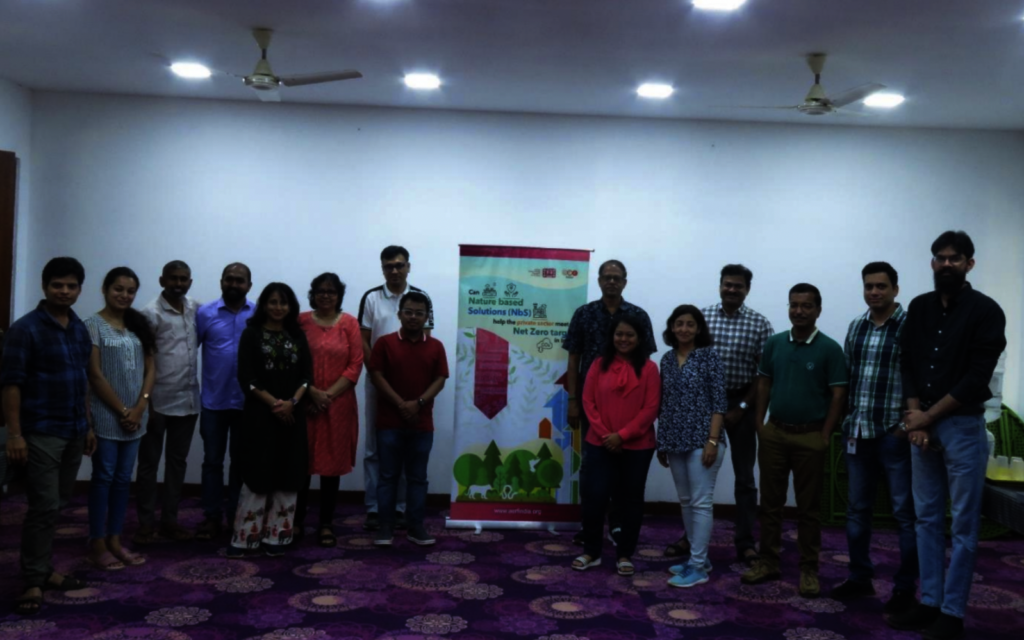
In October 2023, we held a 3 day workshop on how Nature-based solutions can help the private sector meet Net Zero targets in India, with our private sector partners - A.T.E Group. We involved all stakeholders in the discussions to gain a holistic perspective of the fairly new concept of certified carbon credits for forests, including certifying agencies and mediating agencies. One such stakeholder from the community side - Dr. Narendra Jawadekar is from Mangavli village and has been a constant supporter of AERF’s conservation efforts in and around the village. He laid his perspective as a forest land owner from the village and spoke about the conservation challenges specific to Mangavli - fire instances, lack of community cooperation etc. He also spoke about how the association with AERF has slowly started to change the tone of non-cooperation within the community with regard to opportunities in forest conservation and restoration. In addition to developing the Karanj value chain, a possible carbon project with the forests of Mangavli can bode well for repairing the relationship between forests and the community. We have now planned community meetings and workshops in Mangavli to get the discussion around this complex topic going…
As the world wakes up to the renewed relevance of forests in the race to net zero, we are getting ready to apply the mechanisms and strategies to the threatened forests of Northern Western Ghats and to enable the communities to derive sustainable value from restoring, nurturing and caring for their forests!
Project reports on GlobalGiving are posted directly to globalgiving.org by Project Leaders as they are completed, generally every 3-4 months. To protect the integrity of these documents, GlobalGiving does not alter them; therefore you may find some language or formatting issues.
If you donate to this project or have donated to this project, you can receive an email when this project posts a report. You can also subscribe for reports without donating.


Support this important cause by creating a personalized fundraising page.
Start a Fundraiser