By Dustin Byerly | Director of Development & Communications
The last three months have been relatively quiet, but as hurricane season intensifies CERF+ staff are getting ready to respond to any significant storms or other natural disasters that hit the Caribbean. We have used this "down time" to strengthen existing networks, build new ones, and develop partnerships in Puerto Rico and the US Virgin Islands, expanding our reach and increasing awareness of our services among the artists and artisans in those areas.
From June 3 – 4 CERF+ executive director Cornelia Carey participated in the Clinton Global Initiative (CGI) Action Network on Post-Disaster Recovery gathering in St. Thomas. Carey joined leaders in government, business, and civil society to plan long-term strategies to address hurricane recovery and the effects of climate change in the Caribbean. “During this fourth gathering of CGI, it was heartening to see that arts and culture were featured heavily as important contributors to well-being, resilience, and the future of the Caribbean. From community mask-making projects to cooperative clay studios (and lots in between), artists are critical players to recovery, the economy, and the long-term future of these islands,” notes Cornelia.
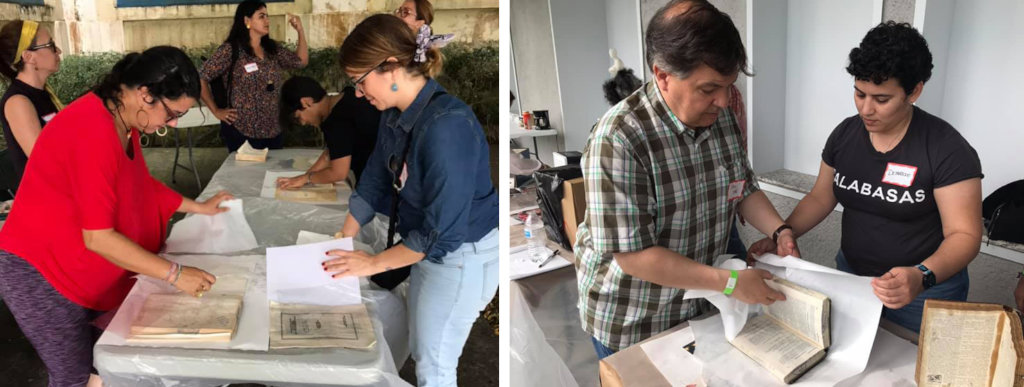
During the first two weeks of June, CERF+ also conducted workshops in Puerto Rico and the US Virgin Islands to support artists in incorporating emergency preparedness and career protection measures into their ongoing recovery efforts from Hurricanes Irma and Maria. Sponsored by FEMA and the Instituto de Cultura Puertorriqueña in Puerto Rico, and the Reichhold Center for the Arts in the Virgin Islands, workshops were held at the Museo de Arte of the Universidad de Puerto Rico in Mayagüez, the Universidad de Puerto Rico in Ponce, the Archivo General y Biblioteca Nacional de Puerto Rico in San Juan, the St. John School of the Arts, and the Little Theatre at the University of the Virgin Islands in St. Thomas.
CERF+ partnered with Performing Arts Readiness (PAR) in Puerto Rico, and the workshops on the island included both CERF+’s resilience training, focusing on how to safeguard an artist’s studio and career, and PAR’s training, led by Tom Clareson, on how to triage and salvage water-damaged materials. When asked what the best part of the workshop was, one participant in Mayaguez commented, “Everything: the orientation, the information on the different types of insurance, and the training on how to save some property that may be important for the individual.”
The recovery efforts in Puerto Rico and the Caribbean will take many years, but CERF+ is committed to being there for the local artists and artisans and helping them throughout the entire process. Thanks to our generous supporters and foundations like GlobalGiving, we are able to carry out our mission and support artists in their time of need.
Links:
Project reports on GlobalGiving are posted directly to globalgiving.org by Project Leaders as they are completed, generally every 3-4 months. To protect the integrity of these documents, GlobalGiving does not alter them; therefore you may find some language or formatting issues.
If you donate to this project or have donated to this project, you can receive an email when this project posts a report. You can also subscribe for reports without donating.