By Andrew Bruckner | Project Leader
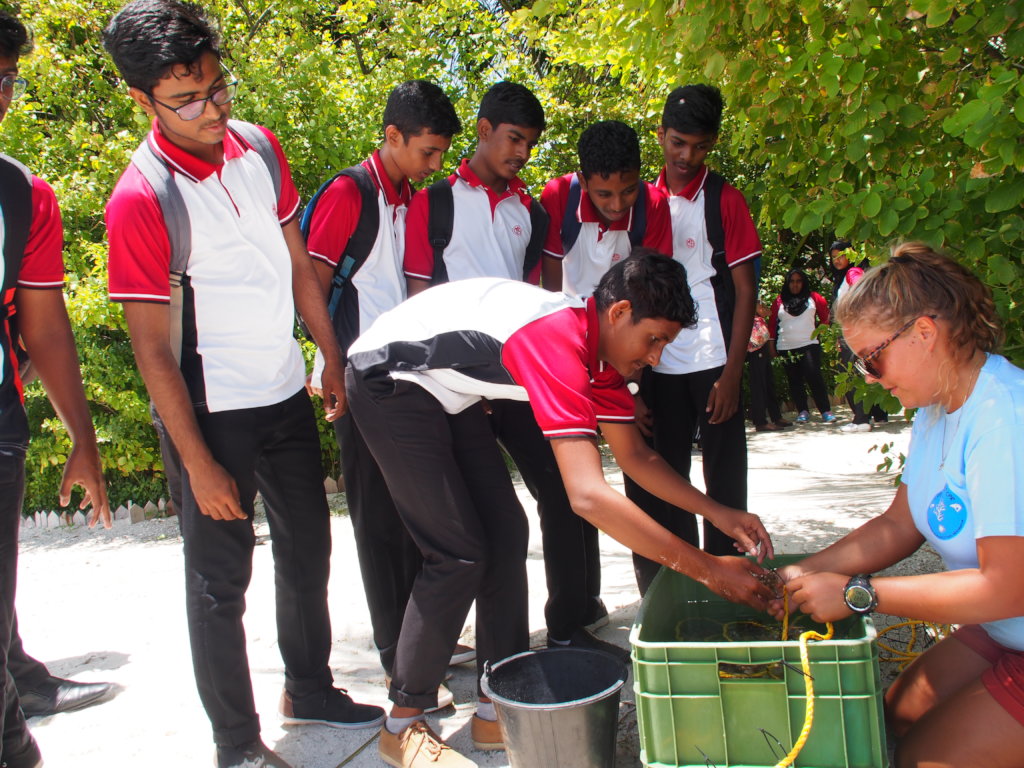
With the assistance of the donations you provided through GlobalGiving, Coral Reef CPR was able to complete a coral restoration project in South Malé Atoll, Maldives, where we transplanted over 1000 large, reproductively mature corals onto degraded reefs and expanded the existing coral nurseries with 1400+ new coral fragments. From April 10-25, 2018, Coral Reef CPR worked in partnership with Aquafanatics and Anantara Resorts (Dhigu and Veli) to complete the next phase of coral nursery and coral restoration project off Veli and Dhigufinolhu (Dhigu) Islands.
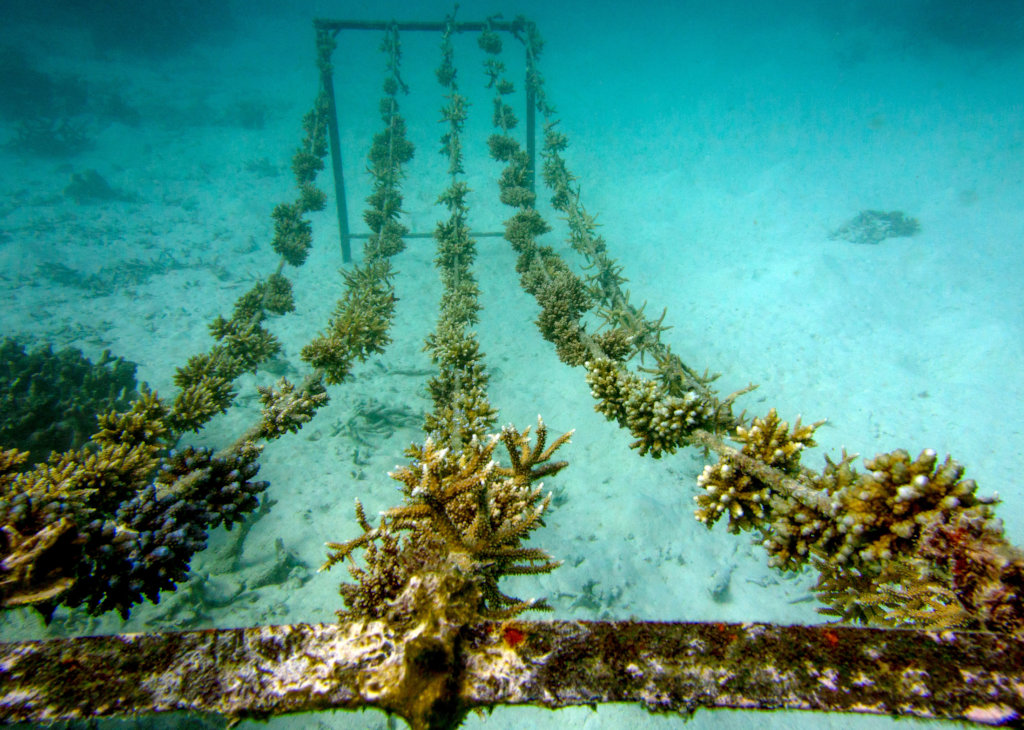
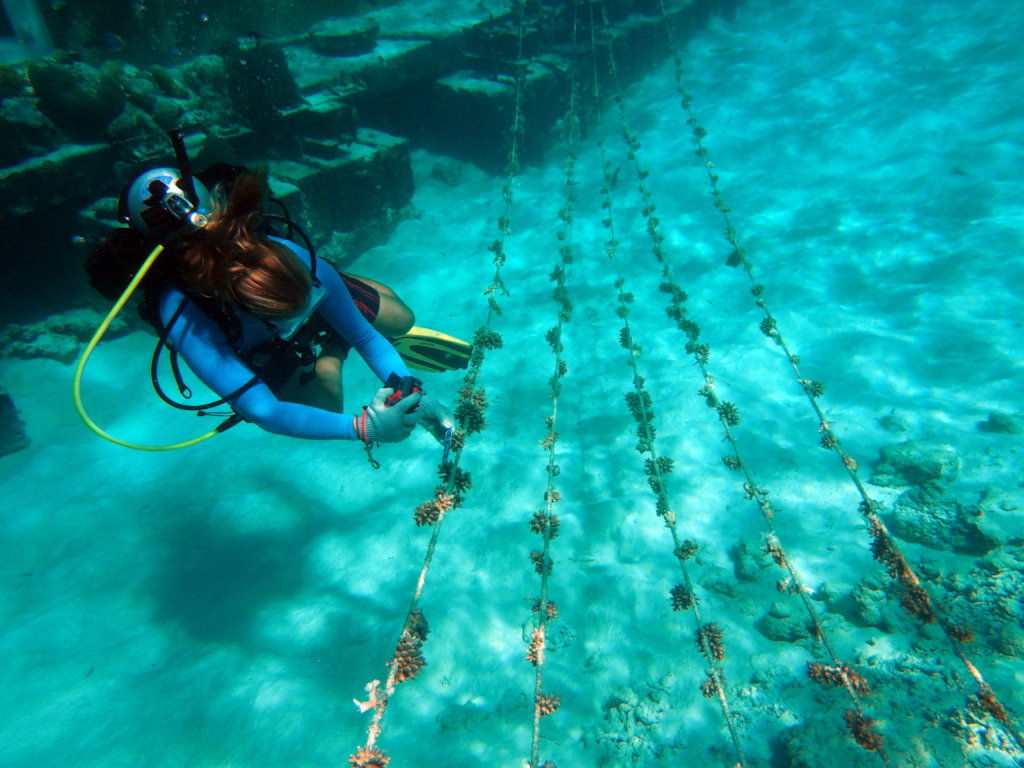
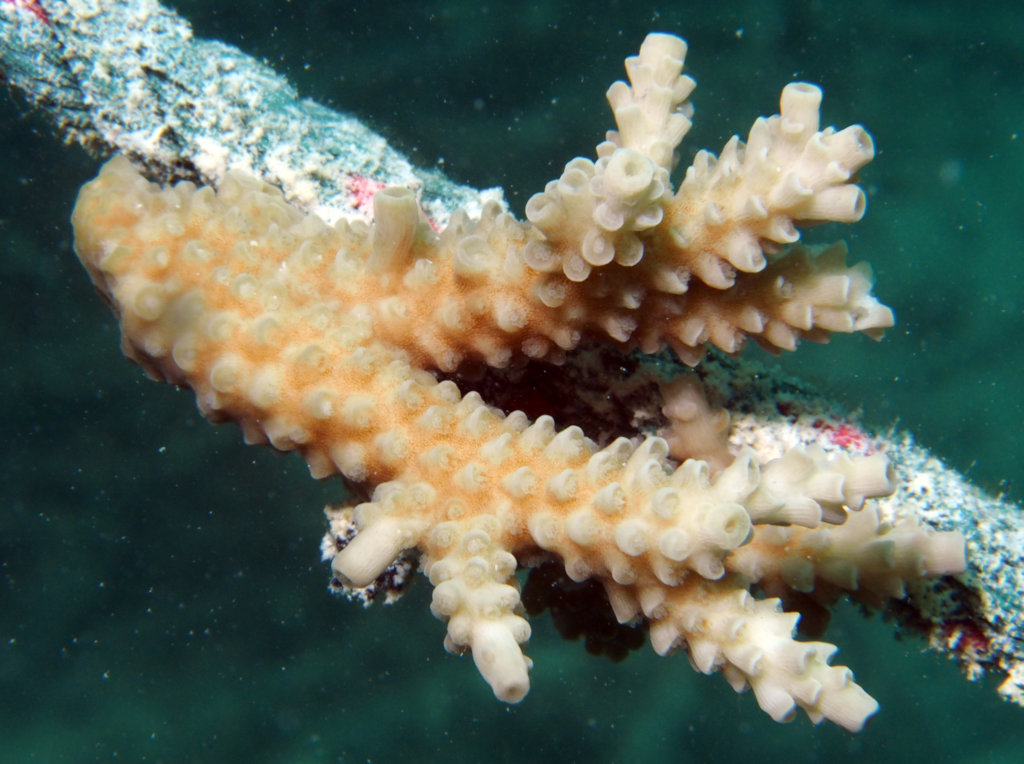
Corals within the four nurseries (Aquabar, Advanced Snorkel Area, Veli lagoon and Dhigu House Reef) have all shown substantial growth, with over 97% survival since establishment of the nurseries and a 500-1000 fold increase in biomass of corals. Coral fragments were 9-18 months old and had increased in size from single, unbranched 3-8 cm fragments to highly branched juvenile and adult coral colonies ranging in size from 12-80 cm diameter (depending on species and age). Growth has varied depending on species and location of the nursery, with slower growth rates seen at the deeper outside site (Dhigu House Reef). Many of the ropes containing the fastest growing staghorn corals had shown so much growth and were now so heavy that they were lying on the sand and at risk of mortality due to burial.
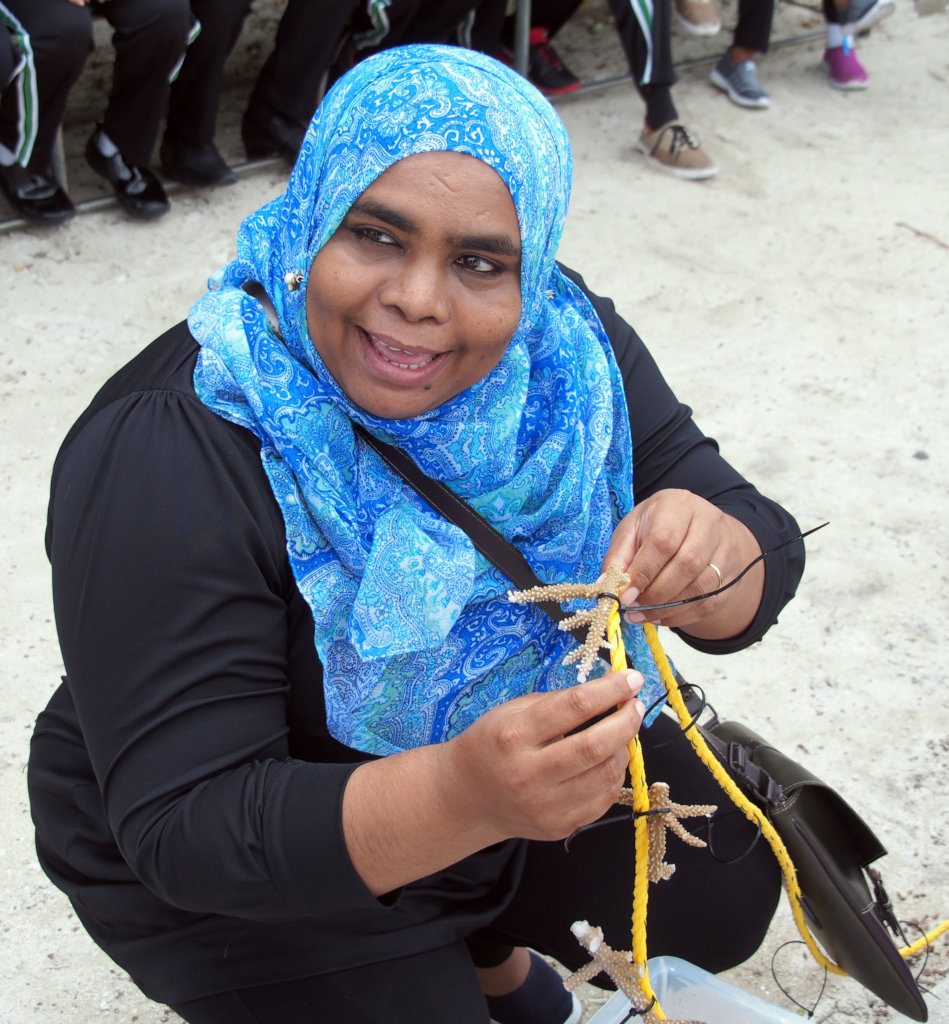
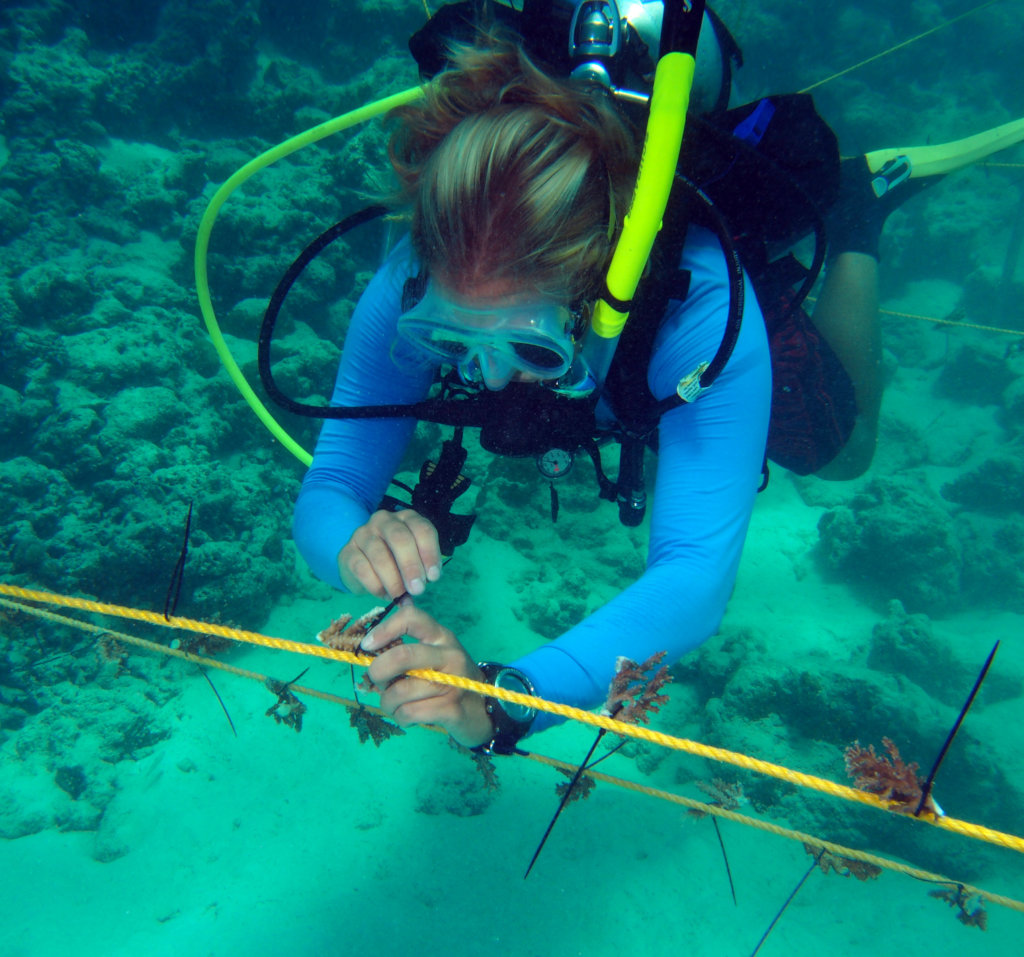
A total of four coral tables (400 corals total) and 27 coral ropes were established within existing nurseries on Veli, Aquabar and Dhigu House Reef. These contained 1484 coral fragments. All fragments are second generation clippings from nursery grown corals and no new corals were sampled to expand the nursery. The fragments used for these new ropes and tables are all pieces that broke off from the existing corals grown in the nurseries, either naturally, or during the translocation of the corals. Because these broken branches were in the sand, they that would have otherwise died.
Corals from one table and eight ropes at Veli Nurseries were transplanted onto dead staghorn framework around the water villas, targeting four restoration areas. Additional ropes of staghorn coral (n=6) were transported from the Aquabar nursery to Veli restoration sites. Large staghorn coral colonies now exist adjacent to the walkway between water villas (in 0.5-1 m depth) in two locations, and they form two dense thickets, each 25 X 10 m in size, within the central part of the lagoon. Four new tables (100 corals per table) were established near the pontoon dock and ten new ropes were attached to three nursery frames.
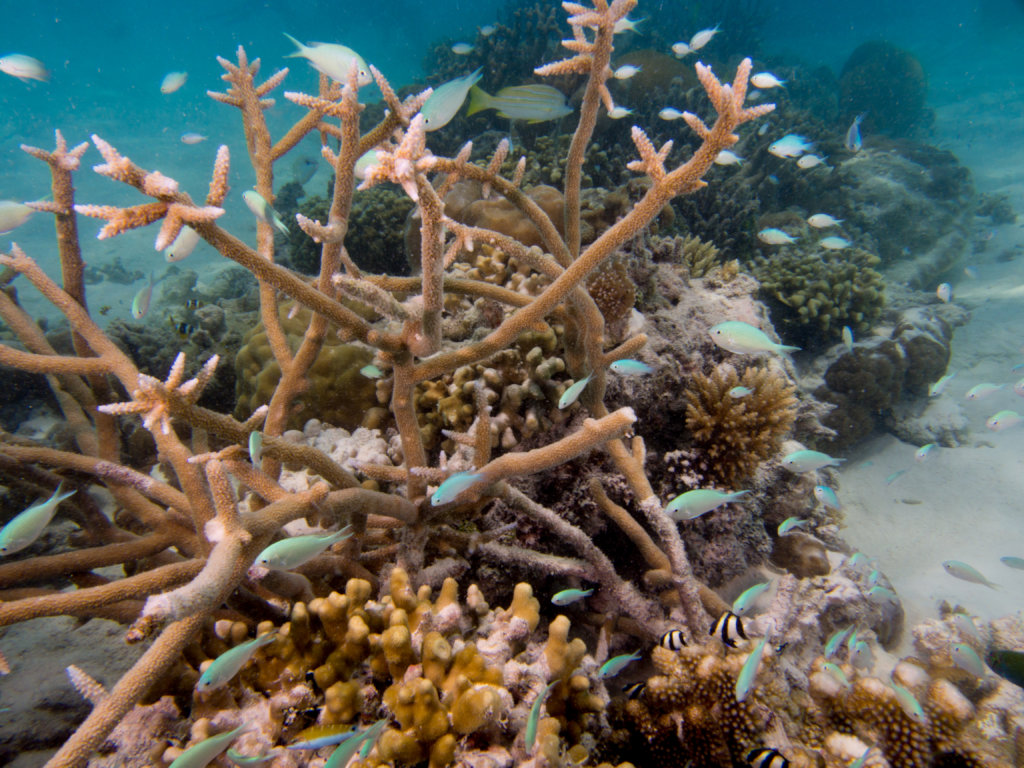
Aquabar snorkel trail has done extremely well since first established in February 2017, with branching corals showing high rates of growth. Nursery-grown staghorn and table acroporid colonies planted on this reef increased from 15-20 cm colonies to bushes that were 60-150 cm in height/diameter. Maintenance of the trail was minimal, consisting primarily of addition of reef substrate, overturning corals that had become dislodged from the trail, removal of coral eating snails from four corals, removal of two corals infected with black-band disease, and removal of one crown of thorns starfish that was consuming staghorn coral colonies. The trail was expanded in length (5 m at the beginning and 5 m at the end) and width (three new areas were added). Dead coral branches and boulders were collected from an adjacent shallow reef and used to build a new reef framework. Nursery-grown Acropora corals were planted onto the new reef framework to create a dense thicket of staghorn coral sand a thriving living reef structure.
The work undertaken by Coral Reef CPR through our HARP program has been a highly successful CSR initiative that demonstrates the feasibility of a simple, low-tech, low cost coral restoration effort. Following the devastating 2016 coral bleaching event, we established coral nurseries using small coral fragments that were rescued from locations and conditions where they would have died. By attaching these to plastic mesh-covered tables and ropes suspended off the bottom, we were able to preserve this genetic stock of corals and grow them into large sexually mature colonies that could be transplanted onto the reef, restoring badly degraded habitats. In the first phase of our coral restoration we successfully created a diverse, flourishing snorkel trail and have established large staghorn thickets on a reef that sustained >99% coral loss. Both of these are located close to shore and are frequently visited by resort guests. We also transplanted corals onto the house reef, transforming a rubble/hardground area that had died during 2016 into a high-relief coral forest now occupied by hundreds of reef fish. Thousands more of our nursery-grown corals are ready to transplant back onto the reef, and the nurseries contain enough coral to provide 2nd and 3rd generation fragments that can be used to further propagate these corals
Links:
Project reports on GlobalGiving are posted directly to globalgiving.org by Project Leaders as they are completed, generally every 3-4 months. To protect the integrity of these documents, GlobalGiving does not alter them; therefore you may find some language or formatting issues.
If you donate to this project or have donated to this project, you can receive an email when this project posts a report. You can also subscribe for reports without donating.