Project Report
| Oct 20, 2015
INFANT & MATERNAL MORTALITY IN THE HIMALAYA Oct 15
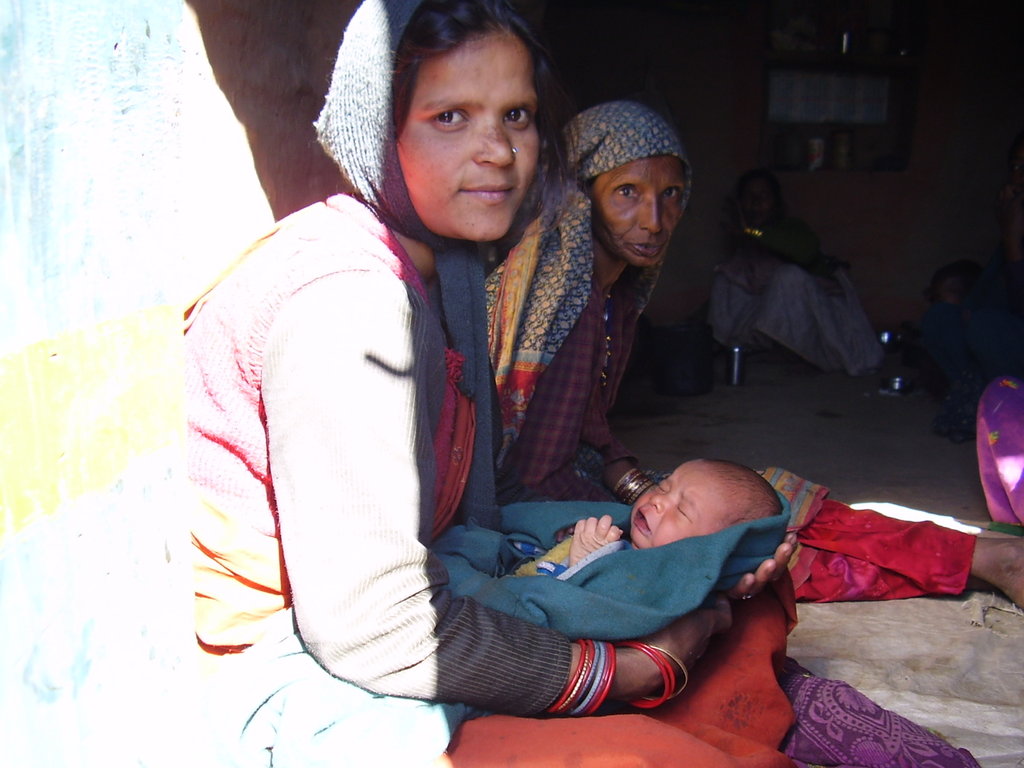
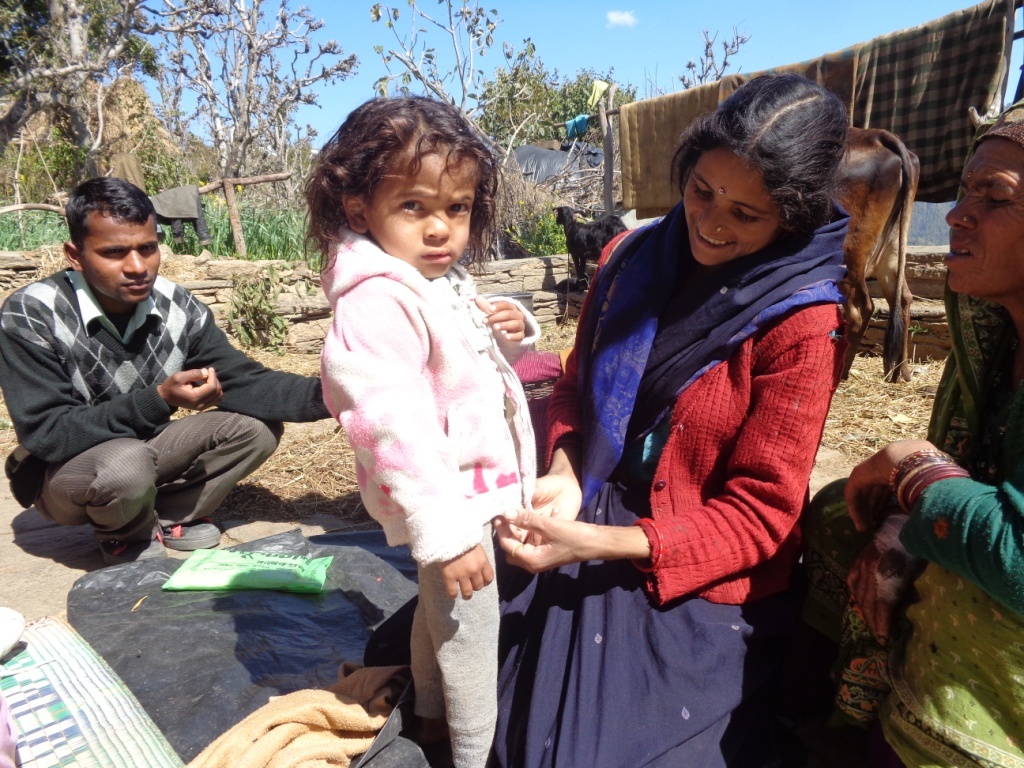
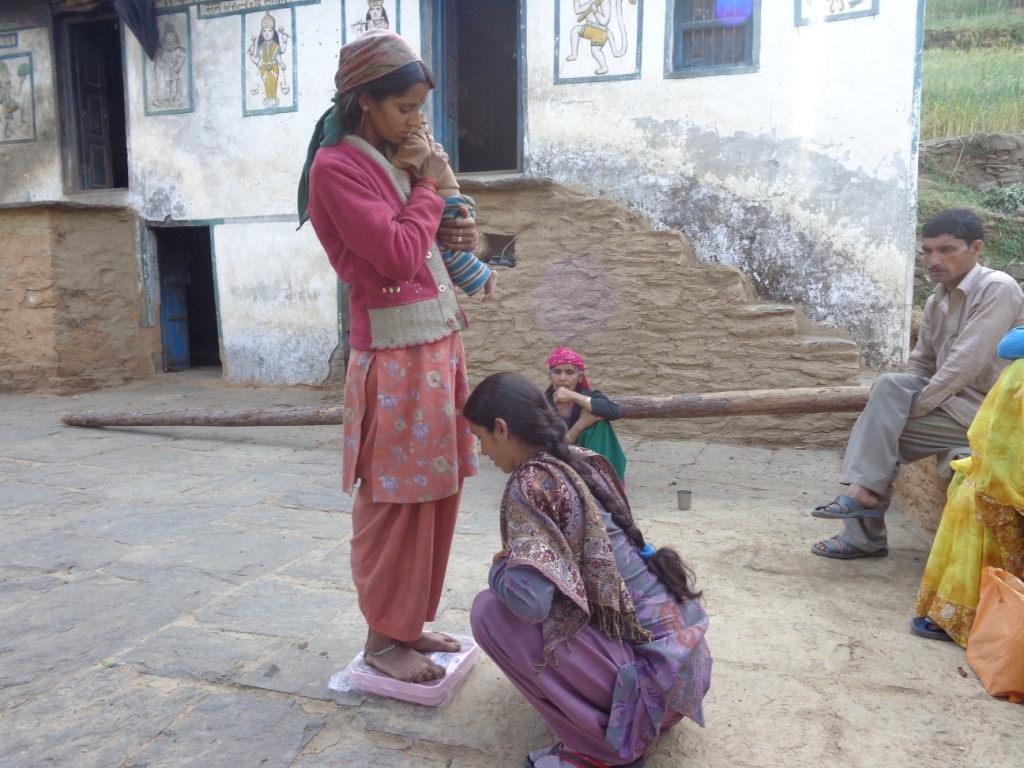
![Growth monitoring in the village]()
Growth monitoring in the village
Dear friends,
We are happy to give you an update on our community health work for the period May to July 2015. It has been a hectic 3 months while we have expanded our work to include all 105 villages covering a population of approximately 50,000 people in the Okhalkanda Block of Nainital District in Uttarakhand.
Do read on to learn more.
Should you have any questions or suggestions on the review please do write to me at sushil@aarohi.org
On behlaf of all of us at Aarohi we thank you for your continued support in helping bring better health opportunities to the communities of rural Uttarakhand.
With gratitude and good wishes to all of you,
Sushil
REDUCE INFANT & MATERNAL MORTALITY IN THE HIMALAYA: May- July 2015
Community health
Our community health project has now expanded to a total of 105 villages in the Okhalkanda Block of Nainital District of Uttarakhand. A remote, mountainous zone in the Himalayas, its greatest issue is access to reliable, timely and ethical health care delivery systems. The community is mired in the cycle of poverty and ignorance and public health care delivery systems are indolent and their private counterparts exploitative.
Achievements & Highlights
- Revival of VHSNCs: 68 Village Health Sanitation and Nutrition Committees (VHSNCs) were identified out the 70 project villages. We revived these VHSNCs by organizing meetings of their members. Prior to these meetings, members did not know that they were part of the VHSNC, and were unaware of their roles and responsibilities. Accredited Social Health Activists (ASHAs) and ASHA facilitators prepared the list of members and forwarded it to the concerned senior authority.
- We started systematic training of VHSNC members on their roles and responsibilities. As a result, some of the VHSNCs have undertaken new initiatives. Some of these are as follows:
- ANM appointment: An Auxilary Nurse Midwife (ANM) was appointed in the sub-centre of Kalaagar, where the post had been vacant for the last 6 months. This was achieved by bringing the issue to the notice of the VHSNC and guiding the members who formally pushed the matter with the CMO.
- ASHA recruitment: In Matela and Goniyaro villages, the VHSNC recruited an ASHA in each village after the meeting. This post had been vacant for approximately 1 year.
- We have now started conducting collective activities during the Village Health and Nutrition Day (VHND), such as Antenatal Care (ANC), growth monitoring; Matru Samuh meetings - counseling on hygiene, contraceptives, food etc. Earlier, in VHND, Anganwadiworkers distributed only THR (Take Home Ration).
- Coordination with the block level government system: After formal discussion with the Block Coordinator of the National Health Mission (NHM) Okkhalkanda, we decided that we would share monthly data with each other on a regular basis. In doing so, we expect the quality and authenticity of data to improve over time. .
- We started decentralised trainings for ASHAs and Dais (Traditional Birth Attendants). Through this, we are saving on travel time of participants and trainers are able to give more one-to -one attention to participants by working in smaller groups.
- Two exposure visits were conducted for school children for their personality development. A total of 74 school children participated.
- A women’s bathroom was constructed in Kalagar village. As a common cultural practice, menstruating women are subject to many restrictions within the household, including having to bathe and look after their sanitation needs outdoors and in the dark. The newly built bathroom will enable women of the village to bathe safely during menstruation. The local community was actively involved in the construction of the bathroom, and has taken responsibly for its maintenance.
- The supply of Iron Folic Acid (IFA) was not regular for the last year. With the help of a Zila Panchayat member, we raised the issue of intermittent supply to the CMO,Nainital. As a result, the government began supply of IFA to ANM centres immediately.
- We started conducting meetings with local government ANMs (Auxilliary Nurse Midwives) to ensure improvement in services and greater collaboration.
- A 5-year extension for use of the MMU (Medical Mobile Unit) has been obtained by the State Government. This MMU benefits approximately 600-700 patients every month and has brought ultrasound and good antenatal care to many pregnant women in our community heath project area.
- Placing a senior volunteer Swiss midwife in PHC (the government Primary Health Centre) Okhalkanda for 4 months enabled local nurses to implement better birthing practices under the NHM.
- We have achieved 100% coverage of the Smokeless Chullah programin Dewali village, which has a population of 25 households. Till date, 21 households have installed the chullah in their homes. On 17th September, a meeting was organized, in which the remaining 4 households agreed to install the smokeeless chullah in their houses. A total of 341 chullahs have been constructed over the past 2 years. 98% of these are in use and the users are extremely happy with this addition to their houses, bringing the comfort of a smoke free use and also reducing the consumption of wood by approximately 50%, thus significantly reducing the drudgery of women.
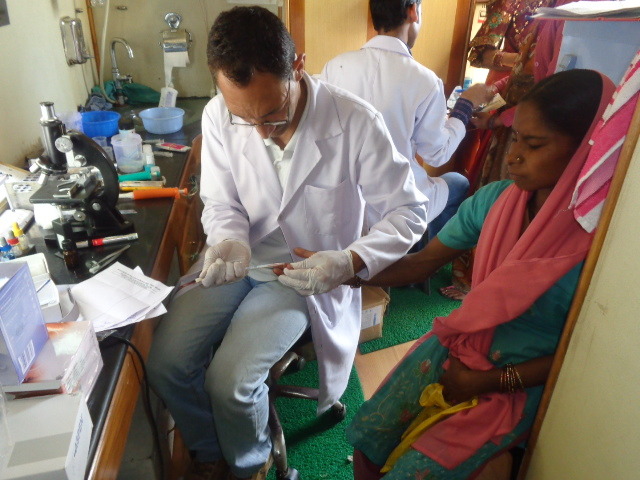
- Water testing and purification at household level We are procuring water testing kits from TARA Life Sustainability Solutions Pvt. Ltd, an ISO certified company known for manufacturing, distributing and supplying a wide range of the premium quality of water testing kits and check vials. We are currently using H2S test kits named TARA aquacheck vial, which can test the presence of pathogenic bacteria (colifrom bacteria) in water that causes common water borne diseases. Supervisors test water from the common source with the help of this kit. Forty five out of 48 or 94% of water sources were found faecally contaminated.This brings out the enormity of the problem of the existence of water borne diseases in the region and the need for a sustained campaign to rectify this issue.
- In Jhargaon Talla, chlorination of the village’s drinking water CWR (Clear Water Reservoir) was successfully carried out.
Maternal and Child Health Statistics
ANTENATAL CARE
Currently pregnant women 853
Total pregnant women given care over three month period
(currently pregnant+ live births+abortion+sb) 319
PREGNANCY OUTCOMES
Abortions 8 (0.9%)
Deliveries 151
Live births 150 (99.3%)
Still births 2 (1%)
Institutional deliveries 52 (34%)
Home deliveries 99 (66%)
Deliveries conducted by Aarohi trained TBA 55 (55.5%)
Low birth weight 11 (7.3%)
Maternal Deaths None
POSTNATAL CARE
Neonates breastfed within 30 minutes (indicator to hasten 3rd stage labour) 122 (82.6%)
Neonates breastfed within 24 hours (for baby) 148 (98.6%)
FAMILY PLANNING
Eligible couples 10,638
Eligible couples using contraceptives 1,753 (16.4%)
CHILD CARE
Children 0-6 months 703
Children 0-5 years 10,219
Infants 0-6 months exlusively breastfed 610 (87%)
Children 0-5 years 10,219
Children 0-5 years monitored for growth ![]()
![]()
![]()
Links:
![Share on Twitter]()
![Share on Facebook]()