By Dr Sushil Sharma | Project Advisor
04 Oct 2013
REDUCING MATERNAL AND CHILD MORTALITY IN THE HIMALAYA: Jun-Aug 2013
Community Health
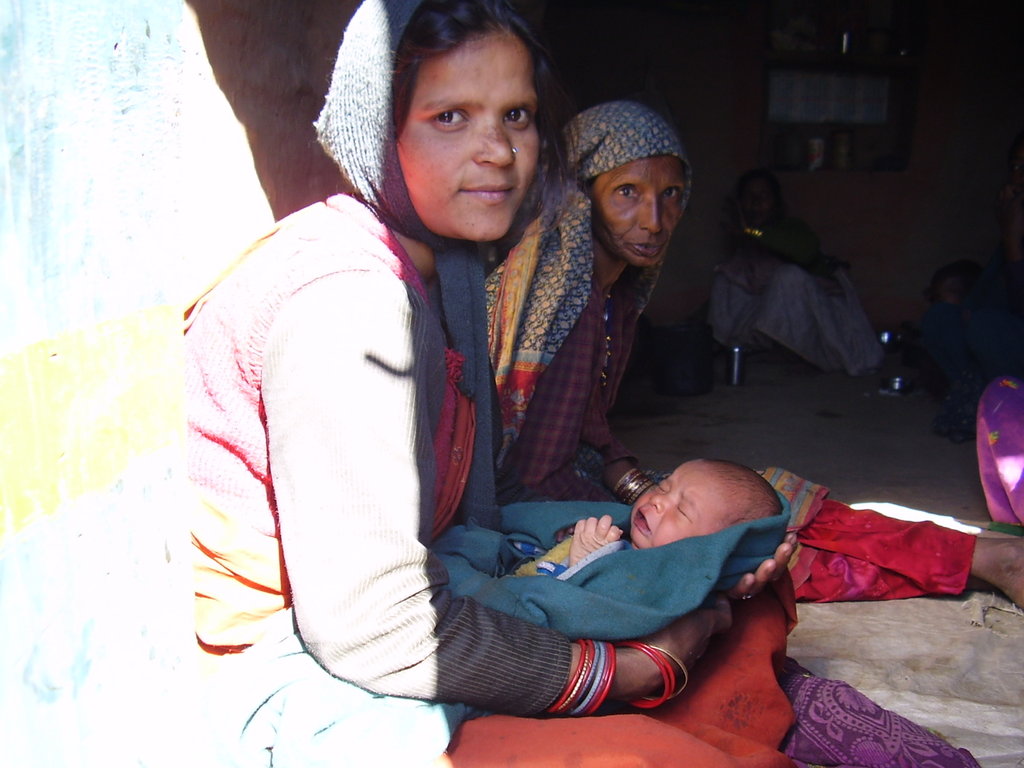
Our health program focuses on rural Kumaon’s most marginalized, i.e. women and children. Girls bear the brunt of the domestic workload, are married off early, are frequently pregnant and, are given second priority in education, nutrition and social rights. They are also subjected to a host of prejudices relating to menstruation and childbirth. Consequently, they have little time, energy or will to look after their children’s basic needs. No wonder, Uttarakhand’s Infant Mortality Rate is 41 per 1000 live births and Maternal Mortality Rate 188 per 100,000 live births as per the 2011 Census.
Our three-year health project supported by Sir Dorabji Tata Trust (SDTT) closed in January 2013. It sought to create a replicable, community-based health care model to minimize maternal and child mortality while improving overall human health and wellbeing in 30 villages of Nainital District’s remote Okhalkanda Block. The third phase of the `Arogya Project’ has been approved by the Sir Dorabji Tata Trust and will formally begin in August 2013. Funds collected from friends and well-wishers through Global Giving were used to continue basic maternal and child health care services in this interim period.
Our health program focuses on rural Kumaon’s most marginalized populations, i.e. women and children. Girls bear the brunt of the domestic workload, are married off early, are frequently pregnant, and are given second priority in education, nutrition, and social rights. They are also subjected to a host of prejudices relating to menstruation and childbirth. Consequently, they have little time, energy or will to look after their children’s basic needs. No wonder, Uttarakhand’s Infant Mortality Rate is 41 per 1000 live births and Maternal Mortality Rate in Okhalkanda Block of Nainital District, in particular, is 353 per 100,000 live births, alarmingly above the state average of 188 as per the 2011 Census.
Highlights of 3 months of continuation work with the community were:
Training
Nine trainings were organized for ASHAs (Government appointed Accredited Social Health Activists) and Swasthya Karmis (Community health workers) Topics covered were:
All 24 SKs attended the trainings.
Monthly meetings
Regular monthly meetings with the community health workers for planning and sharing of work done and on discussions about field related problems.
Mother and child issues
The community health workers weighed all children 0 to 5 years of the all project villages on a monthly basis, and identified malnourished and severely malnourished children. Dietary advice was given to mothers as per protocol.
All pregnant were visited, Antenatal check-ups done
VHSC (Village Health and Sanitation Committee) meeting
Twelve meetings of the VHSC were conducted. Issues taken up were regular supervision and monitoring of SKs and ASHAs, their incentives, bank accounts, balance funds with the VHSC, other health related issues of the village and roles and responsibilities of VHSC.
Commcare program
Life beyond the norm
Life in the mountainous regions of Uttarakhand is tough for women. Deprivation of basic services such as health and education is rife in the region. Despite their adverse living conditions, rural women of the mountains play a crucial role in their society. They are incessantly engaged in daily activities from looking after their homes to managing the farm. Although they play an important role in family and society, this is barely acknowledged.
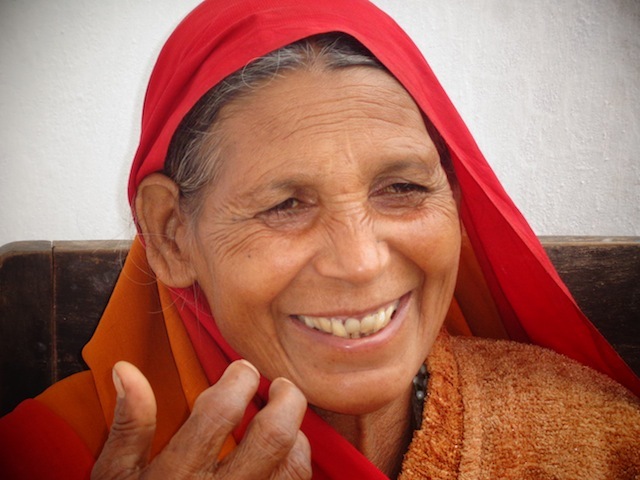
This is a story of 53-year-old Devki Devi, whose husband died 10 years ago. She lives in Khansyu Partola, a village situated in the hilly region of the Okhalkanda Block of Nainital district in Uttarakhand. Her daily routine was not different from other women of the region. It was the routine grind of waking up in the pre-dawn hours, looking after cattle, cooking food, getting children ready for school, going to the forest to collect fodder, cleaning and washing and engaging with farm work until late in the night when it was time to sleep.
Devki has four children. Even during her pregnancies, she had no respite from her daily toil. One day while she was returning from the field with a heavy bundle of grass, she squatted and delivered a baby. Everything seemed normal at that time. But after four months, she started to notice that her uterus had come out. She lived with this problem for 10 years and did not see a doctor or go to a hospital. In August 2013, the problem became worse and she noticed that pus was coming out from her uterus. She then got in touch with Aarohi with the help of her neighbor and got operated at Aarohi’s hospital in Satoli during a surgical camp. She is now well and lives a normal life. She says “I was not able to get treated earlier only because I did not know that this could be treated and neither could I take the time off from my daily routine. I am happy that Aarohi has saved my life.”
A detail of patient care is reflected in the table below:
Sr. No. PARTICULARS JUN-AUG 2013
TOTAL PATIENTS BENEFITED 1088
1 Total patients treated in hospital 675
Female 270
Male 365
Children< 5 years 40
Indoor patients seen 12
Home visits / Emergencies 0
Laboratory Tests 240
X-Rays 21
ECG 4
Total villages covered 45
2 School children screened for Health problems 0
3 Specialist camps held 4
Total patients screened 212
Plastic Surgery 0
Pediatrics 0
Eye 27
Gynae 22
Surgery 29
ENT 0
Medicine 130
Skin 0
Total surgeries performed 11
Total ultrasounds done 42
4 Dental camps held &nb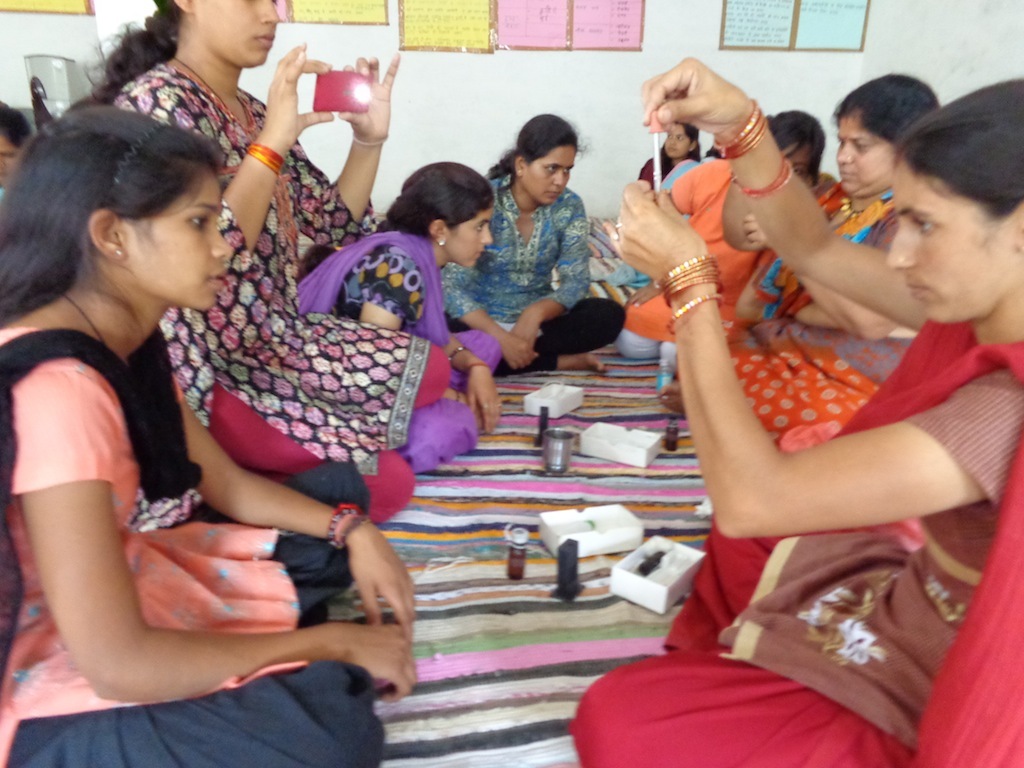 Traning health workers to do Haemoglobin estimate


Project reports on GlobalGiving are posted directly to globalgiving.org by Project Leaders as they are completed, generally every 3-4 months. To protect the integrity of these documents, GlobalGiving does not alter them; therefore you may find some language or formatting issues.
If you donate to this project or have donated to this project, you can receive an email when this project posts a report. You can also subscribe for reports without donating.