Project Report
| Jun 22, 2021
Psychological Support Report
By Tensae Deneke | Project Contributor
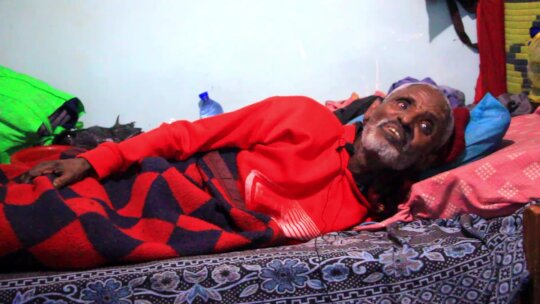
Parkinson’s disease patients are exposed to different psychological stress and hallucination. The more patients go to advanced PD stage, the more they stay at their house. Inability to meet their friends and relatives puts PD patients in serious of stress and anxiety. In addition, inability to work, generate money and support the family as they used to do puts them in a serious frustration. Furthermore, hallucination is also commonly observed problem of PD patients. In order to overcome this problem, Parkinson’s patient support organization-Ethiopia facilitated continuous psychological counseling for PD patients who can come to our office and take the service. Currently, the service is given by two professionals once in a week. The organization planned to diversify the service by including home to home visit to bed ridden patients.
![Share on Twitter]()
![Share on Facebook]()
Feb 8, 2021
Psychological support
By Tensae Deneke | Project Coordinator
It is often said that psychological wellbeing is equivalent with physical health. Just like other people, Parkinson’s disease patients need to be psychologically well, and free from anxiety and depression, but the situation is different. Parkinson’s disease patients face sudden inability of engaging in to different things. The frequent tremor and poor body balance prevents them from engaging in social activities as they used. They gradually stop attending in to social activities and will be forced to stay at home. This and other situations create anxiety and depression. In order to eradicate that, the organization gives psychological support for patients. They are taught how to cope up and live happily with the disease. Many programs including experience sharing are arranged, so that patients get psychological relief
![Share on Twitter]()
![Share on Facebook]()
Oct 10, 2020
Physiological support
By Tsion Terefe | Director
Parkinson’s disease is a progressive neurological disease characterized by motor and non-motor symptoms. ,motor symptoms characterized by tremor, rigidity, and bradykinesia; however, clinical management requires attention beyond its motor features and needs to involve nonmotor features as well. This is because many patients, over the course of their PD, experience depression, anxiety, sleep disturbances, psychosis, and behavioral and cognitive changes .many studies says that for patients and families, these neuropsychiatric disturbances are often more problematic and distressing than the motor aspects of PD . It is important to emphasize to patients, their families, and other colleagues that depressive disorders in PD are treatable and recovery is possible but this is not applicable in Ethiopia because of lack of physiological support but after GlobalGiving support many patients get physiological support and living better quality of life.
![Share on Twitter]()
![Share on Facebook]()