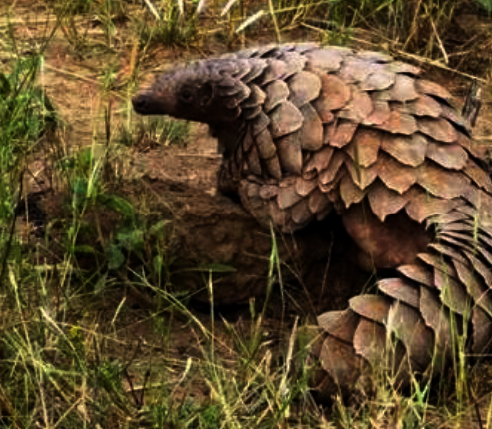
Our grassroots partner, the Pangolin Conservation and Research Foundation (PCRF), works on the frontline of pangolin conservation, combining rescue and rehabilitation with research and long term monitoring.
Since our last update, one extraordinary recovery story has shown just how important that specialist care can be.
Earlier this year, a Temminck's ground pangolin named Sparky was rescued and needed urgent care from the local team after suffering a severe electric fence injury. The shock had left him critically unwell. He was unable to feed independently, struggled to walk properly and had suffered extensive tissue damage, including a serious wound to his tail. At his lowest point, his weight fell below eight kilograms.
His recovery required months of intensive veterinary treatment, health monitoring and dedicated care. For a period, Sparky needed to be sedated twice a day simply so that he could be fed.
As PCRF Founder Kelsey Prediger recently reflected:
“We stopped looking too far ahead. The goal was to get him through.”
Slowly, his condition began to improve. His movement became steadier, his tongue function returned and he began searching for ants and termites independently. His weight eventually climbed beyond 11 kilograms.
After five months of rehabilitation, Sparky was successfully released back into the wild at the end of July.
Importantly, release is not where this work ends. Sparky continues to be monitored using GPS and VHF tracking technology, with the local team locating him regularly for health and weight checks. Recent monitoring has shown him adapting well to life back in the wild, independently finding food, selecting his own burrows and moving freely through his habitat.
Stories like Sparky's highlight how far pangolin rehabilitation in Namibia has progressed. Since 2023, specialist veterinary care, structured rehabilitation and improved release protocols have helped increase survival rates for rescued and released pangolins from around 40% to more than 90%.
This work is also creating valuable knowledge that can help future rescues. Sparky's recovery has provided further experience in treating severe electric fence injuries, supporting feeding during prolonged rehabilitation and monitoring animals following release.
Our grassroots partner continues to combine this hands on work with scientific research, GPS tracking and the development of better approaches for rehabilitating and releasing trafficked pangolins. Recent support has also helped provide new tracking tags, allowing released animals such as Sparky to continue contributing valuable information after returning to the wild.
However, the need remains significant, and support like yours is needed to help establish a dedicated pangolin recovery room in Namibia. This would provide a quiet and secure environment where injured and trafficked pangolins can receive specialist care away from unnecessary disturbance. Until now, rehabilitation has often had to take place using temporary or borrowed facilities.
By supporting Pelorus Foundation, you are helping strengthen the people, systems and knowledge needed to give rescued pangolins a second chance.
From emergency veterinary care to long-term tracking in the wild, every stage matters.
Sparky's journey shows what is possible when a rescued pangolin receives the right care at the right time. With your support, we can help ensure that the next pangolin in crisis has the same opportunity to recover and return to where it belongs.
Thank you once again for continuing to support Pelorus Foundation and the grassroots conservation teams we work alongside.