By Snehaa Sundaram | Asst. Programme Officer- Wild Aid
Chambal Wildlife Sanctuary, a tri-state (Rajasthan, Madhya Pradesh & Uttar Pradesh) Protected Area in Northern India is a long narrow eco-reserve famous for the Endangered Ganges river dolphin (Platanista gangetica), critically endangered Gharial (Gavialis gangeticus) and red-crowned roof turtle (Batagur kachuga). The pristine Chambal River cutting through several ravines and sandy beaches provides a unique habitat for several unique wildlife species. A universally acknowledged Ramsar site, supporting eight of the twenty-six turtle species found in India, the sanctuary is also listed as an Important Bird Area (IBA) harboring atleast 320 species of birds. With parts of the sanctuary threatened by extensive illegal sand mining, the forest department plays a critical role in protecting the nests of gharials and turtles.
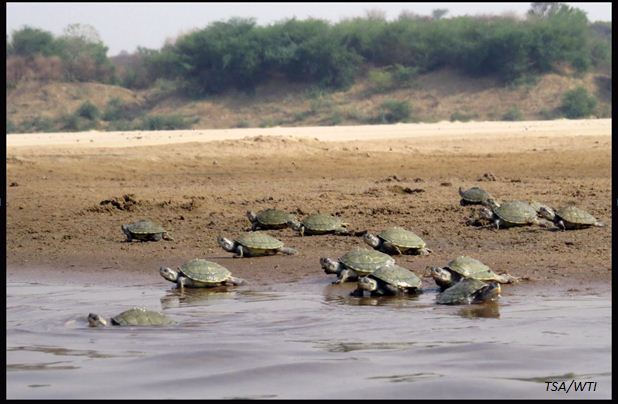
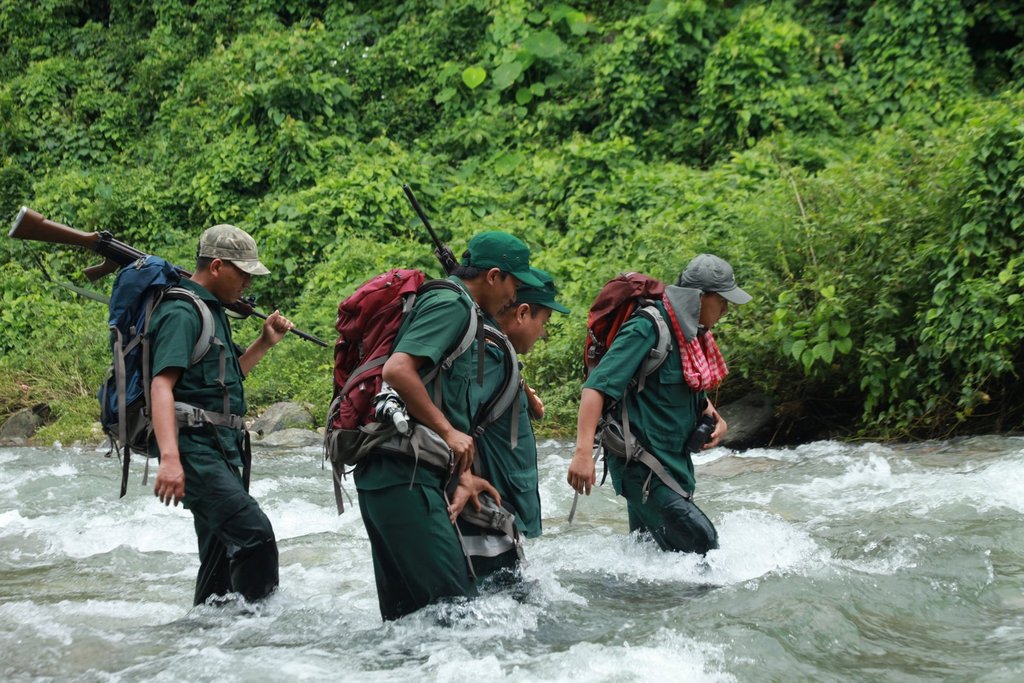
Red-crowned roofed turtle (Batagur kachuga) found largely in riverine environments, in India is restricted to only National Chambal Sanctuary. Today the species is deeply affected by illegal fishing, sand mining, poaching and egg harvesting. Recent estimates by Turtle Survival Alliance(TSA)- India indicate less than 500 nesting females surviving today by the Chambal River. For the past twelve years forest department along with conservation organizations like TSA have tirelessly committed to conserving Red Crowned Roofed Turtle (Batagur kachuga) and the endangered Three Striped Roofed Turtle (Batagur dhongoka) species in this landscape. The staff is engaged and devoted full time in nest protection and relocation of the red-crowned roofed turtle eggs to ensure their hatching success. Until the hatching period, they safeguard the eggs from predators like carnivore jackals, feral dogs, and poachers to ensure no harm comes to the future of this beautiful species.
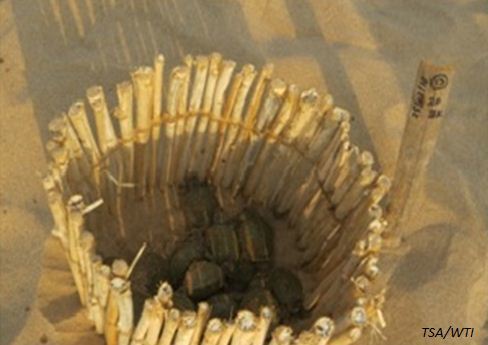
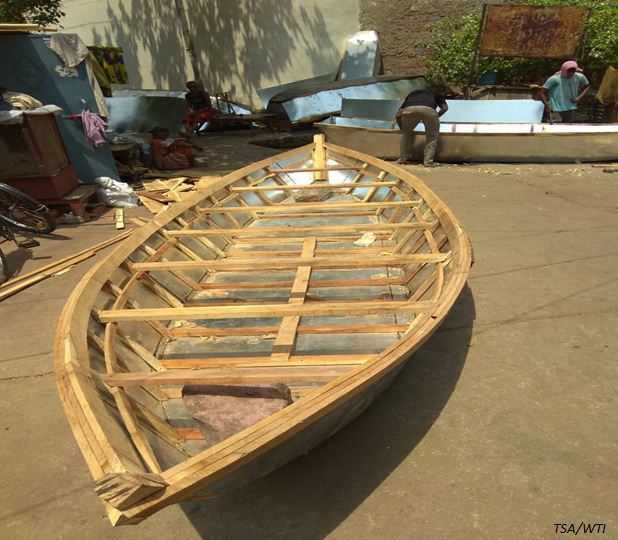
This year in May, ravaging dust storms hit parts of Uttar Pradesh, Madhya Pradesh and Rajasthan killed over 100 civilians and created havoc in the states. In addition, to the devastating damage to property and life across the affected states, the storm also took a toll on the vital conservation project being run to protect the critically endangered species. The hatchery infrastructure was rampaged, making all efforts of safeguarding the eggs grey. The storms blew away the fencing, tarpoline covering the hatcheries and destroyed the boats used for monitoring. A total of 317 nests ie. 6627 eggs of Batagur kachuga and Batagur dhongoka were in danger. To provide immediate relief Wildlife Trust of India with the help of its donors helped restore the damaged infrastructure and protect the eggs to ensure safe hatching this year.
No time was wasted and all efforts were taken to ensure aid reached the field team within 24hrs. The forest department and team were not only battling with repairing the infrastructure and trying to protect the eggs from threats but were working against the unstoppable clock, where the nests were to hatch any day. Field equipment like utensils, storage tubs, buckets and field jackets were restocked to support the field staff at the conservation center. Boundary fences and boats were refurbished in preparation for the next phase of the project involving head hatchlings.
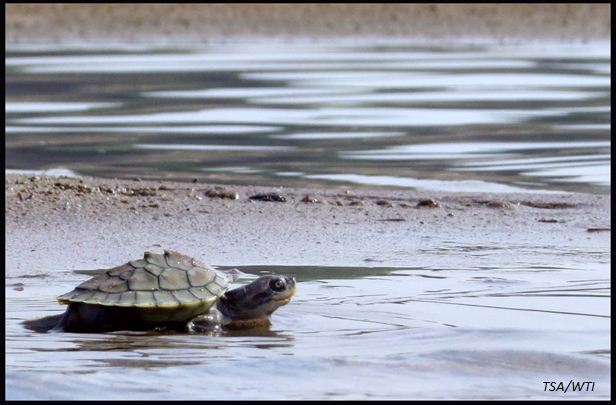
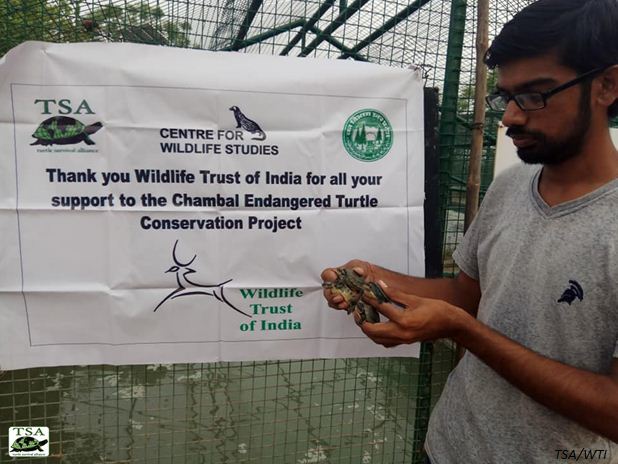
During the nesting season, highly trained staff extensively patrolled the sites and thwarted any natural or anthropogenic threats. With hatching having begun literally a day after our support, the swift action proved essential in the success of the project. Once hatching began, under the supervision of the Uttar Pradesh and Madhya Pradesh Forest Department officials, a total of 5670 hatchlings of both endangered species were safely released back into the river. Out of the total hatchlings released 1225 were of the Batagur kachuga species and 4445 were of the Batagur dhongoka species. Dr. Shailendra Singh, Country Program Director- TSA India says “We sincerely thank the timely and generous funding provided by Wildlife Trust of India, which allowed the team to continue their efforts to bring this amazing species back from the brink of extinction”. With turtle hatchling survival rate being low we hope nature takes its course and most hatchlings make it to adulthood.
Project reports on GlobalGiving are posted directly to globalgiving.org by Project Leaders as they are completed, generally every 3-4 months. To protect the integrity of these documents, GlobalGiving does not alter them; therefore you may find some language or formatting issues.
If you donate to this project or have donated to this project, you can receive an email when this project posts a report. You can also subscribe for reports without donating.



Support this important cause by creating a personalized fundraising page.
Start a Fundraiser