By Sherry Harbert | Executive Assistant and Communications Director
MIKE Program Mentors Build Healthy Relationships with Youth
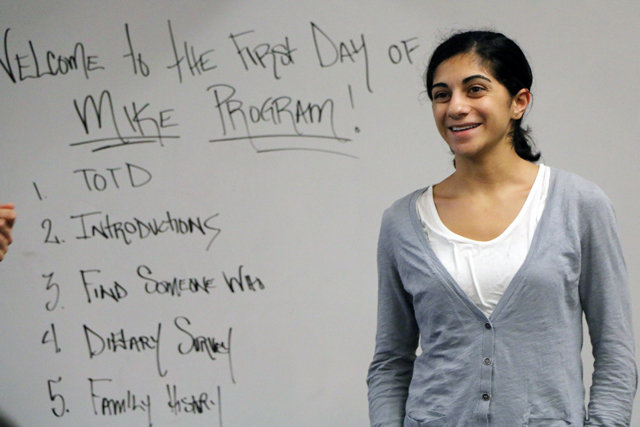
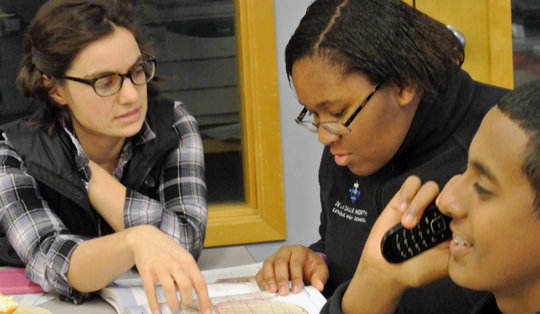
From the application process, screenings, interviews and trainings, MIKE Program mentors complete a demanding series of requirements prior to entering the classroom. Most potential mentors who apply to MIKE Program are used to rigorous standards, like Elena, a second year medical student at Oregon Health and Science University (OHSU). MIKE Program attracts many young adults from health professions. Elena’s medical and academic training helped to provide a solid foundation for her work with youth at De La Salle North Catholic High School in Portland.
“I liked that she helped and answered our questions and helped us to understand,” said Chidinma, one of the youth assigned to Elena’s team. “I also liked how she helped us stay on track on our work. She made MIKE Program a good experience.”
MIKE Program mentors dedicate anywhere from one semester to one or two years to MIKE Program, meeting with youth each week during the academic year. Cody, a MIKE Program mentor who currently is conducting research in trauma critical care at OHSU, is in his second year volunteering with the program. Such commitment builds greater rapport skills for the mentors and elicits positive responses from the youth.
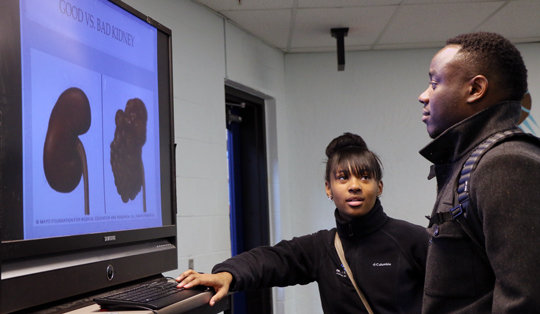
“What I like about Cody was that he was always here on Thursdays,” said Kassandra. “And also that he would teach us new things like words about kidneys.”
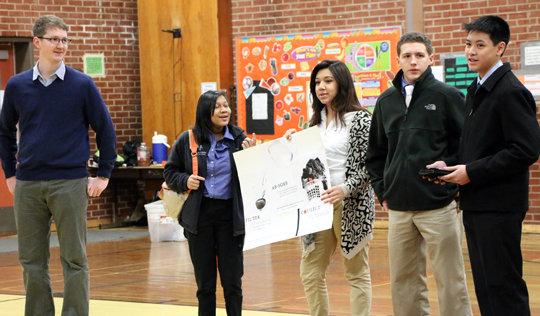
Cody’s team of four youth at De La Salle North Catholic High School shared their new knowledge about kidneys with youngsters at George Middle School in Portland for their Health Leadership Project presentation. The projects are a culmination of the skills and knowledge gained throughout the semester which teams of youth share with their community. In January, 11 teams fanned out in North Portland, reaching more than 260 others with information about living healthy and protecting kidneys.
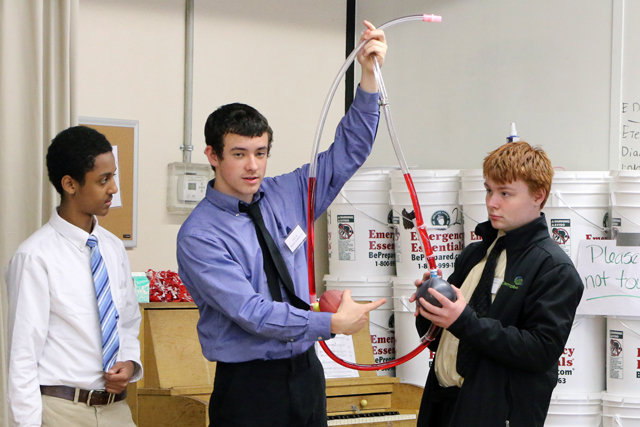
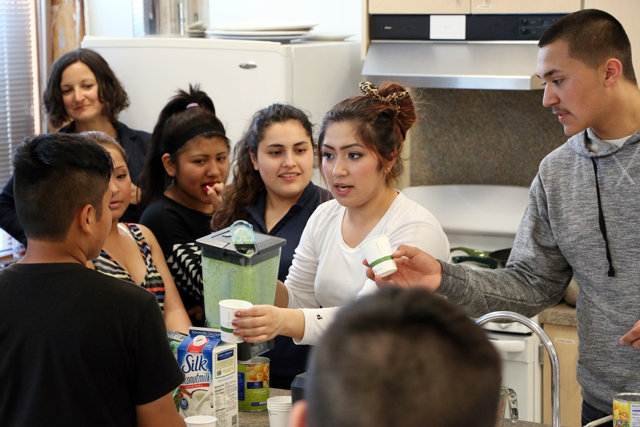
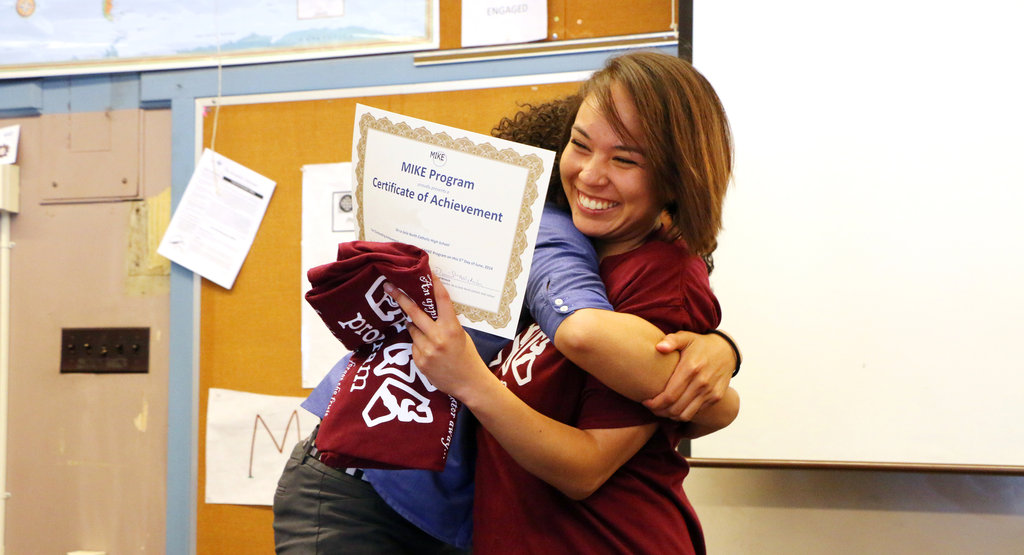
Building healthy relationships is a key component of MIKE Program. For the mentors, MIKE Program offers a unique opportunity to gain real-world training while serving as role models for the next generation. For the youth, it builds trust, confidence and opens new dialogue for a new generation of health leaders.
The rewards are felt by both the youth and the mentors. “I love working with youth in MIKE Program,” said Cody. “They keep me inspired to continue working hard through this process and to love what I do.”
Four Conferences to Feature MIKE Program
In its first decade of service, MIKE Program has earned a reputation for positive outcomes. Since 2011, Pacific University’s School of Professional Psychology has been researching and documenting those positive results. In 2014, a team from the university will present MIKE Program’s outcomes evaluations on a regional and national stage.
There will be a panel discussion, MIKE Program: Preventing Chronic Kidney Disease Among Low-Income Minority Youth, at the Western Psychological Association Conference in Portland, April 24-27, 2014.
MIKE Program outcomes will also be featured at the Familias en Acción’s Latino Health Equity Conference at Portland State University on June 13, 2014. Besides a poster presentation, the conference will feature an afternoon session on Longitudinal Health-Related Outcomes of MIKE Program for Latino Adolescents, and Changing Health Behaviors for Latino Youth Engaged in MIKE Program.
The conference season for MIKE Program begins in March with two national conferences, the Society of Research on Adolescence in Austin, Tex., March 20-22, 2014; followed by the Society for Adolescent Health and Medicine Conference, March 23-26, 2014. Both conferences will feature poster presentations on MIKE Program outcomes by Pacific University.
Links:
Project reports on GlobalGiving are posted directly to globalgiving.org by Project Leaders as they are completed, generally every 3-4 months. To protect the integrity of these documents, GlobalGiving does not alter them; therefore you may find some language or formatting issues.
If you donate to this project or have donated to this project, you can receive an email when this project posts a report. You can also subscribe for reports without donating.