Project Report
| Jul 5, 2018
Thank you for making our work possible!
By Johanna Hansing | Development Officer
Dear HOPE Supporter,
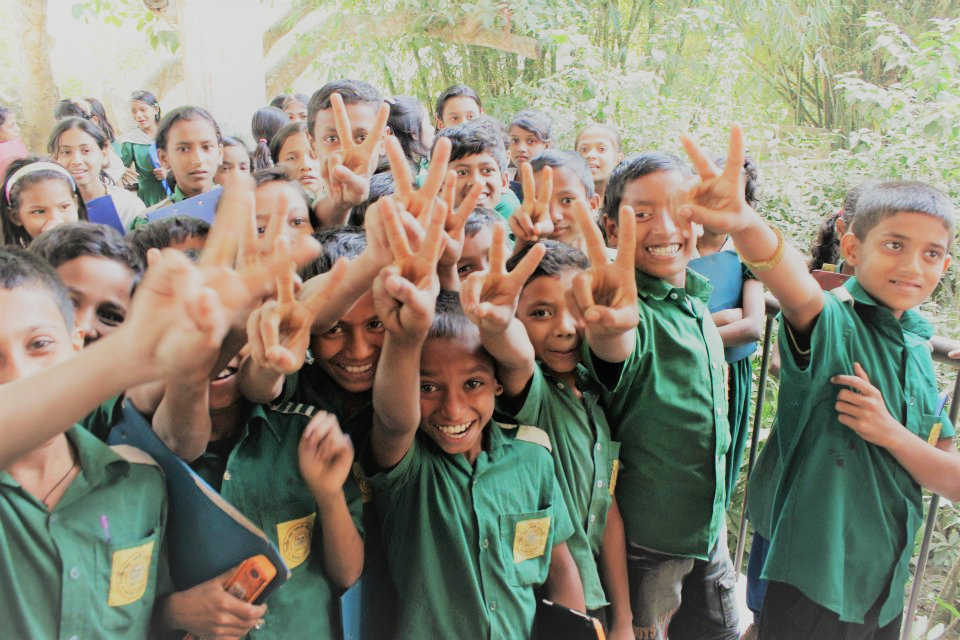
Thank you for supporting the health of primary school students and ensuring their future health as they enter adolescence and adulthood. In order to keep costs down for families, children must see a physician routinely to prevent the onset of diseases. Of particular importance is teaching students concepts and tips that will keep them healthy in the long run.
In Bangladesh, girls have a high malnutrition rate compared to boys. They are also often low in iron which has repercussions on their ability to perform well in school as fatigue weights heavy on girls who are on the anemic side.
It is important to ensure the health of Bangladesh's girls while in school so they can focus without their health hindering their futures.
Thank you for your support.
Sincerely,
![Share on Twitter]()
![Share on Facebook]()
Apr 6, 2018
Because of you our work is possible
By Johanna Hansing Becker | Development Officer
Dear HOPE Supporter,
Thank you for keep supporting the health of primary school students and ensuring their future health as they enter adolesence and adulthood.
Bangladesh is the world’s most densely populated country (excluding city-states) with a density of 1,015 people per square kilometre. This combines with the frequent occurrence of natural disasters to create challenges in accessing safe and sanitized health and nutrition facilities. While significant recent advancements have been achieved across key health indicators many Bangladeshis, particularly marginalized groups, still confront limited access to and knowledge of good health practices. Some of the main areas of concern include: 40 per cent of women do not use contraception; 68 per cent of births are still unassisted by a skilled provider; 53 children per 1,000 births die before the age of five; 14 per cent of children are still not fully vaccinated; 41 per cent of children under age 5 are stunted; 51 per cent of children aged 6 – 59 months are anaemic; 32 per cent of women and 19 per cent of men have elevated blood pressure; 11 per cent of women and men are diabetic; and 59 per cent of women and 65 per cent of men who are diabetic are not aware of this.
This screenings are key for the childrens.
Thank you for your support.
Sincerely,
Johanna hansing
![Share on Twitter]()
![Share on Facebook]()
Jan 8, 2018
Because of you our work is possible
By Johanna Hansing | Program Officer
Dear HOPE Supporter,
Thank you for supporting the health of primary school students and ensuring their future health as they enter adolescence and adulthood. In order to keep costs down for families, children must see a physician routinely to prevent the onset of diseases. Of particular importance is teaching students concepts and tips that will keep them healthy in the long run.
In Bangladesh, girls have a high malnutrition rate compared to boys. They are also often low in iron which has repercussions on their ability to perform well in school as fatigue weights heavy on girls who are on the anemic side. Anemia runs serious complications during pregnancy such as low birth weight of the baby and pre-term delivery. It is estimated that 50% of pregnant women in Bangladesh are anemic.
It is important to ensure the health of Bangladesh's girls while in school so they can focus without their health hindering their futures. In addressing low iron in primary school girls you not only help keep them strong and focused in school but support their health when they grow up and become mothers of their own.
Thank you for your support.
![Share on Twitter]()
![Share on Facebook]()