By Lucas Meers | Conservation Program Officer
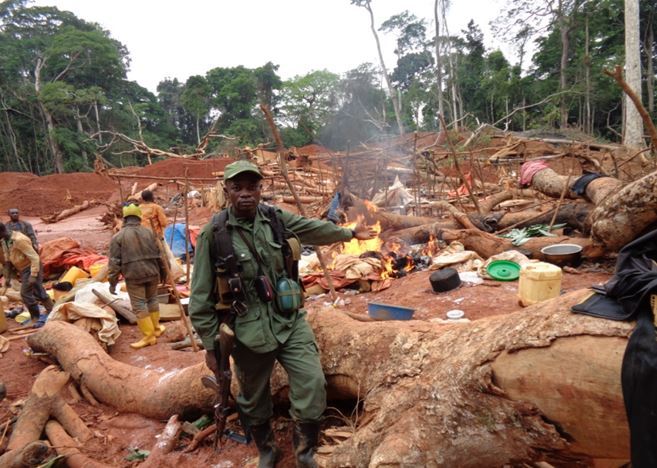
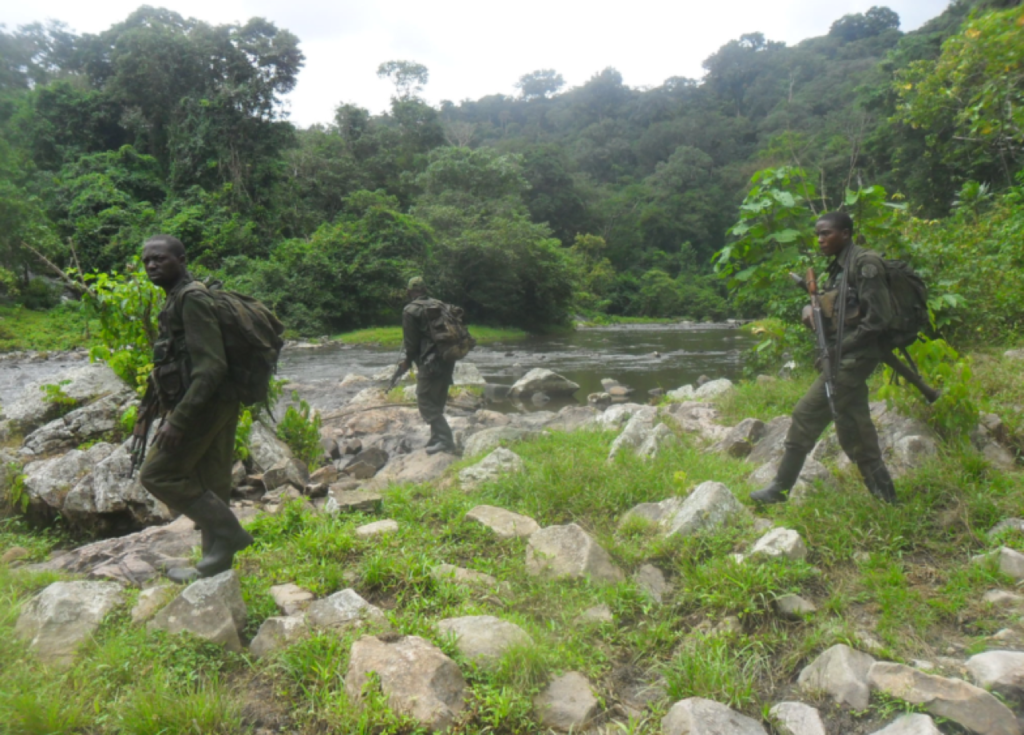
On July 14, 2017, the Okapi Wildlife Reserve suffered a devastating attack resulting in four ICCN rangers losing their lives. The incident happened in Bapela, where three journalists were traveling to the unoccupied mine to collect footage for a documentary on the Reserve. Unknown assailants attacked the camp around 3:30 p.m. All three journalists escaped alive and unhurt, but four ICCN rangers lost their lives. The Bapela mine was closed in April of this year using customary chiefs that directed shamans to put a curse on the mining site (see previous report), and since that time, ICCN rangers have been posted at the mine to ensure it is not reoccupied by miners.
Throughout the years, we have found that there is a direct correlation between the number of miners in the Reserve and the amount of bushmeat consumed. Mining camps can be small or large and can last for a couple of weeks to a couple of months. These miners need to eat, so they set snares and traps in the forest to catch wildlife. The more miners that are evacuated and kept out of the Reserve decreases the amount of wildlife killed for food.
With the recent loss of four ICCN rangers, it will be harder to patrol the Reserve with our already low ICCN staff. Efforts are being made to increase the number of rangers in the Reserve, however, all rangers must complete a year of training before being placed on patrol. ICCN rangers play a vital role in reducing poachers, illegal miners and the need for bushmeat, and we continue to protect the wildlife and the forest to honor those lives lost.
While on patrol, rangers collect snares and arrest anyone participating in illegal activity. In the first six months of this year, rangers have already covered 7,550 kilometers while removing 1,760 nylon snares, arresting 76 poachers and evacuating over 580 miners. Without the ICCN rangers patrolling the forest regularly, miners and poachers would be prominent in the Okapi Wildlife Reserve. Supporters like you allow us to continue the hard work we do in reducing illegal activity while protecting the biodiversity of the Ituri Forest in the DRC. We thank you for your continued support!
Links:
Project reports on GlobalGiving are posted directly to globalgiving.org by Project Leaders as they are completed, generally every 3-4 months. To protect the integrity of these documents, GlobalGiving does not alter them; therefore you may find some language or formatting issues.
If you donate to this project or have donated to this project, you can receive an email when this project posts a report. You can also subscribe for reports without donating.