By John Lukas | President
Evacuation of illegal mining camps inside the Reserve was singled out during the 2013 Mambasa meeting called by Governor Saidi as the most important action that will help restore security in the Reserve and protect wildlife and forests from exploitation.
Like other endangered protected areas in DR Congo, the Okapi Wildlife Reserve (OWR) went through a troubled period due to insecurity and the invasion of the Reserve by illegal miners, uncontrolled immigration, illegal poaching, and resource extractions perpetuated by various armed militias.
Among the nearly 70 mining camps which were illegally occupied after the June 24, 2012 attack and subsequent destabilization of the region, ICCN and partners targeted closing the seven biggest camps where the total number of miners was estimated to be around 20,000. Most of the miners came from cities outside the Reserve, and closing the camps does not involve removing local people.
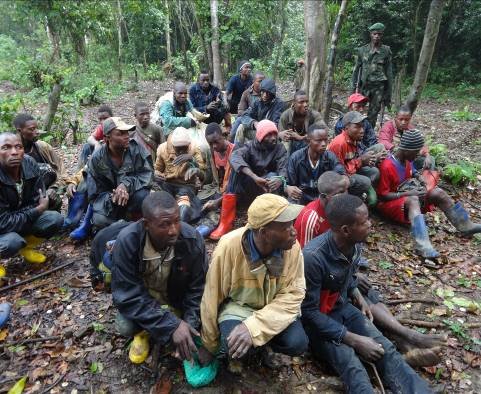
A three-month amnesty period was announced in August of 2014 during which the miners were free to take their tools and leave the Reserve, more than 5,000 miners moved out of mining camps as a result of public awareness campaigns through public meetings and radio programs. After the conclusion of the amnesty period a joint force led by ICCN guards supported by Congolese troops swept the Reserve and closed the mines and escorted the miners out of the Reserve. People were allowed to take their personal possessions and were told if they returned they would be arrested. After 10,000 miners were peacefully evacuated most of the miners left the smaller mines as they realized that the government was serious about shutting down the mines.
A well-organized follow up phase was necessary to keep the mines closed and to demonstrate to the general population that mining in the Okapi Wildlife Reserve would not be tolerated in the future. Only by keeping the mines closed would the wildlife be able to return to the areas around the mines and allow the vegetation to regenerate. Not having to concentrate most of their resources on closing one mine after another frees up ICCN guards to focus on controlling poaching in the north of the Reserve. Fortunately an OCP donor stepped forward to fund targeted patrols to keep the mines closed.
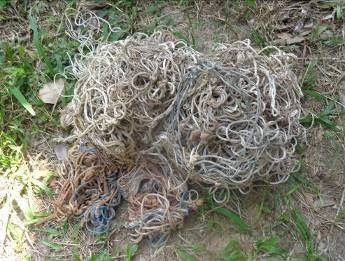
During the last three months, ICCN and the National Army have mounted 41 patrols that covered 1,760 km and resulted in 129 people being arrested, four of which were poachers. It is very encouraging that only 125 miners of the 10,000 that were evacuated returned to the closed mines. The guards and soldiers also confiscated mining tools, five guns, three motorcycles, five generators, seven elephant tusks and 68 snares were collected. A second period of inspection of the closed mines is planned for early June. We would like to assure all local, Provincial, National and International partners that the evacuation of illegal miners from mining camps inside OWR was carried out peacefully and with strict respect of the Human Rights of all involved.
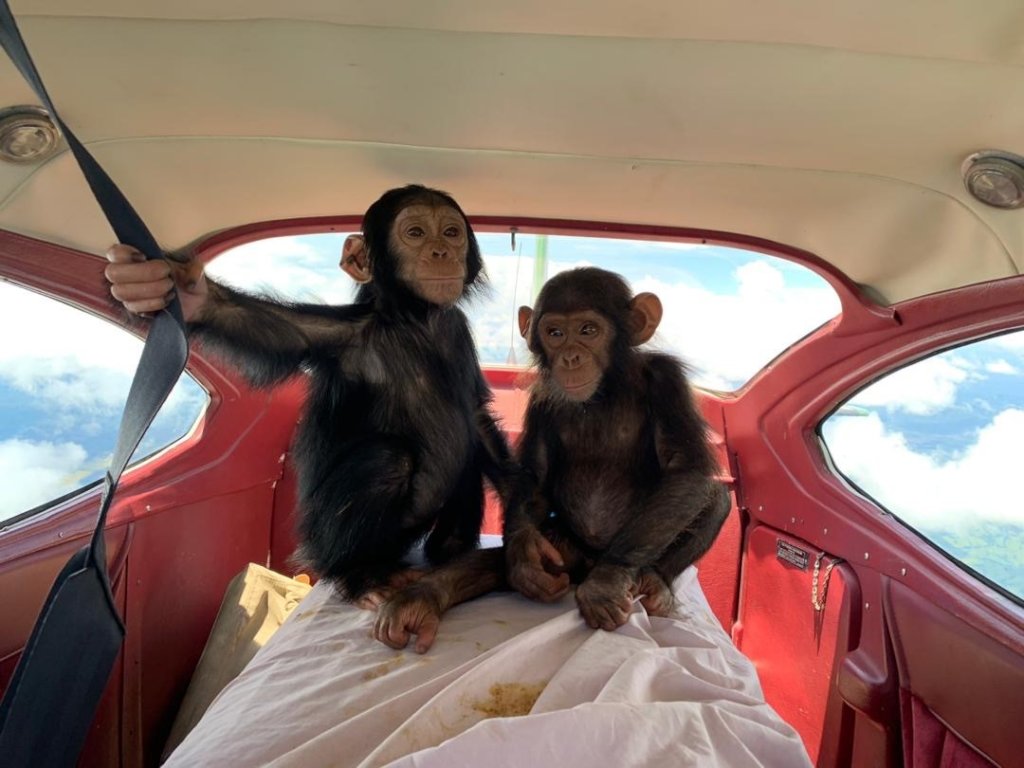
It is now possible for conservation activities to be extended, aiming at protecting the entire ecosystem and the elimination of elephant poaching, mining and logging. Key species including okapi, forest elephant and chimpanzees, which were under constant threat during the last three years, can now be consistently protected alongside other wildlife living in and around the Okapi Wildlife Reserve. A significant benefit of closing the mines has been a reduction in the demand for bush meat. With 20,000 less people to feed that don’t have the means or need to grow food has reduced the number of snares that threatened so many species living in the forest including okapi.
It has taken a large amount of resources and a courageous effort by the ICCN guards and Congolese soldiers to reduce the threats to wildlife in the Okapi Wildlife Reserve. Make no mistake about it – it has been hard – guards and soldiers have died, many people suffered and some lost their homes. The Okapi Conservation Project is financially supporting ICCN efforts to keep the mines closed and drive out poachers from the Reserve. This requires an unremitting presence by the guards, making frequent patrols deep into the forest. Your support of OCP makes it possible to keep up the effort to protect the most important stronghold for okapi, forest elephant and chimpanzee conservation in all of DR Congo, the hard way, every day.
Project reports on GlobalGiving are posted directly to globalgiving.org by Project Leaders as they are completed, generally every 3-4 months. To protect the integrity of these documents, GlobalGiving does not alter them; therefore you may find some language or formatting issues.
If you donate to this project or have donated to this project, you can receive an email when this project posts a report. You can also subscribe for reports without donating.