By Ben Blevins | Engaged Learning Coordinator
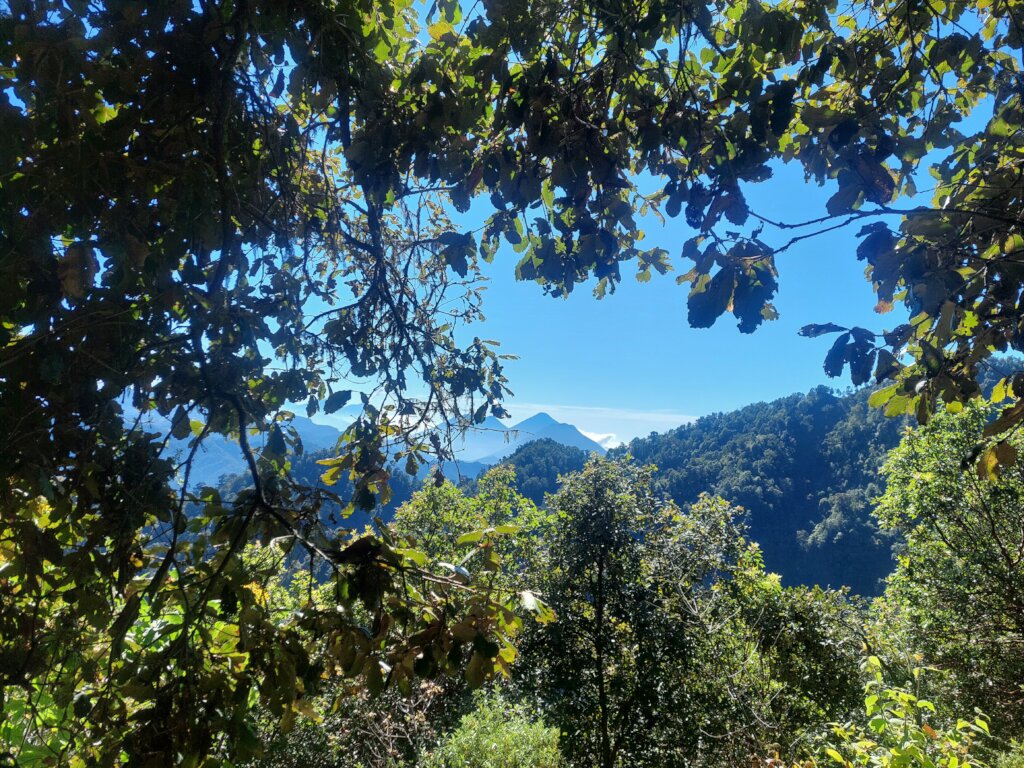
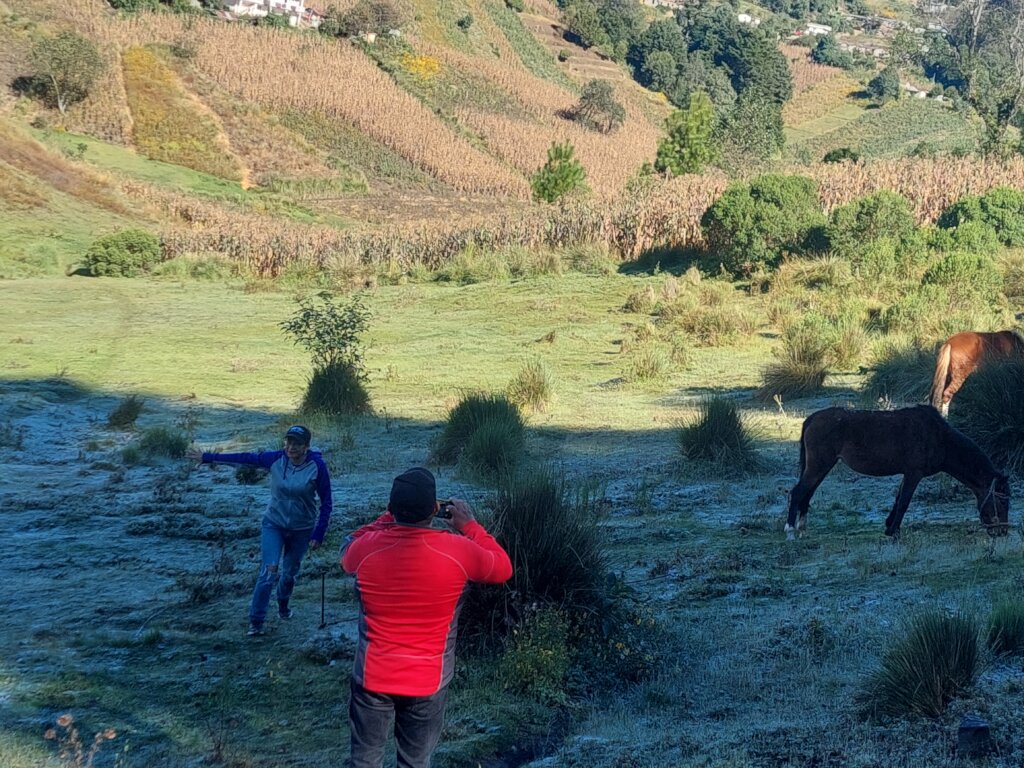
High in the misty highlands of Guatemala, where clouds settle among the branches and moisture beads on every needle, the Pino Blanco (Pinus ayacahuite) once stood as a quiet giant. Known in English as the Mexican white pine, this tall, graceful conifer helped shape the character of the cloud forest for generations. Today, it survives in scattered stands, a shadow of its former abundance. Its story is one of loss, but it is also becoming a story of hope—one written by the hands of a community determined to bring it back.
A Century of Loss: Clear-Cutting and Corporate Extraction
Throughout the 20th century, the Pino Blanco faced relentless pressure. Its soft, fine-grained wood made it one of the most prized softwoods in the region. But in the Sololá region—where Chuicutama is located—the most devastating blow came not from gradual local harvesting, but from large-scale commercial clear-cutting. According to local informants, Japanese corporate interests financed the systematic removal of the highland forests during the 1950s, felling vast stands of Pino Blanco and other native species to supply international timber markets. What had taken centuries to grow was gone within a generation.
Timber extraction was only part of the story. As highland communities grew, more land was cleared for farming and grazing. Forests gave way to fields. Slopes that had held ancient pines were opened to the sun and the plow. Over the decades, this steady clearing compounded the damage left by commercial logging, pushing the Pino Blanco further to the margins. What had once been a defining tree of the highlands became a rare sight, remembered fondly by elders but seldom seen by the young.
The Limits of What Came After: Reforestation Without Restoration
In the decades that followed, efforts were made to replant trees on the denuded slopes of the Guatemalan highlands. Yet these early reforestation programs—well-intentioned as they were—carried a fundamental misunderstanding about what forests actually are.
Government and development-funded planting initiatives prioritized fast-growing, commercially valuable species such as Pinus radiata and Eucalyptus, selected for their economic yield rather than their ecological role. Hillsides were replanted in orderly, single-species stands that looked, from a distance, like forests but functioned nothing like them. There were no shrubs to shelter birds or insects, no herbs to stabilize the forest floor, no layered canopy to capture the clouds, no deep root networks to hold the watershed. These monocultures treated trees as crops. They did not treat the forest as a living system.
The error embedded in this approach was a failure to recognize a basic ecological truth: not all trees are the same in an ecosystem. A plantation of exotic pines cannot replace the intricate, interdependent community of a cloud forest any more than a cornfield can replace a prairie. The species composition of a forest—the mix of trees, shrubs, herbs, fungi, mosses, and the countless organisms that depend on them—is not incidental. It is the forest itself. Strip that complexity away and what remains may be green, but it is not alive in the same way.
Reforestation vs. Cloud Forest Restoration: Why the Distinction Matters
This distinction is not merely academic. It shapes every decision made in the field.
Reforestation, in the conventional sense, means planting trees on land that has lost them. It is often measured in hectares covered and seedlings planted. It can be driven by carbon credit markets, timber production, or watershed protection goals. At its most limited, it replaces one biological layer—the tree canopy—while leaving the rest of the ecosystem absent.
Cloud forest restoration is something fundamentally different. It aims to rebuild the full ecological complexity of a cloud forest: the trees, yes, but also the dense understory of native shrubs, the ground layer of ferns and herbs, the epiphytes clinging to bark, the fungi threading through the soil, and the slow accumulation of organic matter that makes the whole system function. A restored cloud forest is not planted so much as it is guided back—an act of ecological scaffolding that supports the forest in reclaiming its own logic.
This distinction matters especially in cloud forests because these ecosystems are among the most biologically rich and hydrologically vital on Earth. They are not interchangeable with drier montane forests or commercial timber zones. Their ability to capture atmospheric moisture, recharge aquifers, regulate temperature, and support endemic species depends on the presence of many dozens of interacting species—not a handful of commercially selected ones.
An ecologically focused cloud forest restoration project, therefore, deliberately promotes a high diversity of native shrubs and herbs alongside the trees. These plants are not secondary or ornamental. They are structural and functional pillars of the ecosystem. They provide habitat for pollinators and birds, protect the soil from erosion, fix nutrients, regulate moisture, and create the microenvironments in which tree seedlings can take hold. A project that neglects this layer in favor of planting trees alone—particularly for economic return—is not restoring a cloud forest. It is, at best, creating a shade garden.
A Keystone of the Cloud Forest
The Pino Blanco, understood within this full ecological frame, was always far more than a timber species. Its loss weakened an entire living system.
Its deep, spreading roots anchored the steep highland soils, holding the ground in place against heavy rains and preventing landslides. Its presence protected the watersheds that feed springs, streams, and the communities downstream. The trees captured moisture from the passing clouds, releasing it slowly into the soil and sustaining the gentle, life-giving cycle that gives the cloud forest its name.
The Pino Blanco also stored carbon in its tall trunk and reaching branches, helping to regulate the climate at a local and global scale. Its canopy sheltered countless birds, insects, and smaller plants, supporting the rich biodiversity that thrives in these mountains. As a keystone species, it created the conditions in which many other living things could flourish. When it disappeared, the whole forest felt its absence.
Roots in Culture and Community
For the highland Maya communities of Sololá, the Pino Blanco is woven into daily life and memory. Its wood built homes, crafted furniture, and shaped tools passed from one generation to the next. Its presence marked the landscape and anchored a sense of place. To speak of the Pino Blanco is to speak of home.
The tree carried real economic value, too. As a sought-after softwood, it offered families a source of income and materials. Yet this same value drove its decline. The challenge now is to honor the tree's worth in a way that sustains it rather than exhausts it—to see it not as a resource to be spent, but as a living relative to be cared for and renewed.
The Challenge of the Seed
Bringing the Pino Blanco back begins with a single, humble step: finding seeds. This has proven to be one of the greatest obstacles for our cloud forest restoration work.
Because so many mature trees were cut down during the commercial clear-cutting era, few remain to produce cones and seeds. The old giants that once dropped seeds across the forest floor are largely gone. Without healthy, seed-bearing trees, gathering enough viable seed to grow new seedlings is slow and difficult work. Every cone becomes precious. Every seed carries the future of the forest within it.
A Community-Led Path Forward
Where the challenge is great, so is the resolve of the people meeting it. Our work is built on partnership, patience, and the belief that communities can heal the land they love.
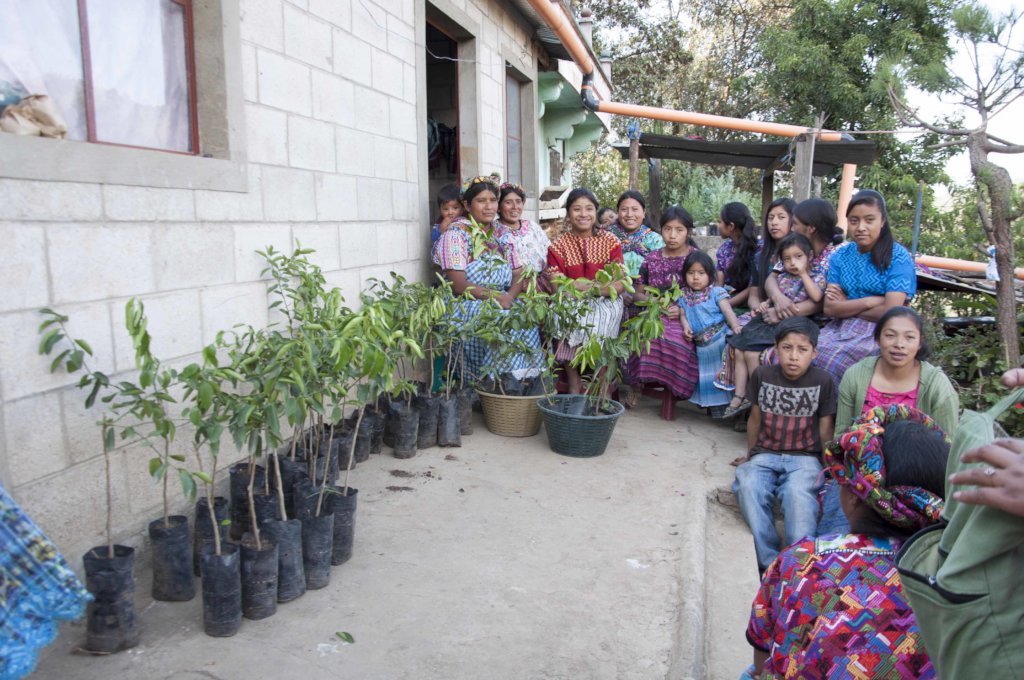
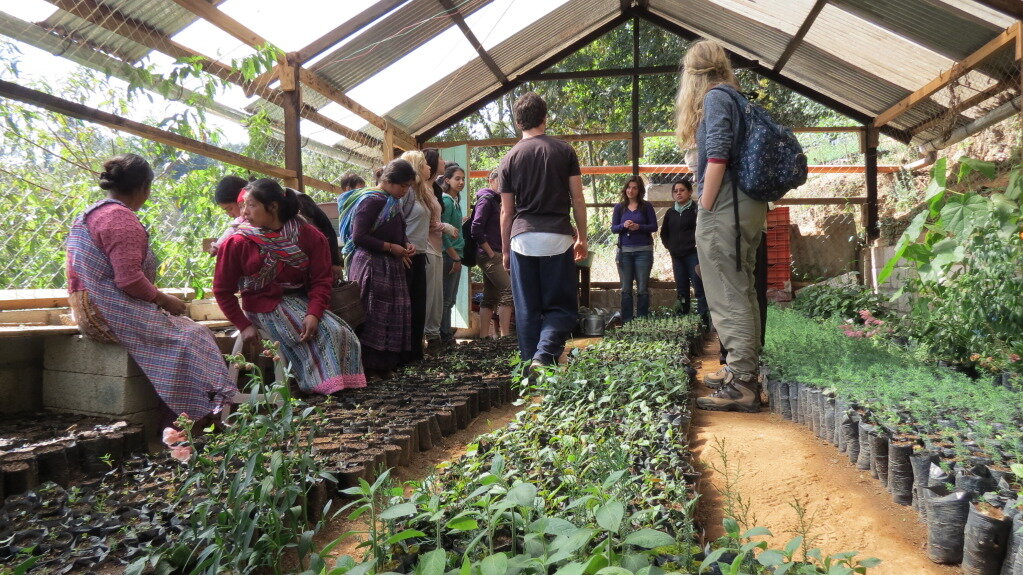
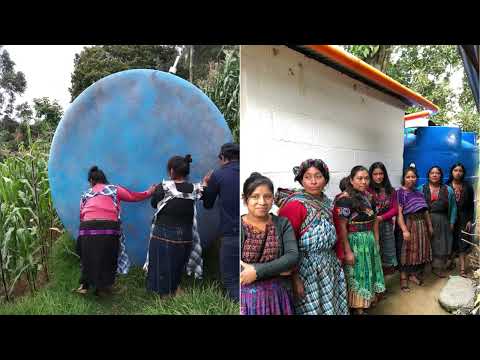
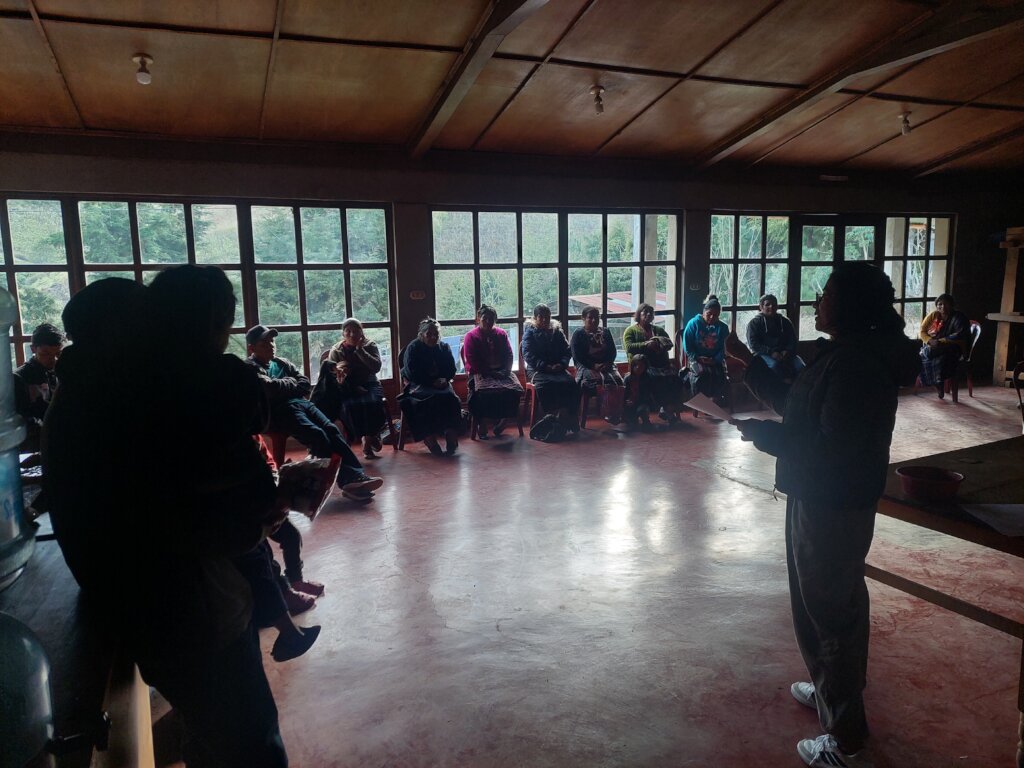
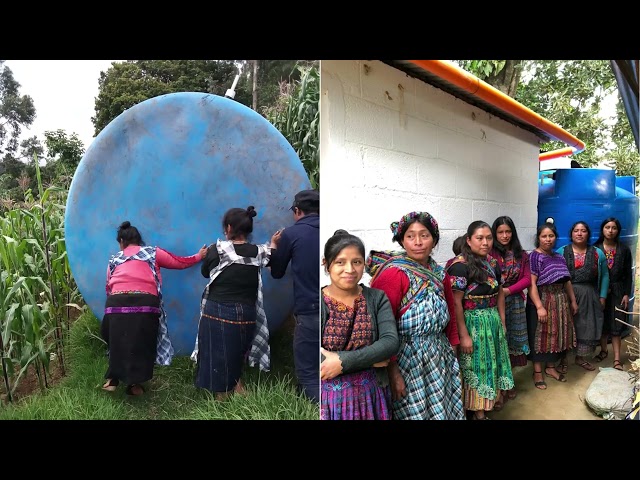
At the heart of this effort is a growing collaboration between the tree nursery in Espumpuja – Las Campanas and the women's group participating in the Chuicutama cloud forest restoration project. The nursery brings technical knowledge—the skills of seed collection, propagation, and careful nurturing of young seedlings. The women's group brings dedication, local knowledge, and a deep connection to the land.
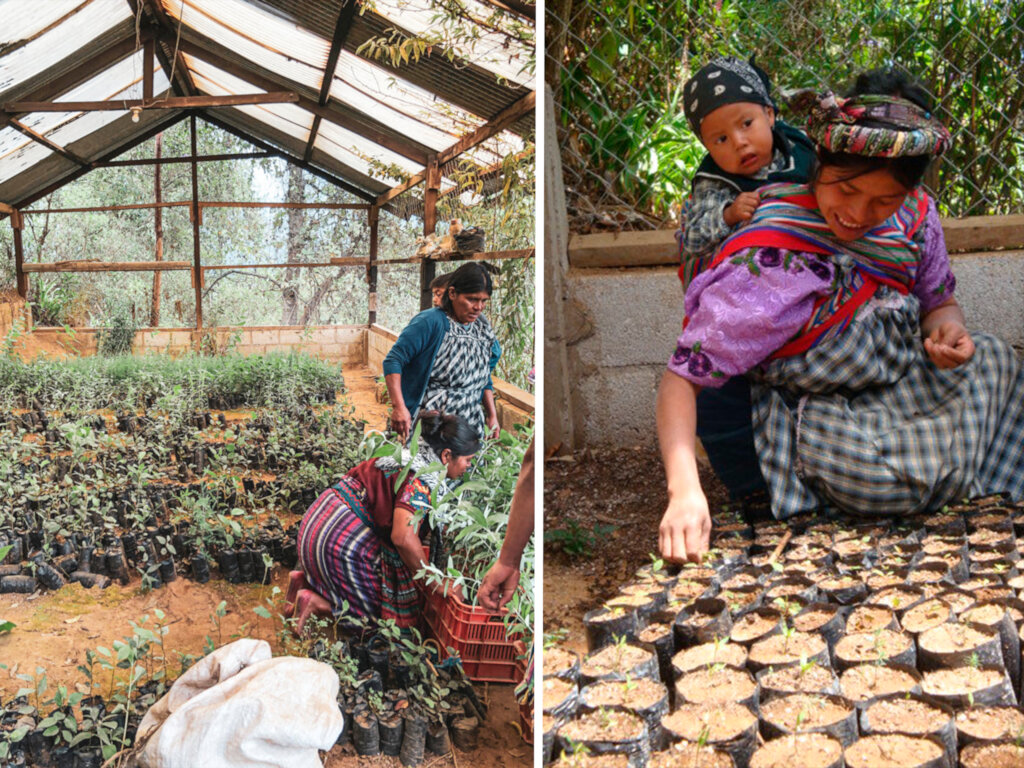
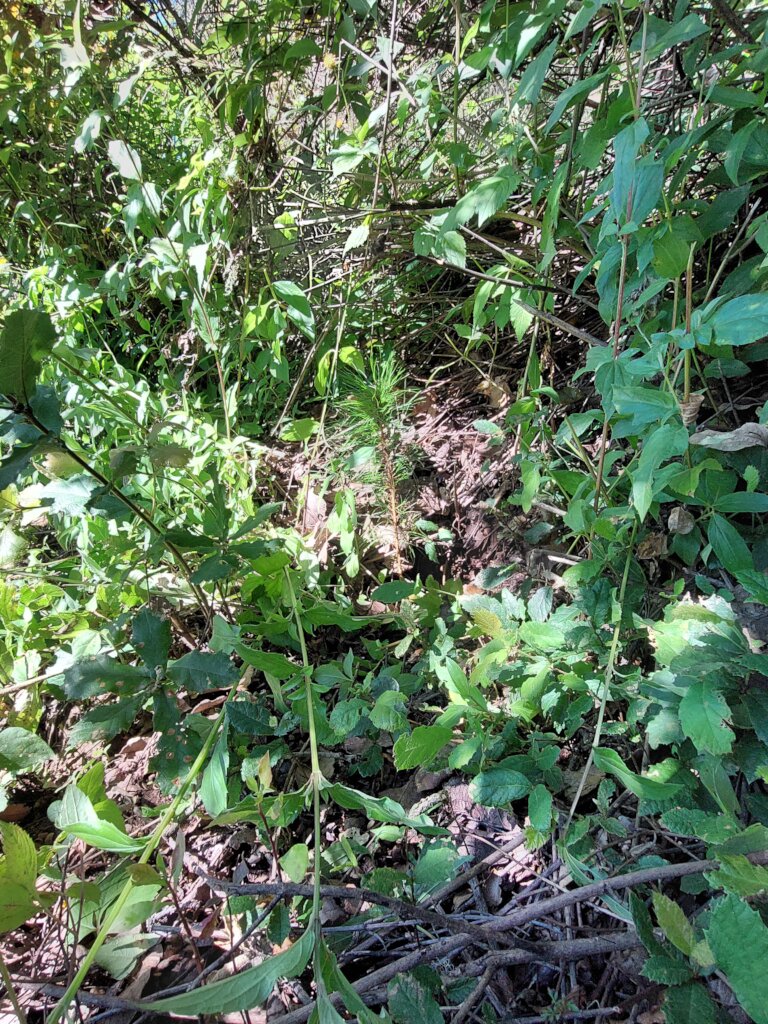
Together, they are learning to propagate Pino Blanco seeds and raise strong seedlings ready to be planted as part of a broader effort to rebuild the layered complexity of the cloud forest. This is not simply a planting project. It is part of a larger ecological vision that includes native shrubs, flowering herbs, ground-cover plants, and the full suite of species that together constitute a living, functioning cloud forest community.
The nursery shares its guidance step by step, from gathering the few available seeds to tending the delicate sprouts until they are ready for the forest. The women lead the daily work of care, becoming stewards of a species that once seemed beyond saving—and of the ecosystem it represents.
This work is women-centered and community-led by design. It places knowledge, responsibility, and hope directly in the hands of those who live closest to the forest. As the seedlings grow, so does something greater: a renewed relationship between people and place, and a locally rooted source of trees to supply cloud forest restoration efforts throughout the highlands.
A Forest Reborn
The return of the Pino Blanco will not happen overnight. Forests grow in the patient rhythm of seasons and years. Yet every seed collected, every seedling raised, and every native shrub and herb planted alongside it is a promise kept to the cloud forest and to the generations to come.
In Espumpuja and Chuicutama, that promise is taking root. The women tending these young pines are doing far more than growing trees. They are rebuilding watersheds, restoring habitat, honoring their culture, and reweaving the ecological web of life that binds a community to its land. In their hands, the story of the Pino Blanco is changing—from one of extraction and loss to one of renewal, complexity, and shared hope for a thriving highland cloud forest.
Project reports on GlobalGiving are posted directly to globalgiving.org by Project Leaders as they are completed, generally every 3-4 months. To protect the integrity of these documents, GlobalGiving does not alter them; therefore you may find some language or formatting issues.
If you donate to this project or have donated to this project, you can receive an email when this project posts a report. You can also subscribe for reports without donating.



Support this important cause by creating a personalized fundraising page.
Start a Fundraiser