By Deepak Balan | Project Leader
1. Project Summary
The COVID-19 second wave has directly impacted several vulnerable, and marginalized communities in India. Most of the rural population have no access to better health quality services, and they prefer to stay in their villages to recover. The proposed project will provide emergency support like protection kits/home isolation support/covid protection awareness/supplementary nutrition/youth engagement in 5 states of rural India and will reach out to more than 50000 families.
2. What is the issue, problem, or change?
The risk of COVID-19 spreading in rural India is heightened. Daily infections are shooting up and this is due to several factors, including lack of awareness, a limited supply of clean water, low levels of nutrition, and most importantly poor medical infrastructure, poorly equipped front Line Workers (FLWs) and lack of preparedness are severely compromising the fight against Covid in rural and small-town India.
3. Explain how the project has reached expected outcomes or goals with the funds raised.
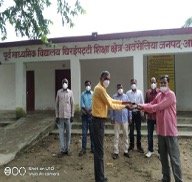
The main objective of the project was to provide emergency support like protection kits, home isolation support, Covid protection awareness, supplementary nutrition and youth engagement in 5 states of rural India and reaching out to more than 50000 families. CHSJ has procured kits after proper inquiries from various sources. Total 800 kits were distributed in 5 states, mostly under-resourced and geographically difficult areas. Each kit included 1 Thermometer, 1 Oximeter, 10 pairs of gloves and 10 pairs of N-95 masks. Kits were distributed in villages identified with local leadership and in presence of local gram panchayat, frontline workers and local health officials. The event of handing over the kit to the locally identified key person was used to generate awareness on Covid 19 and preventive measures for the same and to increase their understanding of why it is still necessary to use face masks and physical distancing. Mock sessions were organized for proper use of oximeter, thermometer and masks. Issues of vaccine hesitation were discussed and the right information was shared with the community. It was interesting to see that they themselves created an opportunity for the community and FLWs to reflect upon the problems they faced in the lack of such a crucial resource at the community level during the second wave of the Covid 19 pandemic.
In Madhya Pradesh (MP), FLWs shared that ANMs were not provided Oximeters from their department it and it made hard for them to assess the oxygen level of the patients. They were asked to do a community-level survey to identify the Covid hit cases but without having the oximeter it was difficult for them, so cases were identified based on symptoms like the problems in breathing.
One senior health official said, “Although there were orders from the above to give oximeters to the ANM there were no budget allocations to buy oximeters!!”
On condition of anonymity Some of the FLWs told that while doing the survey, they were instructed by the district administrators to mention the oxygen level below 95!” FLWs told that the Covid survey was done without having an oximeter and without having a Covid testing facility! Many lives were lost to Covid in a lack of testing facilities and basic testing equipment such as an oximeter.
Himachal Pradesh (HP) where e situation was comparatively better than MP, it was observed that ANMs and ASHAs were given Covid testing kits including Oximeter by their respective department. The main challenge here is small villages that are spread over difficult geographical terrain. So for them to have a kit in the village was seen to be very useful in timely identification of the serious symptoms caused due to Covid 19. They said that it will be useful for the whole village, especially to the marginalized communities.
4. Potential COVID ppriorimpact
At the Community level, it was evident that the THC community-appreciated CHSJ’s contribution as the kit and they were hopeful that it is a useful resource and it will help them in fighting against Covid 19.
Under Govt. of India’s flagship program known as AYUSHMAN Bharat Health and Wellness Centres are opened at villages level to provide comprehensive primary health care which is universal and free to its users. In these centres, there is an arrangement for Community Health Officer (CHO) and ANM.
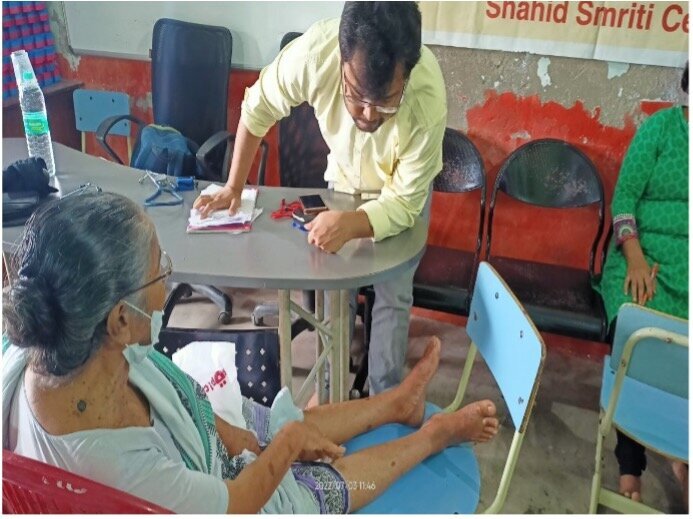
Health and Wellness centres were started but are not properly equipped. Kits were received very positively in these centres. CHO said that now with the help of the kit they would be able to do a proper check-up and will be able to provide timely help based on early detection of the problem. FLWs said that now they are feeling confident in going to the field, besides gloves beside it is useful to protect themselves. One FLW said, “At least someone thinking someone's otherwise who cares for our lives!” In one of the intervention areas, “our gram panchayat is quite big and scattered over a larger area in the hilly terrain. It is difficult for people to go to the nearest health facility. In this situation, we are thankful to CHSJ for providing this kit as it will help us in timely detecting the problem hence lead to timely action.”
Case Study
Medical kits have been provided to ASHA, Anganwadi, women's group, Samanta SaathSaathi'sschool teachers in one of the intervention districts At the village level, ASHA workers go door-to-door to pregnant and lactating women in the community to inquire about their health and measure their body temperature with a thermometer and find out the oxygen level in the body. Similarly, the Anganwadi worker is advising the women to see the doctor based on the situation by detecting the fever and oxygen level of the women coming to the center. They say entrée to the availability of medical kits, now we are able to help the needy people in a safe way by putting on gloves and masks at any time. All these women have increased their faith in our work and they are taking the initiative themselves. The leader of Samanta Saathi’s group said that now due to the safety kit we have, we can find out the body temperature and oxygen level of the men in the group and if any people have a problem, they go to the doctor immediately. Many people of the village had neither seen nor known about its importance before this, but today they are using these themselves, these safety kits are helping the people of the village to protect against corona and now they can take the help of a doctor immediately. Dutta said that when the women group members were informed about the use of these devices and she started using them herself, her confidence also increased, now the women in the group say that we will check other women too and if any problem looks on them she will ask to see the doctor. Similarly, school teachers, with the help of safety kits, check the possible fever measurement of children in their own school and children have been taught about how to use the thermometer setd oximeter. Today school children are very happy that they are able to use them. Dutta said that we are very thankful to the Centre for Health and Social Justice Organisation very much for providing safety kits to our groups.
Case Study
An Anganwadi worker of village who was supported throuhg this campaign has been provided with the Covid safety kit from the Center for Health and Social Justice Organization. After getting the kit, if the women of the village face any kind of problem, then after checking the oxygen level and body temperature, they give proper advice to go to the doctor, which saves the unnecessary expenditure of the people. Earlier, when people go to a private hospital for this, 400 hundred rupees are spent on tests and medicines and such tests were not even done in the village. Now people get tested by Anganwadi workers and if the temperature is high then they go to a government hospital for treatment during the day. Due to the presence of an oximeter and thermometer in the village Anganwadi Center, the stress of the people is reduced and it also checks on time. Reema Devi is pleased that now she is able to help at the village level women’s and other needy people.
Project reports on GlobalGiving are posted directly to globalgiving.org by Project Leaders as they are completed, generally every 3-4 months. To protect the integrity of these documents, GlobalGiving does not alter them; therefore you may find some language or formatting issues.
If you donate to this project or have donated to this project, you can receive an email when this project posts a report. You can also subscribe for reports without donating.