By Aloyo Innocent Jessie | Project Leader
Project Area.
KITGUM DISTRICT - UGANDA
Report Period: November 2017 - January 2018
Background
The River Fund HIV/AIDs Family Support Association is a Community Based Organization (CBO) founded in 2007 by committed and motivated women to contribute towards improving the quality of life of persons infected and affected by HIV/AIDS, through educating and empowering the women and girls on HIV/AIDs Long Term Survival Skills and sponsorship and mentorship of girls in schools, economic empowerment and livelihood food security enhancement for a sustainable development for self-reliance through seeds provision, training in kitchen gardening andsupport to malnourished children through provision of trainings in provision of nutritious meals, and provision of basic items like soap, sugar, cooking oil, salt.
The organisation envisions a just and caring society where people yearn to help one another and realize that every human being is connected to one another for a change in the world with values such as: sharing, Love, Non-Discrimination, Humility, Peace, Non Violence, Justice, Inclusiveness, Service, Dedication, Honesty, Transparency, and Compassion.
Objectives of the Project:
Expected Results
Outputs
Activities conducted during the year.
Meeting with care givers of NS patients.
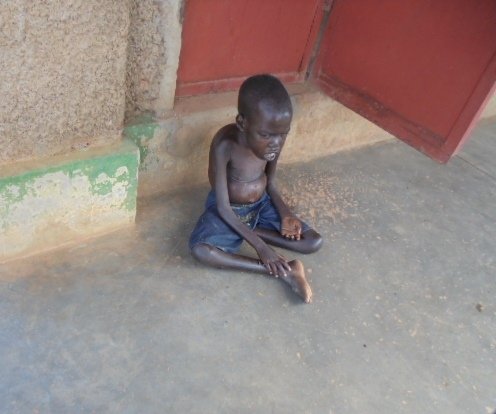
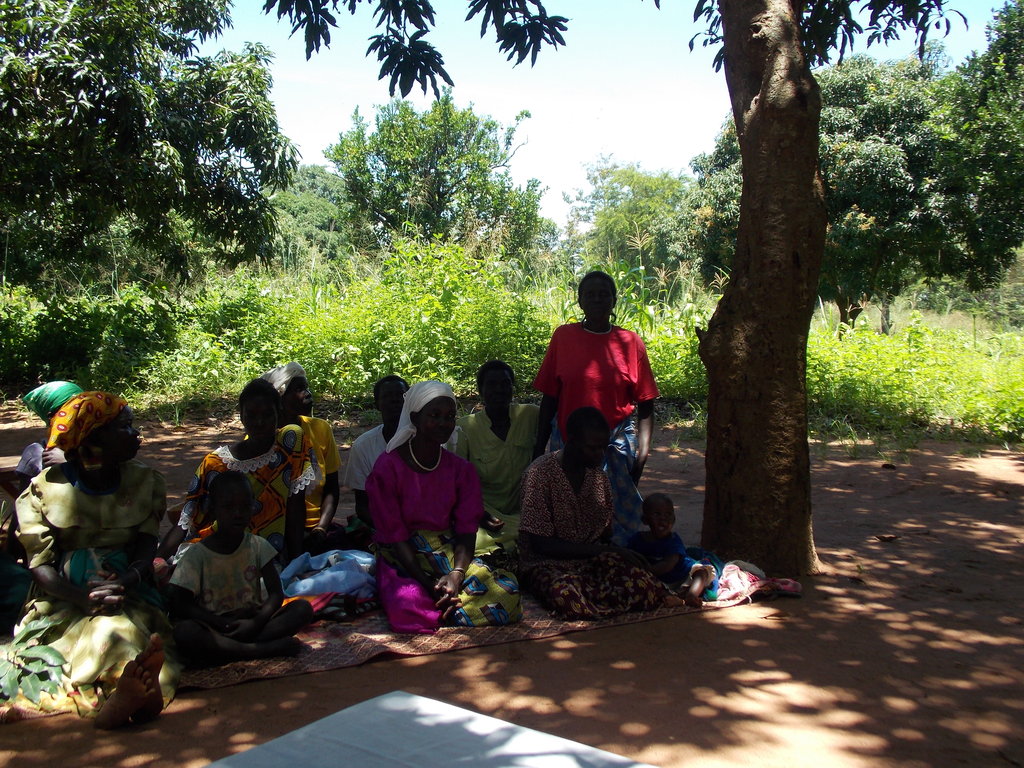
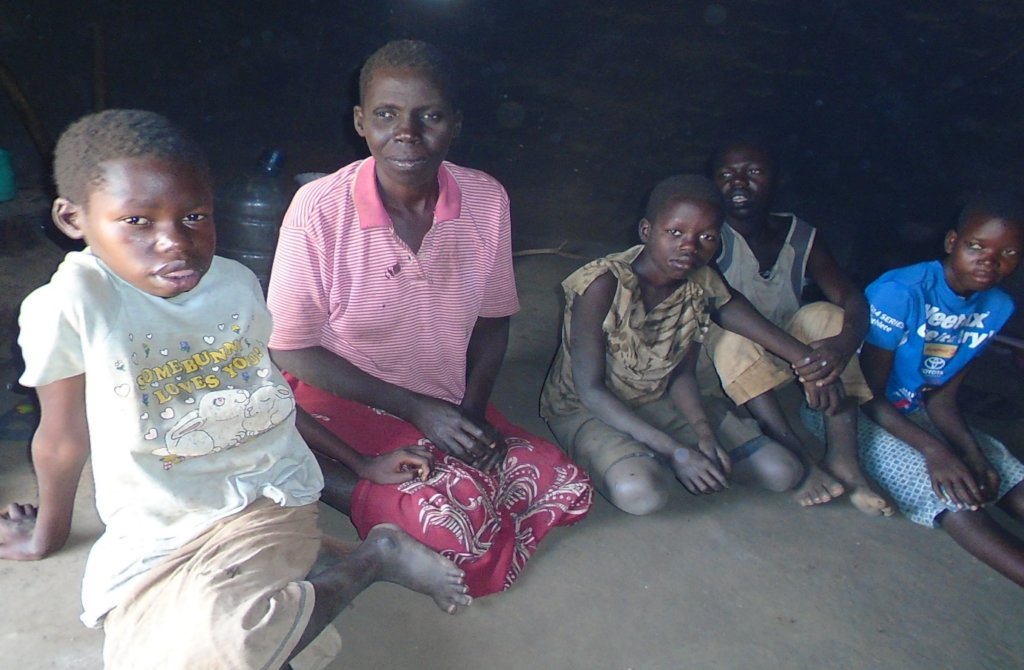
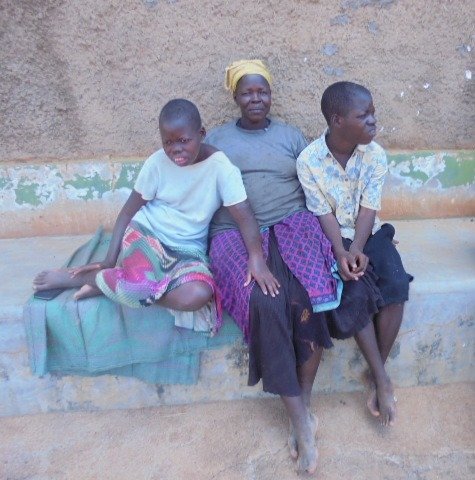
Monthly meetings were held with parents and care givers of NS patients at Okidi parish. In the meetings, the parents requested for inclusion of nonfood items like blankets, clothing to support the children during rainy season.
Concern of hygiene especially for households with more than 3 children is a major issue in that the children have to share beddings like blankets and bedsheets. This is not appropriate for children who are sick and who get attacks sometimes at night when they are asleep.
With the little source of income for the households, the parents are not able to provide for clothing for the children as required as such this makes the children to wear same cloth for more than 2 or 3 days which puts them at greater risk of other disease infection.
The parents also placed forward a request for the setting up of a center where these children can be cared for during the day while they- parents carry on with the activities of fending for food for their households. This center will also act as a learning and training center for the children in activities like weaving, tailoring- knitting table clothes and games and sporting activities like football which are meant to enhance their brains’ development.
Provision of psychosocial support activities.
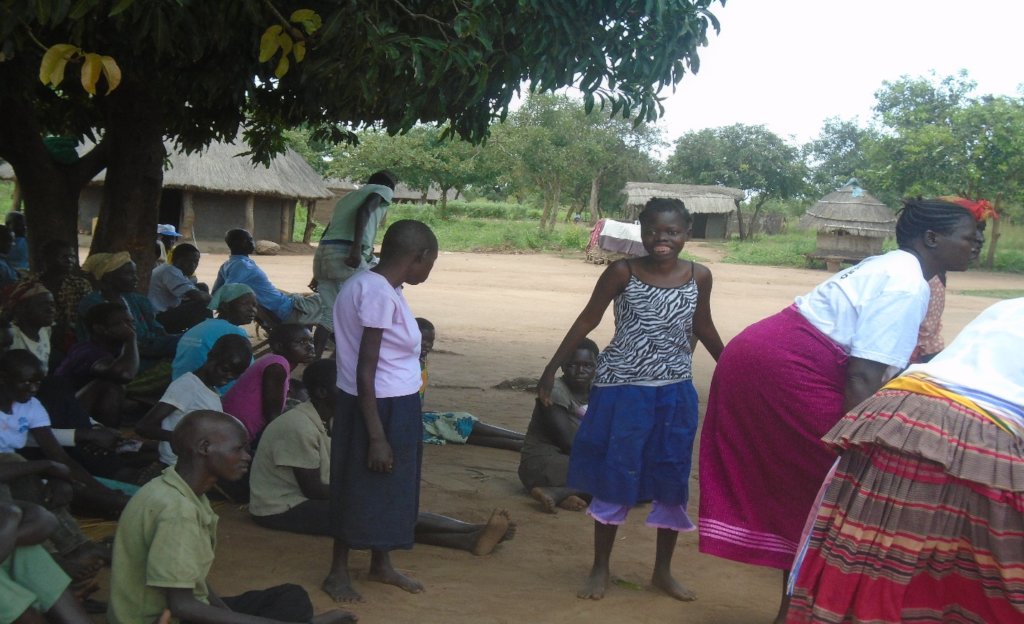
To enhance both their physical as well mental health, the children and care givers were engaged in activities such as music, and dance. These activities were conducted by both care givers and those children who are not completed weighed down by the syndrome. The care givers and children performed traditional dances such as Apiti dance, songs about the syndrome
This session provides for open sharing between the counselor and the caregivers and in turn, it opens door for a healing process for those in constant contact with the NS patients like the care givers.
Food distribution
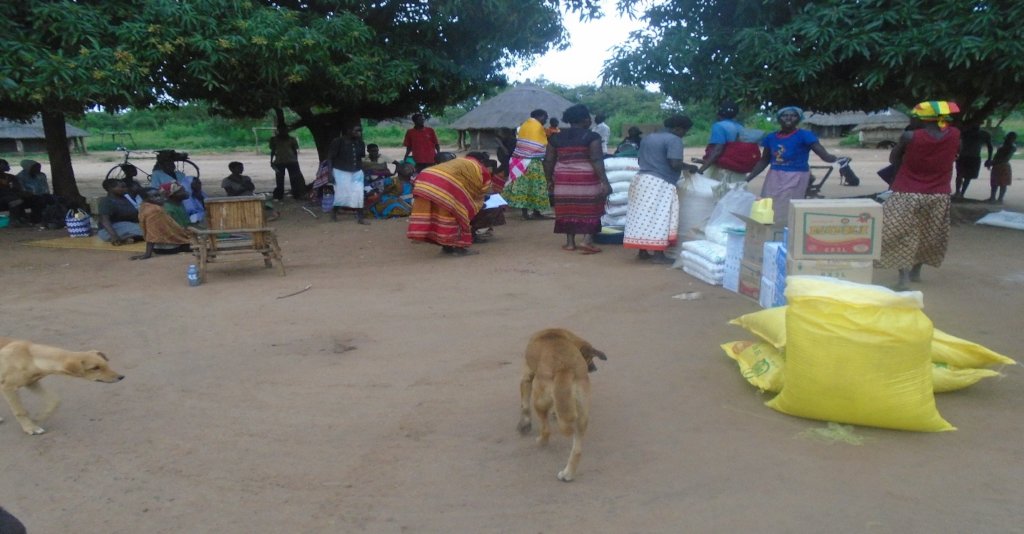
Food distribution was done for 8 months in the year 2017. A total of 35 households received Posho (25Kgs) each, beans (5 Kgs) each, Rice(5kgs), Cooking Oil (3 ltrs), Sugar(5kgs), soap(5bars), fish- lacede (1 basin) and porridge flour(4.5kgs)
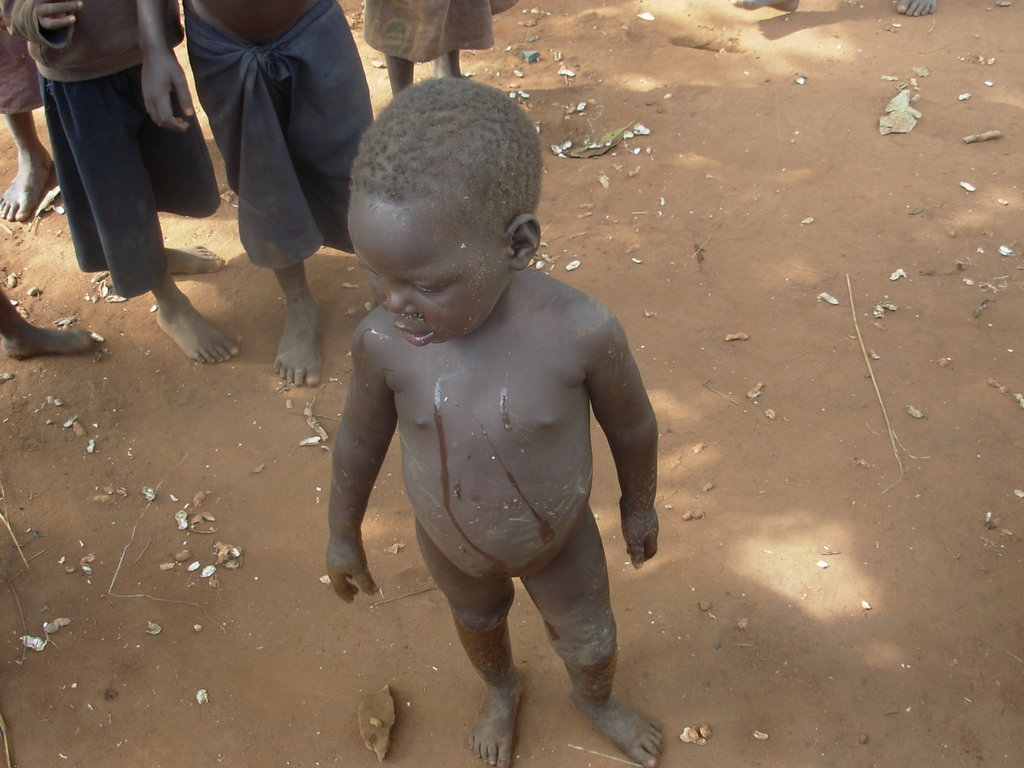
Of the 35 households, a total of 52 children (Female 25: male 27) suffering from the NS are being supported with both food and nonfood items.
Support with Sanitary towels- pads.
As a way of improving on their hygiene and sanitation, the households were given soap. Of the 52 children suffering from the syndrome a total of 25 girls were supported with packets of sanitary which were meant to take them through to the next distribution month. Each girl was given 3 packets of Sanitary pads while in the month of September, each adolescent girl received 4 packets of the pads.
Training of families of affected children on proper feeding
Training on proper feeding and cereal seeds growing shall be provided to the care givers of the selected children on the feeding pattern of the children. They will also be trained on growing of nutritious cereals such as groundnuts, soya beans, beans, sunflower and orange fleshed sweet potatoes which are known for enriching the body with their nutrients for proper growth. This will be done in their area of aboard with demonstration of how to prepare the meals and what a balanced diet entails. The training were done in the simplest way possible and with the use of local available food items to demonstrate to and encourage the care givers that to have a balanced meal you do not have to be rich.
To encourage the component of Kitchen gardening, the caregivers were supported with vegetable seeds like beans, soya beans, onions, Egg plants, tomatoes, Ntula which were meant to be planted as a group.
This same seeds were provided to the group in Lamola which has shown consistency and commitment in carrying on with their group activities despite the minimal support in terms of funds.
Successes
Challenges
Conclusions and ways forward.
There is further need for provision of food to the families of children suffering from the syndrome to improve on their nutrition which is very key to enhancing their growth and improvement.
Continues meeting and provision of psychosocial support to the families and care givers of the NS patients provides for healing and acceptance of the condition they are faced with.
Thank you Global Giving and The River Fund for your continuous support.
Project reports on GlobalGiving are posted directly to globalgiving.org by Project Leaders as they are completed, generally every 3-4 months. To protect the integrity of these documents, GlobalGiving does not alter them; therefore you may find some language or formatting issues.
If you donate to this project or have donated to this project, you can receive an email when this project posts a report. You can also subscribe for reports without donating.