By Max Riley-Gould | Trusts and Major Donor Officer
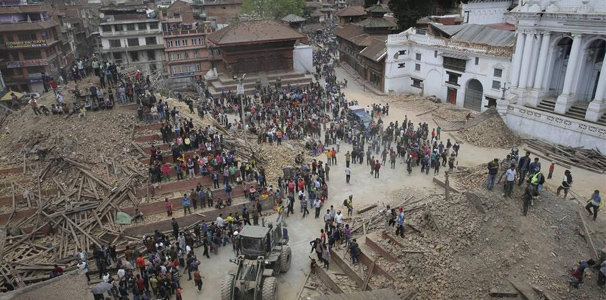
The 25th June will mark two months since the first earthquake struck the Nepalese district of Lamjung, around 110 miles west of the capital Kathmandu. Over 8,000 people have been killed in the disaster, with thousands more suffering serious injuries and seeing their homes destroyed.
Now that the initial relief-efforts have begun to subside, the reconstruction process in the country has begun and RedR staff have been working hand-in-hand with local communities, NGOs and the Nepalese government to support them as they work to rebuild their lives.
Providing essential technical support
One of the major elements of RedR’s response to the disaster has been to provide technical support to local organisations, communities and government agencies in how to rebuild key structures so that life is able to return to normal as quickly as possible.
Engineers from consultant engineering firm Ramboll, key partners in our Ready-to-Respond urban disaster programme, have travelled to Kathmandu to assist in the relief efforts, providing essential structural assessments of hospitals in the capital to identify which damaged buildings will need to be retrofitted, rebuilt or destroyed.
We are also in the process of deploying technical experts to the country to provide long-term support with the relief efforts and rebuilding coordination. These experts will be operating in the four districts of the country, primarily assisting with water, hygiene and sanitation (WASH) and shelter coordination.
In addition to the above, we are also currently establishing five technical hubs to coordinate the humanitarian response to the crisis, situated in some of the worst-affected districts: Dhading, Gorkgha, Nuwakot, Kathmandu, and Sindhupalchowk. These hubs will provide direct support to local populations, advising them on building infrastructure, how to re-establish safe water supplies, and other logistical support.
Working with communities to build back stronger
The other major element of our response is training. As a capacity-building organisation, we believe that by training local communities and organisations in how to respond to the disaster, we are providing them with long-term support that will minimise the impact of future disasters.
We are currently in the process of establishing a number of training sessions for Nepalese NGOs, local staff working for international NGOs, and representatives from government agencies. These courses will cover a range of essential topics (including shelter driver safety training, and WASH skills) that will help local people to rebuild in a safe and sustainable way.
Long-term, sustainable support
Now that the crisis has moved past the initial phase, local communities in Nepal need support to help them not only recover, but build back stronger from the earthquake. By training people and national organisations in the skills to respond to the disaster, and by preparing them for future crises, RedR is providing long-term support that will build the capacity of both the population and Nepalese civil society as a whole. As the needs of the local population change, so too will our response, and we are maintaining a constant dialogue with those affected to ensure we continue to meet their needs.
Project reports on GlobalGiving are posted directly to globalgiving.org by Project Leaders as they are completed, generally every 3-4 months. To protect the integrity of these documents, GlobalGiving does not alter them; therefore you may find some language or formatting issues.
If you donate to this project or have donated to this project, you can receive an email when this project posts a report. You can also subscribe for reports without donating.