By FR & Communications | Mumbai Mobile Creches
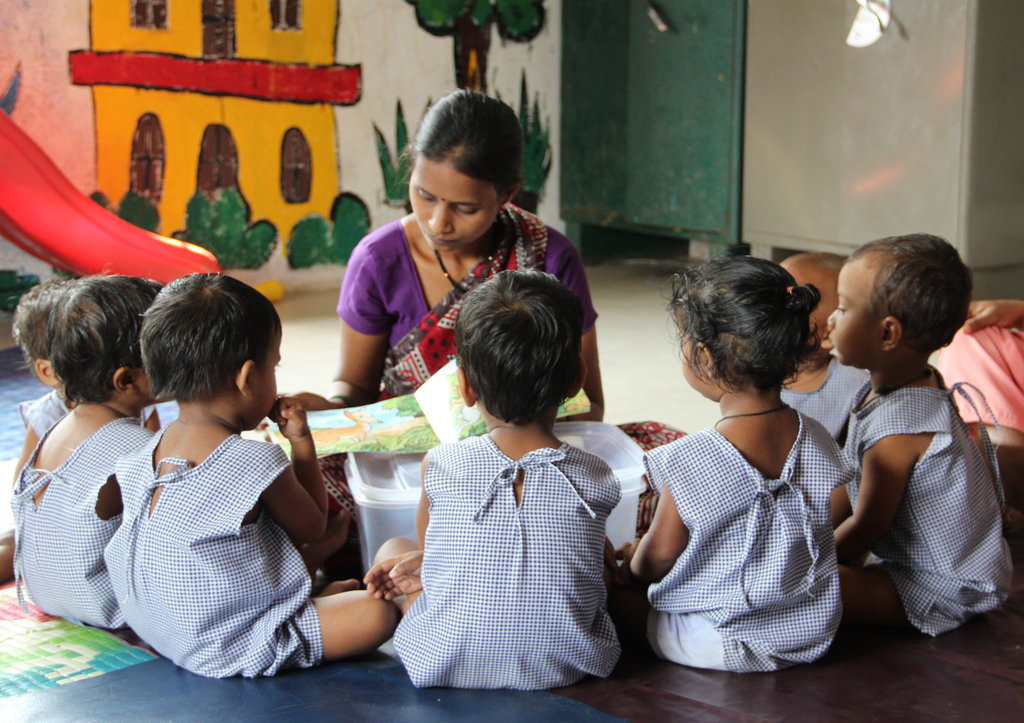
MMC works with migrant children living on construction sites, 60 percent of whom stay with us for only three months or less. The parents of these children constantly move from one place to another in search of work, easily pulling up stakes and moving overnight because they have very little personal belongings.
Once a child leaves the construction site, it is very difficult to track them. Our early childhood intervention approach would be unsustainable if we did not involve the entire community. Children do not stay at our centres forever, so we understand that their families must be better equipped to help nurture the children's development long after they leave the MMC centre.
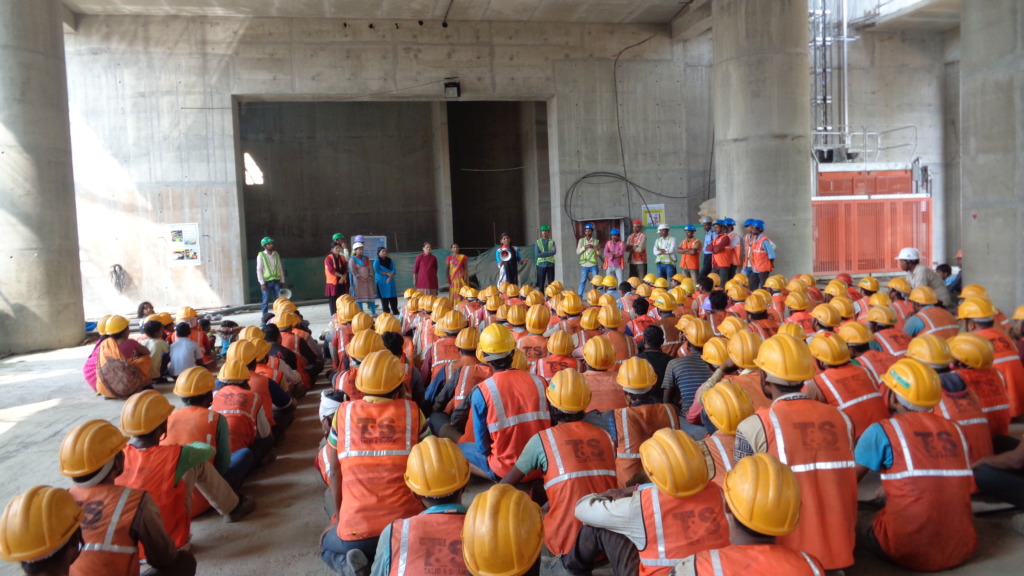
We work very closely with the community and parents by conducting different programmes to impart information on a range of social issues. Our goal is to see that all of MMC’s work ties into the larger aim of supporting the rights of children on construction sites. Additionally, we aim to promote migrant families’ rights, health, and access to government resources.
Here is a snapshot of the programmes that our teachers organise for the parents:
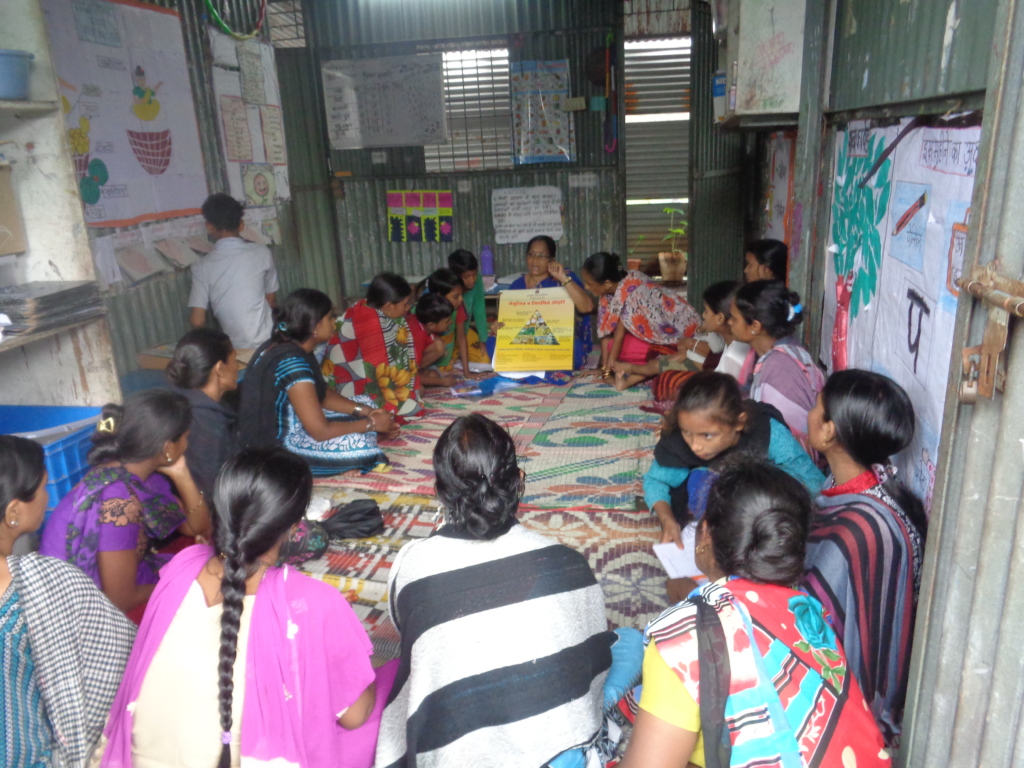
Chai Pani (tea water) meetings are one of the primary means of disseminating information, building community relationships, and communicating with migrant workers living on construction sites. These meetings take place once a month and each focus on a different topic that is relevant to the community. The meetings are informal and allow for open and honest discussions and questions to be asked. Through these meetings the teachers aim to raise awareness about important social, personal, or community issues and provide relevant information about best practices and resources to address these issues. When appropriate, teachers employ charts or visual aids to better convey their points.
A few examples of chai pani meeting topics include school admissions processes, common illnesses during monsoons, importance of breastfeeding, vaccinations, good parenting practices, malnutrition in children, and illness like nutritional anaemia, and tuberculosis.
Open Day Meetings: These are parent-teacher meetings, which give an opportunity for the teachers to discuss the progress of the child with the parents. These meetings give a platform to the teachers to converse about the details specific to each child, aiding to her/his growth and development.
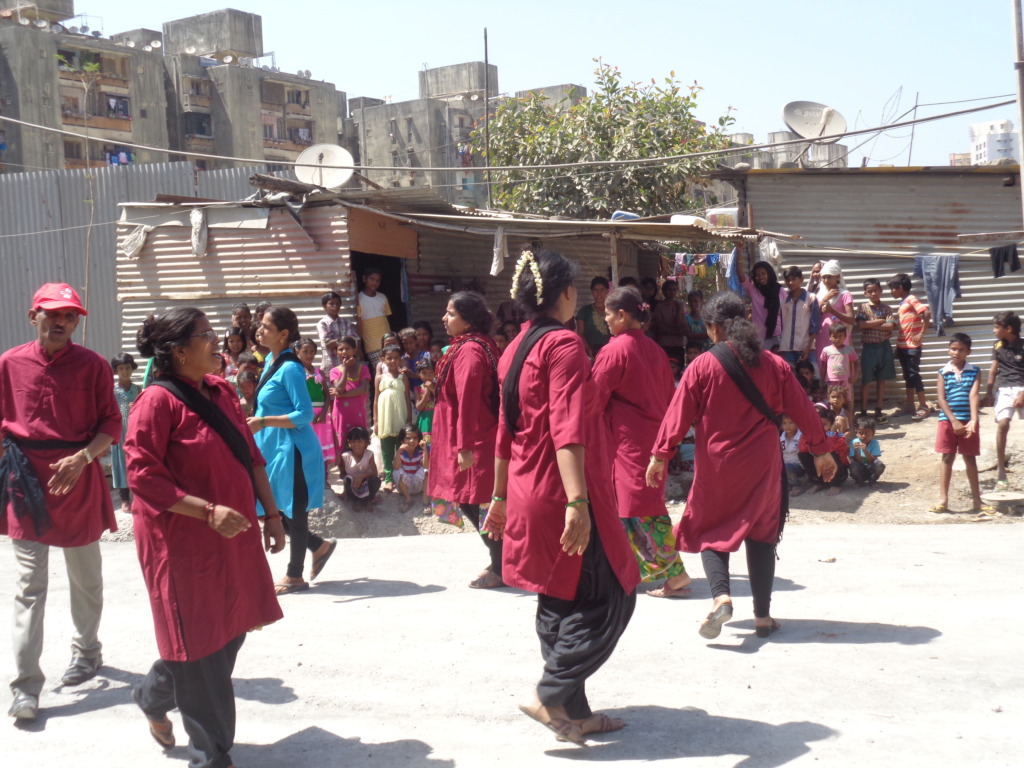
Lokdoots (street plays) are one of MMC’s innovative methods of communicating with migrant communities to provide information about important social, economic, or communal issues. Street plays are effective conduits for our community outreach work in that they circumvent the issue of illiteracy and speak to the highly oral Indian culture. Through engaging street plays, people’s attention is captured in a way that cannot be achieved through presenting written materials.
During the street plays, the MMC team may address a number of different issues. These could include the importance of best personal hygiene practices, how to open a bank account, how to access ration cards or nearby medical services, and more.
MMC sees the community as the central focus for creating awareness and sustainability of early childhood intervention. In this way, we empower members of the construction workers’ community to advocate for their own needs and to build a safer, healthier environment for their children. Through workshops, training, monthly community meetings, and street theatre we aim to ensure that every child enjoys a happy and nurturing childhood.
Funds received from GlobalGiving helped us fund salaries of teachers who conduct the abovementioned meetings and plays on the construction sites. Your contributions has helped us to run the programme in effective and sustainable manner.
Project reports on GlobalGiving are posted directly to globalgiving.org by Project Leaders as they are completed, generally every 3-4 months. To protect the integrity of these documents, GlobalGiving does not alter them; therefore you may find some language or formatting issues.
If you donate to this project or have donated to this project, you can receive an email when this project posts a report. You can also subscribe for reports without donating.