By Norah Owaraga | Project Team Leader
Heroes, survivors, victors, come in all forms and shapes.
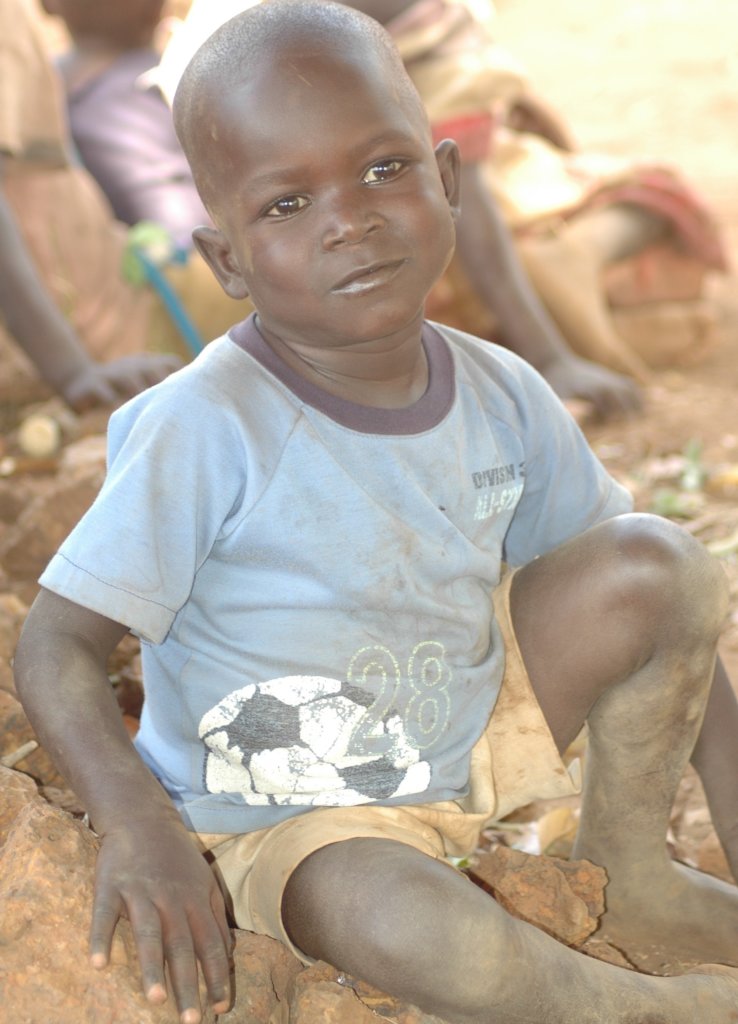
As a boy he loved football and considered himself a footballer.
He loved schooling, always sat in the front row in class and was always the last to leave the class.
If only someone had noticed him early enough, he may not have gone blind at an early age.
He had long been challenged with being short sighted. Even when he played football, he couldn’t see the ball from afar. His choice sitting in the front row in class explained.
In Primary Seven he was a pre-teen and things got worse. He was taken to hospital and the test revealed the veins connecting his eyes to his brain were blocked. Something to that effect he narrated.
Medical teams told him it was too late to operate. He was not in any physical pain he says. But he lost his eyesight and went blind.
It is intriguing that it isn’t only him in his birth family who are blind. Three others in his family - his elder brother and both his biological parents are blind. Yes, four people from the same family are blind.
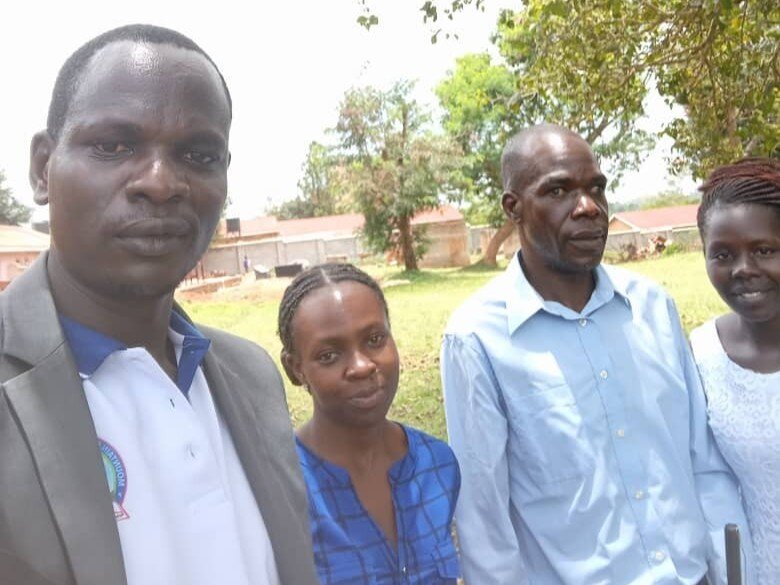
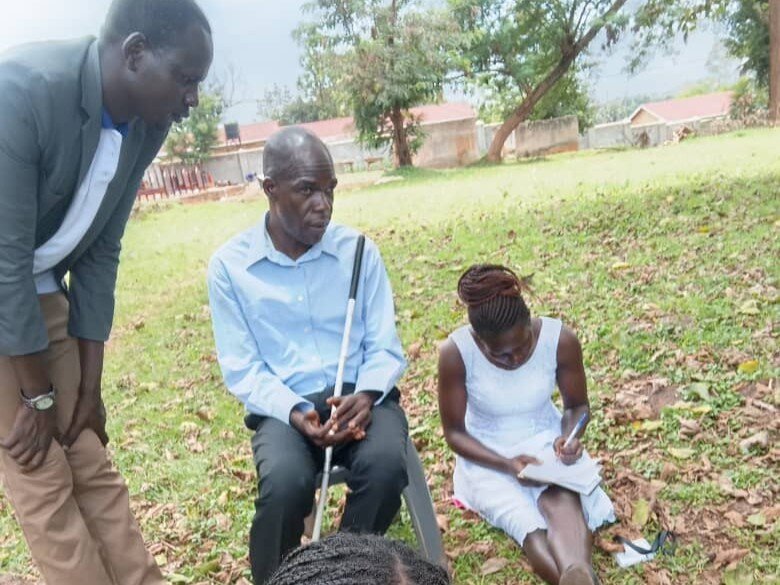
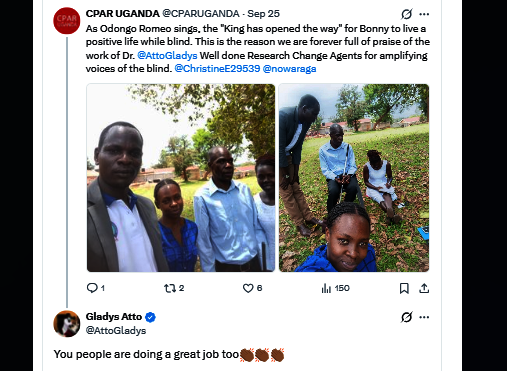
He generously shared his life journey with our Participatory Action Research Writing Masterclass Change Agents, during fieldwork, as part of their training.
“This is a touching, sad story. But disability is not inability. Wishing him success in a supportive, loving environment,” a Ugandan business leader with an over 25,000 following on X (formerly Twitter) commented in reading this gut-wrenching story.
That is our wish too. We, at CPAR Uganda, wish a “supportive, loving environment” for persons afflicted with visual impairment. It is their right, just as it is the right for all Ugandans. The lives of persons living with blindness matter.
Moreover, “according to numerous reports and ophthalmologists, most cases of permanent blindness can be avoided if detected at an early stage. How do we go about it?” Another Ugandan, an ICT Engineer, aptly reacted to the story on X, as well.
He added: “It is heartbreaking to have had sight once and end up blind due to a condition that could have been diagnosed and treated.”
On a positive note, we are inspired by his story. Blindness is a challenge, but not a complete obstacle. He continues, against all odds, to live a full life as best as he can. He is a gospel artist, a husband to a seeing wife and a father to three children with their eyesight intact.
However, sadly, the prevailing status quo in Uganda is concerning. Eyecare services are not given due attention and priority, in terms of public healthcare services provision, which are significantly lacking.
A multipronged approach is needed. One that prevents avoidable blindness, on the one hand; and one that ensures persons living with blindness get to live good quality lives.
Thank you for supporting and enabling our work contributing to restoring eyesight and worth of rural poor in Uganda.
Links:
Project reports on GlobalGiving are posted directly to globalgiving.org by Project Leaders as they are completed, generally every 3-4 months. To protect the integrity of these documents, GlobalGiving does not alter them; therefore you may find some language or formatting issues.
If you donate to this project or have donated to this project, you can receive an email when this project posts a report. You can also subscribe for reports without donating.