By William Park | Director, Acate Peru and Co-Founder
Developments in the Matses Indigenous Mapping Initiative, Healing Forest Medicinal Agroforestry
Two elder shamans and Encyclopedia authors incapacitated by snakebite in advance of inter-village meeting of the Matses chiefs and elders
Auspicious Start: Two elder shamans and Encyclopedia authors incapacitated by snakebite in advance of inter-village meeting of the Matsés chiefs and elders
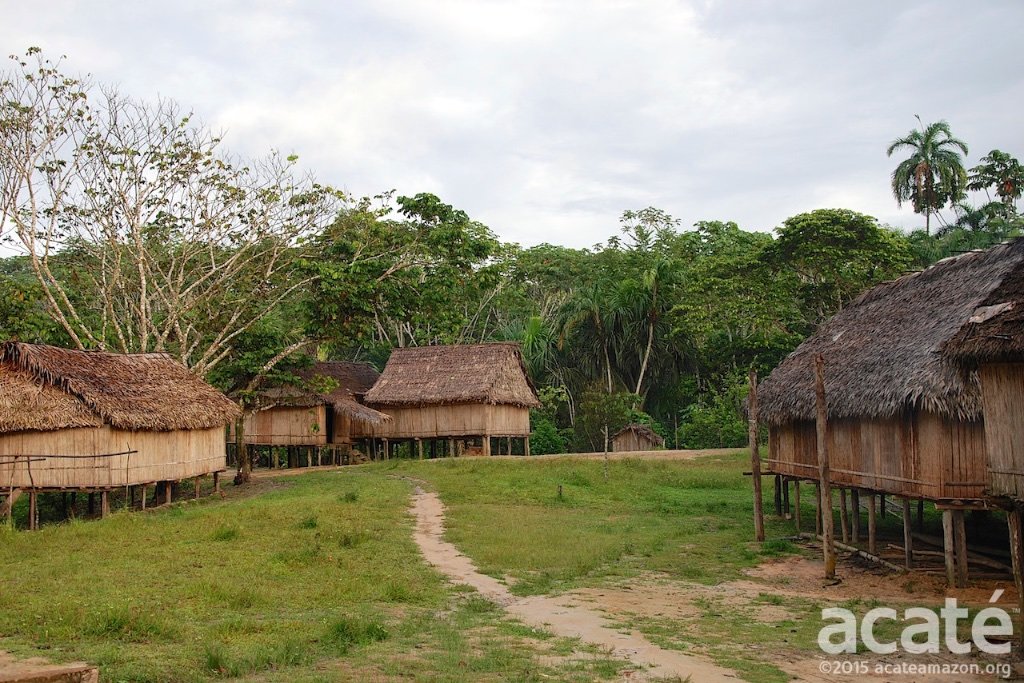
Bringing together Matses from fourteen different communities, some of whom have to travel for three days, is never easy. We confirmed that the formal invitation letters had been received by each village. We then made sure that the essential gasoline and food supplies for the conference were waiting for us in Colonia Angamos. Colonia Angamos is the remote settler community and Peruvian military outpost on the banks of the Javari river that is the gateway to Matses territory. When our Peruvian Air Force flight took off from Iquitos for Angamos on schedule, a not too common occurrence, we could not help feeling optimistic. We would have five days in Angamos to pull everything together before going on to meet everyone at the conference at Remoyacu.
Our auspicious start came to an abrupt end as we were checking to see if key participants were indeed en route to the conference and received word that one of the shamans and an author of a chapter of the , had been bitten by a bushmaster snake. The circumstances surrounding the bite would only become clear to us later. Roberto was bitten as he was hunting at a camp two hours upriver by boat from his village of Remoyacu and a further three hours walking into the forest (Matses pace). As he went off the trail to retrieve a peccary, he was struck in the upper leg by a large bushmaster. Roberto was able to walk about 10 or 15 paces before collapsing.
His Matses hunting companion returned to Remoyacu to seek assistance. For us, as the evening drew on, the situation remained murky as lines of communication through radio were marginal. His condition was serious and during the night there were conflicting reports about his status and location, even a rumor that he had passed. As we made attempts to coordinate Roberto’s evacuation by boat from Remoyacu to the medical outpost in Angamos, reports came in that had also been bitten by a snake! Arturo, the famed Matses warrior and shaman from the village of Buenas Lomas Nueva on the river Chobayacu, was bitten while out in the forest collecting medicinal plants. Arturo had been bitten by a jergon (fer-de-lance, Bothrops atrox) the same day Roberto was bitten by a bushmaster.
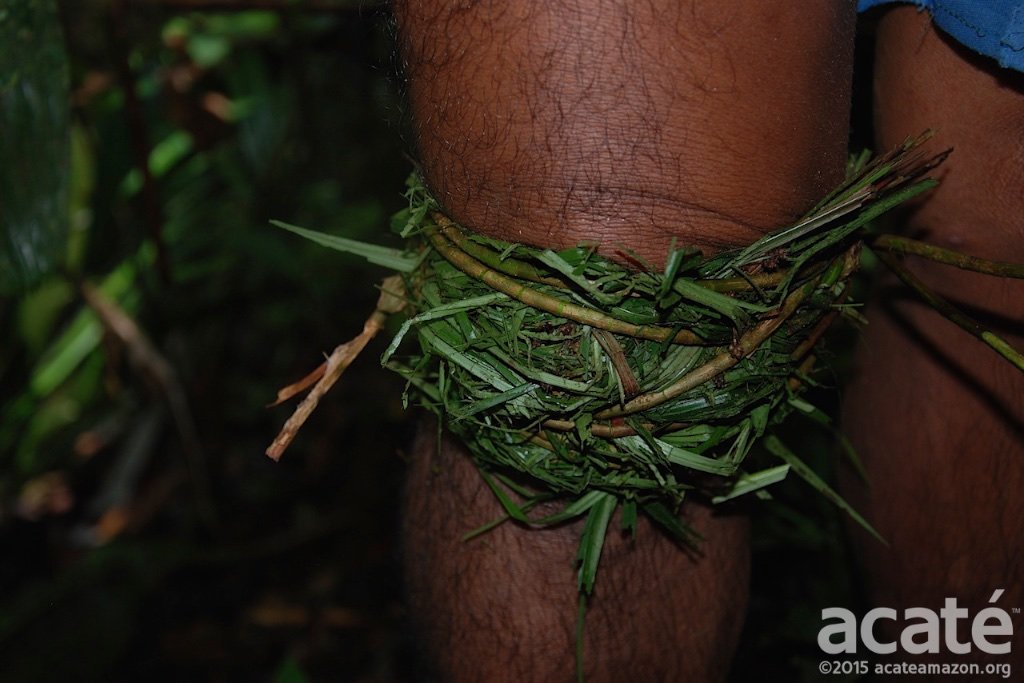
At that moment it seemed incredible, so mathematically improbable, that two of the five elder healers and original Encyclopedia authors were bitten on the same day by venomous snakes. Further reports came in confirming the reality and gravity of the situation. Late the next evening, Arturo arrived in Angamos, huddled in a blanket inside a canoe. We carefully lifted him from the canoe and carried him to the health post. A couple of hours later, near midnight, Roberto arrived from Remoyacu after being brought out of the forest by a group of Matses youth and taken downriver to the waiting Health Ministry boat. He was conscious but with great swelling of his left leg. The height of the bite on his leg and distance between the fang puncture marks indicated that it was a massive snake, described by his Matses hunting companion as having the girth of a man’s arm is also a physician and over the next three days he led efforts to assist the staff at the outpost to work within the challenging resource constraints and limited facilities. The gravity of their condition required constant attention and close supportive care over the days that followed.
Even though Roberto survived the initial envenomation, the swelling and tissue damage left us concerned he would develop a complicating infection. The swelling in Arturo’s foot was comparatively less severe than Roberto’s, but an insidious complication from the virulent jergón (Bothrops atrox) venom had set in. On his arrival at the health outpost a worker had administered an intramuscular injection of vitamins and antibiotic. A day later, this small injection site began spontaneously bleeding. It was profuse and uncontrollable for hours, indicating an underlying and dangerous coagulopathy as an effect of the snake's venom. Although he had lost a shockingly large amount of blood for such a small wound, the real concern was the potential risk for a fatal intracranial hemorrhage. By this time, fortunately, a vial of antivenin was secured and administered to counteract the effect of the venom.
Once their conditions stabilized, Arturo and Roberto both requested that we proceed with the conference in Remoyacu, scheduled to begin soon. Despite being gravely ill, the strength and resilience of these two great Matses elders was inspiring. Roberto was particularly disappointed as he had put so much effort into the meeting’s preparation and was looking forward to showing off the medicinal agroforestry work he had completed with his apprentices. He would have been able to participate in the meeting, he said, if only he had been stung by a scorpion and not bitten by a bushmaster. With much trepidation and an emergency plan in place in case of further complications, we set off for the conference more determined than ever to facilitate the transmission of these plant masters knowledge to the next generation and to help the Matses with their health care resources.
Questions and Answers
The conference was scheduled for three days with Wilder, the elected High Chief of the Matses, presiding. The leaders of each of the 14 Matses villages were present along with the Matses leadership council and many Acate project participants. Acate was represented by Felipe, Segundo, William Park, Dr. David Fleck, and Dr. Christopher Herndon, bringing the total number of attendees to more than fifty. We wanted to make sure that all the participants, many being newly elected village chiefs, were up to date on our projects and in agreement with our philosophy before getting into the detailed planning for the upcoming year.
Acate explained our three core operating pillars, namely, sustainable economy, traditional medicine, and regenerative agriculture, and how each is designed to maintain Matses independence and self-sufficiency. We explained that these very conferences are where our initiatives originate and that each initiative is intended to address a specific need of the Matses. Finally, we emphasized how Acate operates with complete transparency and by total consensus, never in a top-down manner. Knowing many Matses had questions, we decided to begin with an open forum of questions and answers before launching into the meeting agenda. Not surprisingly, many of their questions were concerning financials and fundraising, as the Matses have been perennially disappointed by large organizations promising big projects and delivering small outcomes. There have been many well-funded international initiatives for which only a tiny percentage of the funds ultimately trickled down to the Matses communities for projects.
Moreover, the Matses frequently complain about seeing their pictures and videos posted on the internet and social media by organizations claiming to ‘work’ with the Matses. These organizations actively solicit donations for campaigns but have little to no ground presence or even contact with the Matses. The discussion of financial inputs and expenditures was complex across cultural divides but it seemed clear to all present that while Acate operates on a shoestring budget, it is with transparency and that all our funds are utilized in a manner directly benefiting the Matses communities. The Matses high chief commented that this was the first time any organization had been willing to publicly present a breakdown of operating budgets and funds. The Matses are interested in projects that include all two thousand Matses in Peru. We agreed that if we had the funding, this would be a good idea, and pointed out that since our founding, Acate has realized 100% of our commitments.
The Matses understand our budgetary constraints and appreciated the urgency of the work due its importance and the increasing age of the elders. Thus we reached our first accord of the conference; that Acate would continue to work hard to find more funding to expand the projects and the Matses would continue to achieve outstanding results. We next turned our attention to reviewing current projects and to develop a work plan for the coming year.
Matsés Traditional Medicine Encyclopedia
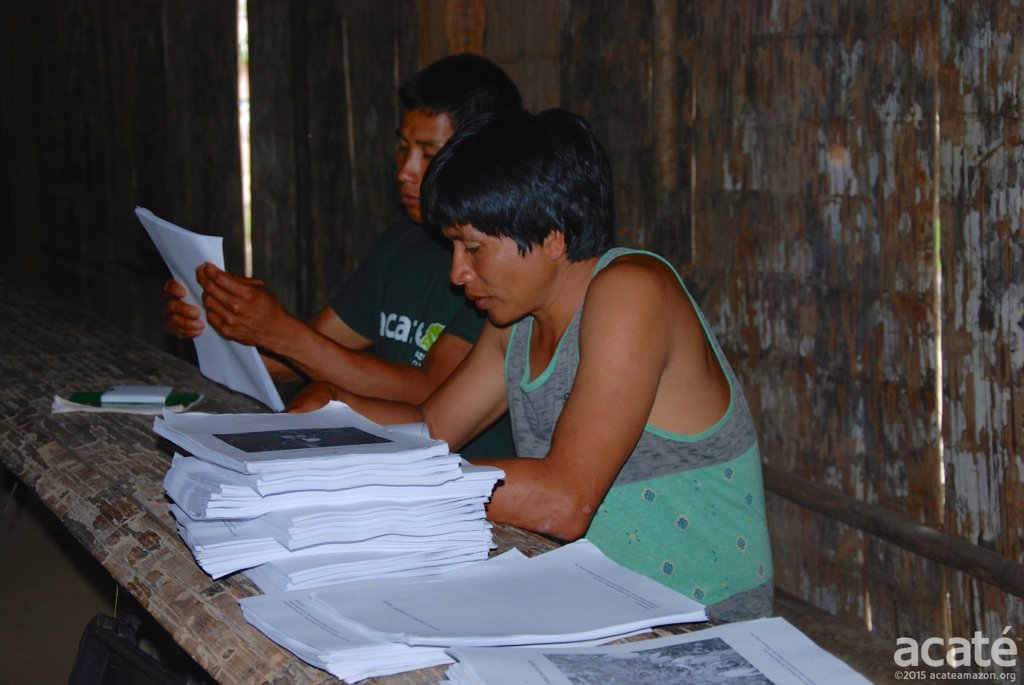
The first Acate core pillar we discussed was Traditional Medicine. There was universal agreement that the Matses Traditional Medicine Encyclopedia is an extraordinary accomplishment. The Encyclopedia is a 511 page hardbound, beautifully illustrated volume, written entirely by the Matses in their own language and from their own villages. An additional ten copies of the Encyclopedia were printed and distributed at the meeting to Matses leaders and elders who had not yet received a copy. The pride seen in elders and youths alike while reading through the volumes was moving. Once everyone was up to date on the Encyclopedia project we opened the floor to nominate candidates to author the next volume. Matses would suggest a name and the strength of the candidacy was determined by consensus and voice approval of the assembled leaders, elders, and conference participants. It was also agreed that the current makeup of the chapter teams and payments were fair. In this manner we generated the teams and timeline for the next volume of the work. Roberto and Arturo were nominated and enthusiastically selected by the assembly.
Matsés Indigenous Mapping Initiative
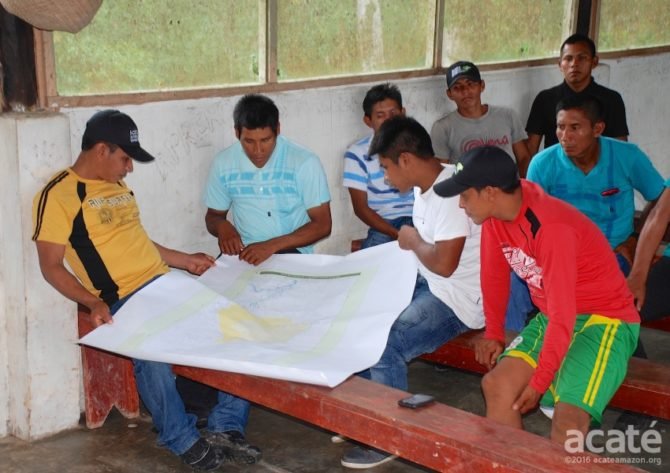
The second day of the conference opened with discussions of the Matses Indigenous Mapping Initiative. The landmark initiative was launched in 2015 for the first time ever, to map Matses traditional territories and land use according to their history, culture, and language. The scale and importance of the initiative is staggering. In Peru alone, the Matses traditional homeland exceeds 3 million acres of primary rainforest. In January 2016, the pilot mapping of the remote headwaters of the Yaquerana (Upper Javari) territory was undertaken by a team from the village of Puerto Alegre, Matses elder Romulo and Aaron, a younger Matses who we trained to use a handheld GPS unit. After this introduction, the elder Romulo stood and powerfully addressed the conference in formal Matses oratory. He shared his experiences and his belief in the importance of the mapping initiative. Ancestral knowledge of their lands is no longer being handed down to the younger generations, he said, and rests only in the memories of the remaining elders.
Tragically, most of the Matses youth today only know the recent Spanish names of the rivers and waterways and their people’s timeless connection to the lands is at risk of being severed. Romulo recounted how for three weeks he and Aaron traveled and camped together deep into the headwaters of the the upper Javari (Yaquerana) taking GPS points and recording corresponding Matses names of all waterways, ancestral villages, burial sites, secluded mineral licks called ‘mactac’ that attract game animals and birds, and many other areas of vital cultural and ecological significance. Romulo and Aaron documented the presence of old farm sites far beyond the official boundaries of titled Matses lands that confirmed the historical precedent of prior indigenous land use.
After Romulo's rousing oratory, the assembly enthusiastically requested he continue his work before expanding the project throughout their territory with the other elders. The duration of, compensation for, and work schedule of this critical initiative over the next two years was agreed upon. Let us be clear on an extremely important and often misunderstood point by the outside world that is crucial for the Matses. The only reason these globally significant forests are intact today is due to the Matses fighting and dying to protect them against the incursions of outsiders!
They fought off the rubber barons of old and modern day petroleum companies. These threats are ever-present, insidious and shifting. A fortune of petroleum lies beneath the very lands that Romulo and Aaron mapped. While the current conservation trend of including indigenous people in decisions on their own lands is encouraging, there are continuing efforts to shift indigenous land to government control. This weakens the protection from extractive industries which are, in most countries, deeply entrenched at all levels of government. The focus of the Mapping Initiative is toward empowering the self-sufficiency of the greatest stakeholders, the Matses indigenous people, to protect their own lands as their forefathers did before them.
Healing Forests: Medicinal Agroforestry
The completion of the Encyclopedia was a historical and critical first step towards mitigating existential threats to Matses’ healing wisdom and self-sufficiency. However, the Encyclopedia alone is insufficient to maintain their self-sufficiency as their healing systems are based on experience that can only be transmitted through long apprenticeships. In the earlier Apprentices Program, elder shamans—who were also Encyclopedia chapter authors—were accompanied in the forest by younger Matses to learn the plants and assist in treating patients. The Matses elders and Acate decided to merge the Apprentices program with the Healing Forest project that is based on traditional Matses agroforestry. Collecting, planting and tending plants is the most effective way to really know them and the additional benefit of having the plants nearby, especially the rare ones, made the decision natural.
The feedback at the conference confirmed that actually working with the plants in developing the medicinal healing forest for a month was the most efficient way to teach identification and applications. It also came up repeatedly that consulting the Encyclopedia is a vitally important means of reinforcing field instruction from the shamans. To continue the program in the upcoming year, we put together the schedule and selected the villages for the medicinal agroforestry sites.
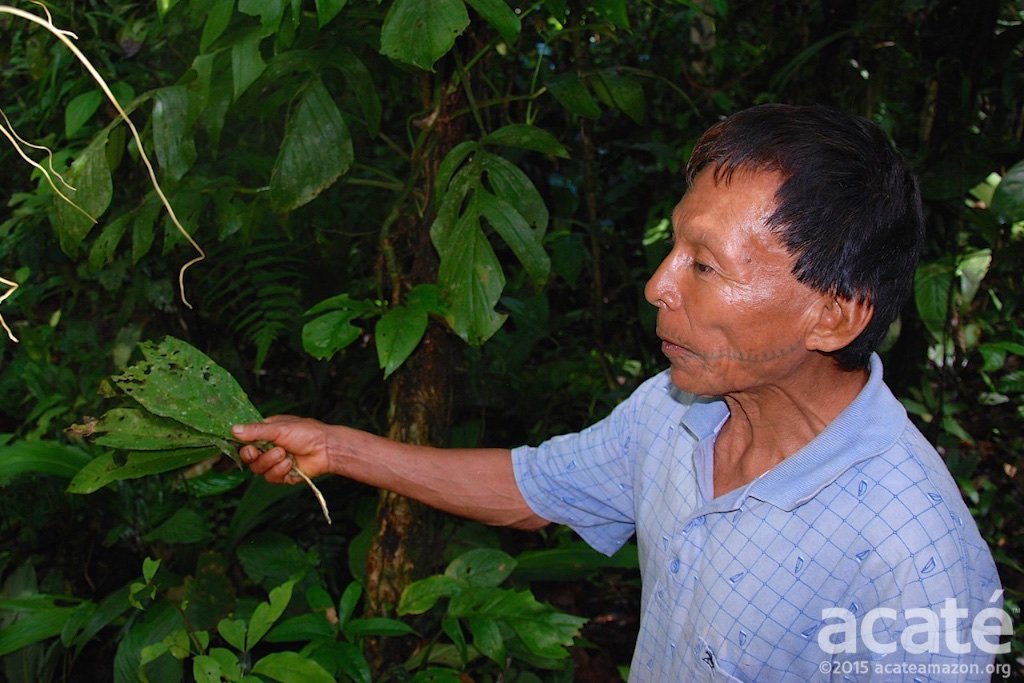
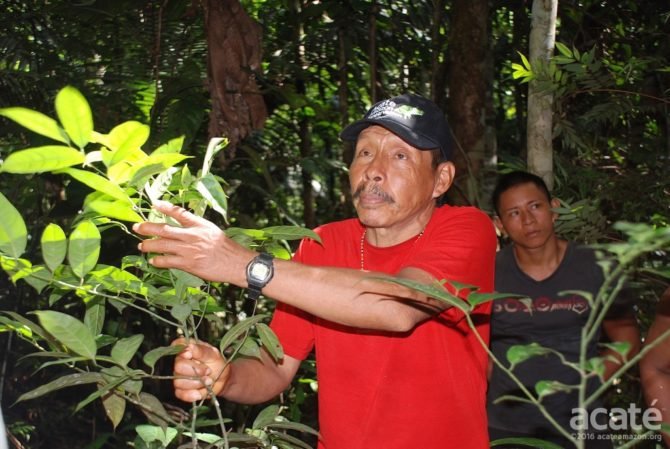
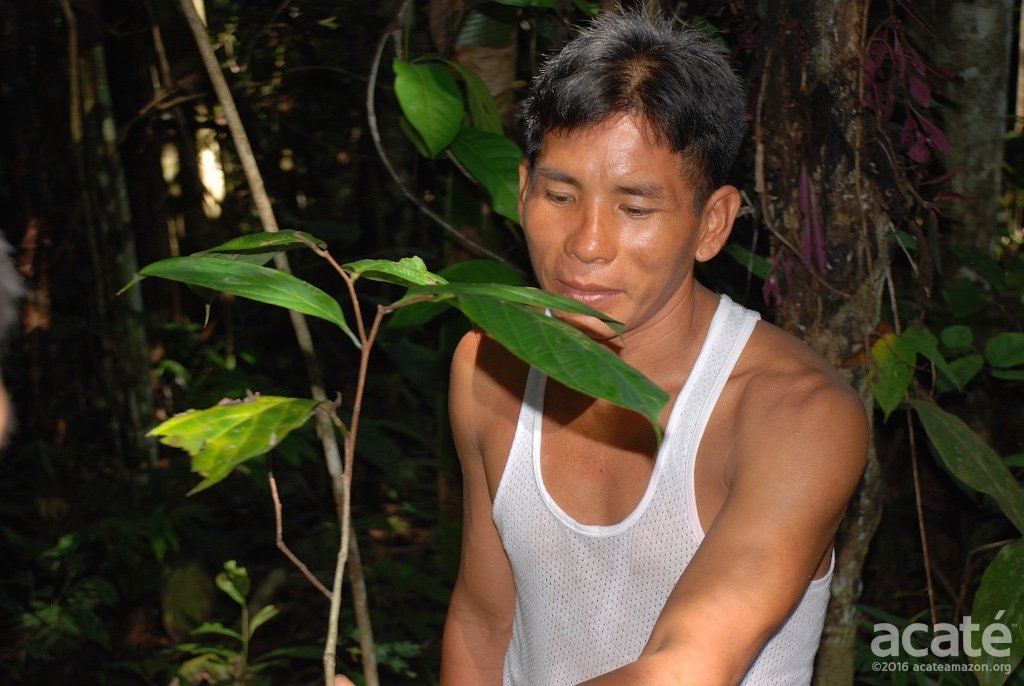
We were then invited to accompany the elder shamans to observe the Healing Forest agroforestry plots in the villages of Remoyacu and Buen Peru. Master Shaman Luis led the apprentices due to Roberto’s absence. As Luis led the apprentices down the path, he would begin by asking the name of a plant and its use. A remarkable exchange always followed. The mastery and enthusiasm of the participants was mind blowing, especially given that some of us outsiders who think we know at least something about plants were utterly lost.
The richness of the Matses Healing Forest ecosystems is hard to convey. Imagine walking for thirty minutes on a rainforest trail winding in a figure eight path in proximity to the village surrounded by a constellation of hundreds of plants with medicinal importance in such abundance that truly careful attention must be made at all times to avoid clumsily stepping on a group of seedlings or small sapling. At a point, we lost count after over eighty species of medicinal plants, trees, small herbs, vines, epiphytes, and understory plants were examined.
Each plant was transplanted and cultivated by the Matses in a zone according to its ecological demands, underscoring indigenous mastery of agroforestry. Epiphytes were grafted onto the proper host trees, fledgling seedlings protected with scaffolding and planted in pockets with just right amount of sun exposure. We saw only one or two plants that had not successfully establish. Potential dangers to seedlings in the rainforest are myriad and include leaf-cutter ant
Links:
Project reports on GlobalGiving are posted directly to globalgiving.org by Project Leaders as they are completed, generally every 3-4 months. To protect the integrity of these documents, GlobalGiving does not alter them; therefore you may find some language or formatting issues.
If you donate to this project or have donated to this project, you can receive an email when this project posts a report. You can also subscribe for reports without donating.



Support this important cause by creating a personalized fundraising page.
Start a Fundraiser