By Christopher Herndon and William Park | Co-Founders
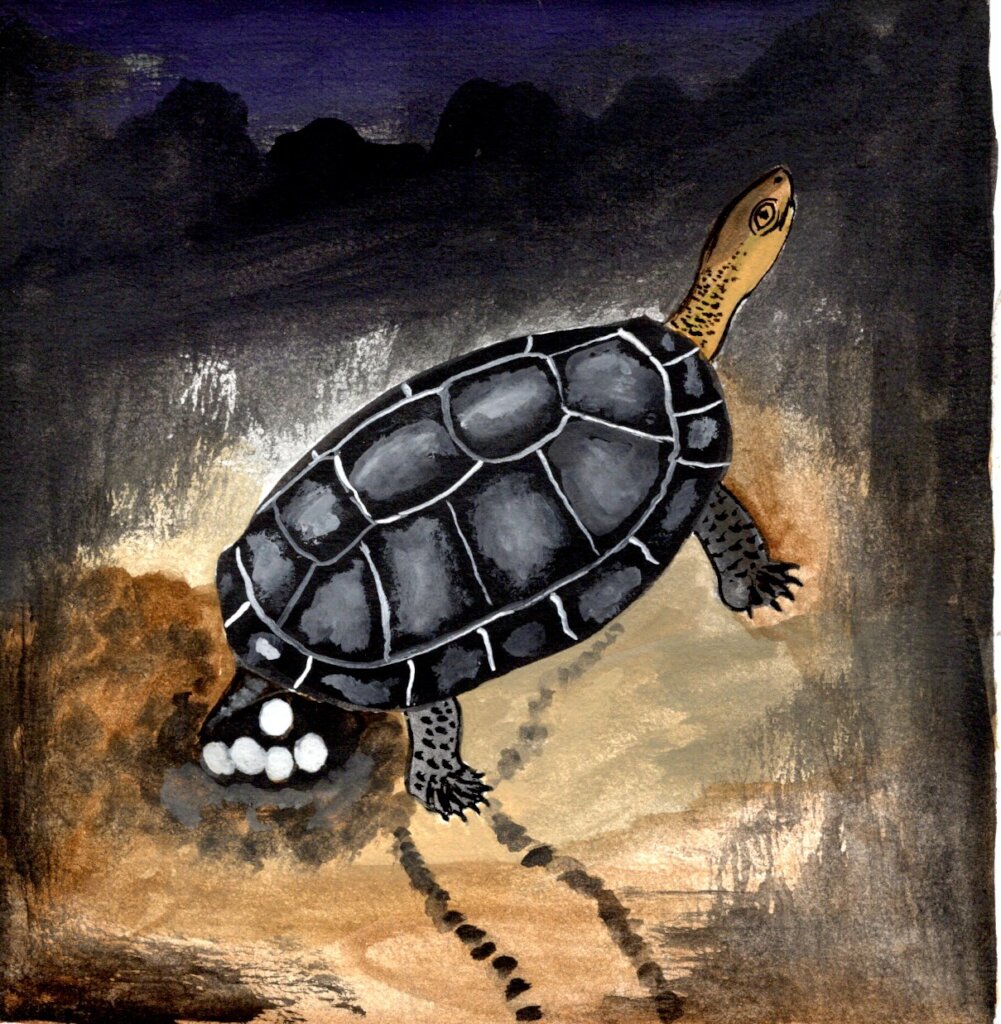
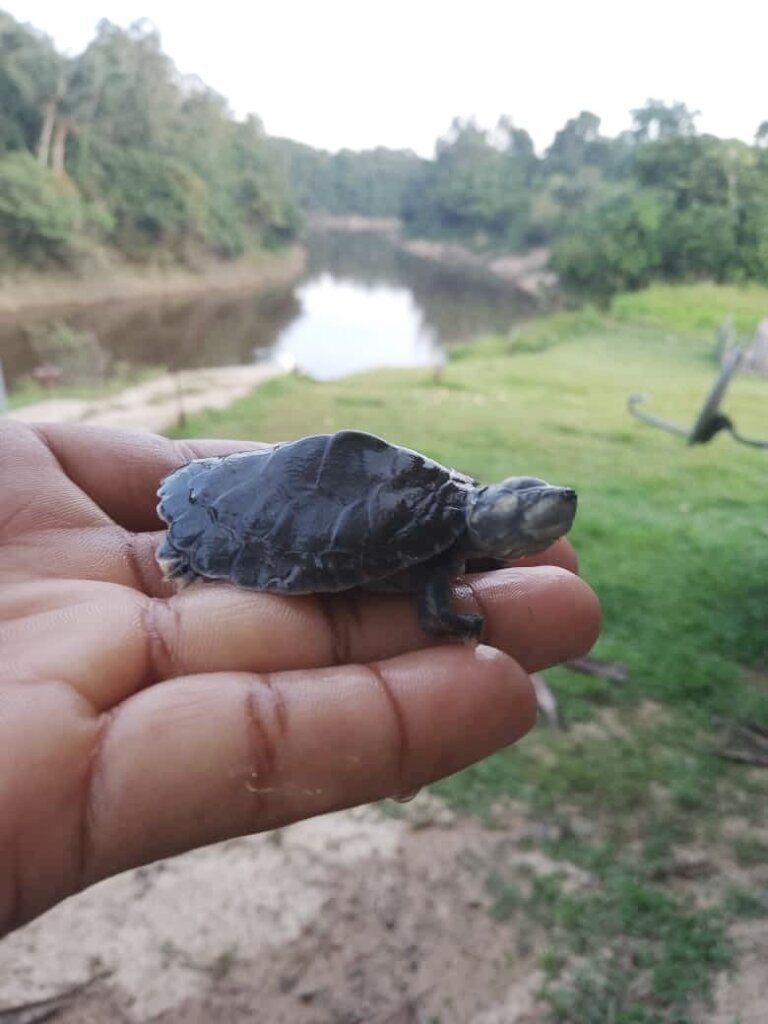
The Giant South American River Turtle (Podocnemis expansa) is one of the iconic species of the Amazon Basin. These turtles, known locally in Peru as charapas, are the largest in the Amazon and can reach weights of up to 200 pounds. These impressive turtles play an important role in their ecosystem by dispersing seeds, cycling nutrients, and maintaining habitat balance. Giant river turtles are social and both adults and hatchlings vocalize to synchronize their migrations and hatching.
Despite their significance, the population of these turtles has drastically plummeted in many parts of the Amazon due to habitat destruction, climate change, and the poaching of adults and the collection of their eggs. A reassessment by the IUCN Species Survival Commission’s Tortoise and Freshwater Turtle Specialist Group has recommended that the conservation status of the Giant South American River Turtle be reclassified as Critically Endangered.
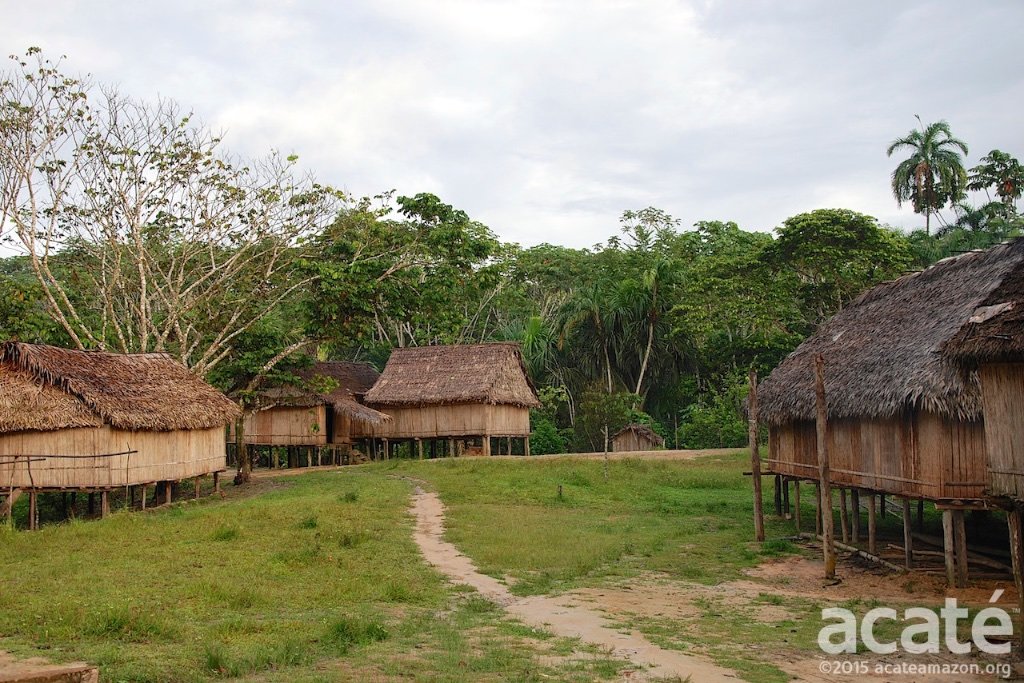
The Matsés Indigenous People live along the Javari River, a tributary of the Amazon, in the vast, remote wilderness that straddles the border between northeast Peru and Brazil. The Matsés directly protect over 1.2 million hectares of rainforest in Perú alone through their ancestral lands, encompassing some of its most intact, biodiverse, and carbon-rich rainforests. Matsés communities are on the front line of a gateway to an even larger binational conservation corridor with Brazil, spanning 16 million hectares, that shelters some of the few uncontacted tribal groups remaining in the world.
Even in this vast wilderness, the populations of giant river turtles are unfortunately declining due to climate change-induced extreme fluctuations in water levels and encroachment by poachers from neighboring non-indigenous settlements, who hunt adults and collect eggs for sale. The key nesting beaches that the turtles congregate lie along a river that is an international boundary waterway, making regulation of boat traffic during nesting season infeasible.
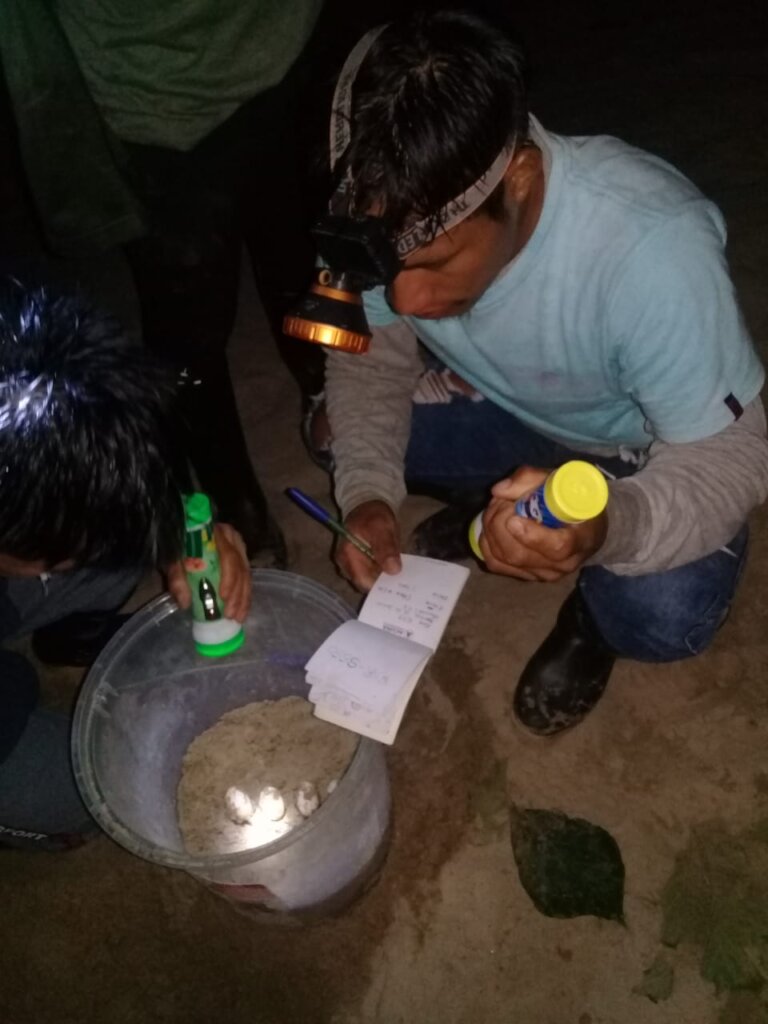
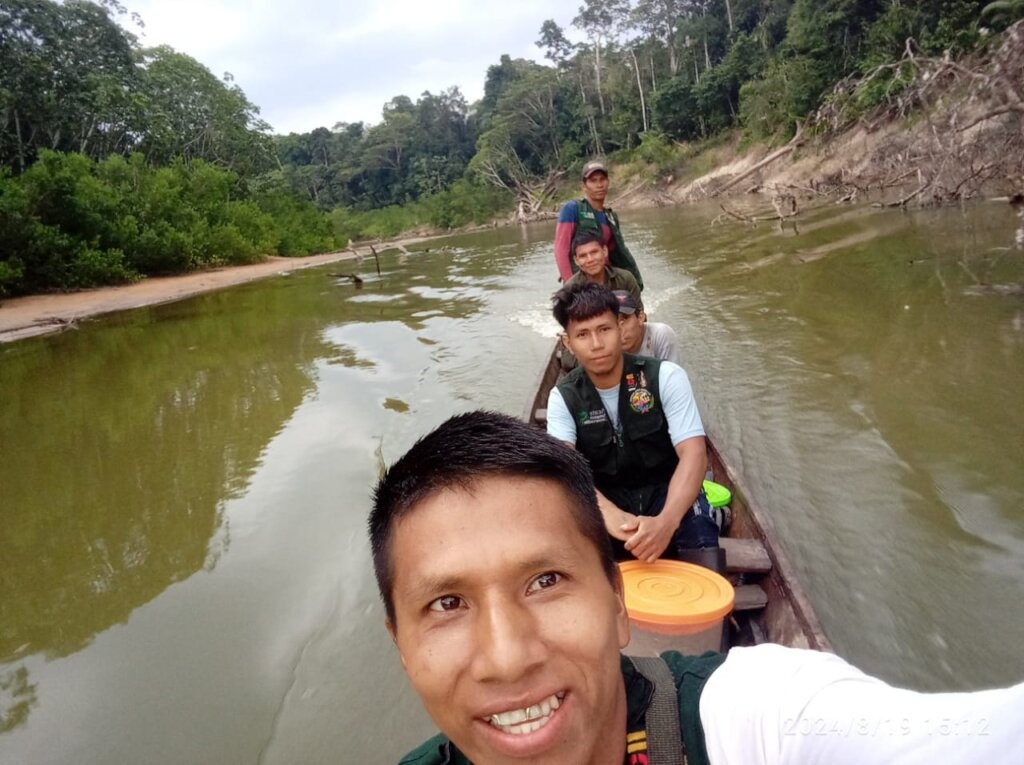
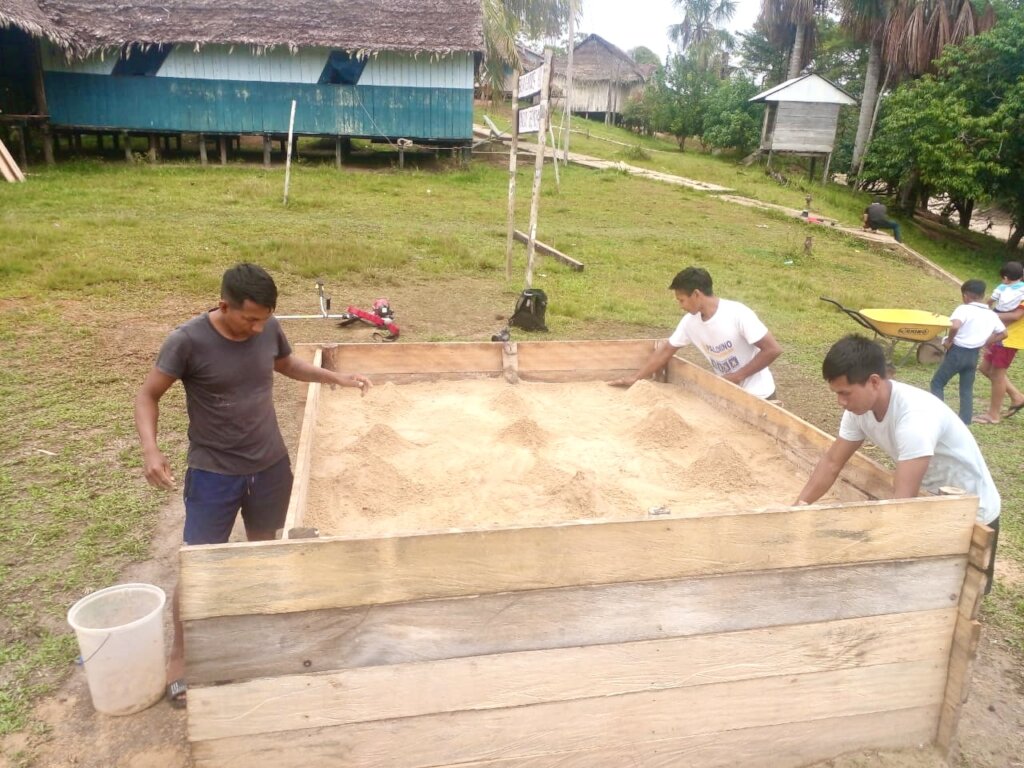
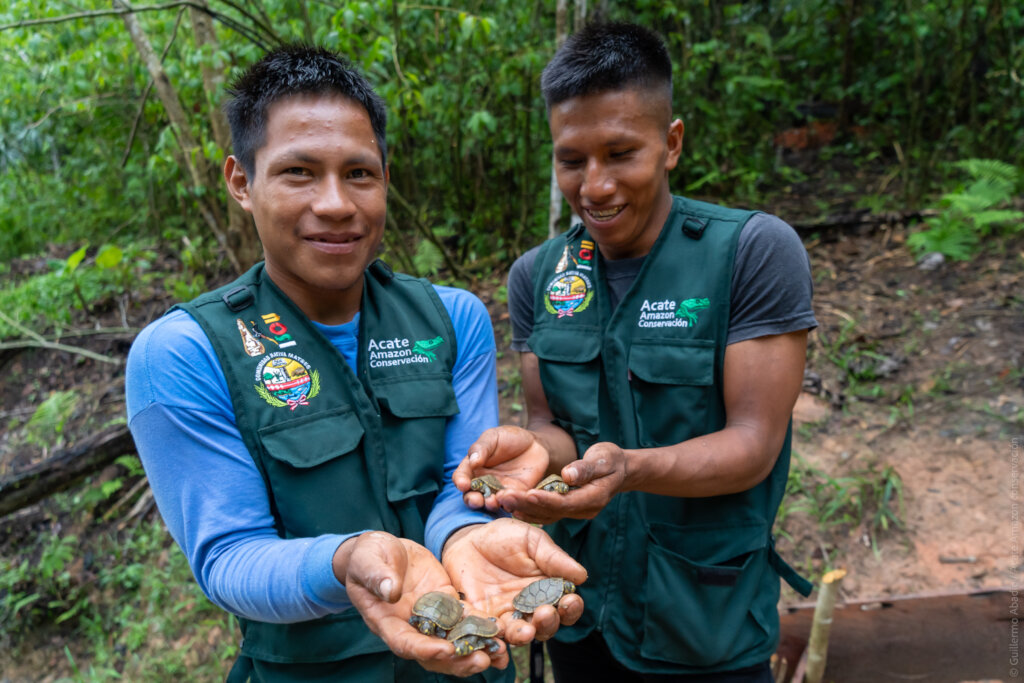
Acaté's river turtle program with the Matsés originated in 2022 when a group of Matsés youth approached Acaté to collaborate on a river turtle population restoration project. Acaté helped the Matsés youth achieve their goals by supporting their regular patrols of a 150 km stretch of river during the dry season, when the riverbanks are exposed and the turtles nest on the beaches. The Matsés team members collect turtle eggs before poachers can find them and remove any traps that may have been set for nesting females. They carefully record the location and number of eggs collected. The eggs are then placed on specially constructed artificial beaches within their communities, providing a safe environment away from predators. Once the hatchlings emerge, they are moved to holding ponds where they are fed until they grow large enough to increase their chances of survival in the wild. The timing of this project is meticulously coordinated: the collection of turtle eggs occurs at the peak of the dry season, while the release of hatchlings coincides with the onset of the rainy season.
The program initially focused on the related, but smaller and also threatened, taricaya or yellow-spotted river turtle (Podocnemis unifilis). The Matsés achieved extraordinary success in propagating taricaya turtles, as reported in our January 2023 Field Report. With strong success in rebounding local taricaya turtle populations, the program shifted to restoring Giant River Turtle populations, which are more depleted and for which turtle conservation programs in other regions of Peru have encountered difficulties obtaining robust yields of hatchlings compared to taricayas.
We are excited to announce the successful reintroduction of the Giant River Turtle into the Galvez River. This area of the Matsés territory has been particularly vulnerable to poaching, leading to the giant river turtles' extirpation and disappearance in the 1990s. So far, as a result of the program, hundreds of giant river turtles have been released. The success of this project is attributed to the strength of a community-led initiative that combines deep traditional knowledge with innovative, state-of-the-art conservation strategies.
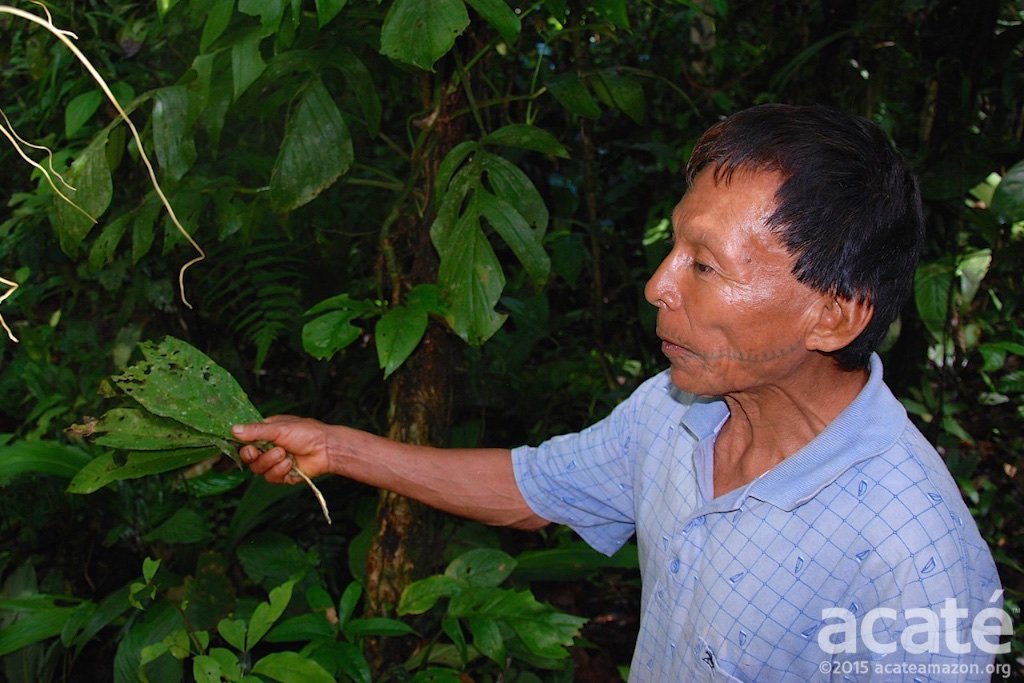
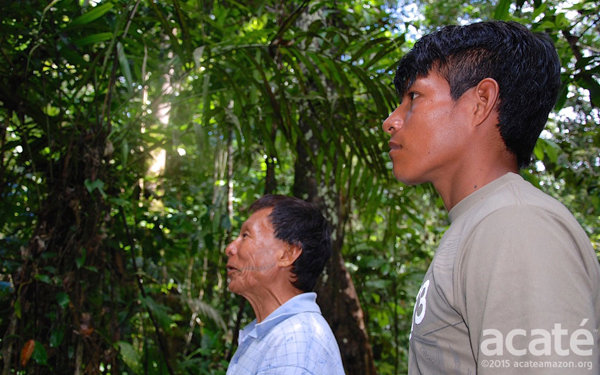
It is essential to highlight the role of traditional knowledge in this effort, as the elder members of the Matsés community contribute valuable insights from their profound knowledge of their natural environment. Once long isolated from sustained contact to the national culture, the Matsés' acculturation is accelerating every year. Young Matsés often look to the world outside their territory for entertainment, prestige, and aspirations of economic success, and generally show less interest in traditional culture and knowledge. Matsés elders take pride in their identity and wish to pass on their wisdom, but they often find that young people are not interested in listening.
The river turtle program aims to transmit knowledge about natural history and highlight the importance and value of their natural environment to younger generations. Initiatives aimed at promoting biological diversity, such as this one, can add economic value to conservation efforts, creating a sense of pride and new opportunities for youth. From a global conservation perspective, species diversity is widely recognized as a key metric for prioritizing conservation efforts and for the growing market for biodiversity credits. By gaining a better understanding of the region's diversity, the Matsés may attract more external financial support for on-the-ground conservation projects, leading to new job opportunities within their community.
If you missed it, please check out our November 2025 Field Report on the completion of year three of our integrated aquaculture program that received a special recognition award from the United Nations Food & Agriculture Organization!
Acaté Amazon Conservation is a non-profit organization that strategically focuses on strengthening rural and Indigenous communities as the most effective natural climate solution. Our work centers on creating sustainable economic alternatives for Indigenous and local communities that depend on forests, thereby halting deforestation at its source. We integrate field data, traditional knowledge, and technology to monitor ecosystems, enhance territorial rights, and develop bio-economies. Our model demonstrates that sustaining the environment and combating climate change are inseparable from supporting the guardians of the forest.
Links:
Project reports on GlobalGiving are posted directly to globalgiving.org by Project Leaders as they are completed, generally every 3-4 months. To protect the integrity of these documents, GlobalGiving does not alter them; therefore you may find some language or formatting issues.
If you donate to this project or have donated to this project, you can receive an email when this project posts a report. You can also subscribe for reports without donating.



Support this important cause by creating a personalized fundraising page.
Start a Fundraiser