By Albert Lotana Lokasola | President, Vie Sauvage
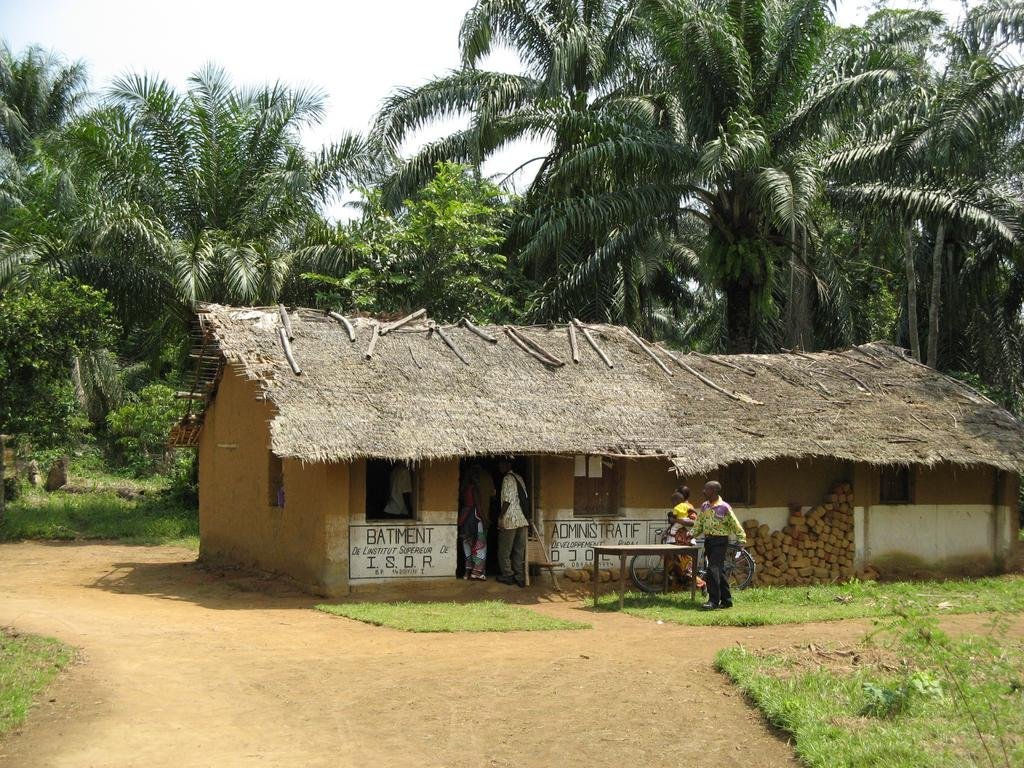
In February, Djolu Technical College received a $5,000 grant channeled by the Food for All Foundation via the Kokolopori-Falls Church Sister City Partnership to Vie Sauvage. This grant, managed and implemented by Djolu Technical College faculty, is intended to increase food security in Kokolopori by providing training and technical assistance, simple farming tools and improved seed stocks to local farmers.
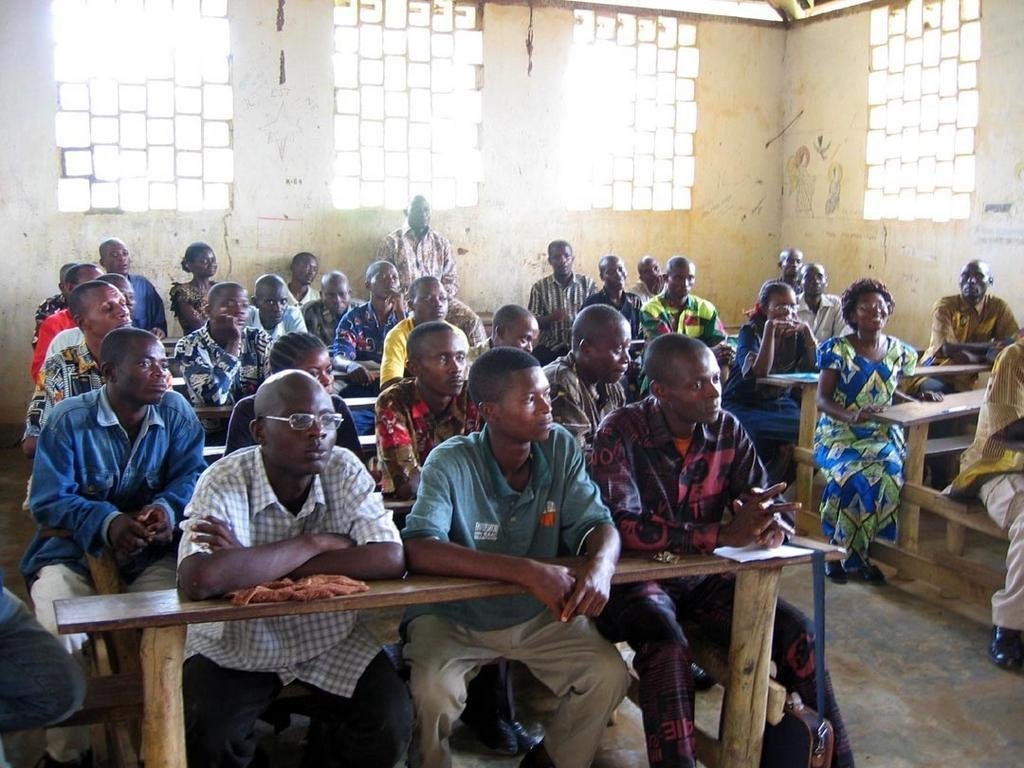
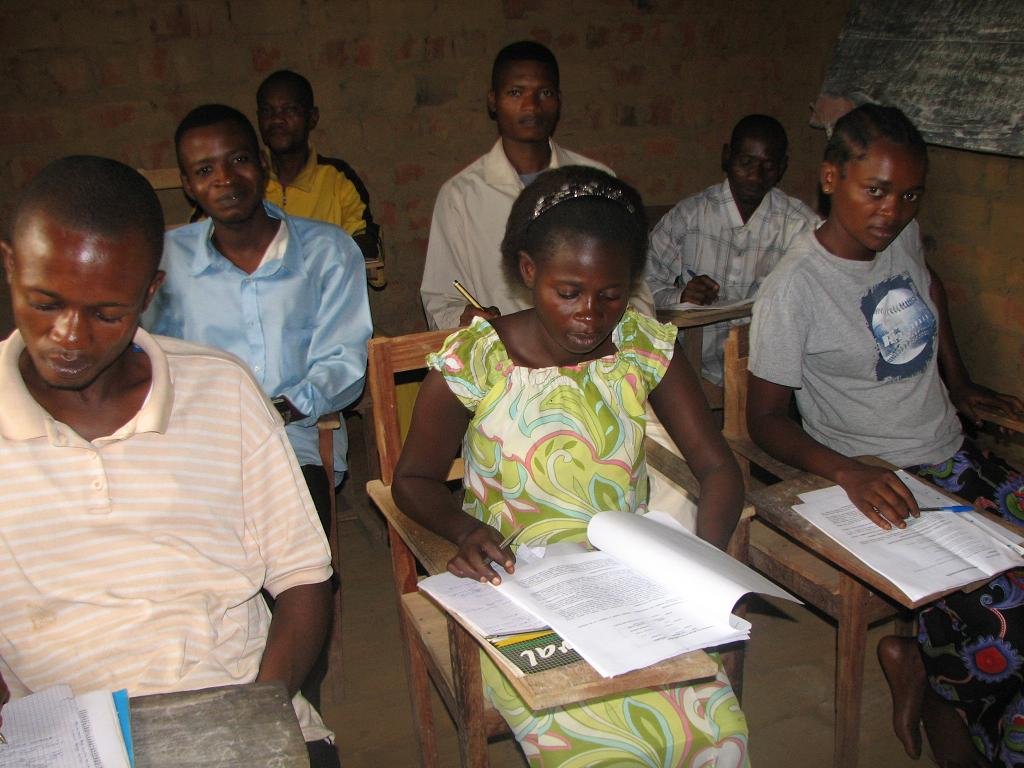
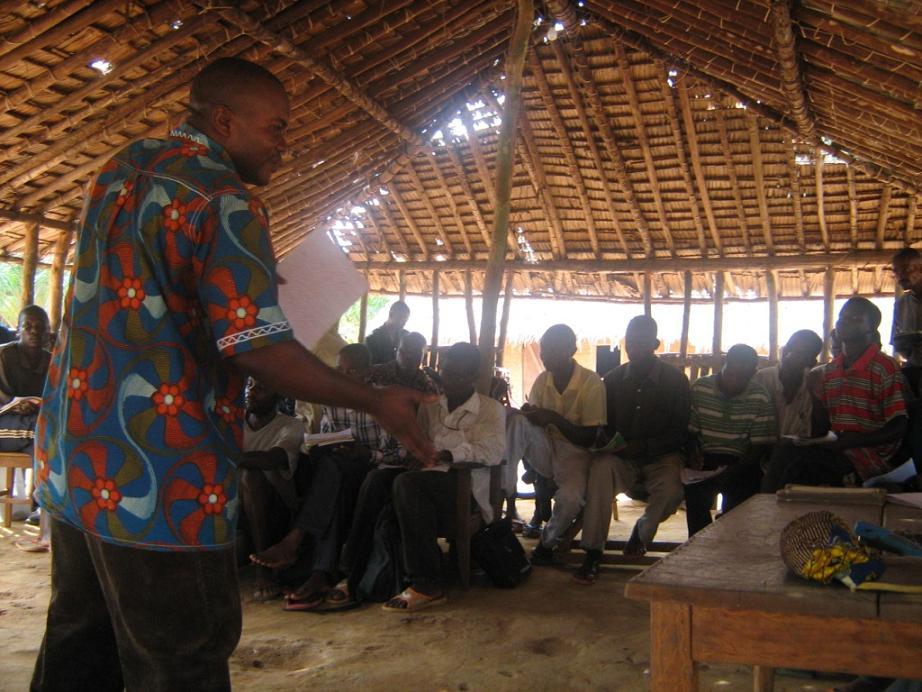
In the first term of the project implementation, 12 farmers’ co-operatives have received training in agroforestry, oriented towards the planting of fruiting trees in association with seasonal cultivations such as cereals, cassava and bananas in the same field.
Before the training, farmers used to apply slash and burn itinerant farming technique, cutting all trees that were found on the field. This method resulted to long delays for forest regeneration, destruction of potential revenue from the sustainable exploitation of non-timber forest products, release of carbon to the air, loss of energy from the burned biomass and finally, destruction and quick exhaustion of soils. Co-operatives also received farming tools to open their agro forestry fields, especially their fruiting tree nurseries.
The next step in June is the cultivation of 5000 fruiting trees in five tree nurseries managed by 5 Kokolopori and Nsema leading co-operatives that are Sapro, Mapamboli, Tomeka, Milona and APRID. If tree growth in the nurseries is successfully achieved, each village’s co-operative will receive and plant in their agroforestry fields, at least 100 trees bearing edible fruits. Edible fruits are good supplementation food to combat malnutrition.
Trees that gives fruits rich in proteins and vitamins will be favored, such as Persia americana (avocado tree), Mangifera indica (mango tree), Dacryodes edulis (safoutier/prunier), etc, planted in association in the same fields with cereals, cassava, banana, pineapple and seasonal vegetables.
II. List of participating co-operatives
1. ONG Vie Sauvage 2. Association de Développement de Moma (ADEMO) 3. Association Bolingo 4. Association de développement de Yetee (ADY) 5. Association de développement internationale d’une famille rurale (ADIFR) 6. Association des jeunes de Yongondju (AJY) 7. Association des jeunes pour le développement de bolamba (AJEDEBO) 8. Association des jeunes de Lindjifombo (AJELI) 9. Association des jeunes de Yofenya (AJF) 10. Association des jeunes de Yasalankose 11. Association de développement de Lindjangele (ADELI) 12. Agriculture priorité pour le developpement (APRID)
III. Content of the training
Module I: TRADITIONAL SYSTEMS OF FARMING 1. Chapter 1 : Itinerant slash and burn farming • Itinerant agriculture • Rainforest semi-intensive farming systems • Rainforest intensive farming systems • Irrigated and inundated farming systems • Mixed systems: a) Seasonal cultivations mixed with durable herbaceous vegetation covered the soil. b) Gardening. c) Seasonal cultivations mixed with durable trees • Intensification of farming through the shortening of the fallows period 2. Chapter 2 : Slash and burn farming and forest regeneration • Advantages of the slash and burn technique (Quick mineralization that increase production in the short term, easy clearing and groundwork • Disadvantage of the slash and burn technique (Quick exhaustion of soils. • Importance of leaving fallows to regenerate (reforestation, restitution of the organic materials to the soils, recycling of minerals that went deep in the ground thanks to tree roots. 3. Chapter 3 : Steps to create a field through slash and burn technique • Clearing and groundwork • Burning • Leaving fallows to regrow forest (Reforestation if the fallow periods are long, savanna growth/development if the fallow periods are too short. • Harvesting in the neighboring forest
MODULE II: FOREST AND FORESTRY 4. Chapter 4: Definition of forest and forestry (Forestry = management and exploitation of forest) • Concept definitions • Goal of agro forestry (To optimize the production per surface unit while respecting the principle of sustainable yield. 5. Chapter 5: Types of forestry • Community forestry • Urban forestry • Social forestry 6. Chapter 6: Importance of the forestry • Protection role (soils, protection against winds) • Regulation role (absorption, conservation of reserves, liberation of nutrients progressively) • Production role (Extraction of energy from the biomass). 7. Chapter 7: Agro forestry farming systems • Cultivations and livestock rearing in forest plantations • Trees and livestock rearing in spaces reserved to cultivations • Trees juxtaposed to the agro pastoral space 8. Chapter 8: Effects of ecological interactions in agro forestry 9. Chapter 9: Agro forestry and sustainable development 10. Chapter 10: Use of plants of the Fabaceae family in agroforestry • For timber • For service wood • For energy • For environmental protection • For animal foraging • For extracted products
III. MODULE III: TECHNIQUES OF MULTPLICATING TREES IN AGRO FORESTRY
11. Chapter 11 : Generative multiplication or multiplication by seeds • Advantages: Allow a massive production, doesn’t require a special training or special technical skills. • Disadvantages: Strong dependence to seeds’ availability, some seeds lose their germinating power, doesn’t allow the identical replication of features of the mother plant. 12. Chapter 12: vegetative multiplication • Multiplication by cuttings • How to get cuttings • How to prepare cuttings • How to plant cuttings • How to main cuttings in a propagator • How to assess the quality of cuttings and plant them in a pot • Layering • How to place the layers • How to harvest the layers • How to plant layers in a pot • How to conduct layers in a tree nursery • How to transplant layers in a field • Transplanting • How to prepare the ‘porte-greffon’ • How to prepare the transplant • How to maintain transplants
IV. MODULE IV: PLANTING AND MANAGEMENT OF AGRO FORESTRY TREES IN A FIELD
13. Chapter 13: Choice of the site 14. Chapter 14: Preparation of the field zone 15. Chapter 15: Spotting and digging plan 16. Chapter 16: Staking of plants 17. Chapter 17: Planting trees 18. Chapter 18: Monitoring et maintenance of agro forestry trees 19. Chapter 19: Harvesting 20. Chaptern20: transformation and conservation of harvested products
V. MODULE V: AGROFORESTRY FOR THE PRODUCTION OF NON TIMBER FOREST PRODUCTS
21. Chapter 21: Survey questionnaire on community ethnobotany. • Medicinal plants • Food plants • Plants for larvas
IV. Duration of the training workshop
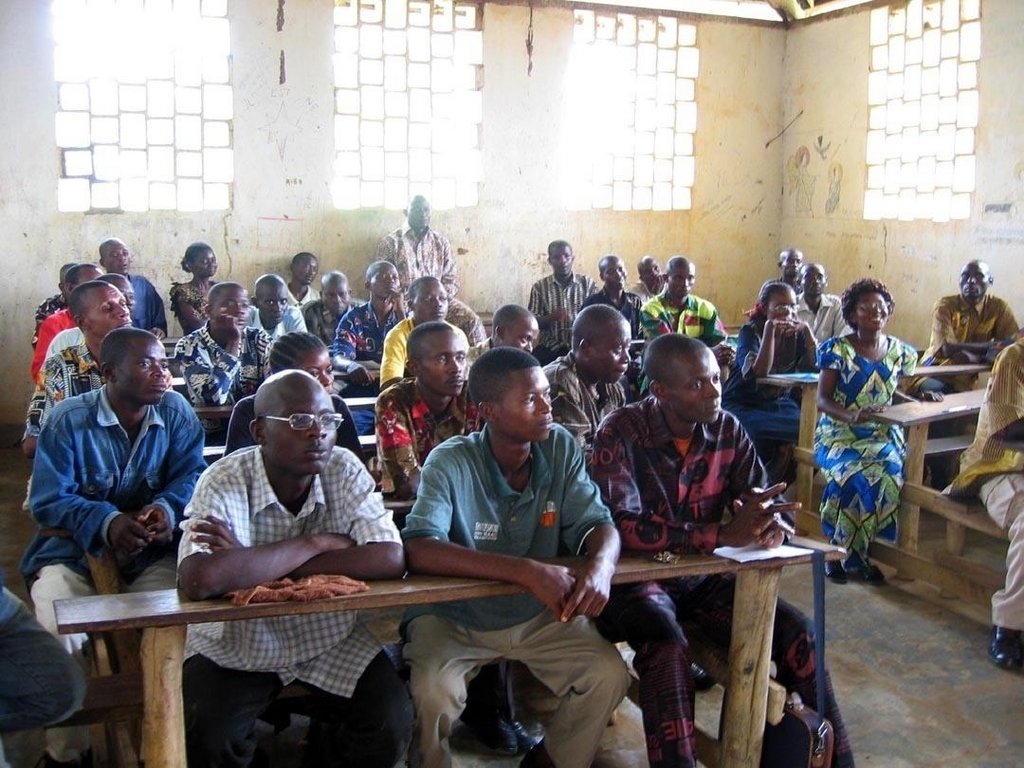
The workshop expanded during 5 days from Monday 15 to Friday 19. March 20, 2010 was the closing ceremony, in the presence of the zone commissioner.
V. Products of the training workshop
1. Structuring and development of peasant organizations The first result of the training workshop was the grouping of the 12 co-operatives that attended the training workshop into five pools, under the leadership of a core co-operative with tangible assets and potential to serve as anchor site from which the agro forestry program will expand.
These co-operative were: TOMEKA leading all farming organizations of Iyondje groupement, SAPRO leading all farming organizations of Lindja 2 groupement, MAPAMBOLI leading all farming organizations of Pombi groupement, MILONA leading all farming organizations of Lindja 1 groupement and APRID leading all farming organizations of Nsema groupement.
2. Creation of 5 resource centers or agro forestry tree nurseries Five pilot tree nurseries have been prepared and will be developed by the 5 identified core co-operatives. The objective is to produce 1000 agro forestry trees in each pilot center to be distributed to members of each pool for dissemination in their own co-operative fields. The species selected are: avocado tree (Persia Americana), mango tree (Mangifera indica), Spondias cythera tree, Syzigium cummini tree, African plum tree (Safoutier), palm tree and Citrus spp trees. These trees will be planted in mixed fields with cereals, bananas and cassava, the staple food of the milieu.
3. Distribution of simple farming tools to co-operative members
150 machetes and 15 sharpeners have been distributed to trainees to help them open their fields and get prepared for the agro-forestry program.
4. Gathering indigenous knowledge for use in the agro forestry program
We undertook a survey aiming the collection of plant list that the community uses for medical purpose, food or larva/caterpillar harvesting. This information is important since we want to save these trees in agro forestry plantations.
VI. Conclusion In the next phase in June, it is planned a practical training in planting trees in the fields and Djolu Technical College faculty and student-assistants will visit nurseries and plantations to provide technical assistance to farmers.
Project reports on GlobalGiving are posted directly to globalgiving.org by Project Leaders as they are completed, generally every 3-4 months. To protect the integrity of these documents, GlobalGiving does not alter them; therefore you may find some language or formatting issues.
If you donate to this project or have donated to this project, you can receive an email when this project posts a report. You can also subscribe for reports without donating.