By Katherine Trujillo | Deputy Director
Many of us don’t think twice about going online to catch up with family and friends, check our bank balance, or send an email. However, for the 21 million Americans who do not have access to broadband internet, these activities cannot be taken for granted. Beyond binge-watching Netflix, a high-speed internet connection gives us access to information and the tools needed to carry out everyday activities.
Just think about the student whose grades suffer because they can’t do their homework or download the study resources their teacher posted online. Or the new small business that needs a reliable internet connection to process payments and sell their products on the global marketplace. Or the elderly person living in a remote, rural area who depends on telehealth services to receive medical care because the nearest doctor is nearly 100 miles away.
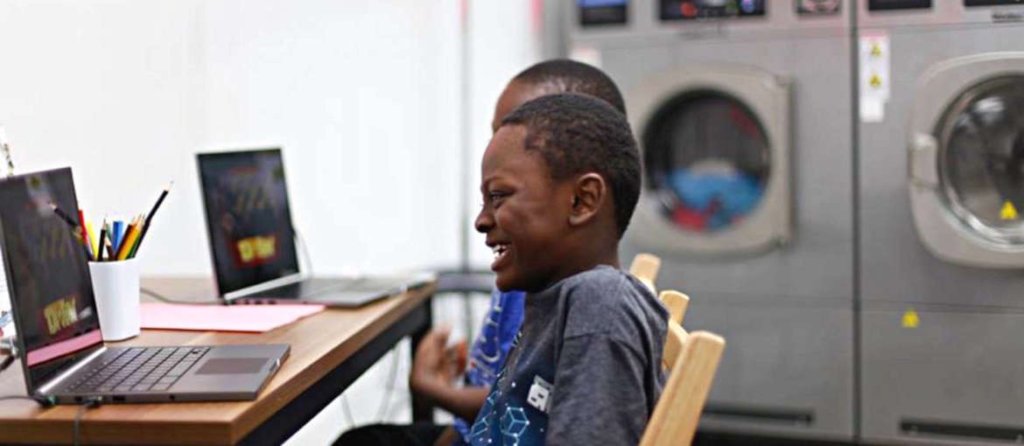
Of course, access to information alone cannot fix the inequalities borne out of the digital divide. That’s why Libraries Without Borders takes a community-driven approach to bridge the gap between the internet-haves and have-nots. By setting up pop-up libraries and learning spaces in public places—laundromats, community centers, playgrounds, mobile home parks—we create “connectivity oases” for people who would otherwise remain offline.
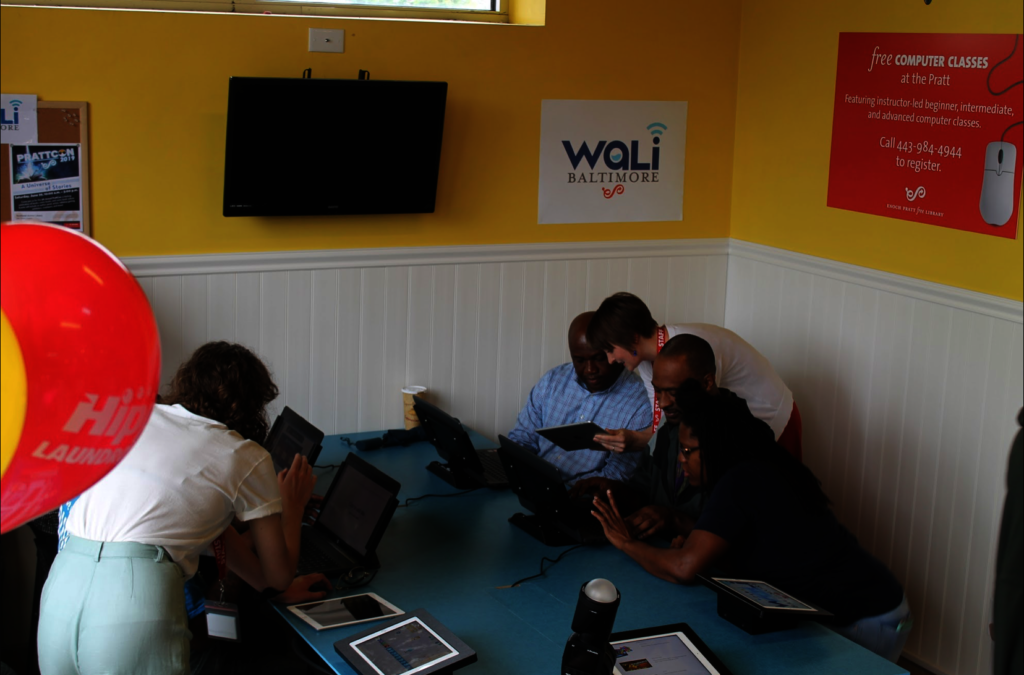
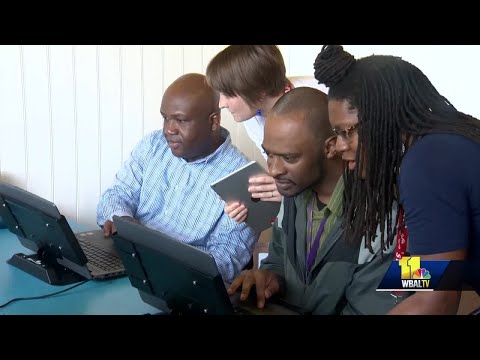
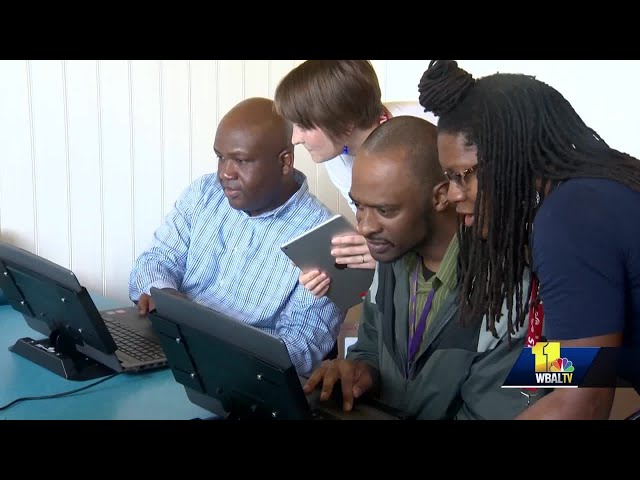
Through our programs (which you can read more about them below), we equip people with the skills and technology they need to actually get online and access the information and tools relevant to their lives. Take for instance our Wash and Learn Initiative in Baltimore. Launched in June 2019, WALI Baltimore has transformed four laundromats in underserved parts of the city into community centers where patrons of all ages can use laptops and tablets, connect to the internet, or ask a librarian for help. Through this hyper-local approach, WALI Baltimore provides a more integrative, holistic approach to promoting digital literacy among the most disconnected residents in the city. It is a crucial step that lays the groundwork for building a more digitally inclusive city.
None of these programs would exist without your generosity. As we enter into fall, we wanted to send our sincerest thanks for your continued support—along with an update about our programs.
We cannot thank you enough!
---
The Wash and Learn Initiative: Expanding a National Movement
At present, LWB is running the Wash and Learn Initiative (WALI) in laundromats in eight states across the country. Each WALI site features library programming and is equipped with iPads, computers, books, and arts and crafts materials. At every WALI site, both children and adults have the opportunity to learn new skills from experts in basic, digital, health, and legal literacy, among other topics.
On Septmber 9th, we launched three new WALI sites in Detroit, Michigan. On September 16th and 21st, we launched two new WALI sites in San Antonio, Texas.
In the months to come, we’ll upgrade WALI sites across the country, making sure every laundromat is up-to-date with high-speed tech and new, exciting books!
The Ideas Box in Puerto Rico: Engaging the Youth
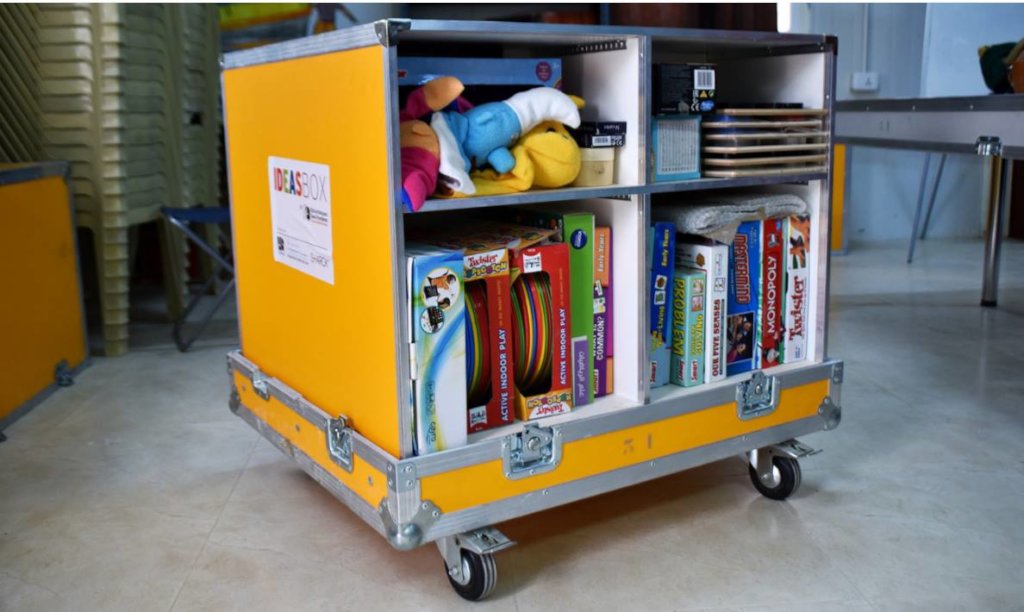
Following the success of last summer’s pilot program, LWB continues to provide educational and cultural programming with the Ideas Box.
Through your donations, and with generous support from SONY, we have expanded our pilot in Loíza into a full-year program. Additionally, winners from last May’s successful make-a-thon, “Empréndete: Loíza”, have further developed their ideas by designing strategic business plans. We are gearing up to use these plans to transform their ideas into reality! In further exciting news about results from the make-a-thon, everyone from the winning team received a laptop. One young adult, about to start university as an agriculture and engineering major, was especially happy; he finally had a computer that he could bring to university!
In further news, this summer, two communities in Loíza organized summer camps for youth and young adults. In El Ancón de Loíza, community leader, Moreno, organized workshops focused on sustainable agriculture, health literacy, entrepreneurship, culture and dance, design thinking, and marketing. Young adults that participated in the camp all received stipends for their hard work and commitment to the trainings. In Sector 23 y las Gardenias, community leader, Danaliz, organized two summer camps: one for kids aged five to eleven and the other for kids aged twelve to twenty-two. These camps focused on sports, environmental stewardship, healthy eating, and entrepreneurship. Participants also received stipends based on their attendance and commitment to the program.
The Legal Literacy Initiative: Addressing New Needs in Washington, D.C.
In partnership with legal aid providers, local libraries, and nonprofits, we have curated, contextualized, and simplified legal resources to meet the needs of the communities we serve. With oversight from our Legal Literacy Advisory Board, we will continue to provide these communities with a steady stream of relevant and reliable legal information.
Recently, we were awarded a grant by Immigrant Justice Legal Services (IJLS) to pivot our focus to the Asian community in Washington, D.C. and its surrounding suburbs. While we still provide legal information, the needs of this community have largely centered around health literacy and access to books. Consequently, we have switched our focus and are now working on bringing library services to centers serving this community, such as the Chinatown Senior Center.
Increasing Rural Literacy Rates: Building on the Success of Wash and Learn
Building upon the best practices gleaned from the Wash and Learn Initiative, we plan to launch a program for residents living in manufactured housing communities in suburban and rural areas across the country. The pilot will begin in Fridley, Minnesota, where we have partnered with a local library and Park Plaza Co-Op, a resident-owned manufactured housing cooperative. Through this pilot, we will set up iPads, laptops, arts and crafts materials, and a space where residents can participate in library programming inside the co-op’s storm shelter. By working with the library and other community-based organizations, this pilot will provide residents with opportunities to develop basic, digital, health and legal literacy skills.
Links:
Project reports on GlobalGiving are posted directly to globalgiving.org by Project Leaders as they are completed, generally every 3-4 months. To protect the integrity of these documents, GlobalGiving does not alter them; therefore you may find some language or formatting issues.
If you donate to this project or have donated to this project, you can receive an email when this project posts a report. You can also subscribe for reports without donating.