By Susan Smith | Director
Hello Friends of Literacy,
Years ago, while trying to figure out where and how to begin in Tlamacazapa, we casually heard women worrying about their children with diarrhea. The following week, we set up a class on a street corner, inviting passersby to prepare ORS (oral rehydration solution), a simple easy-to-make mixture of sugar, salt and water that can save the life of a child with dehydration from diarrhea. Amid the noise of traffic, moms gathered around, asked questions and made ORS. Soon after, we visited them in their homes, weighing young children and chatting with family members. We had our starting point for our first program, one that responded directly to people with special needs and that allowed the building of trust on person by person basis.
Building on careful observation, the Atzin team investigated and gradually pieced together a big puzzle of a complicated village situation of toxicity. Initially, the living conditions of severe economic poverty were obvious. It took time, listening, many questions and digging for data, to realize the critical environmental problems and importantly, the suffering caused by a collective poverty of spirit.
A poverty of spirit means that people can’t imagine that tomorrow will be any different from today or yesterday. The Nahuatl word, Tlamacazapa, translates as “people who are fearful” and is a cultural reflection of their history. The original inhabitants ran to escape the Spanish invaders more than 500 years ago, settling on a rocky, infertile mountain slope where they found water. An attitude of fearfulness continued over the centuries, and is too often coupled with insecurity, distrust or victimization. Hopelessness frequently prevails, blocking a vision for a better future.
With enough resources and a common purpose, people can solve environmental degradation and economic poverty. But a poverty of spirit crushes this possibility from the start. We knew that illiteracy was prevalent and contributed to a sense of stressful despair, especially among women, but did not know to what extent. In 2005 we worked with 75 village youth to conduct a thorough village census and generated sobering statistics like: 73% of women over 15 years of age could not read or write; 40% of children aged 6-15 years were not in school, mostly due to poverty and learning difficulties.
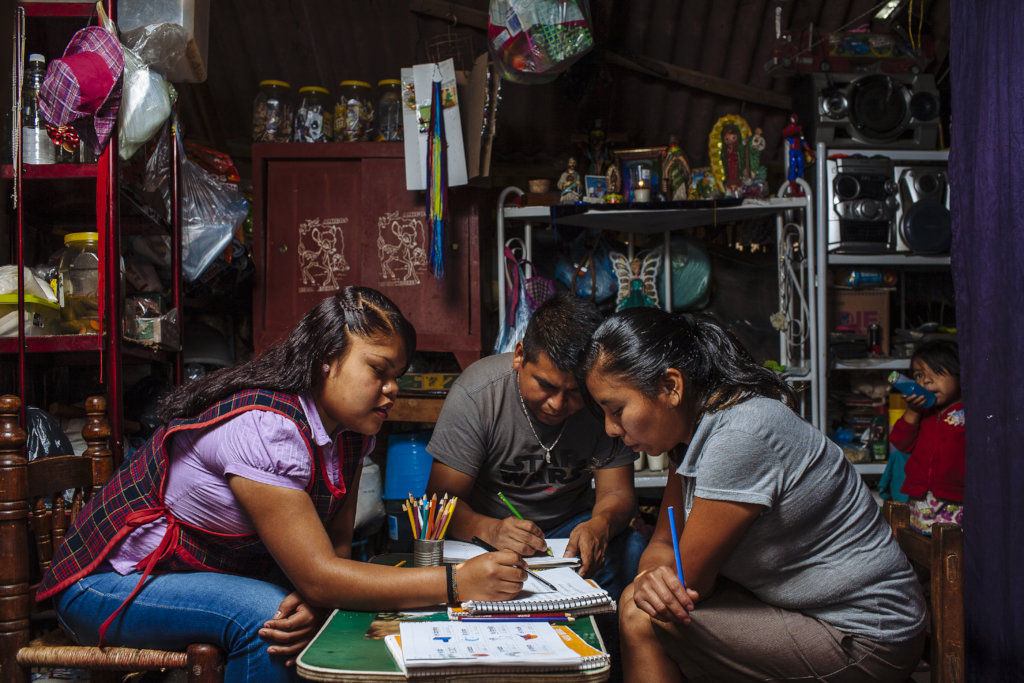
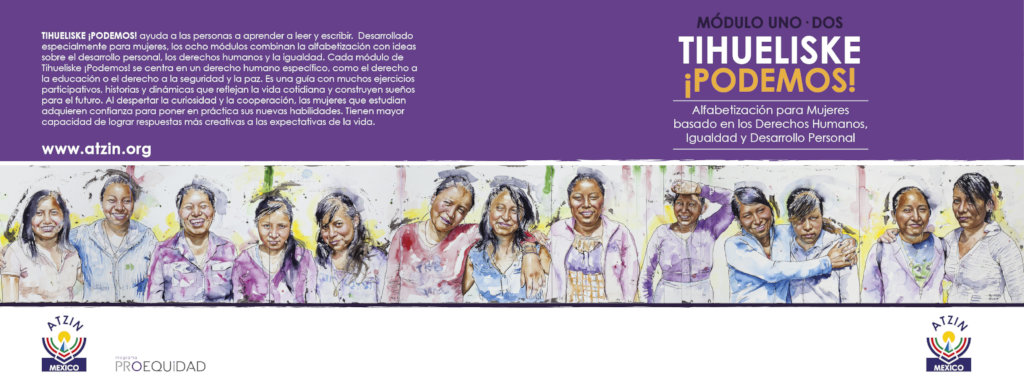
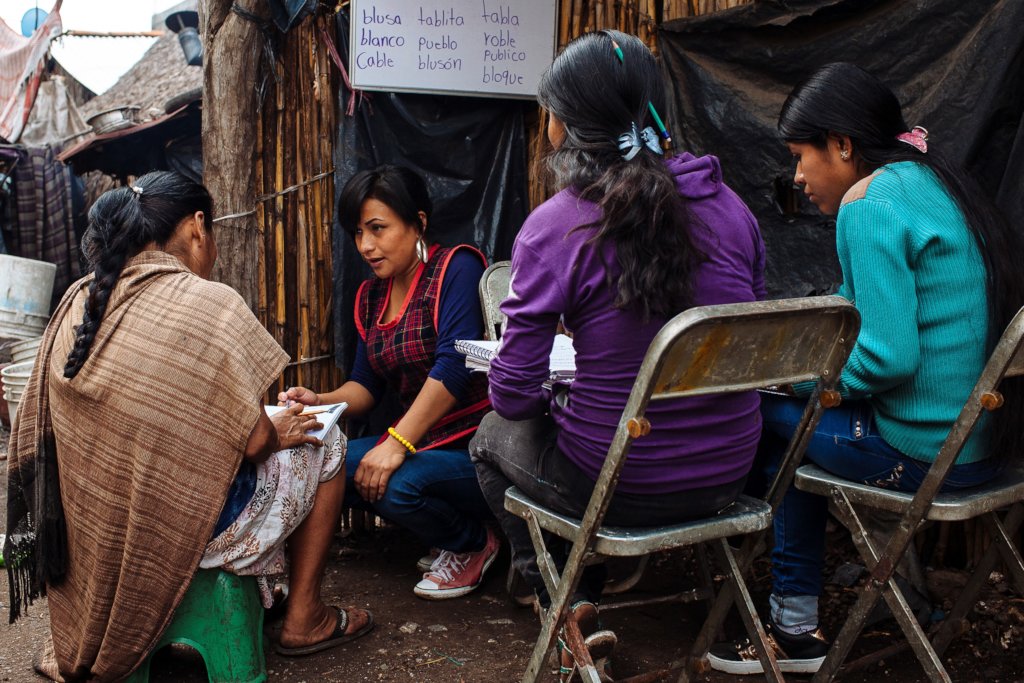
In response, Atzin initiated its first education program, Tihueliske (We Can!) in 2006, focusing first on out-of-school children. By 2011 Atzin had established tutoring classes for children failing grade level in primary school as well as literacy classes for women. Juggling home and work demands the enrolled women learned very slowly and discouraged, frequently dropped out. Diagnosing these weak program results, the Atzin team dove in and eventually developed a completely new plan of studies that blended literacy with information relevant to rural living and plenty of practice. Young village women now teach small classes three afternoons per week in people’s homes. By all reports, learners are suddenly doing well.
Atzin uses a people-centred approach to development, bringing individuals together to support one another. When faced with continued suffering, brave women are taking unprecedented risks, defying cultural norms (“grown women cannot learn to read”) and gradually are transforming their fear into greater self-confidence and taking actions, however small. These experiences accumulate to strengthen their personal resilience and a greater richness of spirit, allowing more effective responses to the demands of their lives.
Literacy is the best gift ever!
Links:
Project reports on GlobalGiving are posted directly to globalgiving.org by Project Leaders as they are completed, generally every 3-4 months. To protect the integrity of these documents, GlobalGiving does not alter them; therefore you may find some language or formatting issues.
If you donate to this project or have donated to this project, you can receive an email when this project posts a report. You can also subscribe for reports without donating.