By Jason Davis | Digital Editor
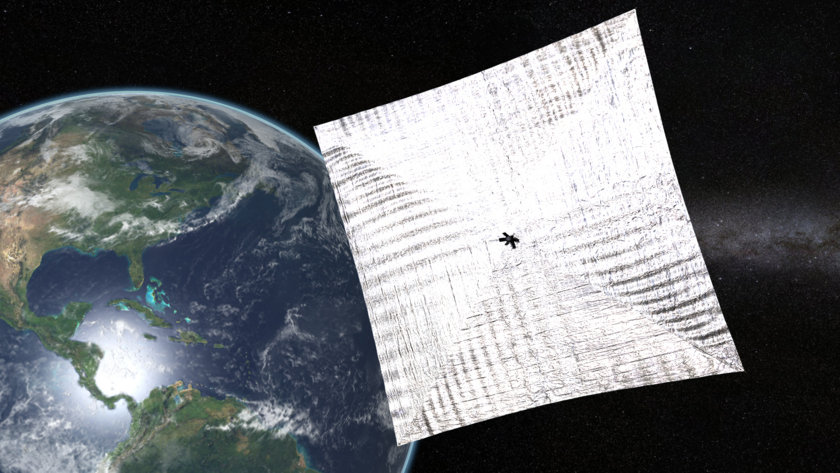
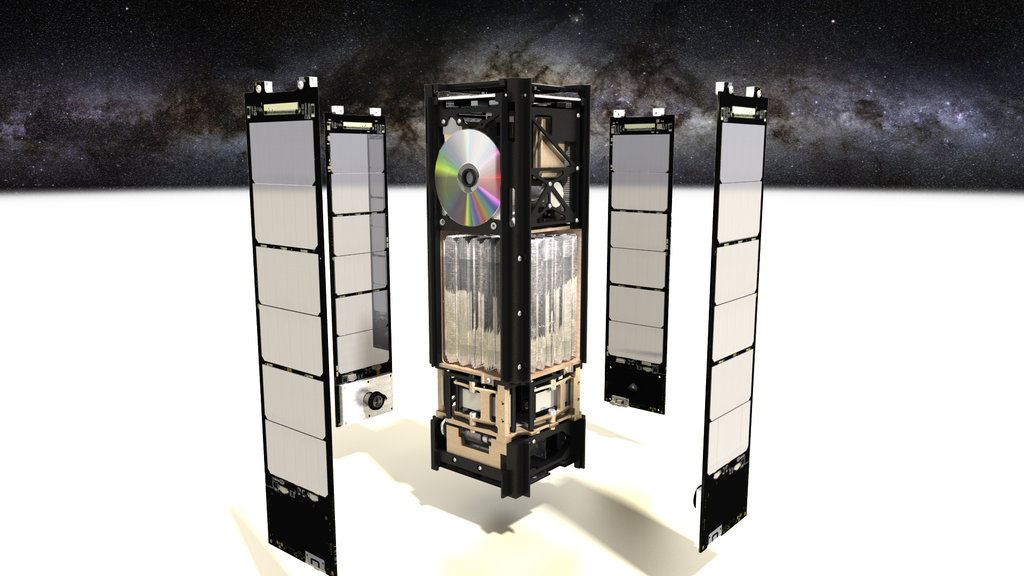
LightSail 2 is integrated in Prox-1! Last week, engineers installed The Planetary Society's solar sailing CubeSat in a spring-loaded deployer, and that deployer was bolted to the Prox-1 spacecraft. It was a double integration; basically we put a box inside a box inside a box.
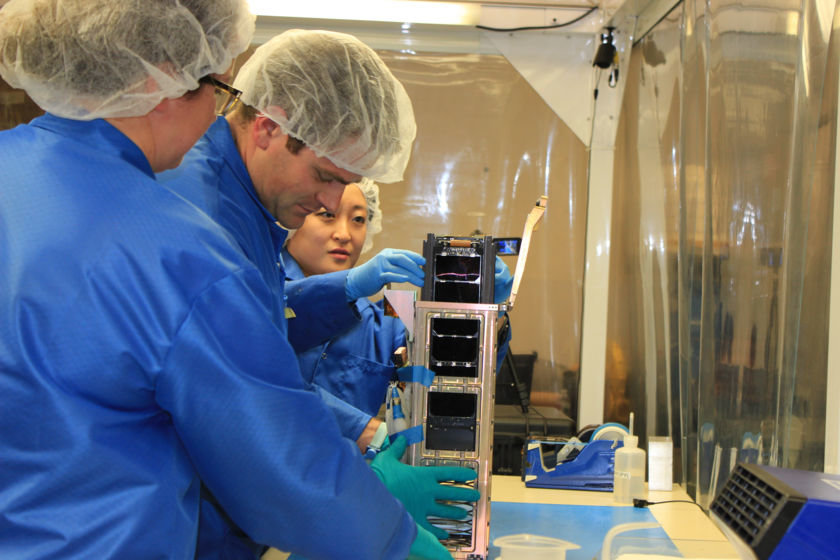
It all started Monday at Cal Poly San Luis Obispo, where engineers integrated LightSail 2 into its P-POD. (As a reminder, P-POD stands for Poly Picosatellite Orbital Deployer.) Our program manager, Bruce Betts, said he spent part of the day literally watching glue dry:
"Everything was slow and cautious, and quite laborious. The engineers weighed, measured and re-measured the spacecraft, and filled out a CubeSat Acceptance Checklist, which Cal Poly uses to make sure LightSail 2 meets the requirements to fit in its P-POD (a really technical, reliable jack-in-the-box used to push CubeSats into space). They measured and tweaked adjustment bolts to ensure perfect placement of LightSail 2 within, then applied the P-POD side panels. They applied glue (twice) to each of the many screws and adjustment bolts used to assemble the P-POD. It was one more reminder that flying successfully in space is complicated—even the "simple" things."
On Thursday, Cal Poly engineers wrapped LightSail 2 in anti-static electronics bags, placed the spacecraft in a Pelican Case, and flew to the Air Force Research Laboratory (AFRL) in Albuquerque to meet up with Prox-1.
Cal Poly commonly flies CubeSats as carry-on items aboard commercial airplanes, and that's how LightSail 2 travelled to Albuquerque. Engineers Ryan Nugent and Alicia Johnstone told me they fly out of San Luis Obispo's small airport, and the TSA agents there are used to seeing spacecraft.
"We do it semi-regularly," Nugent said. The agents usually require a CubeSat to go through manual screening, but the engineer-handlers are allowed to stay with the spacecraft. LightSail 2 was no exception, and the TSA asked that the Pelican Case be opened to swab the outside of the anti-static bags for explosives. All in all, the screening was benign compared to what LightSail 2 will go through on launch day, and then in outer space.
During a layover in Phoenix, Nugent said an airport employee noticed the case, which bore LightSail and CubeSat logos, and asked, "Is that a real CubeSat?" Upon learning that it was, he proceeded to ask all about the mission, and was extra excited to learn the spacecraft would be flying on SpaceX's Falcon Heavy.
In a clean room at AFRL, LightSail 2 met Prox-1 for the first time. Just two of Prox-1's six sides are currently assembled; the other four have to be installed around the P-POD with LightSail 2 inside.
Once Prox-1 is reassembled around the P-POD, the integrated pair will go through one final round of environmental tests. The LightSail 2 team will return to Albuquerque for one final "aliveness" test—basically, they'll power up LightSail 2 to make sure it survived everything and is in a flight-ready state. And from there, it's on to Florida!
Project reports on GlobalGiving are posted directly to globalgiving.org by Project Leaders as they are completed, generally every 3-4 months. To protect the integrity of these documents, GlobalGiving does not alter them; therefore you may find some language or formatting issues.
If you donate to this project or have donated to this project, you can receive an email when this project posts a report. You can also subscribe for reports without donating.