By Sonal Shukla | Managing Trustee
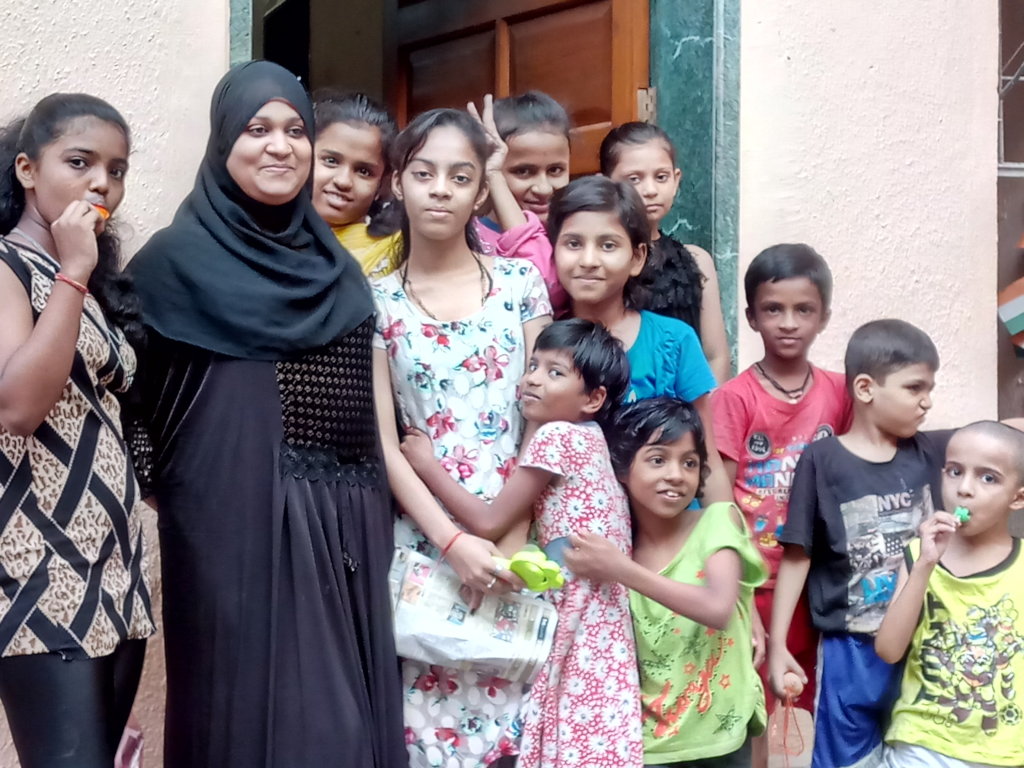
Meet Saleha, one of our team members. A free-spirited young woman, she hails actually from a conventional Muslim family. She wears a burkha because that is her tradition but also, she says, because it gives her mobility to go out. ‘Why argue about this when there are so many other non -traditional things I want to do?’ she says. And those she does. Like stepping out of a bad marriage she was forced to undergo. Like getting involved in community work where she is involved in empowerment of poor girls from many different communities.
Saleha had approached Vacha centre in her locality to see what we were doing. She got interested and wished to become active in our programmes. Today she is in charge of an entire centre in one of the more poor slums in Mumbai. Her work is so good that the main priest of a local Hindu temple who had been against giving us access to the temple space for our work has now voluntarily given us permission to use that space.
Though Saleha is chirpy and enthusiastic about her work and new initiatives, her life has been sad and her problems are not yet over. Eldest of 5 children, she was married off while not yet 18 and she had to go and live in a village. Her in laws were oppressive and the husband a vagabond. He used to be violent with her and sold off her jewellery to support his bad habits. She left him and returned to her parents with a young child. The father kept goading her to go back but she resisted the pressure. She got counselling and support from Vacha but filing for divorce was her own choice. Her husband did not agree to it and would not respond to summons from court. In the meantime he got arrested on a murder charge.
He came to Mumbai when on bail and again pushed for reconciliation but within the same old structure of rural joint family where she would get no support if he was again violent and abusive. She did not go and the court granted her divorce. But it would not be valid under the separate law – Sharia - applicable for Muslim marriages in India. But her husband died suddenly. In one sense she is free now, free from him at least. She is looking forward to completing her studies and be able to support her child.
Saleha had reached her 20s when we met her. We meet many victims of violence and injustice like her in different communities, some of our community organisers have also had suffer in domestic situations a lot. They become role models for others as these young women have learnt to deal with problems that look unsurmountable at first. Our project of Girls’ Empowerment is a preventive action as it equips girls with education and life skills so that, when older, they are not trapped in to similar or comparable situations.
During this festive season of giving, please lend your support for Vacha’s work to continue in poor communities and for our team members like Saleha to pursue their work regularly and effectively. We are forever grateful for your generous contributions through GlobalGiving.
Project reports on GlobalGiving are posted directly to globalgiving.org by Project Leaders as they are completed, generally every 3-4 months. To protect the integrity of these documents, GlobalGiving does not alter them; therefore you may find some language or formatting issues.
If you donate to this project or have donated to this project, you can receive an email when this project posts a report. You can also subscribe for reports without donating.