By Rut Roman | Project Leader
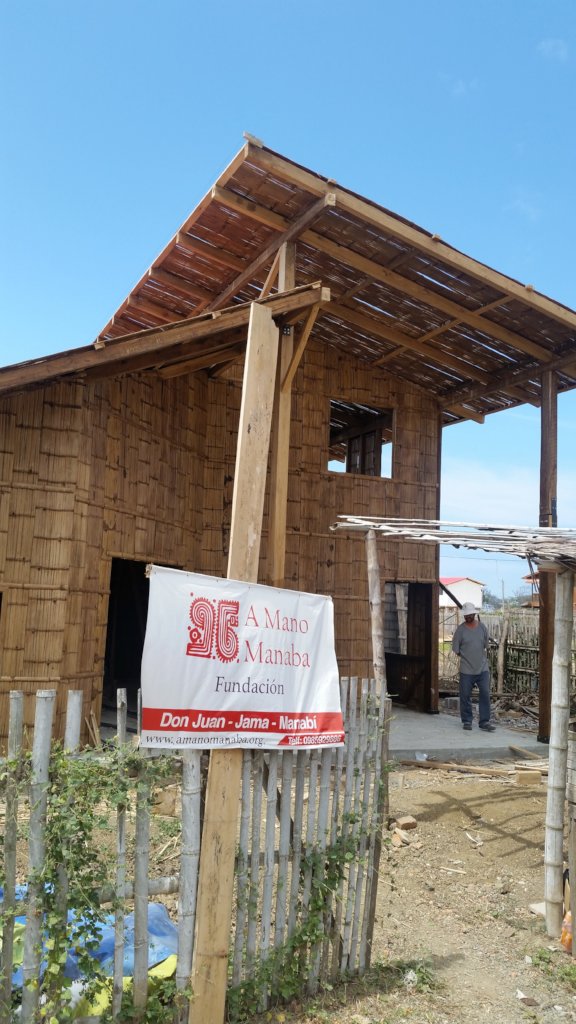
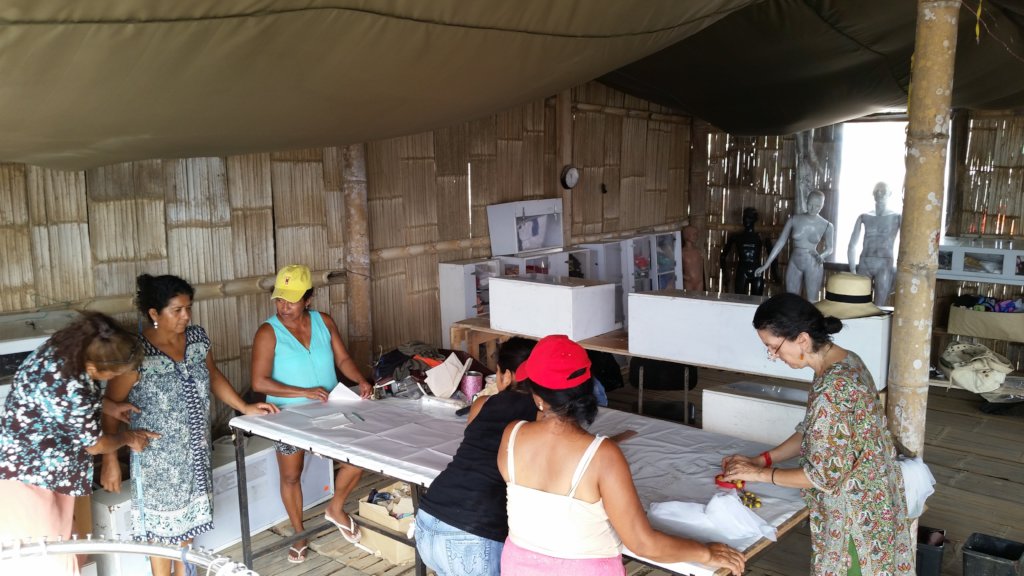
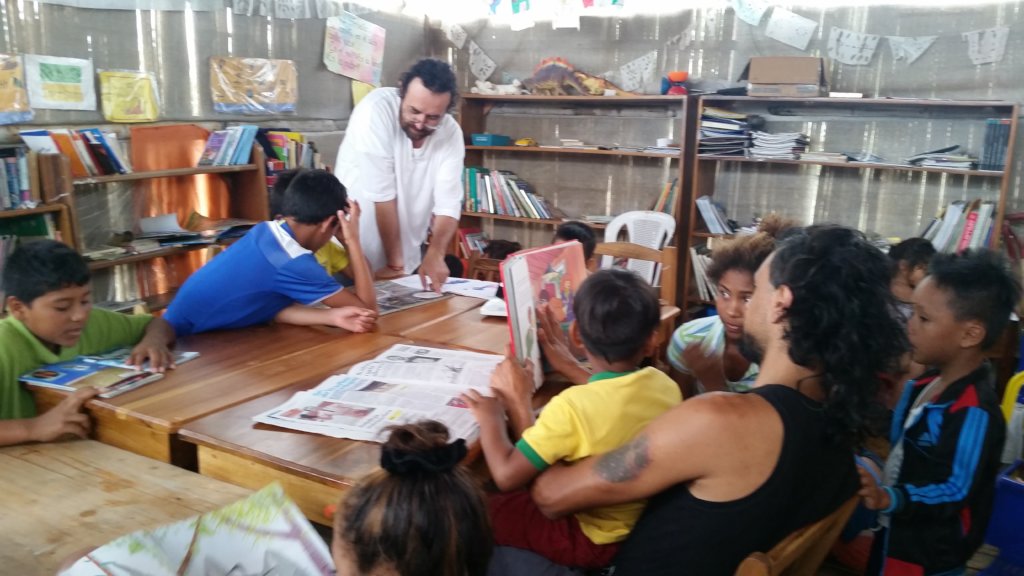
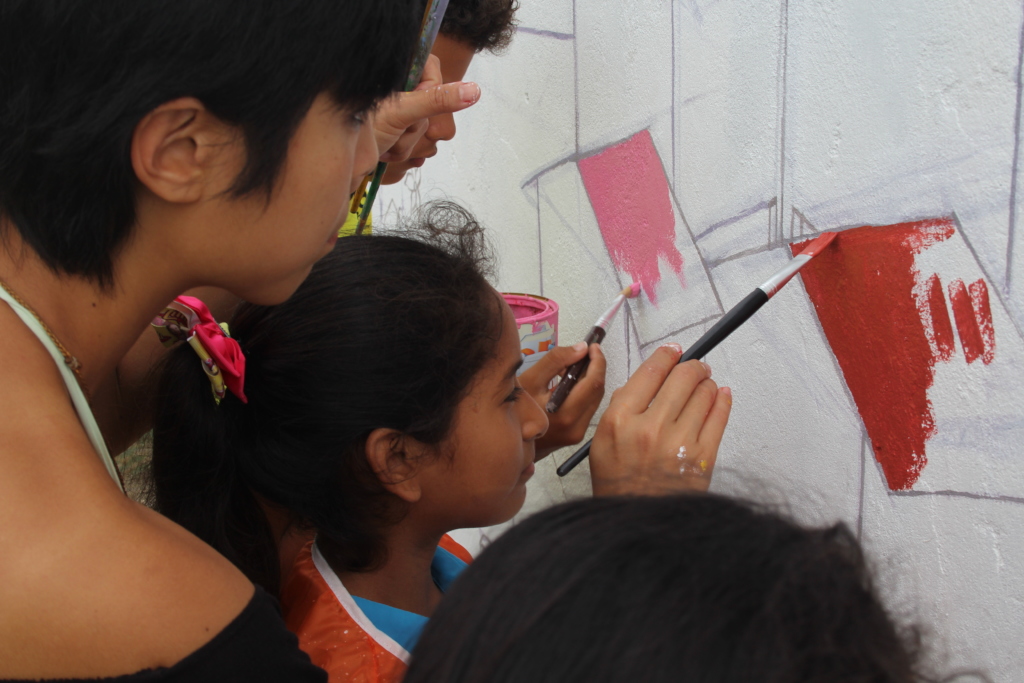
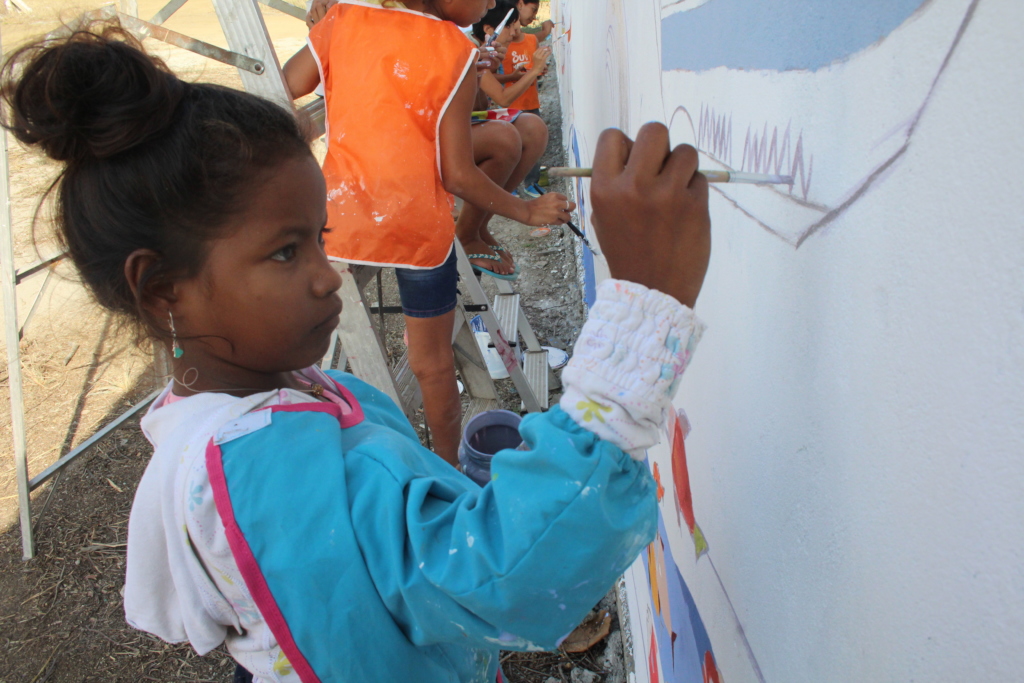
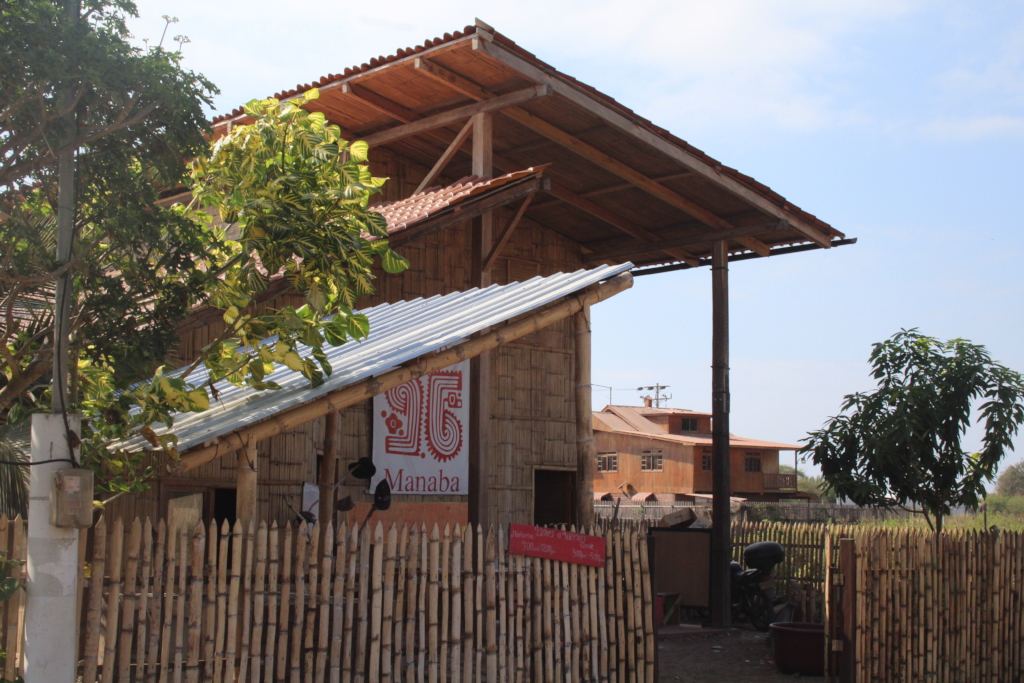
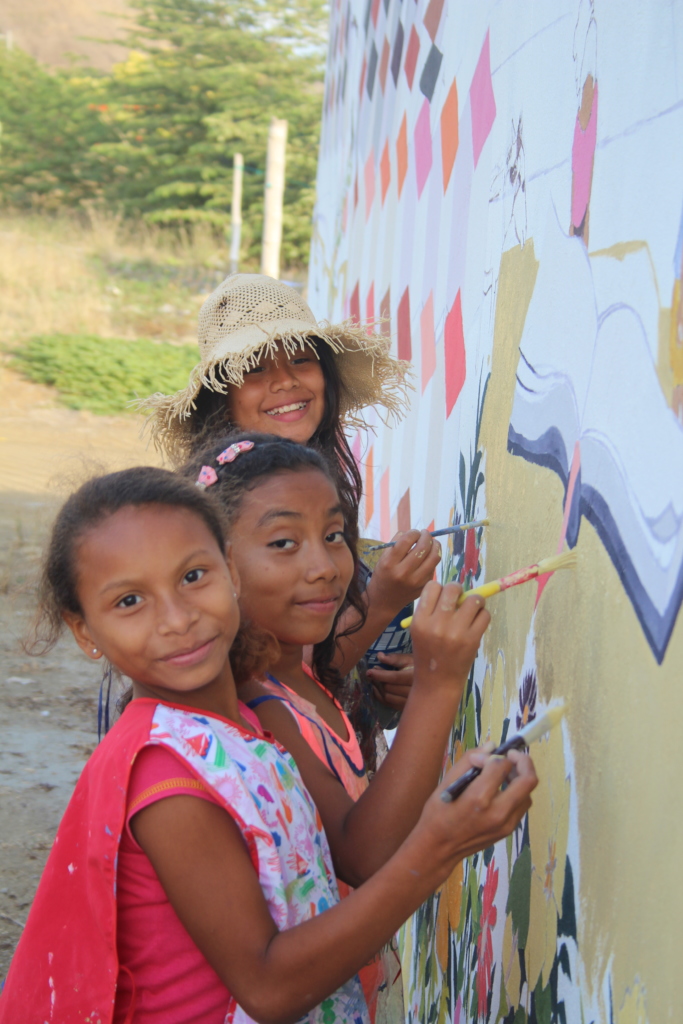
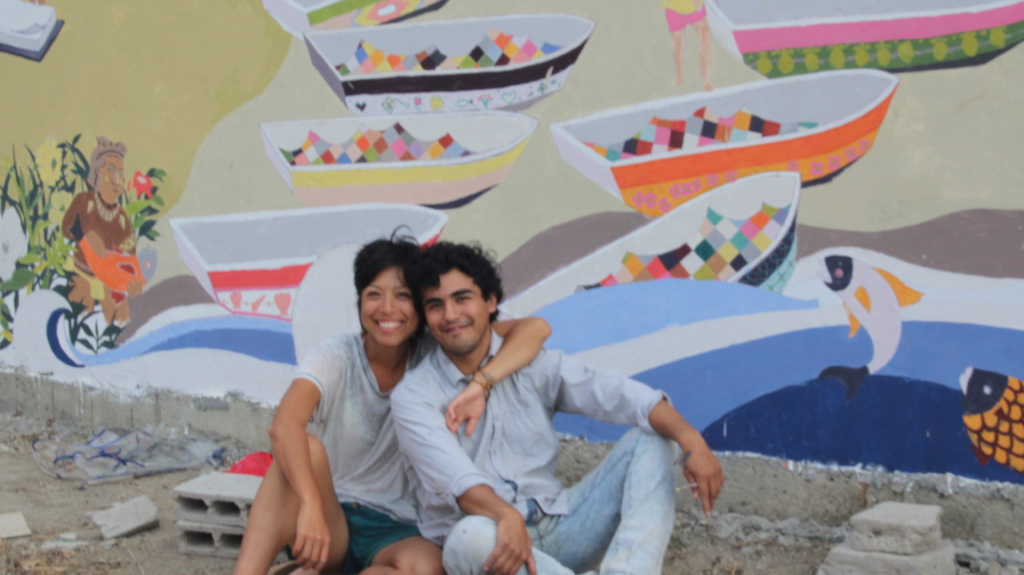
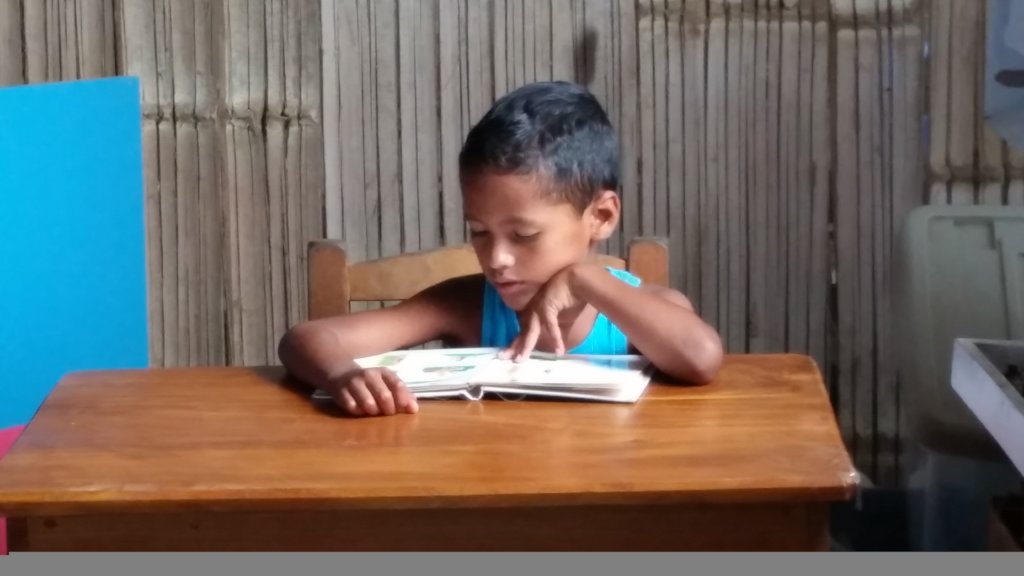
The Intercultural Center A mano manaba (CIAMM) sits in the middle of the tiny fishing village of Don Juan. It houses a Children’s Library, multi-purpose workspace, garden and a suite for volunteers. Volunteers come from around the world and stay for a couple of months. With our programs we try to attract young couples that embody respectful gender relations while sharing their different skills and knowledge with the community. This time we hosted Hsuan Ying Chen , an artist from Taiwan, and her boyfriend Eduardo Nava, an English teacher from Mexico. We invited Hsuan and Eduardo to intervene in the grim surroundings of the CIAMM and help us enliven the environment by engaging our young library patrons in an art project. After two months of hard work they have accomplished wonderful things. Not only are the children excited and interested in art, but they have learned to work with each other and, on top of this, we are now enjoying a beautiful art mural that narrates the vision of Don Juan. Hsuan and Eduardo are nearing the end of their stay with us and we would like to share their experience.
FAMM: Tell us how you found us and why you decided this was the place where you wanted to volunteer. EDUARDO:It was my turn to find a volunteer post, so when I found CIAMM on the internet Hsuan said to me: “it´s a Library, are you sure?’ I said yeah, its perfect, we’ll do murals and teach English at the same time. You will see.
HSUAN: This is what I´ve always wanted to do, not necessarily in alibrary, but with a studio that offers different programs. When I arrived I said “wow! This is how I had envisioned it, a place where kids want to come and explore their interests.” I didn’t set out only to do murals, but this is my third one in Latin America: Guatemala, Colombia and now Ecuador.
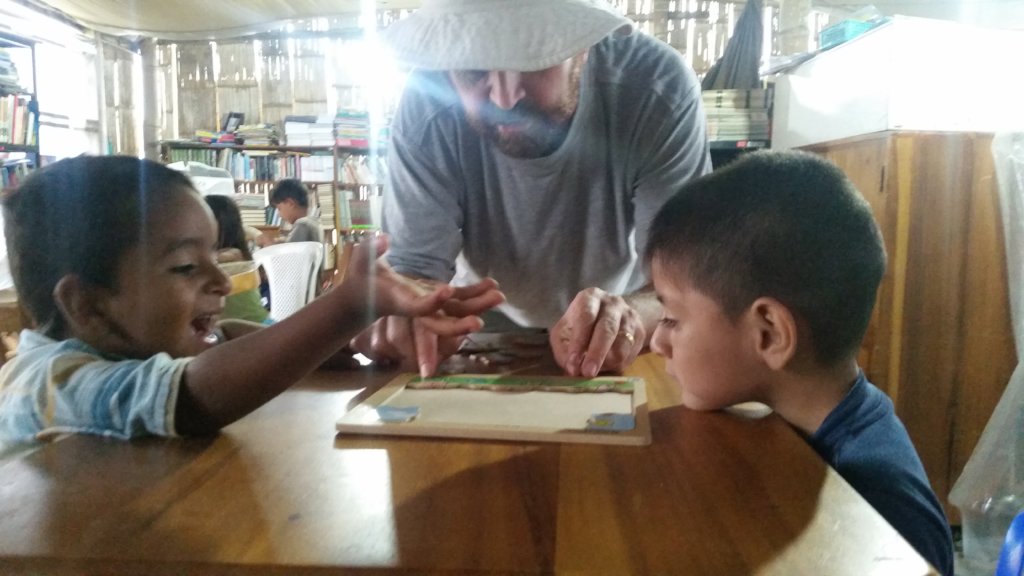
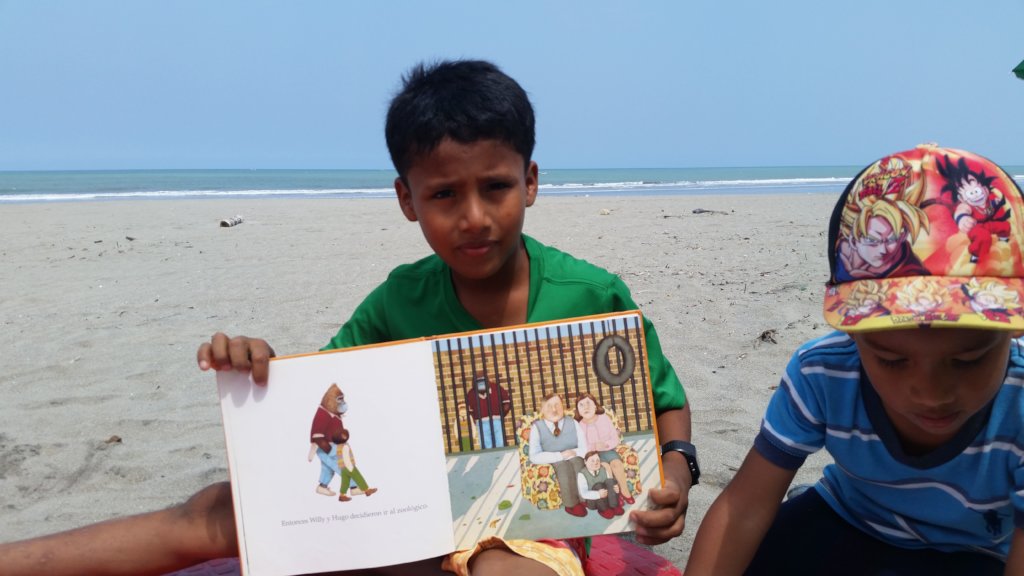
EDUARDO:What makes this program different from others we´ve seen is that nobody makes these kids come, they come on their own, and they’re always ahead of schedule. We open at 3:00 in the afternoon. At 2.30 they start to show up. I can hear them yell at us, “hey,when are you opening?” And I yell back “it´s 2:30 and I´m taking a nap, come back at 3:00.” But they don´t leave! They wait outside for us to open! Even though it’s a library there is so much going on. Kids come to do their homework, read, paint, play, do taekwondo or just hang out.
HSUAN: I always wanted to create anart studio, open to the public, where people could come in and out freely. What I like most about this library is that everyone is having fun and learning.
EDUARDO:It’s pretty dynamic.If a kid wants to read she can, but if she wants to do something else that´s fine.
FAMM: Hsuan, when you were training as a professional artist, did you ever picture yourself doing volunteer work in a fishing village in Ecuador?
HSUAN: I studied at Washington University, St. Louis. Along with conceptual art we were encouraged to do social art projects. As a student I had a lot of classes, but not much practice. When I finished I was tired of it so I went back to China and worked for several years in commercial projects. It paid well but lacked any social impact. I saved money so I could travel to do more social art projects. I started volunteering because I wanted to make myself useful.
FAMM: How would you define a social art project?
HSUAN: It’s when people participate in the planning, development and delivery of an art product. Each participant is changed by the experience.
FAMM:Do you see differences from a couple of months ago and now?
HSUAN: Yeah! More kids draw! In the beginning nobody wanted to draw anything. They would ask for instructions, what do you want me to paint? They wouldn’t touch a blank page, let alone a wall. Now they want to paint on their own. When I first suggested painting a wall there was no interest. It took several days of showing them big mural projects, street art. They would ask, so you can really paint a house like that? They were amazed.
FAMM: What’s the narrative in this mural?
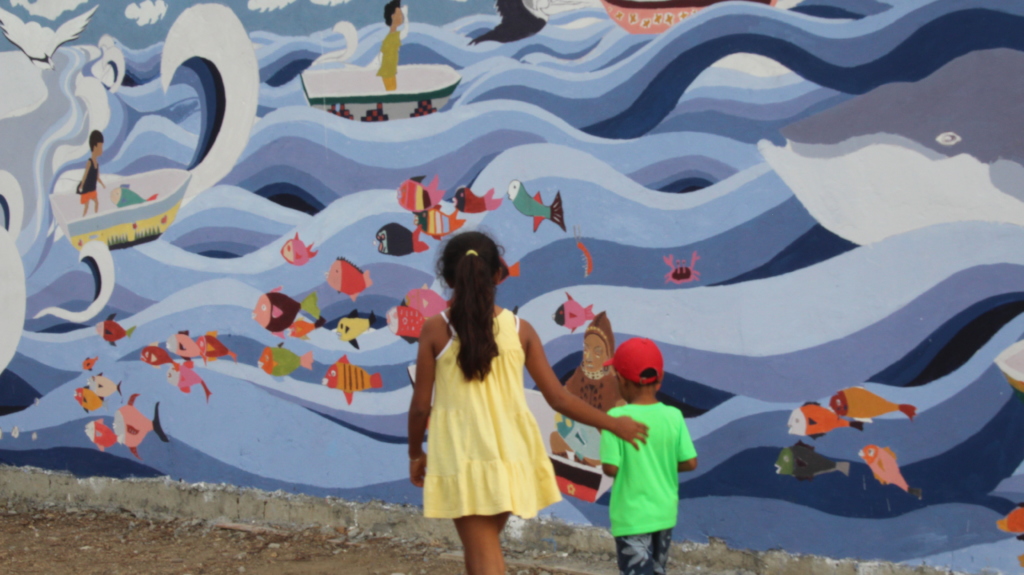
HSUAN: It combines what we discussed with the kids and with you guys (CIAMM directors). When I learned about the devastating 2016 earthquake, I didn’t know if we should address it directly. You suggested not to avoid the earthquake but let this be an opportunity to share memories of the quake. So after a couple of weeks of talking and drawing with the kids I included the earthquake in the mural along other things that please them like the flowers and hearts. The narrative begins with the earthquake and moves on. The kids talked more about the new houses than the sea, which was surprising for us. We incorporated a lot of things in the mural, for example, the muñequitos or “little dolls” which is how kids refer to archeological objects they find in the beach. We wanted to put a library in there but it ended up as a flying book!
FAMM: I like the subtle commentary about the cramped housing project in a spacious beautiful beach. There is beauty in that, but there´s also a statement about space, territory and landholding systems.
HSUAN: You could read it like that, but the kids don’t.They see the houses like toys. One girl said “hey, look how pretty the houses look.”
FAMM: You are planning to come back at some point after you travel south. What would you like to do ideally?
EDUARDO: Yes we definitively want to come back, because when you volunteer for 2 months you think it’s a lot of time, but you really need more time to change things. We´ve been able to engage the kids with the mural but now that they have their own ideas, we´re leaving. Next time we want to support the kids with their own projects. The designs should come from them. This time together we changed an ugly grey wall into a beautiful mural. They now realize that things don´t necessarily have to stay ugly. They´ve learned to be proactive with their surroundings. I think that it’s not so important what you learn, but to know that there are options. If their house is white because the government gave them white houses, they can be changed, if they want. You can change the colors, you can choose, you have options. I can relate to these kids because I come from a different background, from poverty. I always say that if my parents had showed a little bit more interest in me, maybe I could have been an artist or a soccer player. Kids only need a little push, some respectful attention from adults. This project is telling them that they can dream big: if you want to be an artist you can be an artist. From what I have seen, kids here don´t always get that kind of support at home. This place gives them that support. You are telling them that it’s alright to be ambitious with their future. The most gratifying thing is when the kids come the next day and are proud of what they did. This builds self-esteem. When they pass by the mural, they can say “we did this”.
Links:
Project reports on GlobalGiving are posted directly to globalgiving.org by Project Leaders as they are completed, generally every 3-4 months. To protect the integrity of these documents, GlobalGiving does not alter them; therefore you may find some language or formatting issues.
If you donate to this project or have donated to this project, you can receive an email when this project posts a report. You can also subscribe for reports without donating.