By Lydia Bakaki | Founding Director
A-Z aims to create visibility of the plight of the African woman in the transition from communal to market based economies. The plan is to create a model village that brings together women that have been sent out of their homes at divorce or death of spouse and advocate for policy change. Since the inception of Asante Na Zawadi project, we have carried out three sets of activities. We have purchased 123 acres of land and embarked on the construction phase, made two trips to Uganda to launch the project and carried out appreciative inquiry with the women to work out which way forward for the project. Following is a more detailed account of the purchase and surveying of the land, the presentation to the U.S. Congress and the two trips to Uganda.
Construction and visitors
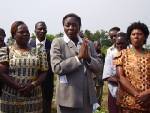
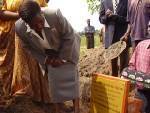
In January 2007 Lydia Bakaki and Joe Cistone went to Uganda to lay a foundation stone on the Asante na Zawadi, Centre for Reciprocal Learning, and to find out the whereabouts of the Domestic Relations Bill (The law that would have provided for spousal joint property ownership of the matrimonial home among other provisions in Uganda, East Africa) which Ugandan women have advocated for since 1953 and in its relatively current form since 1989. The aim was to verify the allegations that the international community has over the years been responsible for the failure of the property related demands of the women. The group also aimed to find out whether the cultural leaders consider their role relevant to women empowerment at all.
The building that was launched can house 10 women living semi-communally. It is made of Adobe bricks joined with cement and mortar. Although the 10 people house is very nice to look at, it is very expensive. For that reason the house is getting built at a very slow rate. It still remains at slightly above the foundation level. In October the Asante group made a decision to embark on two new mud and wattle houses to work as police house and office. The process of construction involves a contractor procuring builders supervising them and preparing the draft manual of construction. By report time, construction was still in progress and the report still being compiled. The pictures of the houses will be attached to the next progress report.
As a result of the mission, we also found out that the Parliament of Uganda plans to put an oral question to the executive to require an update on the Domestic Relations Bill. By doing so, Parliament can debate the issue even if it is not on the order paper and come up with a resolution. Parliament uses that procedure to pass a Parliamentary resolution to require government to expedite the presentation of an issue to the Ugandan Parliament. By so doing members of the Ugandan Parliament hope that the executive will be made to include the DRB in their work plan. We also learnt that the Women Parliamentarians group has a DRB committee and have the DRB on the organizational work plan 2007. I volunteered to help with the development of the proposal, to help the Women Parliamentarians access the DANIDA funds and implement the project successfully
The cultural leaders on the other hand expressed their regret for abandoning their female subjects to such levels of suffering. The Minister of Gender in the Buganda Kingdom made a plan to rectify the situation by providing guidance to clan leaders and family heads. A meeting was scheduled that day to look into the matter. The Minister relayed our concerns to the King of Buganda. The King expressed support to the cause.
Although we found that the International community in Uganda no longer uses Laws, as conditionality for funds releases, to the Ugandan Government, Danida Human Rights and Democratization Program, reiterated its commitment to fund the Ugandan Women Parliamentarians in their quest for the DRB.
In June 2007 Elizabeth Kucinich and Lydia Bakaki went to Uganda. They were supposed travel with Joe, Director of International Partners in Mission and with Marcia Odel, founder of WORTH, a microfinance project that is works in developing countries but they were not able to travel at that time due to schedule conflicts. The aim of the trip was to complete the Appreciative Inquiry workshop that Lydia started on in January 2007 and investigate the WORTH microfinance method for replication. We also planned to visit policy makers at the level of government for visibility.
Elizabeth traveled before Lydia and visited the WORTH Microfinance groups in Mbale in Eastern Uganda. As a result of her visit and prior briefing, Elizabeth found out that the women pool their money and have the members with viable projects borrow the money at a small interest. The group profits are shared by whoever put money into the pool. The method was found suitable for A-Z. WORTH committed to send some women from the established groups to A-Z to train the women. It was agreed that A-Z’s would meet the cost of translating the materials while other modalities would be discussed and agreed on between WORTH and A-Z. After further deliberations, it was found that A-Z is better off developing their own micro enterprise system and implements it without incurring the expense of translating materials and other coincidental costs. The implementation of this activity will start after the women have moved onto the land.
The Appreciative Inquiry session was meant to take place at Uganda Women’s Network compound. The meeting had been planned for the morning but due to changes in our schedule, the meeting took place in the afternoon. The meeting aimed at coming up with best practices in the women’s past to carry with them into the village. The meeting also planned to come up with a ground plan of the village. There was also a plan to travel to the land and distribute plots to the women. Due to time constraints, the women discussed the plan in a hurry. The group went straight into planning. The women discussed and drew what they thought the village should look like. In response to the suggestion of a corporative the women expressed that they wished each one of them to have their own plot. They would then organize their houses in four clusters or create a township where a school, hospital and their houses would be built. The women emphasized the need for each of them to acquire ownership of an acre of land within the communal living system. They said that they did not mind how the place would be organized or where the houses would be built. It was agreed that the plan would be a living plan and that they would have a chance to adjust it at anytime before the finalization of the plan.
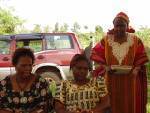
When the group got to the land, the surveyors were not at the land to show the women the boundaries. However over the next four days the surveyors re-divided the land into plots. Lydia was also able to meet with some people that had started encroaching on the land. She got together the local council leader, the political leaders, government officials, police and the people to discuss when they will stop encroaching on the land. The people agreed if they can be given a small portion of the land next to their land, they would stop encroaching on the land. They agreed that the surveyors would adjust the plan accordingly. We showed the women who were present the boundaries of their various plots. The women were about 10 in number. UWONET plans to show more women their boundaries in September 2007.
Although the project continues to run under a strict budget, the project has been able to increase the visibility of Ugandan women in the transition from communal to private ownership of property. The project now boasts of houses being built and visits by policy makers including Elizabeth Kucinich and Joe Cistone, Executive Director International Partners in Mission. We intend to double our efforts in fundraising and to improve coordination
Future plans
1. The project plans to distribute land to more women and to get some houses built on the land in order to avoid further encroachment. An agreement has been developed between the surveyor and the project to get all the land demarcated by the end of the year. 2. In the short run, the project intends to construct a police house and one woman’s home. The area Member of Parliament, the Councilor and the local Police promised to grant the project a police post if we can provide an office for police on duty. The office would double as a house for the family of the policeman in charge of the station. We plan to use the money that remained from the launch to construct two houses. 3. The long-term plan is to construct the village. The construction will depend on how fast we can secure money for construction. The project women have offered in-kind labor while they learn on the job how to construct. The plan is to have them take over from the constructors. The women intent to form a construction company after learning and securing a construction manual for rural women. The constructors agreed to develop a manual as part of the teaching and supervision of the women.
Project reports on GlobalGiving are posted directly to globalgiving.org by Project Leaders as they are completed, generally every 3-4 months. To protect the integrity of these documents, GlobalGiving does not alter them; therefore you may find some language or formatting issues.
If you donate to this project or have donated to this project, you can receive an email when this project posts a report. You can also subscribe for reports without donating.