By Suzanne Plopper | Program manager
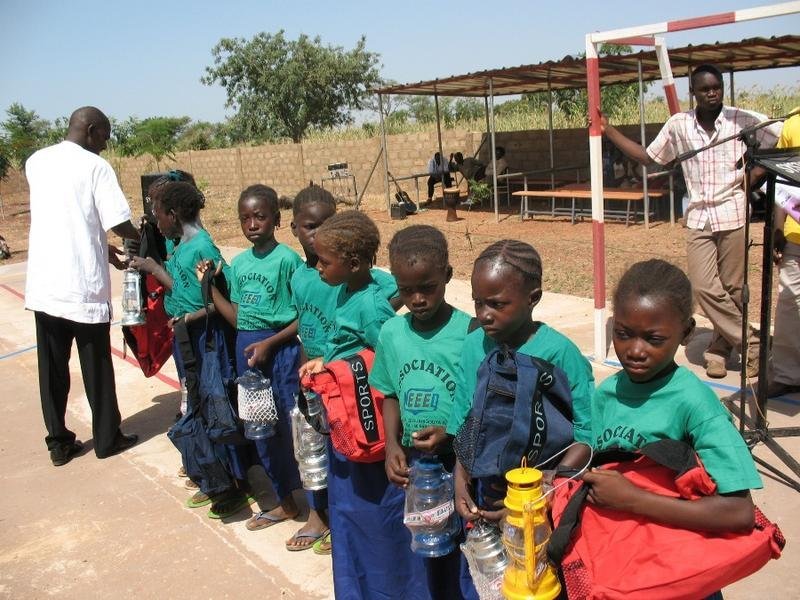
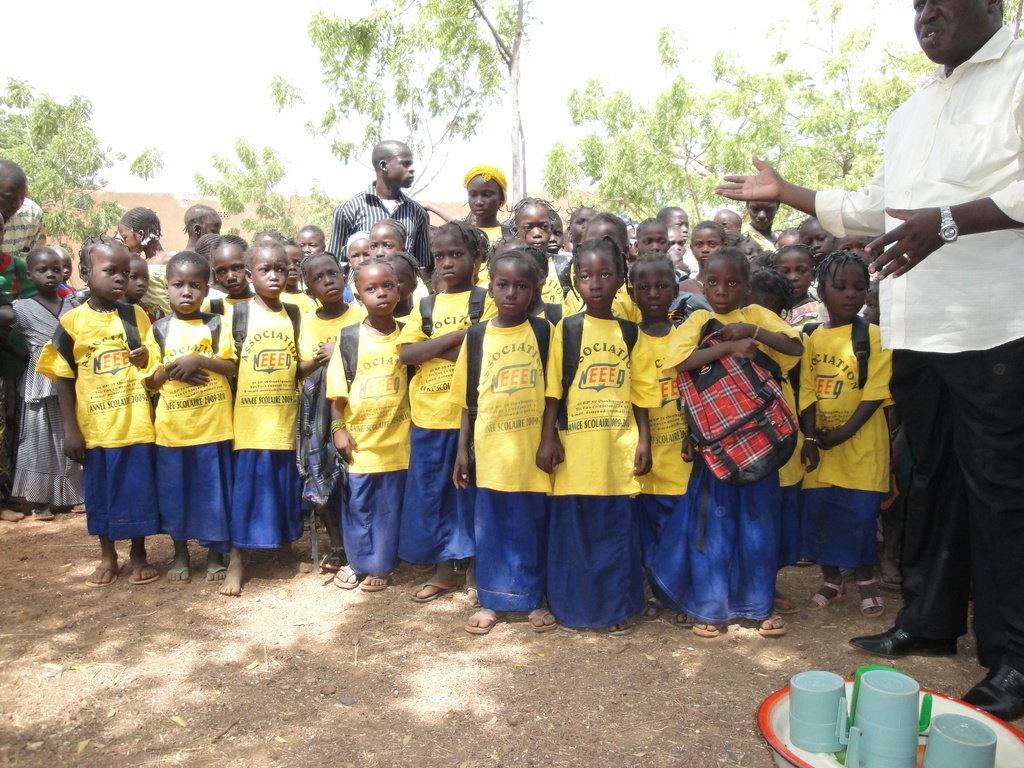
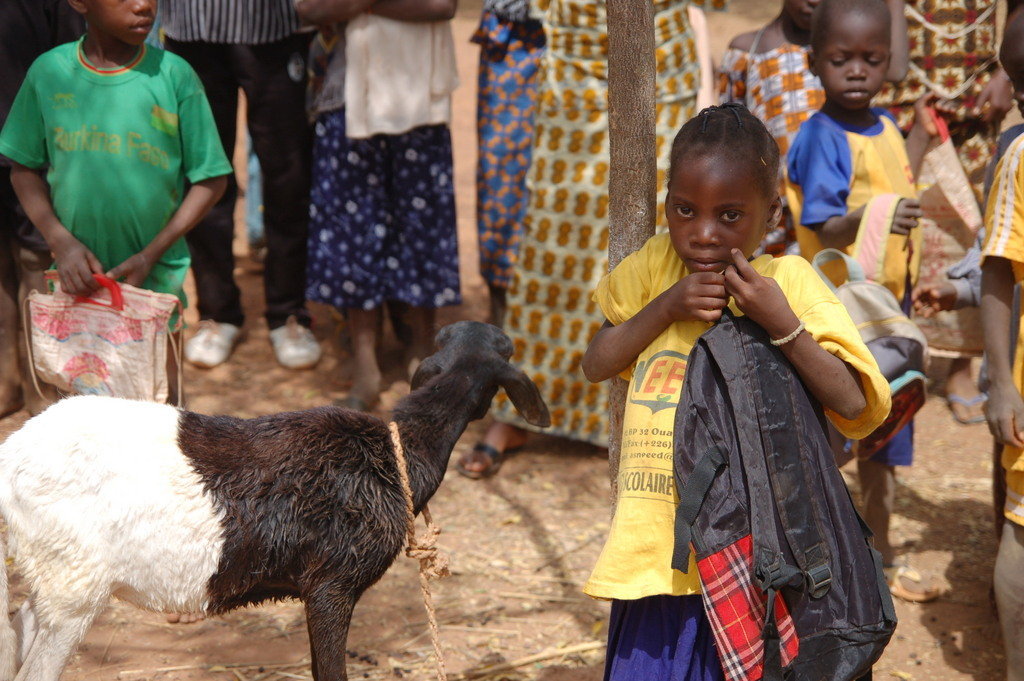
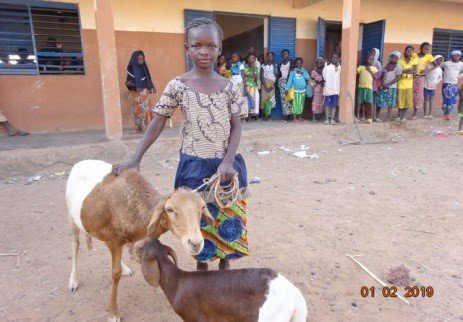
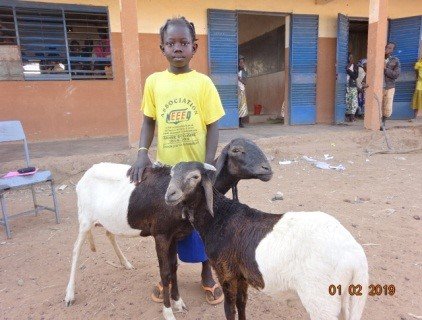
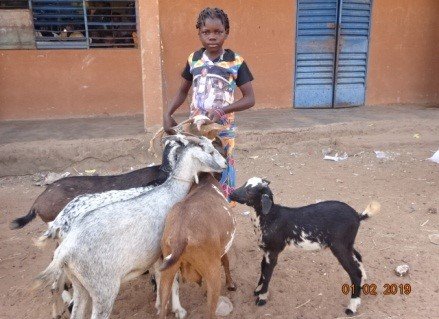
The village of Riqui is an example of the success of Assn NEEED’s Lambs Support Girls’ Education Project in northern Burkina Faso. In the school year 2014-2015, NEEED responded to Riqui’s request to participate in this project by supporting the entry into primary school of 43 girls – each with a lamb and school materials - for the first year of school.
Of the 43 girls who entered primary school in Riqui, thanks to Assn NEEED and to our collective support, 40 are in their fifth year of primary school. (Three left Riqui’s primary school two years ago as their families moved to Ivory Coast in search of employment.) NEEED staff met recently with students, parents and teachers in Riqui. The students shared that selling their lambs (and buying new younger ones) each year has enabled them to buy school materials and clothes to enable them to stay in school, and to contribute occasionally, when necessary, to their family’s food needs. An added bonus: because sheep often have twins, and occasionally triplets, girls who were lucky enough to be given a “first” female lamb who was pregnant at the time now have 2-6 lambs. These young girls are learning the value of building their “asset”, knowledge which will continue to serve them as they grow up.
Academically, over the past 14 years, 84% of the village girls enrolled in primary school through the Lambs Support Girls’ Education Projecthave passed the national exit exam at the end of primary school, qualifying them to continue on to middle school, compared with 64% of their peers throughout the northern region. And it keeps getting better. 2016: 86.3% passed; 2017: 87.1% passed. In 2018 89.6% received their Certificat d’Etudes Primaires, (compared with 58.8% of students in the province, 56.1% of students in the region and 61.6% of students nationally).
NEEED sincerely thanks GlobalGiving donors for your support without which the education of village girls in northern Burkina Faso, and the increasingly positive cultural climate for girls’ education in this region, would not be possible.
Project reports on GlobalGiving are posted directly to globalgiving.org by Project Leaders as they are completed, generally every 3-4 months. To protect the integrity of these documents, GlobalGiving does not alter them; therefore you may find some language or formatting issues.
If you donate to this project or have donated to this project, you can receive an email when this project posts a report. You can also subscribe for reports without donating.