By David Bartecchi | Project Director
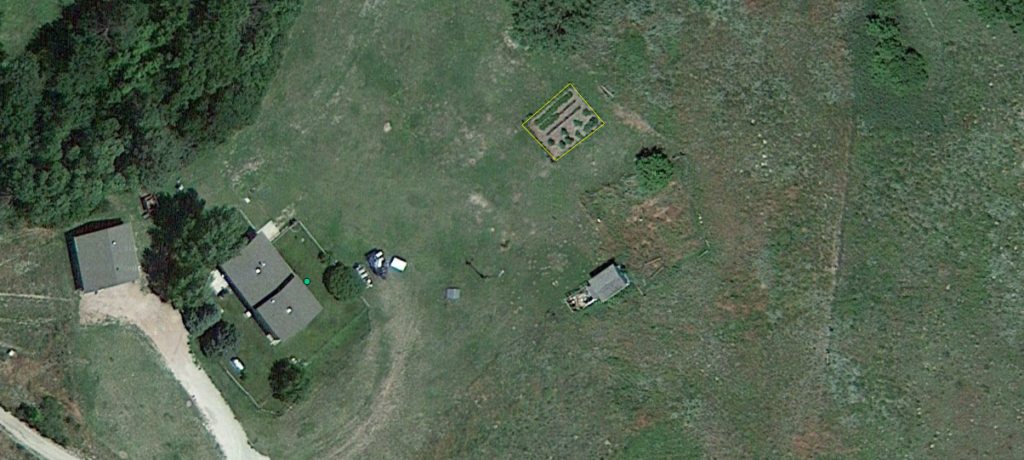
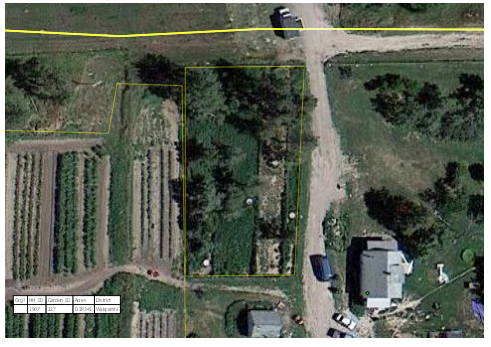
Village Earth's Lakota Lands Recovery's Project has been busy at work this summer and fall working on a project in partnership with the Lakota organization Thunder Valley CDC to locate and map all the domestic garden plots on the Pine Ridge Indian Reservation.
According to the most recent 2012 USDA census of agriculture for Native American Reservations, non-native producers control nearly 60% of all agriculture land and 65% of all the active farms and ranches on Native American Reservations in South Dakota. In economic terms, a whopping 84.5% of all agriculture income on South Dakota Reservations is collected by non-native producers.
The unequal land-use patterns seen on reservations today is a direct outcome of discriminatory lending practices, land fractionation and specifically, Federal policies over the last century that have excluded native land owners from the ability to utilize their lands while at the same time opening them up to non-native farmers and ranchers. Another cause, discriminatory lending practices, as argued in court cases such as Keepseagle vs. Vilsack that demonstrated that Native Americans have been denied roughly 3 billion in credit. Another significant obstacle is the high degree of fractionation of Reservation lands caused by the General Allotment Act (GAA) of 1887. Over a century of unplanned inheritance by the Bureau of Indian Affairs has created a situation where reservation lands have become severely fractionated. Today, for a Native land owner to consolidate and utilize his or her allotted lands they may have to get the signed approval of dozens, hundreds or even thousands of separate land owners. As a result, most Indian land owners have few options besides leasing their lands out as part of the Federal Government’s leasing program. Additionally, historical and racially-based policies by the Federal government have been designed to exclude Native American farmers and ranchers from utilizing their own lands, opening them up to non-natives for a fraction of their fair market value.
The unequal land-use on Pine Ridge has also contributed to the highly insecure food economy which is heavily dependent on Federal commodities and highly processed foods. Despite the fact that there is a great deal of commodity agricultural production taking place on and around the reservation, the majority of foods are shipped-in from hundreds or even thousands of miles away.
The lack of availability of healthy foods has also contributed to the unprecedented rates of food related disease among Tribal members living on the Reservation. According to research done on the Pine Ridge Reservation by Benjamin Jewell and Kathleen Pickering from Colorado State University; “more than 71% of households are impacted by dietary diseases.”
In the face of the incredible obstacles to participating in market-based production, there is a long-tradition of informal modes of agriculture production on the Pine Ridge Reservation (Robertson 2001). One of the most widespread modes of informal agriculture production includes domestic gardens. However, until recently, it has been difficult for researchers and community planners to accurately measure the number of domestic and impact of those gardens on Reservation livelihoods. Yet, according to (Dewaelheyns 2014) “Detailed information on the stock of domestic gardens is needed to develop all-inclusive policies that include domestic gardens.”
In order to gain greater insight into the impact of domestic gardens on the livelihoods of residents of the Pine Ridge Indian Reservation, this study attempts to map 100% of the gardens on the Pine Ridge Indian Reservation using high resolution satellite imagery.
We thank you for your support of this important initiative.
Project reports on GlobalGiving are posted directly to globalgiving.org by Project Leaders as they are completed, generally every 3-4 months. To protect the integrity of these documents, GlobalGiving does not alter them; therefore you may find some language or formatting issues.
If you donate to this project or have donated to this project, you can receive an email when this project posts a report. You can also subscribe for reports without donating.