By Marie Fischborn | Programme Officer, Protected Areas Solutions
Serengeti was Tanzania’s first national park, established in 1951; Saadani is one of the latest additions to the country’s park network, gazetted in 2005. The creation of Serengeti National Park was accompanied by fierce conflicts between conservation and human rights, linked to evictions of Maasai settling in the area covered by the new park. So was anything learned in the time between these two events?
In terms of ensuring community consultation and buy-in, not that much, it seems. Saadani was similarly established with a ‘top-down’ approach and no proper community consultation. As a result, people in the adjacent villages were basically informed that they would have to give up certain rights such as collection of firewood, as well as part of their village land.
At the same time, Saadani isn’t exactly one of Tanzania’s iconic parks (had you heard of it before?). While it combines a unique array of habitats, and is the country’s only coastal park – ‘where the bush meets the beach’ – it is not nearly as rich in wildlife as many of the other national parks. Situated away from Tanzania’s main tourist areas, most visitors give the park a pass, leaving communities in the area feeling they have gained little revenue in return for all the rights they had given up.
So a simple question was left unanswered when Saadani National Park was established: If you take rights away from people, but don’t provide benefits to them in return, how do you expect them to support the park?
Recognising the need to build dialogue, the Kesho Trust has been working to improve relationships between the park agency and the villages. I was fortunate to be able to volunteer with them as my ‘Innovation Week’ project for my professional learning and capacity building (and boy, did I learn a lot!), while taking the work of IUCN’s Global Protected Areas Programme on protected area solutions and ‘solution-ing’ to the grassroots level.
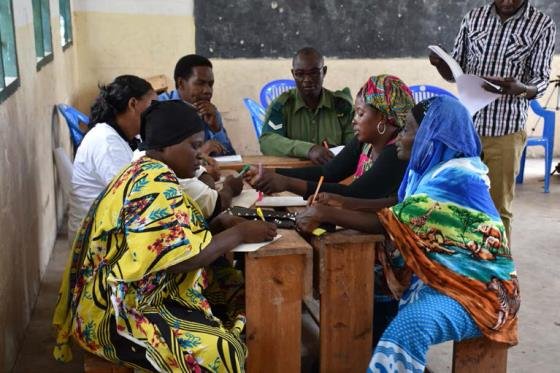
In meetings with community members in different villages, we discussed the successful steps they have taken already, with support from the Kesho Trust, to improve relations with the park agency. These ranged from writing songs and poems, aimed to raise awareness among the communities about the importance of conservation, to regular meetings between park staff and community representatives. These meetings are an opportunity for both sides to better understand each other’s position, while developing specific ideas together, such as training village rangers to support anti-poaching efforts in the park.
I was impressed by the dedication of the community conservation committees, who have been engaging in the activities for several years already. Facilitating discussions in fishing villages is not usually part of my job description (and it all being complicated further by the fact that I don’t speak their language), so I was slightly nervous about not finding a connection with the people. My fears were unfounded however as they were grateful for the opportunity to raise their concerns, discuss them with park staff, and have someone “from as far away as Switzerland” taking an interest.
They also appreciated examples I brought in, showcasing solutions that have been found elsewhere for aligning conservation and community development needs in protected areas, showing that success stories can inspire and their elements be transferred across geographic boundaries.
I still felt a level of tension and defensiveness in the meetings. Mistrust is deeply rooted and will not be overcome from one day to the next. Still, the small steps taken are leading to gradual improvements and both sides were quick to acknowledge that.
The result of this week of ‘solutioning’ will be a truly community-sourced ‘protected area solution’ case study to be published on IUCN’s Panorama platform.
So, it seems there is hope for things in Saadani to improve gradually. Along with the populations of the park’s large mammals being on the rise, the communities’ frustrations seem to slowly melt, while the park agency is taking them more and more seriously – suluhisho (’solutions’ in Swahili) can be found!
And next time you visit Tanzania, consider adding this park to your safari itinerary – you might just be lucky and see elephants taking a dip in the ocean!
Links:
Project reports on GlobalGiving are posted directly to globalgiving.org by Project Leaders as they are completed, generally every 3-4 months. To protect the integrity of these documents, GlobalGiving does not alter them; therefore you may find some language or formatting issues.
If you donate to this project or have donated to this project, you can receive an email when this project posts a report. You can also subscribe for reports without donating.