By Constance Hunt | Executive Director
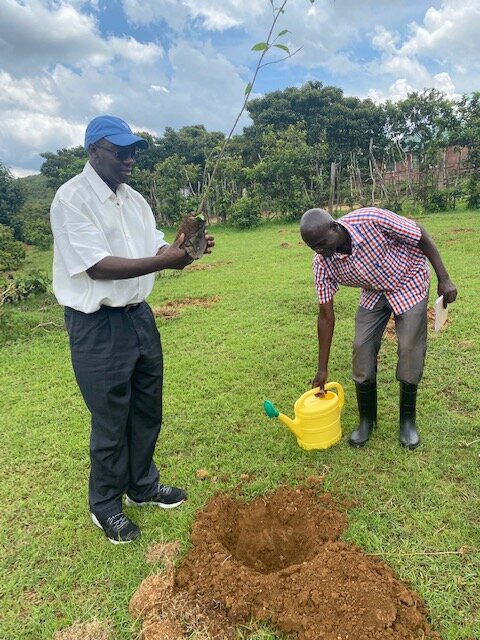
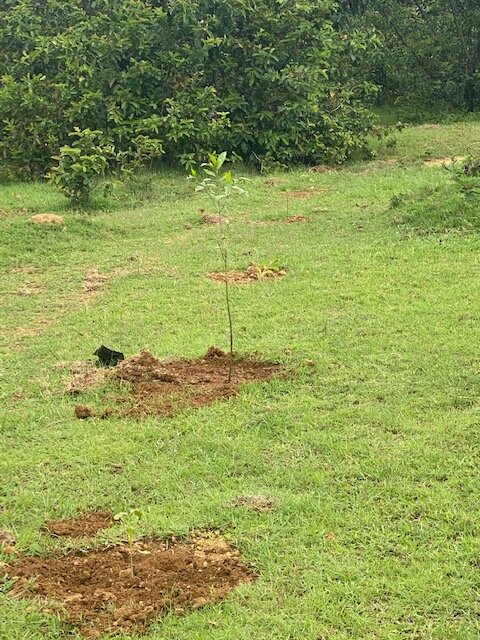
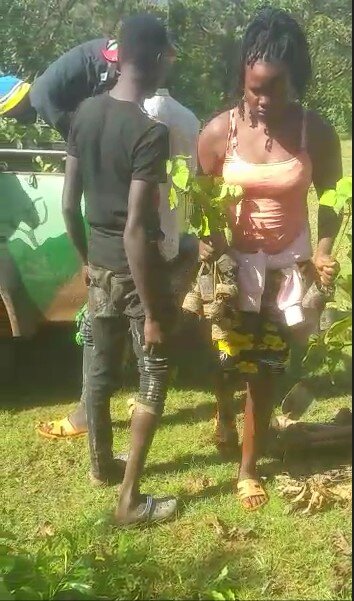
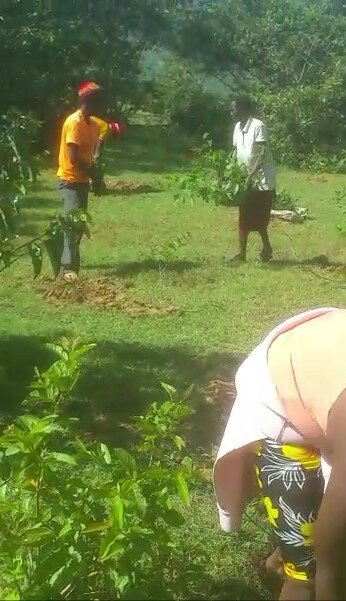
We restored our first hectare in the Kakamega Rainforest in March and April. Site preparation, including clearing exotic vegetation and digging holes for the seedlings of species native to the forest, took place on March 30, followed by the planting of 1000 seedlings on 1 April (no fooling!).
Many of the native tree seedlings were produced in our own nurseries, but we also purchased some from the Muelishi Community Forest Association, one of our local partners, in order to increase the species diversity.
The species planted were:
Albezia grandbracteata (large-leaf albezia), a legume which adds nitrogen to the soil naturally;
Brindelia micrantha (golden leaf), a larval food plant for butterflies;
Croton macrostachys (broad-leaf croton), which helps control soil erosion;
Maeopsis emenii (umbrella tree), the fruits of which are eaten by monkeys and large birds such as hornbills;
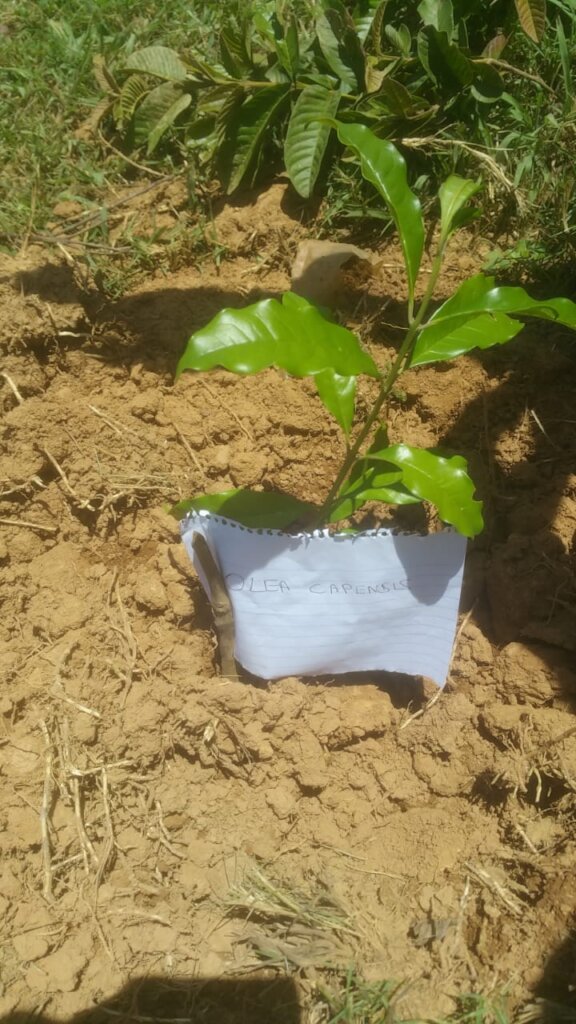
Olea capensis welwitschii (Elgon teak), the blossoms of which provide pollen and nectar for bees and the fruits of which are edible;
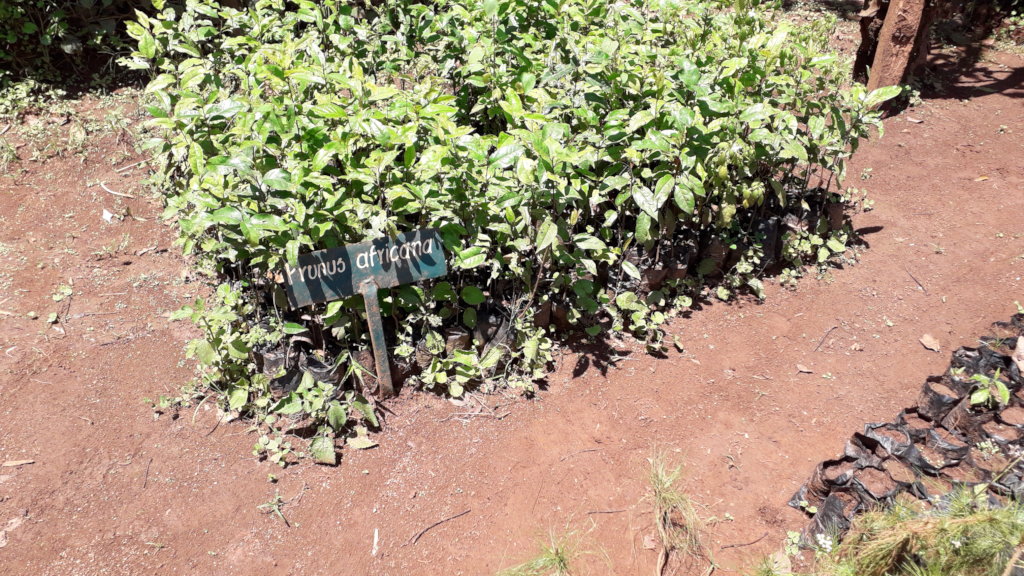
Prunus Africana (African cherry), an important food source for frugivorous birds and mammals; and
Zanthoxlum gilletii (East African satinwood), the flowers of which produce nectar and pollen for honey bees.
All these species have uses for people as well as for the forest ecology. Most of them have medicinal properties. Many produce leaves that are good for livestock fodder and crop mulch. The timber of most of them can be used to make tools and construct houses. Elgon teak is used in the crafting of fine wood products, including furniture and decorative doors. East African Satinwood produces the spice "uzazi," which has a spicier flavor and greater pugnancy than sichaun pepper!
The rains were steady and the seedlings are growing well, but some seedings are always lost in the transplant process. We "beat up" the first planting (no physical violence was involved!) by planting an additional 100 young trees to replace seedlings that had whithered on 21 April. In the process, we added an additional 6 species to our inventory, including:
Polyscias fulva, a fast-growing species with leaves that form a nutritious mulch on the forest floor;
Teclea nobilis (small-fruited teclea), the fruits of which are edible and flowers provide nectar and pollen for bees;
Manilkara butugi, a tree that provides roosts and fruit for bats (threatened by forest loss) which, in turn, are important fertilizers of farms and fields as well as predators on crop pests such as rats and insects;
Albezia coriaria (lightwood) a nitrogen-fixing legume;
Funtumia africana (Lagos silkrubber tree), whose root system protects moist, forest soils from erosion and whose leaf litter enriches soil fertility;
Sapium ellypticum, which produces leaves that are a source of protien for monkeys, such as the black and white colubus (guereza).
Project reports on GlobalGiving are posted directly to globalgiving.org by Project Leaders as they are completed, generally every 3-4 months. To protect the integrity of these documents, GlobalGiving does not alter them; therefore you may find some language or formatting issues.
If you donate to this project or have donated to this project, you can receive an email when this project posts a report. You can also subscribe for reports without donating.



Support this important cause by creating a personalized fundraising page.
Start a Fundraiser