By Tobias Eigen | Founder
As you consider which nonprofits to support this year, please take a moment to learn about Kabissa's plans and our funding needs, which I discuss in some detail in an interview published today by Netsquared and excerpted below.
Please donate to Kabissa today. Once you have donated, use Global Giving's Social Networking tools to spread the word about Kabissa to your friends and family. Thank you for your support!
We recently announced the 5 Winners for the FACT Social Justice Challenge and we are thrilled at the caliber and impact of all the Projects. As such, we want to give you a closer look at these collaborative technology Projects and the people behind them. Each Monday in the month of November, we posted an interview from one of the Winning Projects using the fact interviews tag. This is the last interview in the series - thanks for following along!
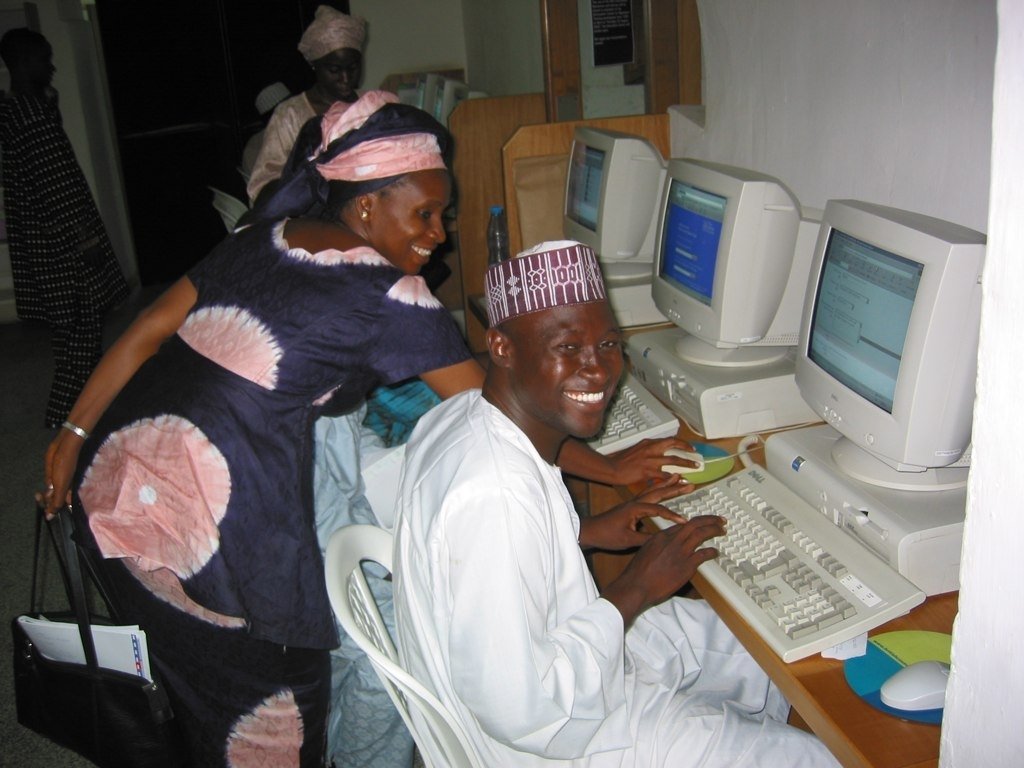
This week, we're featuring Tobias Eigen from Kabissa Connections. Kabissa is an online network that helps African civil society organizations use ICT to benefit communities all over Africa. The Kabissa Connections Project is an extension of the existing Kabissa platform that will address trust concerns by revealing connections that organizations have with networks, international organizations, supporters and service providers.
Learn more about Kabissa Connections in the interview below!
The inspiration for Kabissa Connections comes out of my work with African civil society organizations for over 15 years, the last ten with Kabissa, always with the aim to help organizations put information and communication technologies (ICT) to work for the benefit of their communities. In the early days, I helped build and run “store and forward” email networks in Africa using Fidonet technology. Then in 1999, inspired by a consultancy helping 10 human rights groups in 5 cities throughout Nigeria, I created Kabissa. Kabissa started out as a domain/website hosting provider, then it grew into a technology partner providing Internet training and support. Now it is a network connecting people and organizations for Africa primarily via an online community website.
Over this entire time, economic, social and political change has been coming to Africa excruciatingly slowly. One reason for this, I believe, is that the existing development aid system does not do enough to elevate and empower the people who are in the best position to create change - the changemakers working on the local level to serve their own communities. Even now, after over 30 years of independence in most countries, these local heroes still do not operate on equal footing, at the same eye level, with their international partners. They are under-resourced, often work in deplorable conditions, can’t easily demonstrate their effectiveness, and are accountable not to their beneficiaries and local partners but to the international donor agencies, NGOs and foundations who fund their work.
Another reason is that changemakers, especially those working in rural areas, struggle to use ICT effectively. Regular access to the Internet is hard to come by which leads to people not being able to learn useful tech skills or come up with creative ideas for using tech to help them create change. As a result they waste time online and even unwittingly put themselves and the people around them in danger.
You would think that the rise of blogging and social networking platforms like Facebook present an opportunity for changemakers to use ICT better and to build up their credibility online, but while it is true that they are able to do more online now, the same old problems - and the risks - have also been amplified. Only some, usually those already connected with international charity brands, are effectively leveraging blogging and social networking in support of their mission. Meanwhile local changemakers are trying their best but spread themselves thin on many social networking sites and often fall prey to phishing scams. They also face unknown security risks as they turn to Facebook for “one stop shopping” for both work and play.
Kabissa Connections is an idea to help African changemakers take charge of their presence on the Internet, build a Web of Trust around the projects and organizations they are involved in, and ultimately become more effective and accountable so they can create lasting change in their communities.
As explained in our Nov 9th Progress Update, we are working on building trust in Kabissa itself, officially organized as a United States 501(c)3 nonprofit organization. We are completing the transition from technology partner to network by making our own organizational structure and procedures more transparent and accessible.
We will also invite stakeholders to get involved in running Kabissa on various levels, such as:
We are busy setting up a volunteer team and infrastructure so that we can continuously help the people and organizations in our network to make the most of Kabissa to showcase themselves and connect with each other to collaborate, share opportunities and help each other to learn how to use ICT more effectively.
Priority areas include:
As explained in our Sept 22nd Progress Update, we are working on several projects to improve Kabissa as a networking platform and to enable our members working in Africa to leverage it for their own purposes as much as possible. Besides Kabissa Connections, a top priority for us is to upgrade Kabissa Groups to improve their usability and to enable members to participate via email. We are also working to improve the site functionality overall by adding new features such as translation tools so that the site can be accessible to people who speak languages other than English.
In the past we have received generous funding from a range of sources including the Africa offices of the Ford Foundation, the Open Society Institute Information Program, Open Society Initiative for West Africa, the German Federal Ministry for Economic Cooperation and Development (BMZ) and the Lonely Planet Foundation (now Planet Wheeler Foundation).
As of 2007, Kabissa has no employees or institutional funding, and we have been taking a pole pole (slowly slowly) approach to developing Kabissa even though we have many projects that we are working on. This is intentional and part of our transition strategy.
It would speed up many activities and produce a better result if we could secure regular funding for the next three years to recruit a full-time coordinator (~$60,000 annually including a travel budget) and a web development firm to manage the roadmap and produce an integrated site user interface and design (~30,000 annually). Additional activities, including Kabissa Connections, would be proposed, prioritized and funded on a project basis in collaboration with members and partners.
This fall we have set ourselves a modest goal of raising $20,000 in donations from individual donors to cover the core costs of maintaining the organization which include server hosting, book keeping, the annual audit and tax return, and security/maintenance upgrades. So far we have raised about $10,000 towards our goal, and the sooner we can raise the rest the sooner we can focus our attention on other tasks. If we are able to raise more, we will put it towards our projects.
We see Kabissa Connections (and Kabissa as a whole) as fitting into the broader project to keep the web open. We want to avoid reinventing the wheel or creating yet another silo where information goes in and can't come out or be used properly to help make the world a better place.
We would love to hear from Kabissa stakeholders - African organizations, activists, charities, SMEs, entrepreneurs, networks, foundations, international agencies, students, etc - who are interested in joining together to work on developing the Kabissa platform and ensuring it is as useful and relevant as possible.
Links:
Project reports on GlobalGiving are posted directly to globalgiving.org by Project Leaders as they are completed, generally every 3-4 months. To protect the integrity of these documents, GlobalGiving does not alter them; therefore you may find some language or formatting issues.
If you donate to this project or have donated to this project, you can receive an email when this project posts a report. You can also subscribe for reports without donating.