Info Saves Lives: Ebola Outbreak in West Africa

by Internews
Info Saves Lives: Ebola Outbreak in West Africa

Project Report | Aug 14, 2014
Week One Report: Info Saves Lives, West Africa

By Amanda Frankel | Project Leader

Thank you for your support of our mission and our project in West Africa – where, with your donations, we are working to ensure that accurate, timely, reliable and contextualized local information about the nature, spread and treatment of the Ebola Disease Virus is provided and shared with the affected population by health workers and media.

If you donated today, your donation has been matched 100% by the Paul G Allen Family Foundation, doubling your impact and putting us that much closer to our fundraising goal. Thank you for your support!

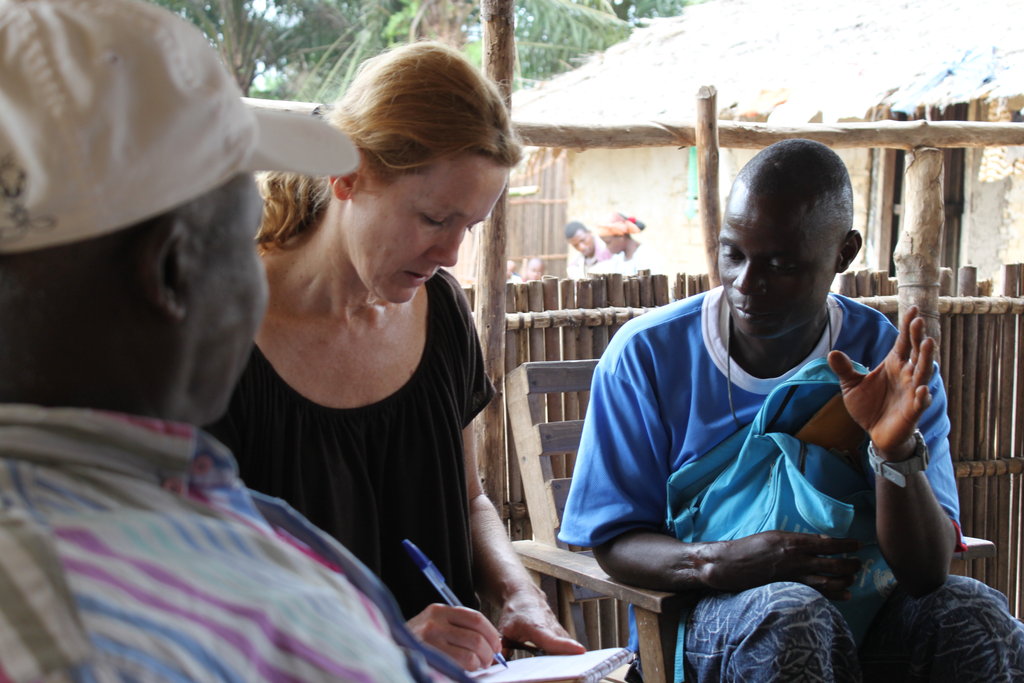
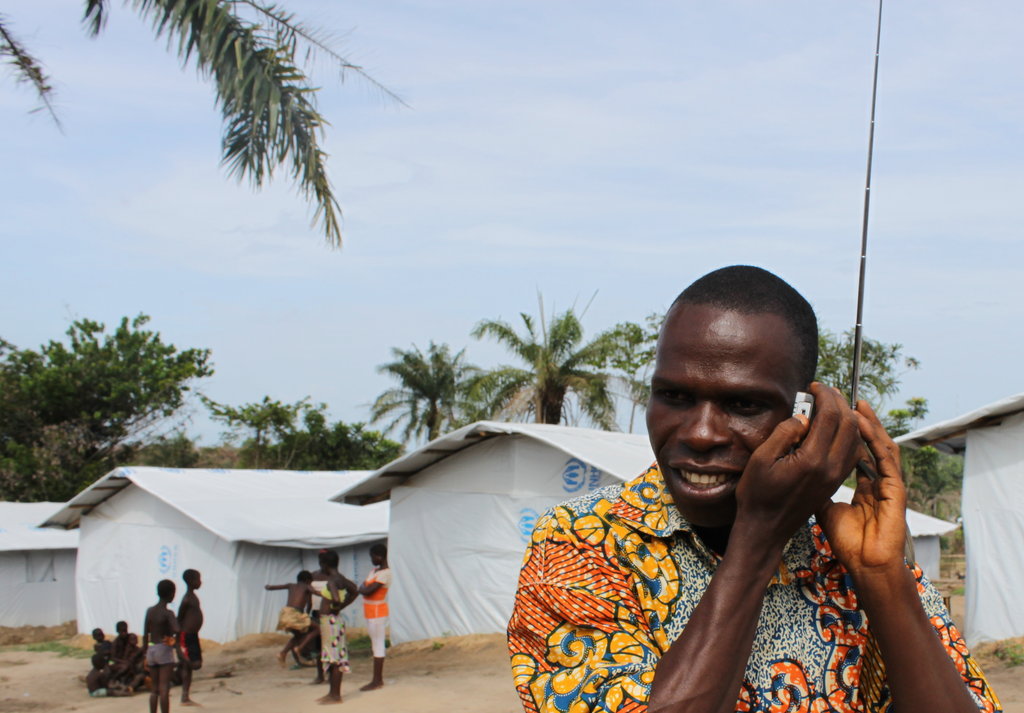
It has been an extremely busy week since we launched our project on GlobalGiving. In Guinea, where Internews has been working since the early days of the outbreak, we have dramatically increased the amount of Ebola-related content on radios in the capital, in the South East and cross-border into Liberia. Our team in Guinea travelled to Monrovia, Liberia for a quick assessment of the environment, and a team member in Sierra Leona conducted a rapid assessment in-country last week.

We’d like to share some of the initial findings from the assessments we conducted, which will inform our response in Guinea, Sierra Leone, and Liberia moving forward.

Guinea:

  • As part of a humanitarian information project in Guinea, Internews has been working since the early days of the Ebola outbreak in the country to provide information about the disease itself, how to prevent it spreading, and how to treat it.
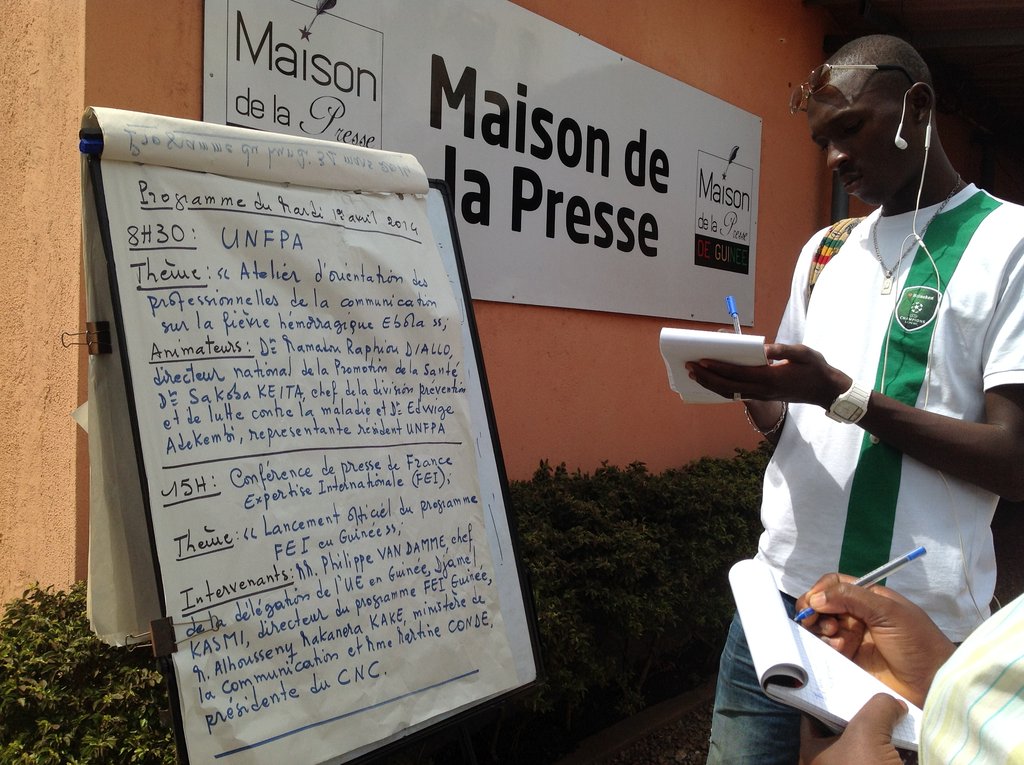
  • Experienced humanitarian journalism trainers have been deployed in Guinée Forestière (where the outbreak started), Conakry, and other cities to train media workers in the most effective ways of explaining the disease to local communities and engaging them in the fight against its spread
  • Overall, the Ebola response is working in the country, but more resources and support are needed in Guinée Forestière, which is the center of the outbreak. Coordinating with the different government, medical and other humanitarian responders needs to happen in Conakry.


Sierra Leone:

  • Reports from the Sierra Leone Association of Journalists (SLAJ), tasked to work with Ebola Response Committee’s Social Mobilization Sub-Committee responsible for all national messaging related to the disease, confirm that the media is acutely under-resourced to effectively respond to the crisis, and that the process is currently stalled.
  • There are indications that messages from International Non-Governmental Organizations (INGOs) in English are trusted more, simply because they are in English and come from INGOs, while messages from the government are generally mistrusted.
  • Compounding communication challenges is the difficulty of transposing accurate but not panicky information in local languages, which have no word for “infection.”
  • Messages in local languages have to be oversimplified, which then in turn requires interpretation
  • From a technology perspective, lack of communications connectivity is problematic, however, mobile phone technology and the use of SMS is considered the most reliable means of sharing information quickly.
  • There is a real need for better communication on the risk of death associated with the disease to dispel earlier communications that stressed that there is “no cure ... if you get Ebola, you will die.” In reality, death rates are lower if people seek and are given appropriate supportive treatment. The overall result is poor messaging that is inconsistent, at times inaccurate, and ill-adapted linguistically to the needs of their audiences.
  • While in some core-affected areas such as Kailahun near the Guinea border, as well as Kenama, journalists have received some training from non-governmental organizations, it has focused solely on medical information, without addressing the need for the media to accurately report on the outbreak from an evidence-based perspective.


Liberia:

  • Internews’ assessment has identified a critical need for humanitarian liaison to ensure that key messages are disseminated by the media in a coordinated, coherent and harmonized way, within the context of the declaration of state of emergency.
  • Accurate information is key; target audiences of the media need to have the most timely and correct information available to them so as to make informed decisions about the risks associated with the disease, and as in Sierra Leone, not ignore other medical needs , and not assume the worst-case scenario for all medical emergencies.
  • The media can fulfil a role of honest broker in this instance, relaying vital, up to date, and credible information that will engage as broad an audience as possible to include communities, traditional leaders and health care workers.


 After this initial assessment, with your support, we can begin to bridge the gap in information and address the issues identified. On the whole, we understand that, of the most immediate needs, information is one of the most critical is fighting the spread of this disease; people need to know how to identify early symptoms, prevent transmission, what to do and where to receive medical help, especially if they live in remote rural areas. Rumours and false information proliferates in these situations. Communities need to be able to access relevant information through local media sources and platforms that they trust, in languages that they understand. Local media are a vital partner for agencies seeking to provide information about risk and assistance options, and an important tool to counter the rumours and false information. However only too frequently, local media themselves lack accurate and timely information, lack experience in reporting health emergencies, do not have well established contacts with the appropriate health authorities or service providers, and lack the resources to carry out the required reporting.

Thank you for partnering with us to address this very serious challenge. We will continue to update you on our progress.

In the meantime, we encourage you to share this project with your friends, family, and colleagues. For a limited time, the Paul G. Allen Foundation will be matching donations 100% for GlobalGiving projects supporting the treatment and prevention of the spread of the Ebola epidemic in West Africa. There are $100,000 available in matching funds for this effort.

Please consider telling your friends and family about our project - share the link on your blogs or social networks, use the tell-a-friend feature on the project page to email your network, or just bring us up in conversation. You know your friends and family best, so use your own words - tell them why you chose our project and what it means to you.


Thank you again for all you have done to support Internews and our mission.

Links:

Share on Twitter Share on Facebook

About Project Reports

Project reports on GlobalGiving are posted directly to globalgiving.org by Project Leaders as they are completed, generally every 3-4 months. To protect the integrity of these documents, GlobalGiving does not alter them; therefore you may find some language or formatting issues.

If you donate to this project or have donated to this project, you can receive an email when this project posts a report. You can also subscribe for reports without donating.

Sign up for updates

Organization Information

Internews

Location: Washington, DC - USA
Website:
Project Leader:
Amanda Frankel
Washington , DC United States

Funded Project!

Combined with other sources of funding, this project raised enough money to fund the outlined activities and is no longer accepting donations.
   

Still want to help?

Find another project in Guinea or in Physical Health that needs your help.
Find a Project

Learn more about GlobalGiving

Teenage Science Students
Vetting +
Due Diligence

Snorkeler
Our
Impact

Woman Holding a Gift Card
Give
Gift Cards

Young Girl with a Bicycle
GlobalGiving
Guarantee

Get incredible stories, promotions, and matching offers in your inbox

WARNING: Javascript is currently disabled or is not available in your browser. GlobalGiving makes extensive use of Javascript and will not function properly with Javascript disabled. Please enable Javascript and refresh this page.