By M. Keller, E. Kwobah, L. Atwoli, A. Walters | AMPATH mental health team
Martha, a mother of three, lost her husband to HIV three years ago and has been the primary provider for her family since. She is barely able to make ends meet by mending clothes for the Kenyan village where she resides. Martha’s sewing service takes the majority of her time, so her eldest daughter, age 9, must tend to the younger children. Frequently there is only enough money to feed her children once a day. Since her husband’s death, Martha has feelings of hopelessness and increased anxiety; she is also HIV-positive. The stress of disease and poverty is too much for Martha to bear. Martha’s depression remains untreated—this scenario is seen too frequently in Kenya.
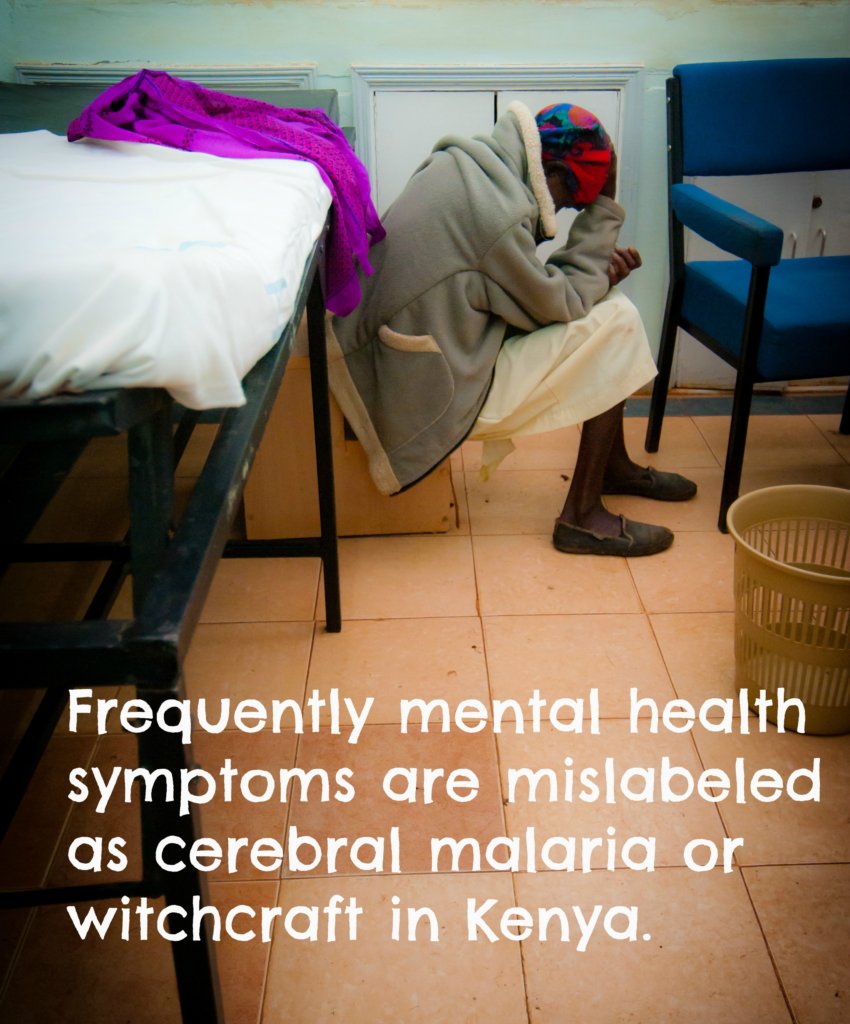
A Kenyan research team at Moi University School of Medicine in Eldoret recently conducted a study to determine the prevalence mental disorders in western Kenya. Almost half of those interviewed had at least one mental disorder at some point in their life, and only about two percent of these had ever been formally diagnosed.Almost 13% of the population had suffered from depression (the most important risk factor for suicide) in their lifetime. Sadly, 16% of the population had attempted suicide in their lifetime, from this typical rural community in Kenya. Over 98% of the respondents with a lifetime history of mental illness had never been diagnosed or obtained treatment, highlighting the massive diagnostic and treatment gap for these disorders.
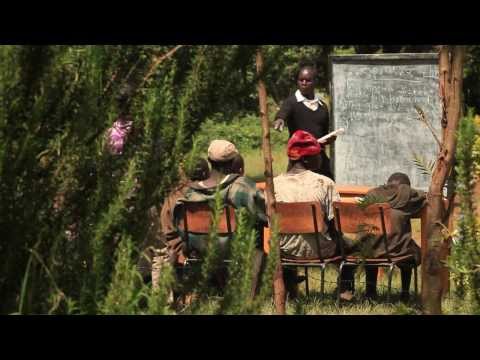
In one of the AMPATH rural sites (Mosoriot), four community health workers have been trained to screen for mental health and link patients with depression, psychosis, and alcohol dependence to care. Since May 2016, about 1,000 persons have been screened and 79 new patients are in care. Nurses and clinical officers have been trained to manage mental disorders using the World Health Organization (WHO) Mental Health Gap intervention guide. Several support groups have been established for those suffering from alcohol dependence. This work is taking place parallel to continuous community education and engagement through meetings and educational materials. Progress is being made!
An essential component to building the AMPATH mental health is continuing to train future leaders in the area of psychiatry. At present in Kenya, there are approximately 84 psychiatrists for a population of 44 million. There are no child psychiatrists in western Kenya and only three in the entire country, all in Nairobi; which is consistent with the misconception in Kenya that children and adolescents do not suffer from mental illness and the fact that such illnesses are rarely diagnosed and treated in Kenyan youth.
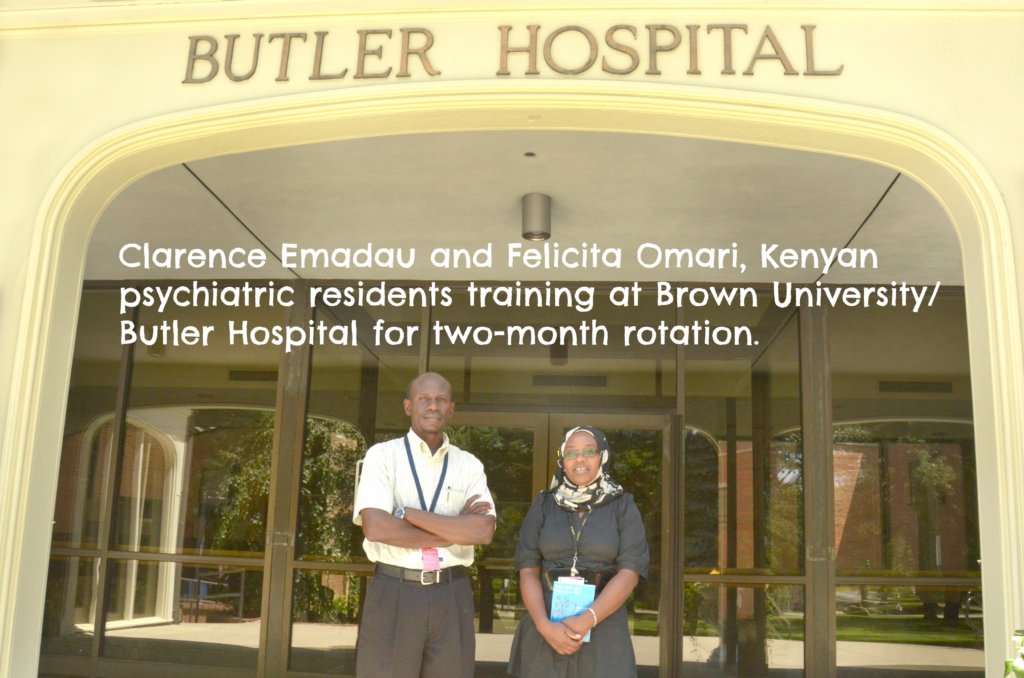
A goal of Moi University’s medical school is to increase matriculation to the psychiatry residency program. Moreover, the AMPATH program, Moi University, and Brown University, established a psychiatry training group in 2009. Faculty from collaborating institutions have been traveling to Kenya for several months per year with US psychiatry residents and fellows on a training exchange program, and in addition as many as three Kenyan second year residents come to Brown University Medical School once per year for two months to complete their residency rotations in child and adolescent psychiatry, geriatrics, and neurology—specialties which have limited opportunities for training in Kenya.
Last year two Kenyan psych residents from Moi University participated in a two-month rotation at Brown University. This year the AMPATH-Kenya program was able to fund three. We are excited about the progress being made with the AMPATH mental health program, but there is still much work to be done to provide adequate mental health services to the four million people we serve in our catchment.
Links:
Project reports on GlobalGiving are posted directly to globalgiving.org by Project Leaders as they are completed, generally every 3-4 months. To protect the integrity of these documents, GlobalGiving does not alter them; therefore you may find some language or formatting issues.
If you donate to this project or have donated to this project, you can receive an email when this project posts a report. You can also subscribe for reports without donating.



Support this important cause by creating a personalized fundraising page.
Start a Fundraiser