By Niranjan Narsing Khatri | Executive Director
Our teacher training program is focused on reading aloud with children, but there is more to it than that. Once the initial sessions are over it’s important to us to continue to work with teachers and principals to develop programs that they would like to pursue with their students.
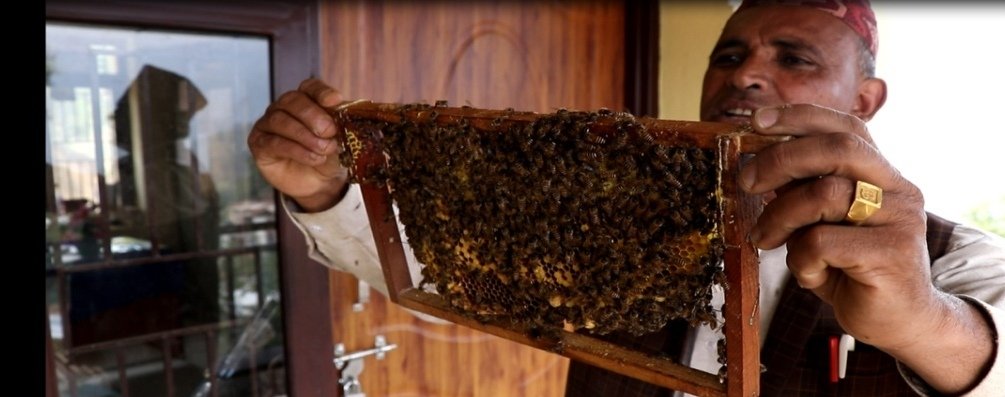
That’s how we found ourselves delivering two beehives and 10,000 bees to two of our partner schools, Jana Jyoti Primary School and Lali Gurans Primary School, in late April.
The initial group of teachers in our training program, in Kavre District, are now entering their third year with us. We asked them for suggestions of learning experiences that interested their students, and they told us about beekeeping.
The Community Forest Group of Kavre District and our partner organization, Kakshyalaya, conducted a two-day workshop about beekeeping for about 20 teachers from seven schools and 10 local residents. The training was conducted by Mr. Loknath Sapkota (secretary of the forest group) and Mr. Bachchu Karki (a local beekeeping expert).
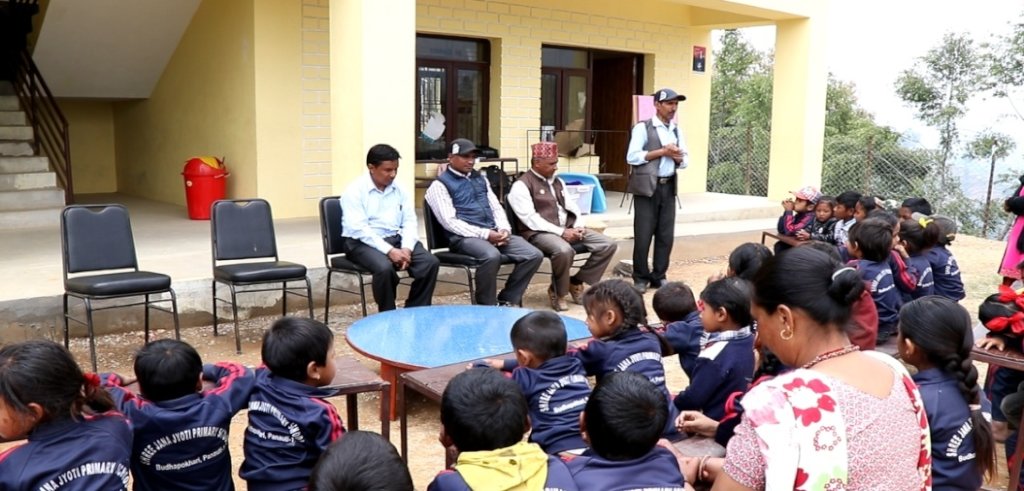
We also held a separate one-day workshop for students at Jana Jyoti School to give them a fun, outdoor learning experience. A total of 48 students and eight teachers attended the training along with a handful of parents and the head of the school management committee.
The students were thrilled with the chance to get close to the bees and observe life in the hives. Squeals of delight and excitement filled the air as the younger students touched the bees. One of our goals was to help children overcome their fear of bees.
The training was designed to help children and adults understand how honey is made, manage bee stings, and identify different castes of colonies of bees and beehive products. Some even got to taste royal jelly, a honeybee secretion used to feed queen bee larvae.
Afterward, students designed a floral calendar for bees. The entire group discussed the reasons for the decline non-commercial bees and what people can we do to protect bees.
Your support helps us deliver new kinds of learning experiences to children in rural Nepal. Thank you!
Project reports on GlobalGiving are posted directly to globalgiving.org by Project Leaders as they are completed, generally every 3-4 months. To protect the integrity of these documents, GlobalGiving does not alter them; therefore you may find some language or formatting issues.
If you donate to this project or have donated to this project, you can receive an email when this project posts a report. You can also subscribe for reports without donating.