By Dr Kevin Becker and Deanna Boulard | Project Leader
Background
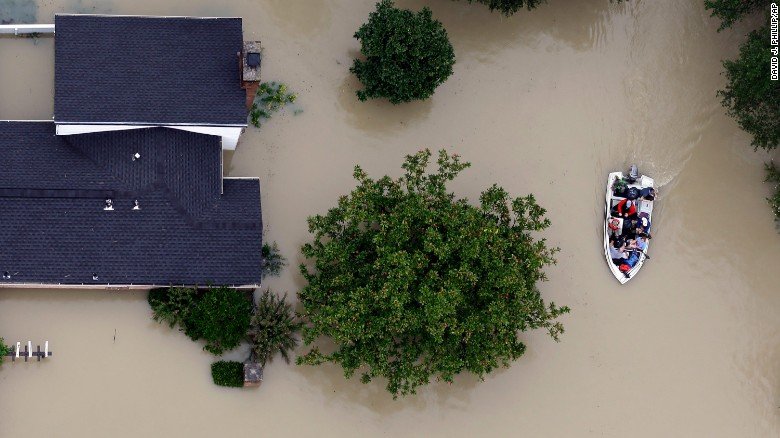
Category 4 Hurricane Harvey hit the coast of Texas on Friday, August 25, 2017. By Wednesday, some areas had received over 47 inches of rain and flooding, and by Thursday, August 31, 2017, the storm had killed at least 44 people and damaged or destroyed 48,700 homes. 350,000 people, many uninsured, have registered for disaster assistance.
Survivors of disasters like Hurricane Harvey include everyone in the community and region, all in the wake of the storm. They are infants and children, adults young and old, partners and families, immigrants and refugees, and native-born residents. They are people who have lost their homes and businesses, as well as those who are providing help, even as they experience their own trauma.
For many, the fear, trauma, and loss experienced during Hurricane Harvey will result in emotional scars that may last for years to come. Long after the water has receded and homes have been rebuilt, the stress and anxiety that accompany disasters of this size and scope will remain. Research indicates that suicide rates, substance abuse, and violence frequently increase in the aftermath of community-wide disasters. Putting life back together in the form of a “new normal” is an emotionally overwhelming process. Our project focuses on communities in the affected area to help minimize the “disaster after the disaster” and get community members back on their feet.
RMF’s Presence
Real Medicine Foundation is an international NGO with an excellent track record in psychological trauma support. We believe that “real medicine” focuses on treating the person as a whole, providing medical/physical, emotional, social, and economic support. To care for victims of Hurricane Harvey, we are collaborating with Organizational Resilience International (a partner since Hurricane Katrina) to implement a 3-phase psychological support project for Hurricane Harvey victims in the Houston area.
Since December 2017, our team has been speaking with clergy members from across the Greater Houston area to identify and assess their needs regarding how to support both church and community members in the wake of the September disaster.During this time, the RMF team of psychological trauma experts also provided consultations to ministers across the affected area, and began planning to provide several trainings for ministers and religious leaders from around the impacted area over the coming months.
First Training Session
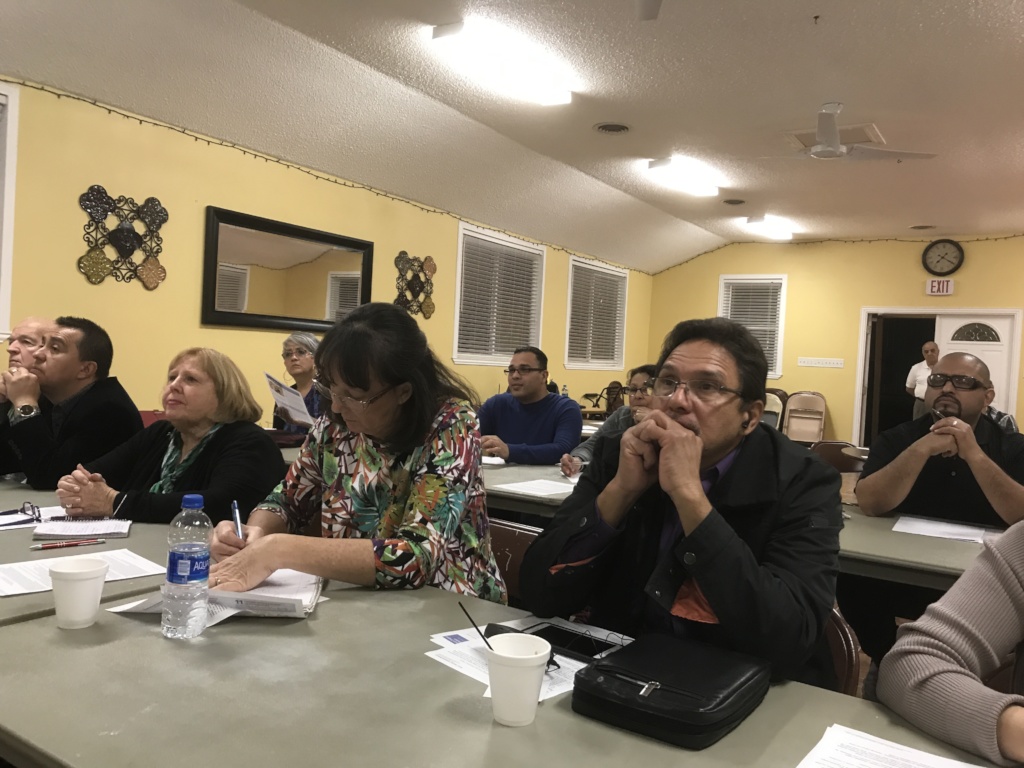
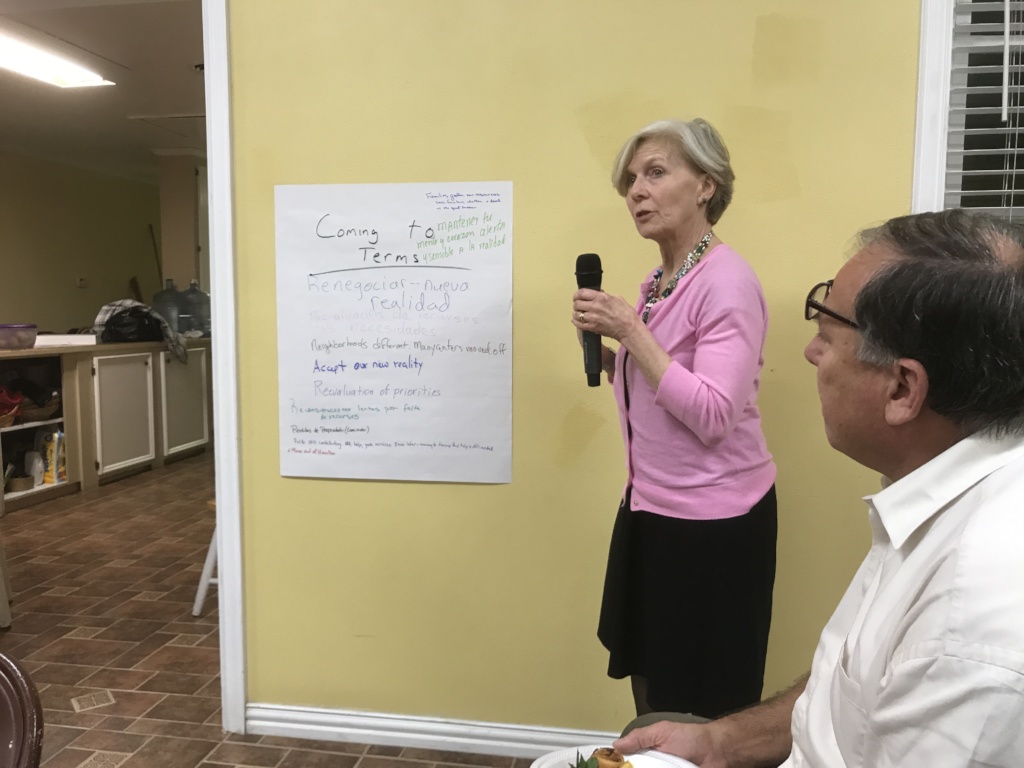
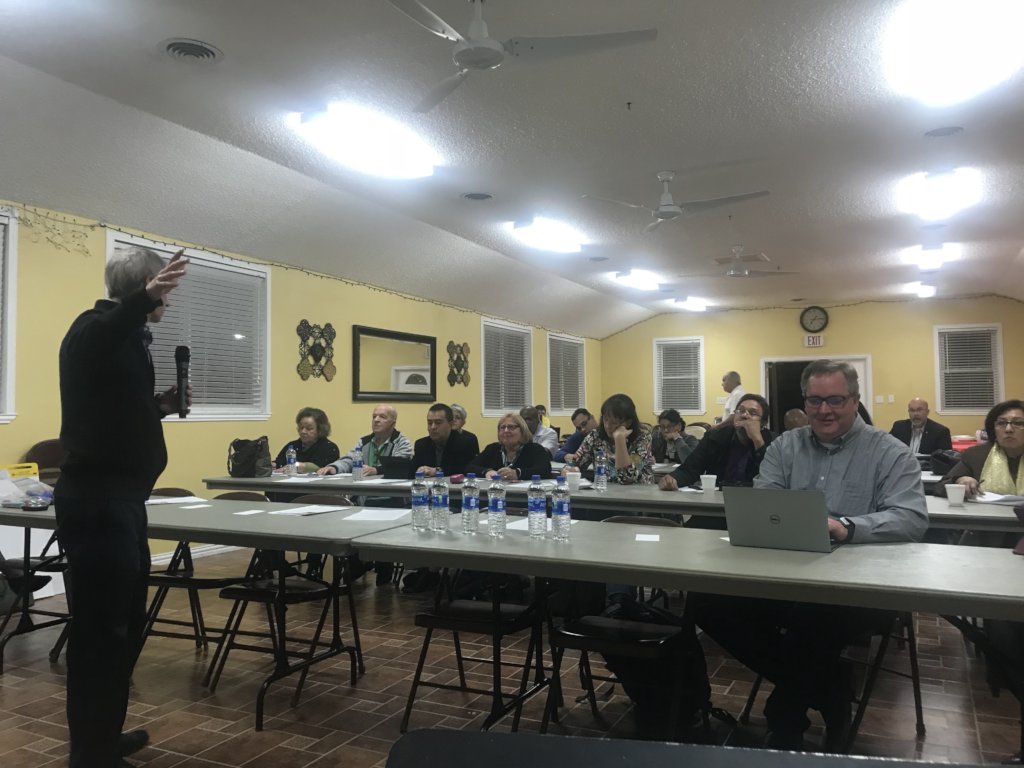
For our first training sessions, the RMF trauma team was on the ground in Houston from January 27, 2018 to January 30, 2018. Senior Consultant Lisa Tieszen and Dr. Annie Farnsworth worked with Dr. Kevin Becker, the trauma team leader, to provide a two-day training program to approximately 24 clergy members and lay leaders of the Disciples of Christ Church from across the region. The training sessions took place on January 28th and 29th at Houston’s Iglesia Christiana El Redentor and are designed to assist clergy members in their understanding of the impact of traumatic events and to promote the identification of strategies for self-care among caregivers.
To accomplish these goals, the training sessions covered the following topics:
By helping clergy members and lay leaders gain a fuller understanding of the long-term disaster recovery process and providing additional tools to identify trauma and implement healthy coping mechanisms, RMF and Organizational Resilience International seek to strengthen these caregivers, who will in turn strengthen whole communities.
One attendee, W. Kyle Fauntleroy, responded to the training with these kind words:
"I found the training and education provided Organizational Resilience International (ORI), funded by Real Medicine Foundation, to be the right resource at the right time for those who continue to work through the effects of Hurricane Harvey. Although I have no experience in clinical healing, my 32 years of pastoral care within the Dept of Defense for Sailors, Marines, Coast Guardsmen and their families, who often live, train and work in lethal environments gives me some experience in post-trauma support and recovery. At both training events on Sunday and Monday evenings, the subject matter experts of ORI provided exceptional information in terms all in attendance can understand regardless of language, level of education, or relationship to the given catastrophic event. The ORI training team raised the awareness and understanding of the event through careful and deliberate explanations of variety of impacts these kinds of events tend to provoke physically, emotionally and spiritually on people and communities; the possible, normal reactions to trauma they might expect in the coming weeks and months; as well as methods and practices all can use to mitigate adverse effects to a traumatic event. All of their explanations, definitions and recommendations were consistent with my training and experience. What I found most helpful and unique about this specific team, was their acutely compassionate ability to attend to the specific needs of those gathered, their gentle and wise responses, and their uncanny way of communicating hope and confidence in the future of every soul present."
Additional Support
In addition, the trauma team reached out to a local hospice agency and provided consultations and support to several chaplains who have seen a significant increase in patient admissions since the hurricane. The team spent several hours visiting and talking with staff regarding the ongoing traumatic impact of their work (arising from ongoing exposure to the trauma of their clients/parishioners) and the heightened stressors and losses resulting from Hurricane Harvey. One staff member described a colleague who was visiting a dying patient as the storm approached. The patient died just as the storm was hitting. The hospice worker was then stranded in the home with the deceased patient for two days until a rescue could be implemented for both of them.
Next Steps
While in Houston, the team also met with leaders of other religious groups in order to offer the upcoming training and consultation in February to an even wider interfaith audience. The team will return in late February 2018 to provide additional support and training in both the Houston and Corpus Christi areas of Texas.
Links:
Project reports on GlobalGiving are posted directly to globalgiving.org by Project Leaders as they are completed, generally every 3-4 months. To protect the integrity of these documents, GlobalGiving does not alter them; therefore you may find some language or formatting issues.
If you donate to this project or have donated to this project, you can receive an email when this project posts a report. You can also subscribe for reports without donating.