By Mark Nonkes | World Vision East Africa Communications
They are the first
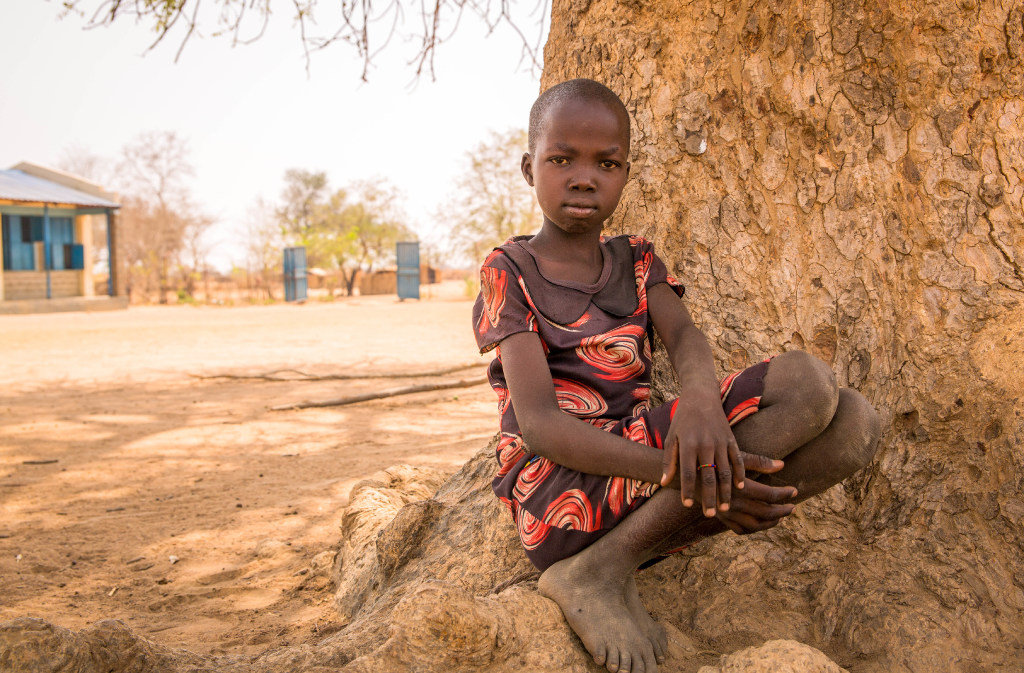
Fourteen-year-old Nyanbol and 13-year-old Acha have been freed. A task that has burdened generations of women in South Sudan will no longer plague them. The daily chore of walking to the river – a four-hour task across hostile terrain – that forced girls to drop out of school and to miss the rest of their childhood has ended.
“The river water is bad, there are germs, we would get sick,” says 11-year-old Dene.
The fear that women felt of what lingered in the bushes along the way and of the hippos and crocodiles that might snap at them as they scooped the dirty water into buckets is over. For the first times in their lives, more than 23,000 people who fled conflict in South Sudan’s Upper Nile state are receiving clean drinking water from community taps near their doorsteps.
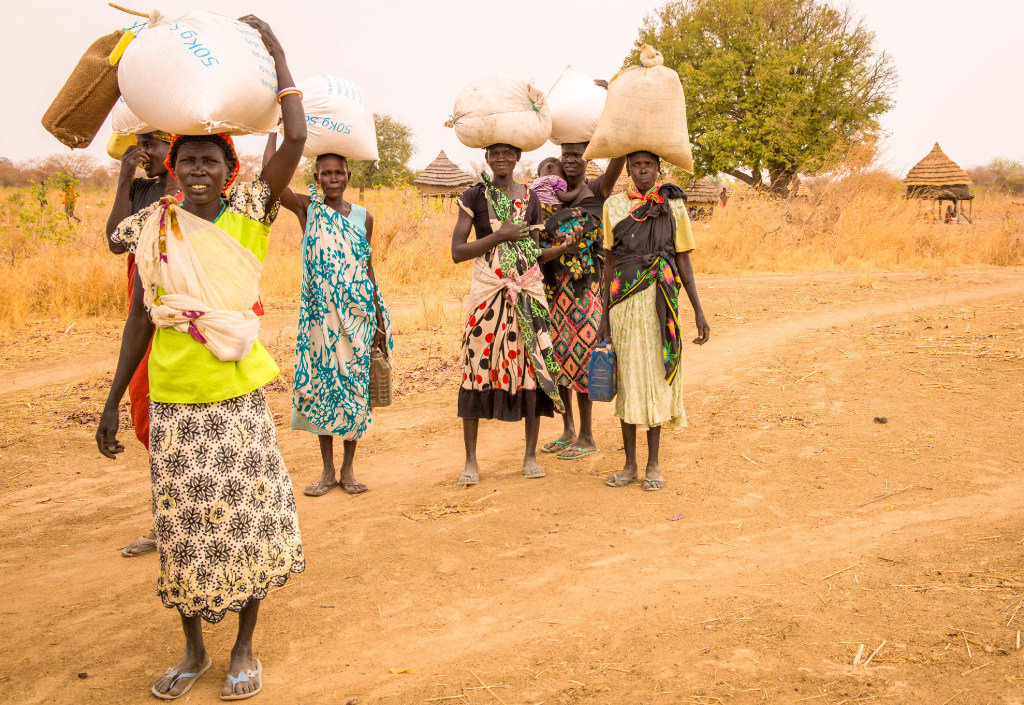
Nyadhiang can’t quite say how old she is but her gray hair, her bent back and memory of events from the distant past suggests she’s well in her 80s. She points to divots in the top of her head, “from the water” and explains for her entire adult life, she’s fetched water from the river in two 40kg containers and transported them by balancing them upon her head. Her daughters seated nearby, in their 30s and 40s now, echo similar sentiments. In this community, fetching water is entirely a female responsibility.
“Now, we feel that our daughters will be able to go to school and continue studying in the future because they don’t have to go far to access water,” says Abeuk, a 30-year-old mother of five, and one of Nyadhiang’s daughter-in-laws. “I’m not educated because of those responsibilities in the past. I can’t compare my children’s lives to mine, they will have a much better life.”
They say that in every disaster, there is a blessing in disguise
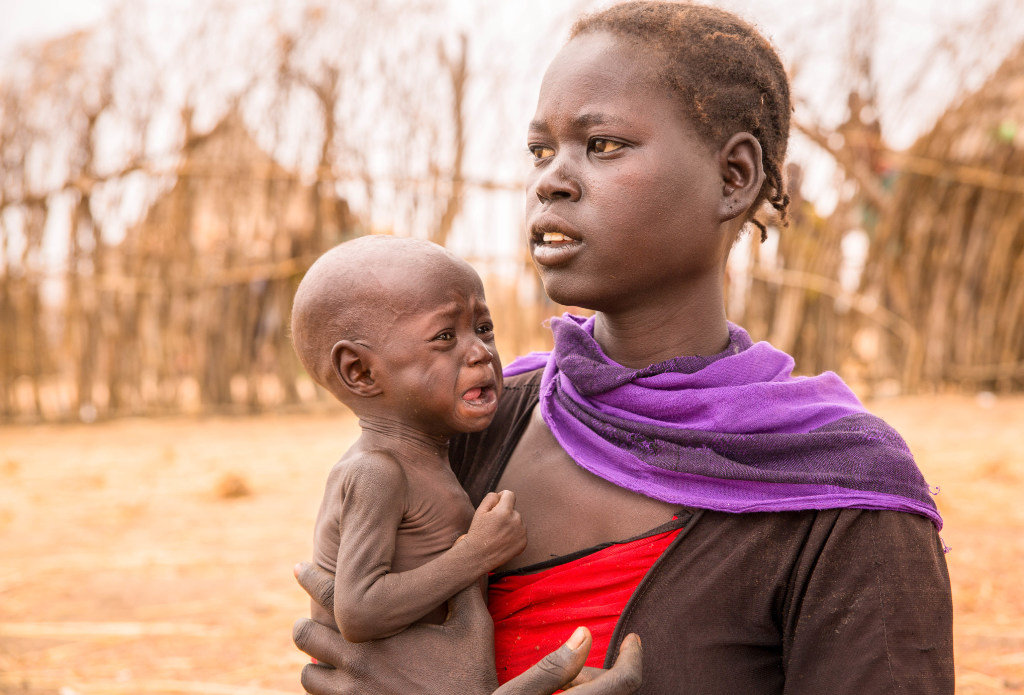
Three years ago, life fell apart for Nyadhiang, her daughters and grandchildren. The home they knew, the one that they had lived in for generations, was attacked and houses burned to the ground – their village caught in the ongoing conflict within South Sudan.
“Everyone ran,” Nyadhiang says. “I was left alone.”
Nyadhiang hobbled, worried. She couldn’t move fast. She doubted she would make it to the fields that she’d heard about – a safe zone for people displaced by the conflict – which was about a week’s walk away.
“I met others, they helped. I came with them,” Nyadhiang says. “After we had all scattered, we met here again.”
But not everyone was there. Nyadhiang’s son was killed in the conflict. Another daughter-in-law died on the escape.
“She was thirsty, there was no water,” says Aben, one of Nyadhiang’s daughters who now lives in a hut nearby in the settlement.
Those safe fields were now a makeshift village – homes to 13,700 people escaping conflict initially. In the early days of the village, hostility from the host community was a constant threat.
“It was very difficult and hard when we came here. We were afraid. There was a lot of fear. We worried about what might attack us, we were scared of the hippos and the crocodiles in the river too,” says Aben.
Getting safe drinking water was also a challenge.
“When we came, we drank raw water right from the river. The children and elderly got diarrhea, people were often sick,” says 43-year-old Malech, Nyadhiang’s daughter.
“If we didn’t get water from there though, people would have died from thirst,” Abeuk adds.
For humanitarian agencies responding to the spike in arrivals, providing people with clean water became a priority. An emergency water facility was set up through funding from the government of Canada, the UK’s Disaster Emergency Committee, New Zealand’s Ministry of Foreign Affairs and Trade and the United States’ Agency for International Development Office of US’s Foreign Disaster Assistance. Huge inflatable rubber pools were unfolded, 20,000 litres of river water was pumped into them and the water was treated with Aluminum sulphate and chlorine. World Vision specialists tested the water – to ensure it was safe for human consumption
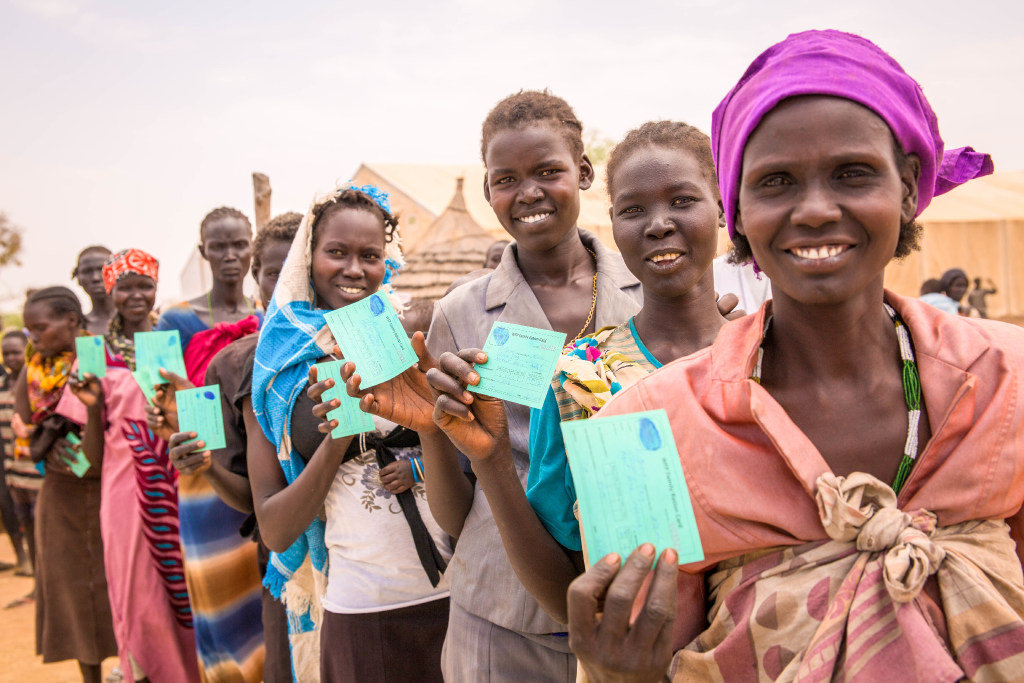
“That first day we gave people water, 3,000 people came together and queued. They were visibly happy to get clean water closer to their homes .The taps were connected to a movable tapstand with 12 taps each serving an average 20 people at a time. The taps were set up on a temporary platform, which we later improved to permanent tap stands with drainage for drain water,” says Jimmy, World Vision’s water, sanitation and hygiene manager in Melut.
In the months following, World Vision expanded the number of surface water treatment systems to four, set up a water treatment plant in the nearby town for the host community to avoid future conflict over water, constructed a 72,000 litre elevated tank and set up 212 water taps throughout the refugee settlement and nearby community. The organization continues to provide water to 28,153 people everyday.
For women and girls, the taps have changed their lives. Eleven-year-old Dene, who is in Grade 2, says in the past she used to feel afraid when she’d accompany her mom to the river. “Now it’s good, we’re not afraid anymore,” Dene says.
“We’re very happy when we compare to those old days to today, life isn’t difficult,” says Melach, a mother of six. “There’s no more diarrhea.”
“Everything is perfect now, the water is nearby and it’s clean,” adds Aben. “We have extra time to cut grass or to collect firewood which we sell to buy food.”
Project reports on GlobalGiving are posted directly to globalgiving.org by Project Leaders as they are completed, generally every 3-4 months. To protect the integrity of these documents, GlobalGiving does not alter them; therefore you may find some language or formatting issues.
If you donate to this project or have donated to this project, you can receive an email when this project posts a report. You can also subscribe for reports without donating.