By Alisa Lemire Brooks | Orca Network Whale Sighting Network Coordinator
Only 76 left.
Endangered Southern Resident Orcas ~
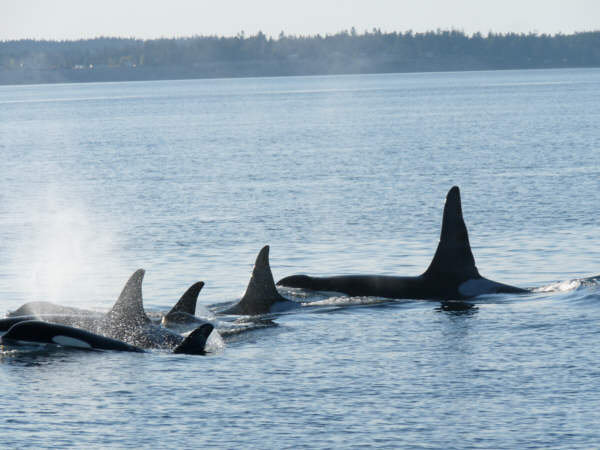
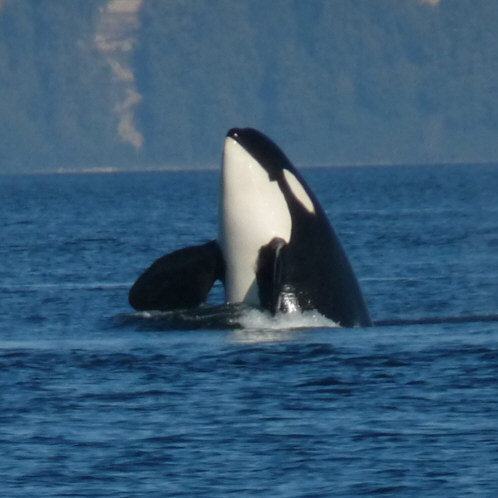
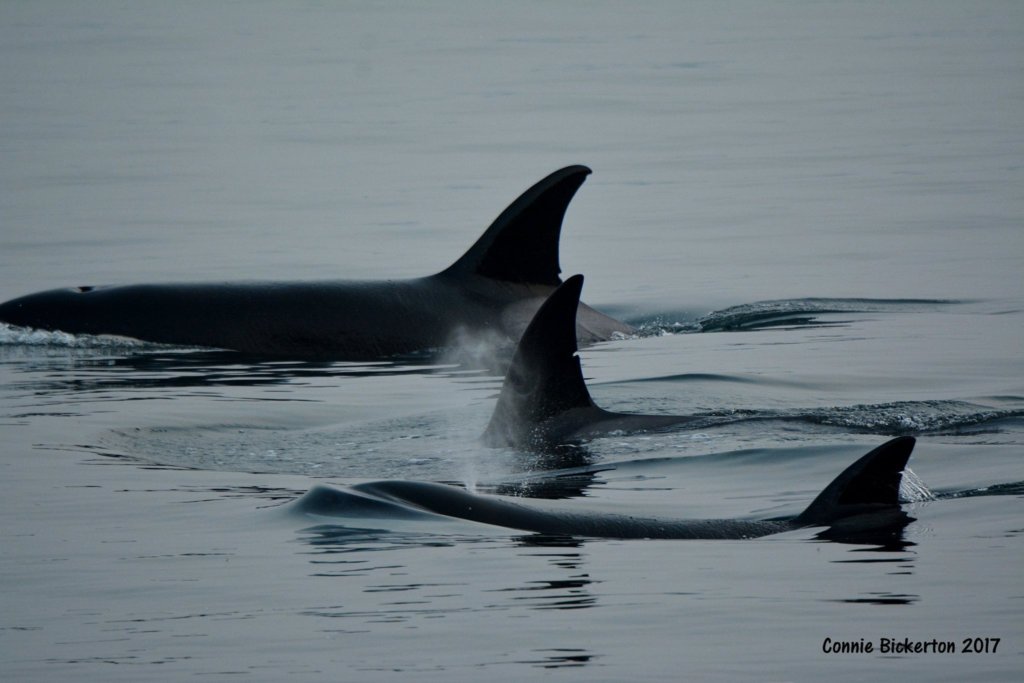
It is with such heavy hearts we pass along the very sad news that since our last report, matriarch K13 Skagit and 2-1/2 year-old J52 Sonic (one of the "baby-boom" calves) have been confirmed deceased by the Center for Whale Research. These devastating losses bring the official count of the critically endangered Southern Resident orcas down to just 76 members.
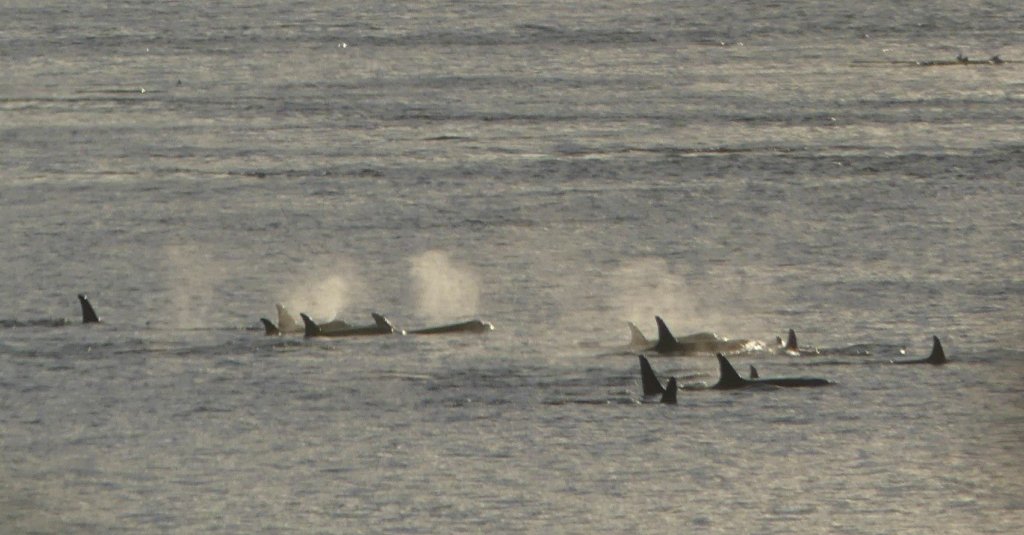
Orcas will go where they can find food, they go where the salmon are. As mentioned in our last update, the Fraser River Chinook salmon runs were abysmal this year. Of the three pods, J pod and L87 spent the most time inland foraging for what scarce Chinook was to be found in their core summer habitat, members of L pod came and went less often, and K pod hardly showed up at all. To further highlight the extreme decrease in prey availability, October 15th marked the first time the L54s, L84, and L88 were documented inland in 2017, meaning they spent ZERO time in their core summer habitat. 2017 was the worst on record (by a huge margin) for the number of days spent inland by the three pods during the late spring and summer months. Every sighting of this fragile community of orcas this summer felt like a rare gift, their presence in our Salish Sea waters on a consistent basis no longer being taken for granted.
Enjoy this video of J and L pods off Lime Kiln State Park, San Juan Island, filmed July 23, 2017 by Alisa Lemire Brooks
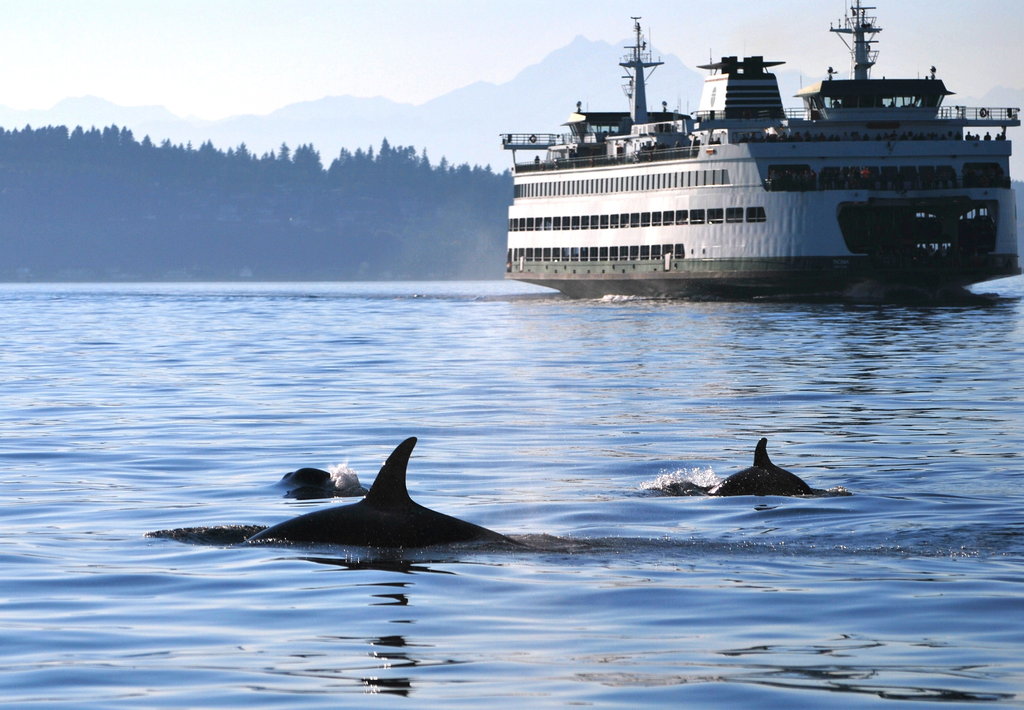
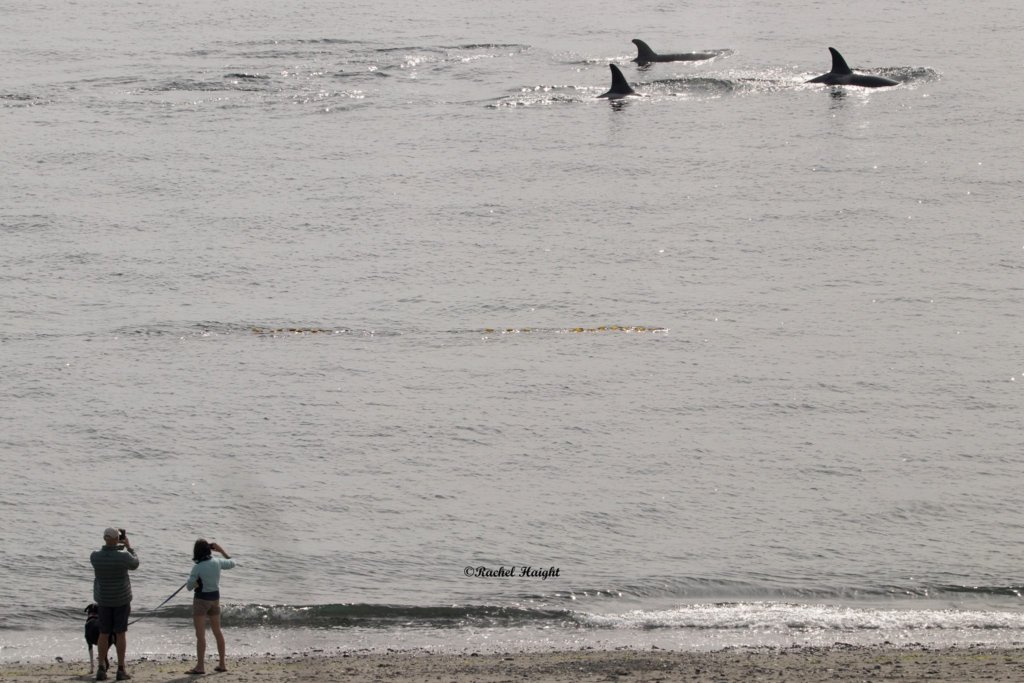
In the Pacific Northwest, this time of year brings the rains and the Chum salmon which feeds the Southern Residents during the fall and early winter months. True to their instincts they showed up after our first significant rains, and on September 18th in several spread out groups, Js and Ls showed up (much to everyone’s surprise) for their first documented Fall 2017 foray into Admiralty Inlet and Puget Sound.
Bigg's/Transient Orcas ~
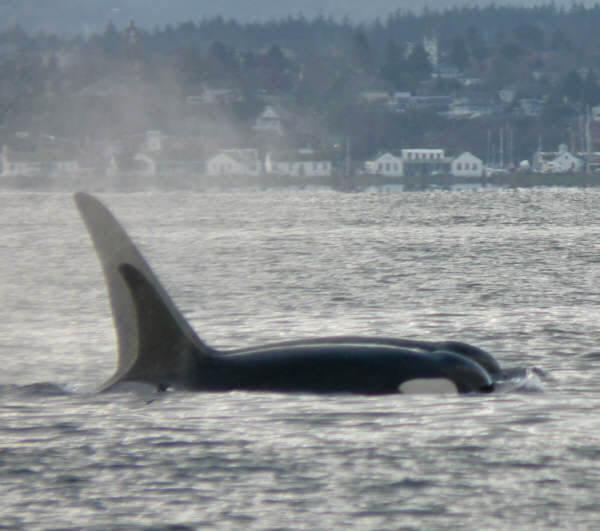
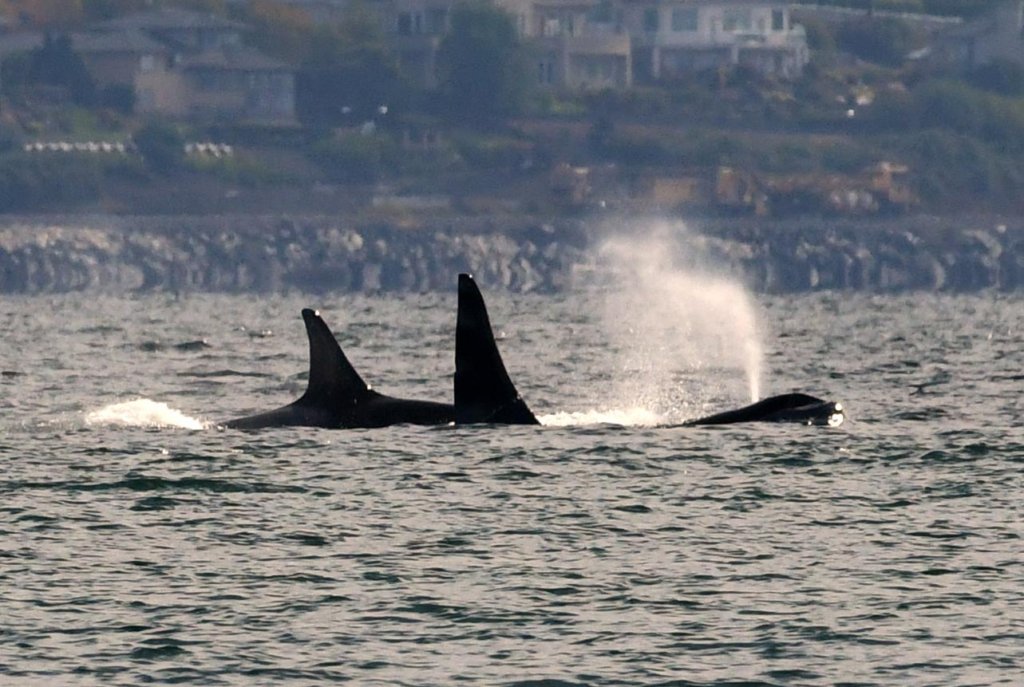
The summer so void of Southern Resident orcas was filled with the mammal eaters. The past several years an abundance of seals, sea lions and porpoise means Bigg’s/Transient orcas have had plenty of food available to them to maintain a steady presence throughout the Salish Sea year round, this summer was no exception. Summer of 2017 brought unprecedented numbers of Transients often in large groups on a consistent basis. What once was a summer rarity in Puget Sound turned out to be a full summer with weeks-long stays by some matrilines and individuals.
Here are two wonderful videos of Bigg's/Transient orcas off Whidbey Island filmed by Alisa Lemire Brooks:
T65As and T137s in Admiralty Inlet, August 30, 2017
T100s in Holmes Harbor/Saratoga Passage, August 31, 2017
Humpback Whales ~
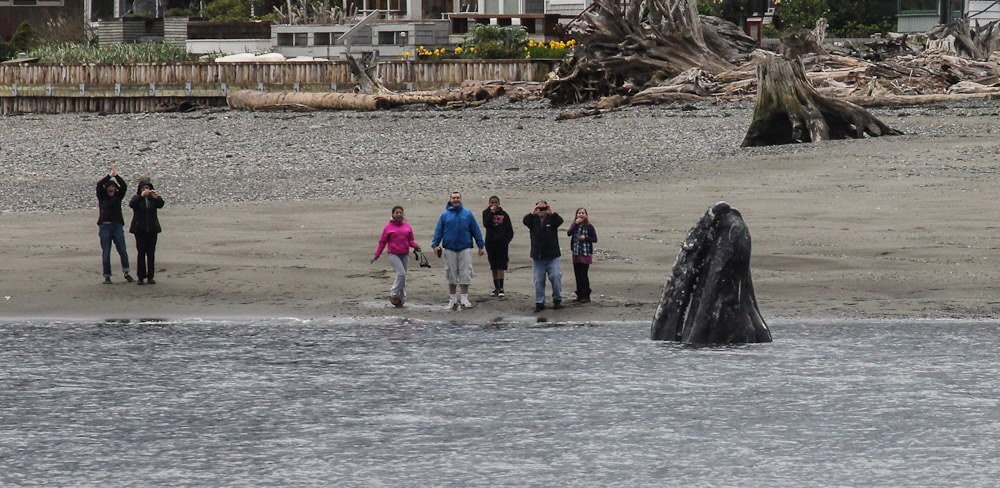
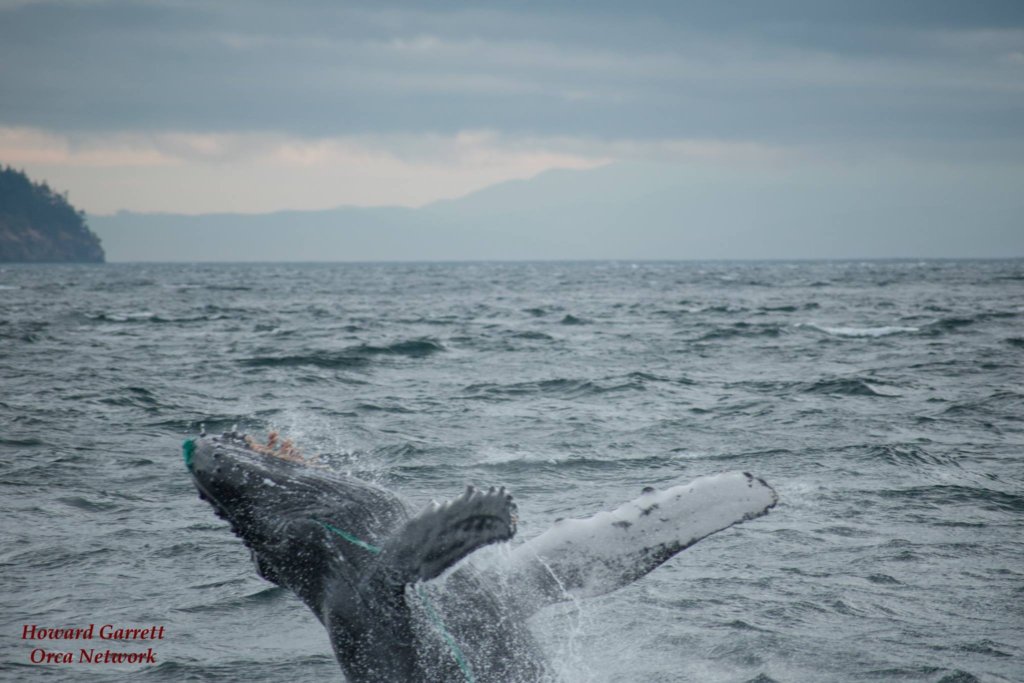
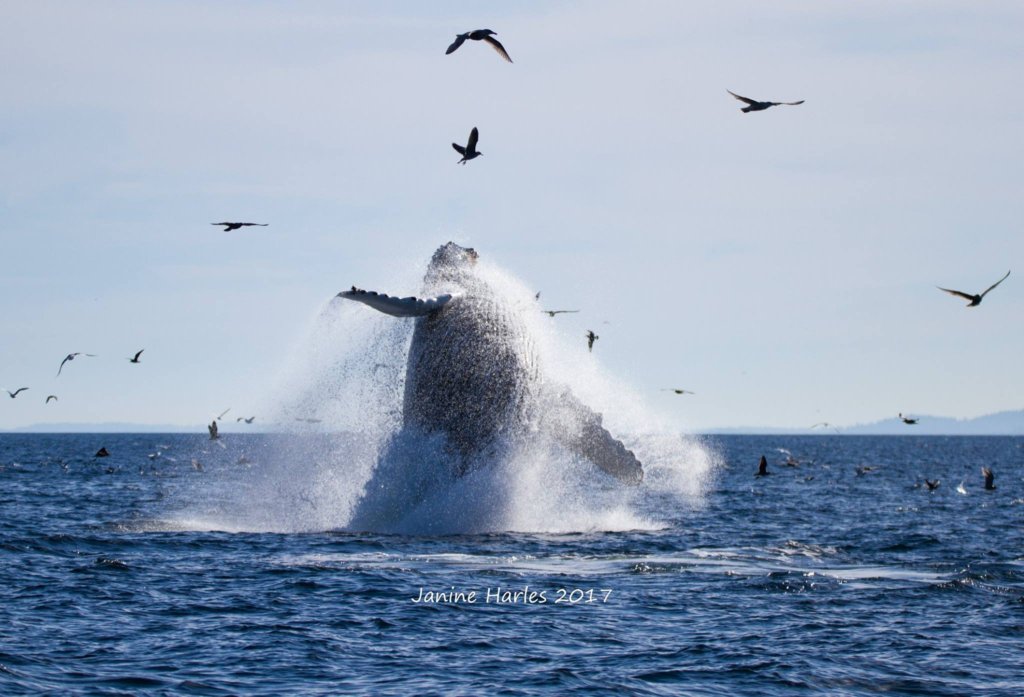
Humpbacks continue recolonizing their historical home waters. New individuals are showing up each year along with those who have been returning consistently for several. One humpback who showed the most fidelity to Puget Sound again this year is CS631/CRC16017 known affectionately as Two Spot. He has been documented around Puget Sound for the past three years, typically for prolonged stays. Prior to this week he was seen daily for nearly two months in primarily North Sound around the Kingston/Point No Point/Edmonds/South Whidbey area. It is hopeful to see the return of a native species who was hunted to near extinction and extirpated from the Salish Sea. Their return has increased people's enthusiasm, offers many opportunities to educate the public, and also increases the need for volunteers to help document their comeback. Sadly, their recovery and increase in whales also means an increase in the number of entanglements we will see. Our co-founder Howard Garrett observed and photographed a humpback entangled in gill netting on October 6th off San Juan Island. Working closely with the Stranding Networks and Large Whale Entanglement Team led by NOAA Fisheries, we put our volunteers on alert and did so again when the whale showed up two days later in Admiralty Inlet. Unfortunately the Entanglement Team was not able to reach this whale on either of those days, and our Sighting and Stranding Network volunteers continue to look for sightings of this whale.
Volunteer/Citizen Whale Sightings help us help the whales ~
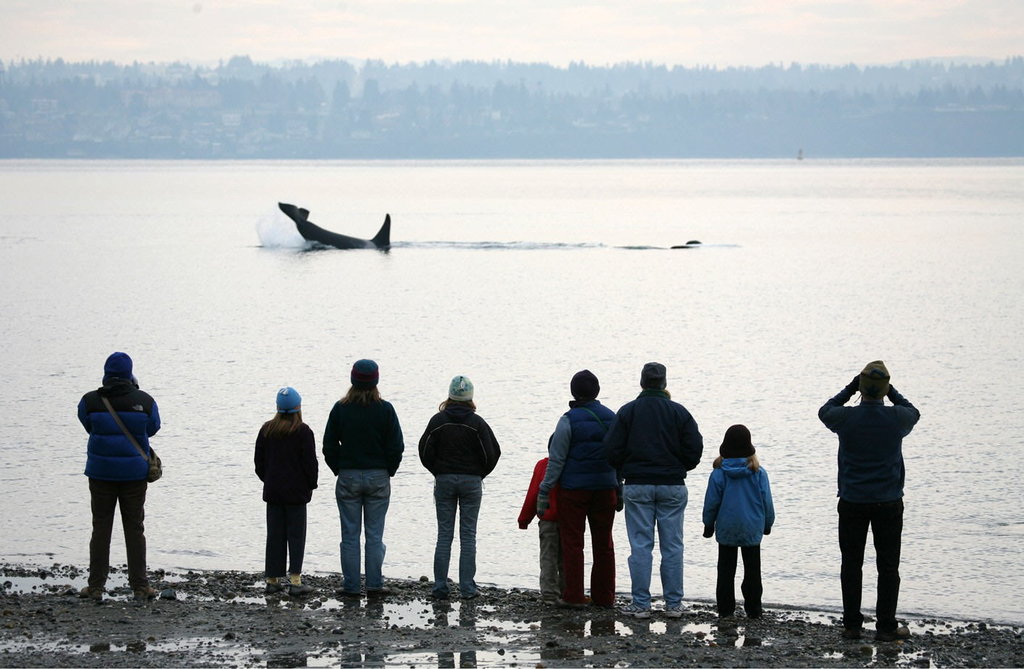
One of our Whale Sighting Network's priorities is to track the Southern Resident orcas during the fall and early winter months when they enter Puget Sound in search of Chum salmon, and gather reports we forward to local researchers and organizations, as well as alerting and educating other citizens who are eager to line the shores to watch and learn. As you can see, whales have a year-round presence now in Puget Sound and the greater Salish Sea basin. We are more grateful than ever for our Whale Sighting Network Volunteers who are great allies and so helpful in documenting the Southern Residents and all the other whales, and who have been at the ready to go out in times such as the entangled humpback. We are so grateful to you for your support that helps keep our Whale Sighting Network going!
To learn more about Orca Network's Whale Sighting Network and the whales of the Salish Sea, please visit our website Sightings Page.
Links:
Project reports on GlobalGiving are posted directly to globalgiving.org by Project Leaders as they are completed, generally every 3-4 months. To protect the integrity of these documents, GlobalGiving does not alter them; therefore you may find some language or formatting issues.
If you donate to this project or have donated to this project, you can receive an email when this project posts a report. You can also subscribe for reports without donating.