By Alisa Lemire Brooks | Whale Sighting Network Coordinator
Since our last report we have learned that J54 is a boy and, thanks to photos taken by two of our most dedicated volunteers, the Center for Whale Research was able to also confirm that J53 is a girl! Of the eight living Southern Resident calves born since December 2014 two are female, four are male, and L123 is still unknown.
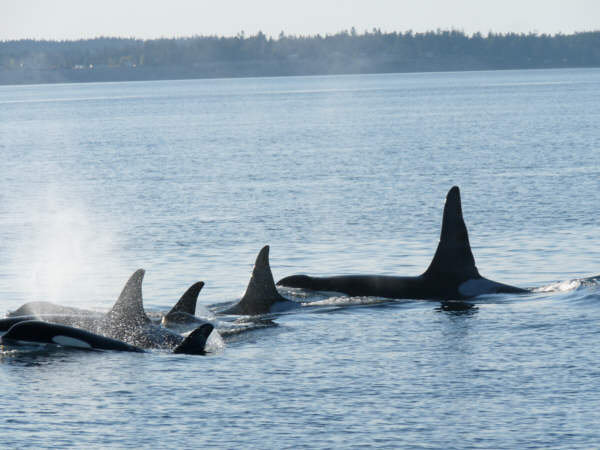
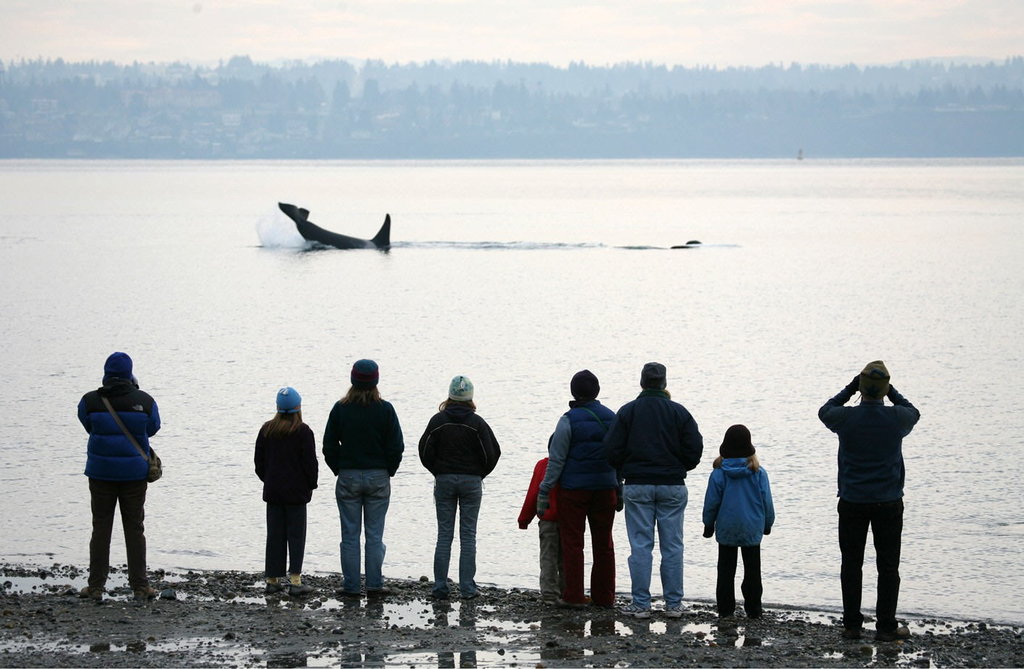
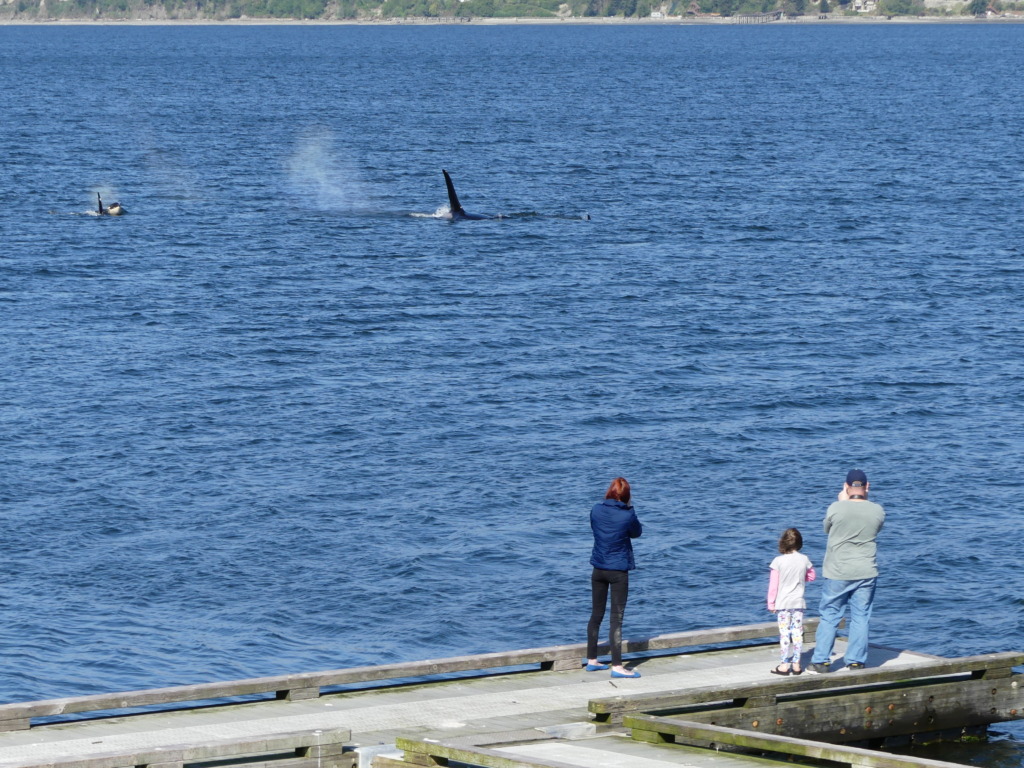
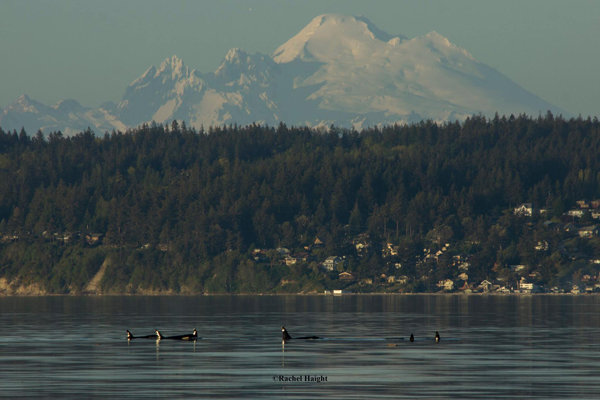
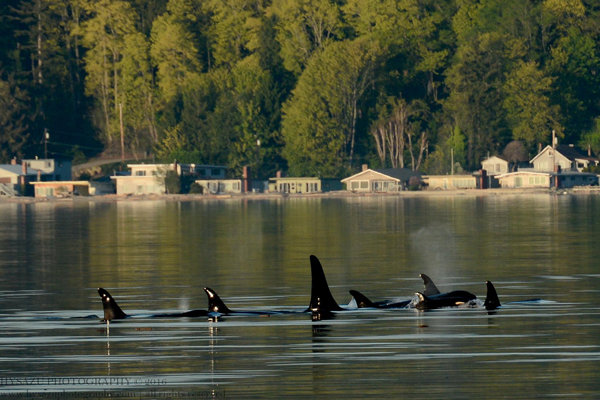
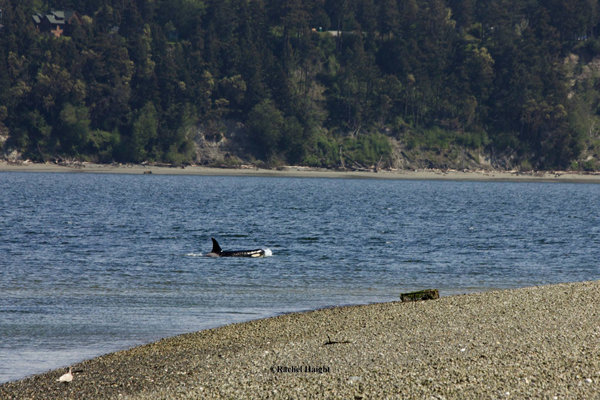
J53 and J54 are members of the J17s who along with the J 22s showed up in Puget Sound in early April. For the next nine days these two matrilines stayed in the Sound, primarily on the east side of Whidbey Island in Saratoga Passage with comings and goings into Holmes Harbor. Visits this time of year are not unheard of, but it is unusual for the salmon eating orcas to spend time in either of those places in the spring. Word at the time was locals were catching resident Blackmouth Chinook salmon; this left us all speculating perhaps the Js may have been as well.
Sadly we’ve three losses to the Southern Residents to share, two known individuals and one neonate. The newest calf J55, first seen January 18th with J14 and J37, was not seen again by the Center for Whale Research in follow up encounters and is presumed deceased. Mid April, DFO announced the death of 20 year-old L pod male L95 Nigel and confirmed the deceased neonate female calf found near Sooke, BC on March 23rd, 2016 was a southern resident. This is a double blow to this struggling endangered community.
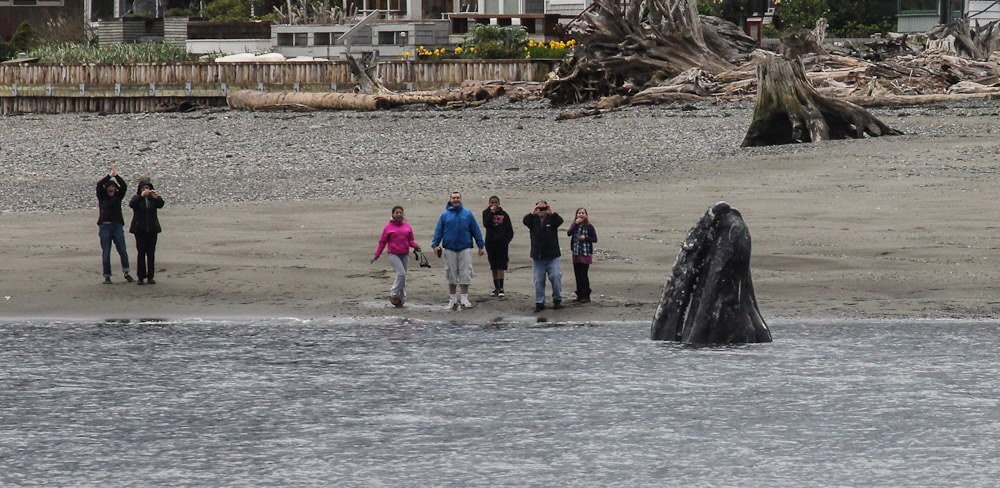
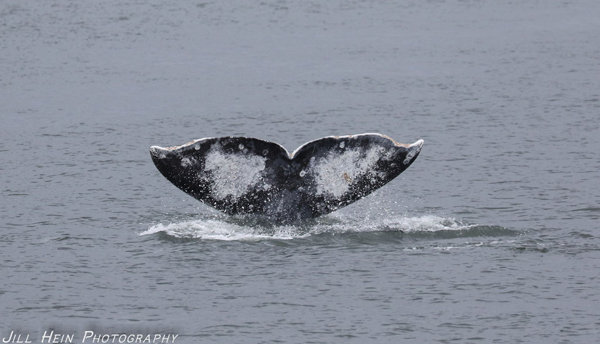
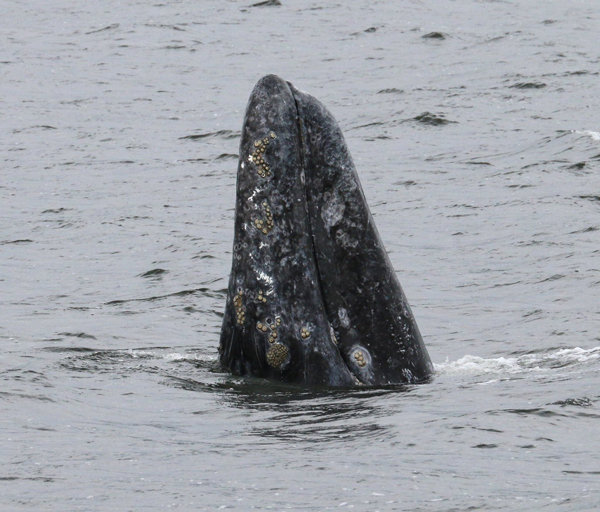
Over this Winter/early Spring we welcomed seven of the population of 10-12 North Puget Sound Gray whales (recently named the “Sounders") who have been identified, and their comings and goings tracked since the early 1990’s by Cascadia Research Collective (CRC). Wednesday February 17th, while out searching for a reported entangled humpback off Edmonds, I and one of our volunteers encountered and documented the first Gray of 2016, #723, who was found foraging off Possession Point, south Whidbey Island. Over the next month six other “Sounders” followed; #44, #49, #56, #383, #531. We are still getting reports of two who have been here this February-May season to feast on the ghost shrimp they find in the intertidal zones of north Puget Sound.
Working in collaboration with CRC more closely this year, Whale Sighting Network volunteers have been instrumental in reporting sightings to researchers doing field studies and keeping track of them, as well as assisting CRC and the local Marine Mammal Stranding Networks by locating and keeping track of two straggler emaciated young grays who did not have enough reserves to make the long migration north and came in to the more quiet waters of Puget Sound to die.
We are grateful for your support that enables us to keep the network moving forward, collaborating with various groups and researchers, and ultimately helping the whales by way of educating the public about their cultures, prey, habitat, boating regulations and everything else they need to survive.
Links:
Project reports on GlobalGiving are posted directly to globalgiving.org by Project Leaders as they are completed, generally every 3-4 months. To protect the integrity of these documents, GlobalGiving does not alter them; therefore you may find some language or formatting issues.
If you donate to this project or have donated to this project, you can receive an email when this project posts a report. You can also subscribe for reports without donating.