By Alisa Lemire Brooks | Orca Network's Whale Sighting Network Coordinator
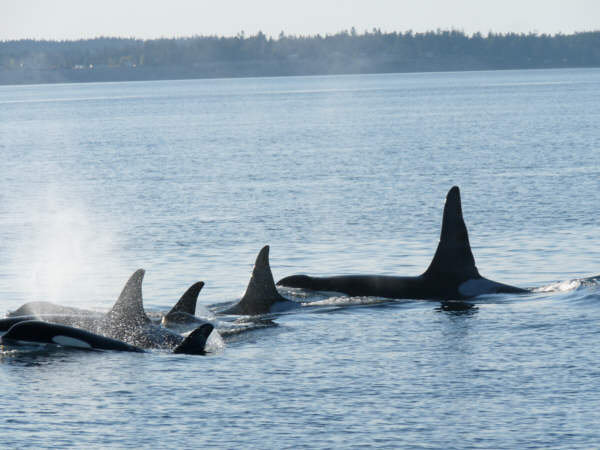
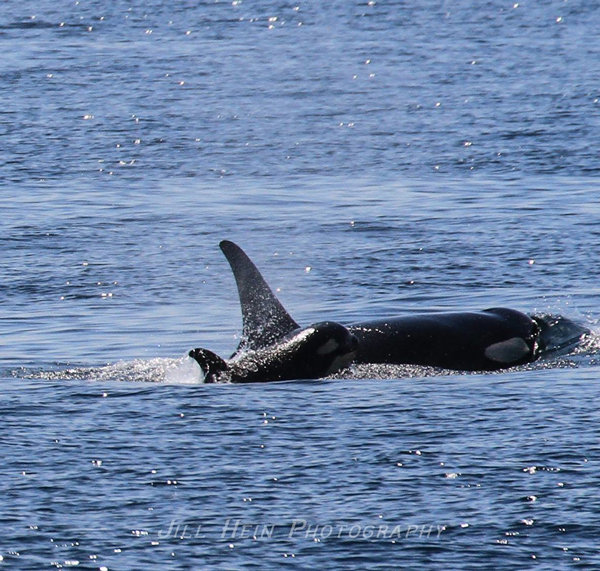
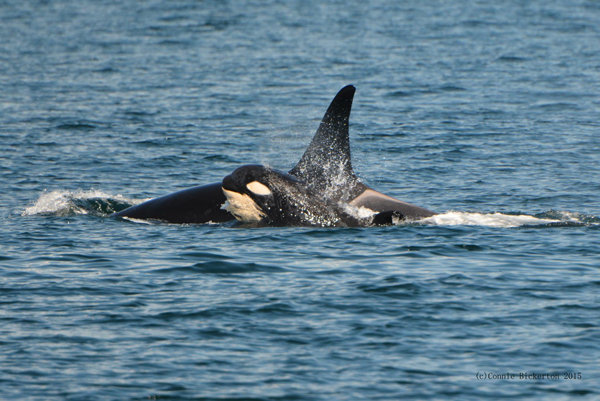
Our February orca update included welcome news of two new calves, J50 and J51. We are pleased to share the happy news of an additional two calves. L121 was thought to be just a few days-old when first seen by NOAA near Westport off the Washington coast on February 25th swimming with his mom, L94. And, as if our euphoria over a third calf wasn’t enough, the Center for Whale Research confirmed the arrival of a fourth calf, J52, first seen with his mom J36 on March 30th by the keen eyes of a naturalist out tracking J pod. With the return of all members to inland waters this spring/summer season (including all four calves) the Southern Resident population stands at 81 members. This number is far more hopeful than last year, but still a fragile and unsustainable number for this clan.
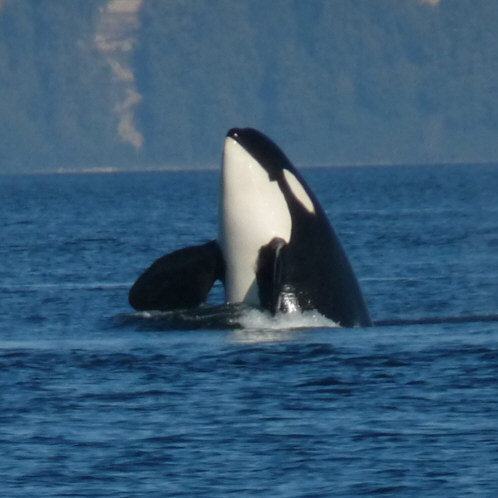
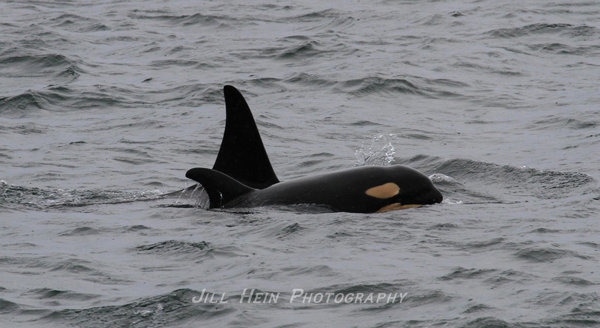
As of August 9th, the gender has been determined and confirmed by the Center for Whale Research (CWR) for 3 of the 4 calves. J50 is the only female. J51 (unconfirmed), J52, and L121 are male. One naturalist did get a good photo of J51’s under side that determined his gender as male, but CWR has not yet obtained their own belly photos to call it official. We continue to receive consistent reports all calves are looking active and healthy while foraging, traveling and socializing the inland waters this spring and summer with their families. And of course they are endearing themselves to everyone with their unique traits and individual personalities.
On August 1st a contributor to our network forwarded her photographs of twelve-year-old male J39 (Mako) with a salmon lure stuck in his mouth. We forwarded the photos to NOAA, the Center For Whale Research, local stranding networks, and our sightings network. NOAA-Fisheries naturally had concerns and took immediate action, “NOAA Fisheries will provide additional interim funding to the Center for Whale Research in Friday Harbor to further monitor the whale, which will help assess the impacts of the lure and possible means of addressing the situation.”
CWR staff encountered J39 on August 6th and shared this update: "We went out yesterday with the mission of checking up on J39 who was seen earlier this week with a fishing lure hanging out of his mouth. As of yesterday we were able to determine that his new found accessory was no longer attached. Whether he swallowed it or it fell out on its own, we may never know. He appeared fine yesterday, and was behaving normally." Staff continues to closely monitor J39.
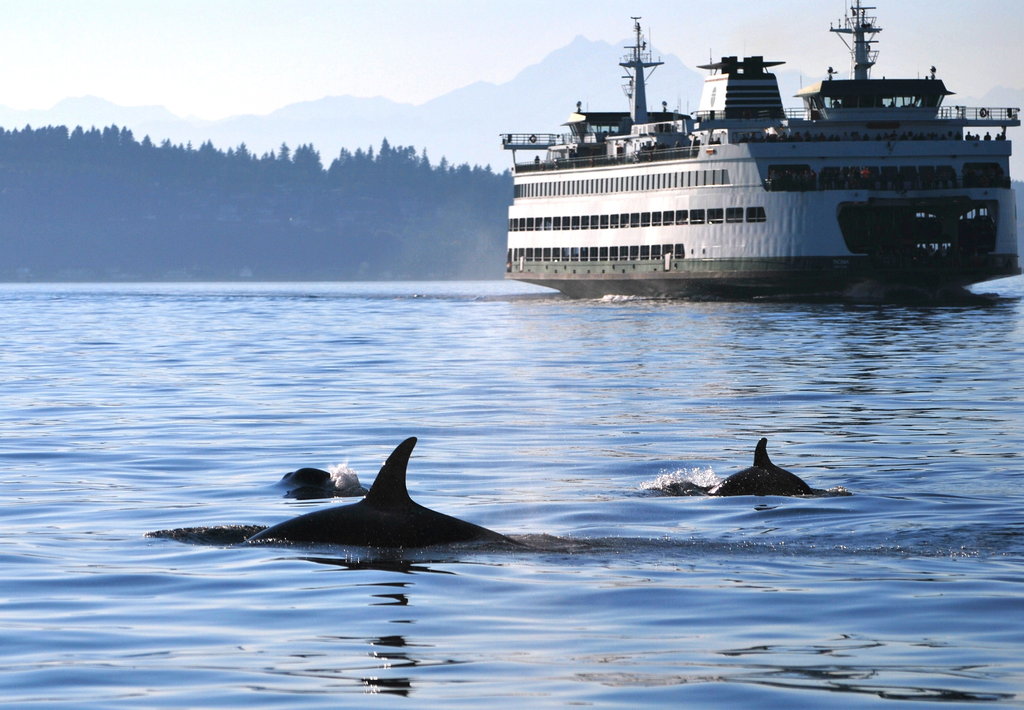
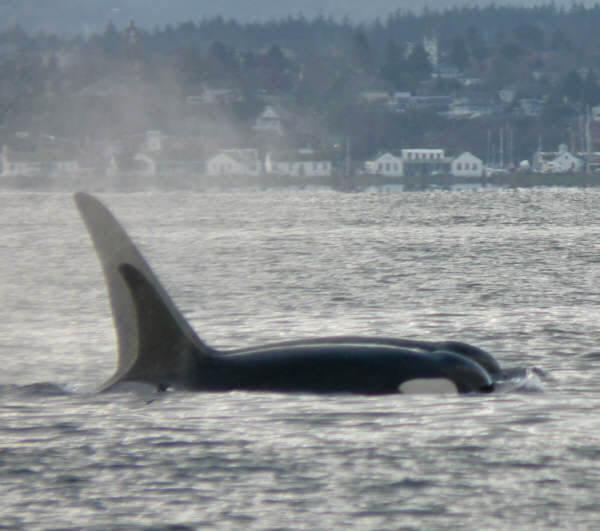
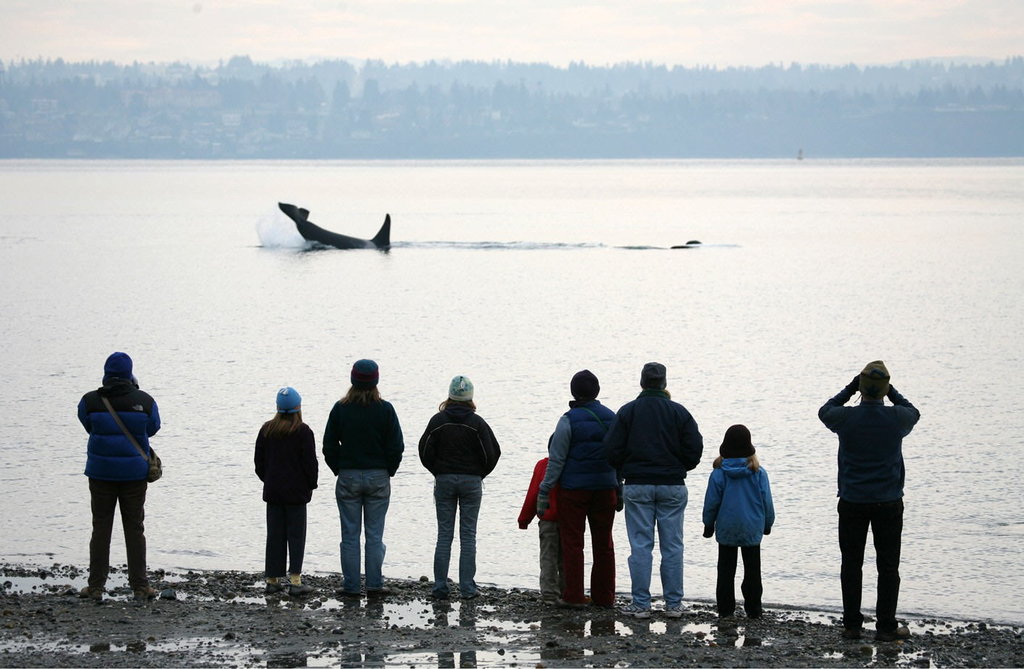
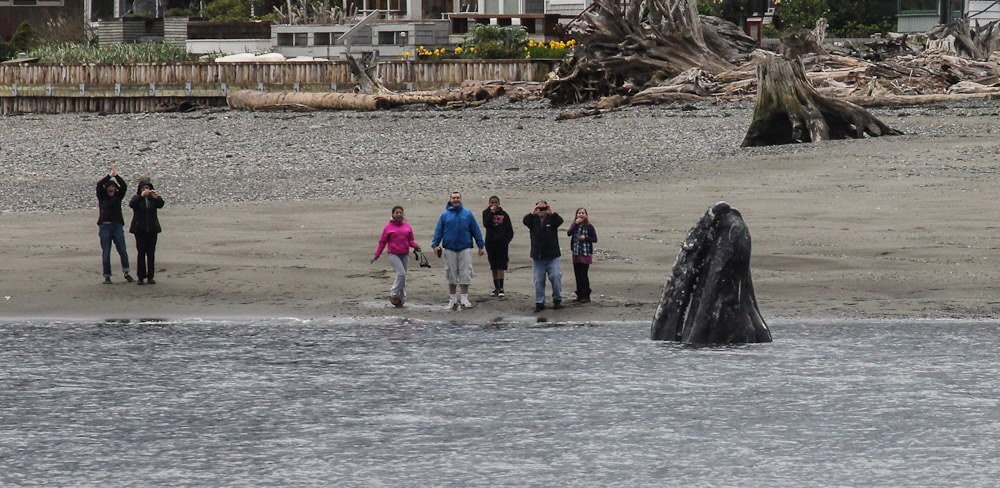
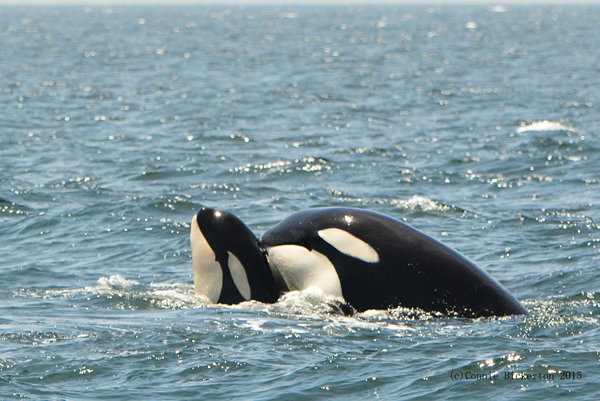
Our sightings network was unusually busy during late spring and early summer with more frequent and longer visits by Bigg’s/Transient orcas (mammal eaters) in the inland waters of Puget Sound. The T125s were among the many matrilines who spent time in Puget Sound during that time. They are unique in that they had not been seen in the inland waters west of the Pacific since the early 90’s and T127 has a serious injury to his dorsal that made him very recognizable and popular. The T125s traveled throughout Puget Sound but primarily spent their time (most of June) in the inlets and bays in the deep reaches of south Puget Sound. Their prolonged stay presented many viewing opportunities both by land and on the water. In the south Sound public viewpoints are limited and people with boats are numerous. We had several reports of humans on watercraft crowding the pods and interfering with the orcas natural movement. These reports prompted us to review our real-time postings and increase boater education and awareness through the Be Whale Wise campaign. We reached out daily, consistently sharing the current laws/ guidelines when around marine mammals via our Facebook page and our Sightings Reports published 1-3 times a week.
Orca Network's Whale Sighting Network is instrumental in keeping track of the orca's movements, educating the public, and sharing information that helps others make connections. Once they have made a connection they care more and are eager to expand their knowledge of the life and needs of these beings. We very much appreciate your support that enables us to educate and assist others in learning to be good stewards toward the whales and their habitats.
Links:
Project reports on GlobalGiving are posted directly to globalgiving.org by Project Leaders as they are completed, generally every 3-4 months. To protect the integrity of these documents, GlobalGiving does not alter them; therefore you may find some language or formatting issues.
If you donate to this project or have donated to this project, you can receive an email when this project posts a report. You can also subscribe for reports without donating.