By Susan Berta, Cindy Hansen & Alisa Lemire Brooks | Education & Sighting Network Coordinators
J35 Tahlequah's Tour of Grief
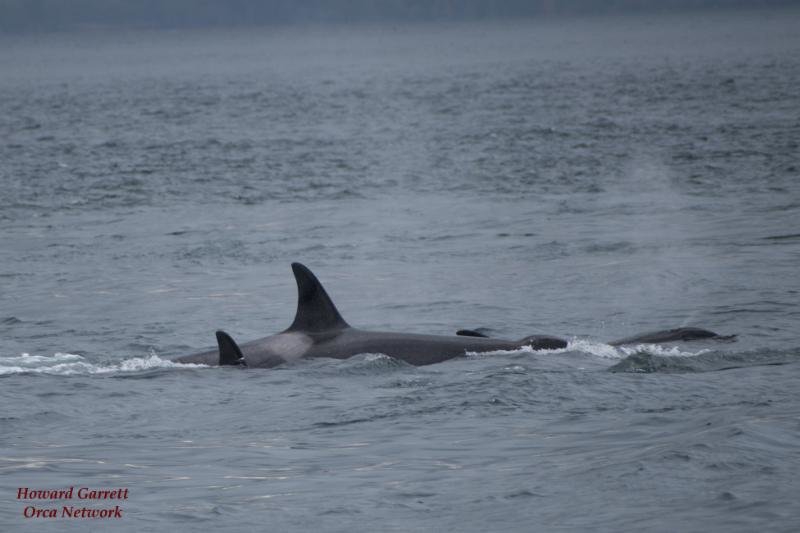
On July 24th, Endangered Southern Resident J35 Tahlequah gave birth to a baby girl who died within the hour. The sad loss of a much needed new calf, especially a female, was hard enough to witness ~ but then J35 Tahlequah carried her deceased daughter's body for at least 17 days after her birth and death, not letting go of the tiny calf as she continued swimming with her family all around the Salish Sea, as if to make sure we all saw and felt her suffering. The Center for Whale Research's account of J35 and the loss of her calf can be found here.
We include Ken Balcomb's brief statement here, to give some direction to the grief we're all feeling right now. There are so many conflicting theories and agendas that some clarity is needed, and we believe this focus on restoring wild chinook is sorely needed:
"The larger environmental question reflected in the J35 story is that both the USA and Canada MUST redouble efforts to restore wild salmon (particularly Chinook) throughout Washington State and British Columbia for a food supply for the SRKW in this region. Whales in this Endangered population are dependent upon Chinook salmon for their primary food source. Unfortunately, Chinook salmon are also Endangered. We have long demonstrated that these fish-eating whales are getting skinnier and skinnier, and the death rate is increasing. This baby whale (and 100% of the pregnancies in the past three years) failed to be viable because the mothers do not have sufficient food. Period. We've got at most five more rears of reproductive life in this population to make it happen, but if we don't do it in those five years, it isn't going to happen. My energy is going toward advocating restoration of wild Chinook salmon populations as a priority."
- Ken Balcomb, Founder and Senior Scientist, Center for Whale Research
J50 Scarlet, ailing, announced missing Sept. 13th
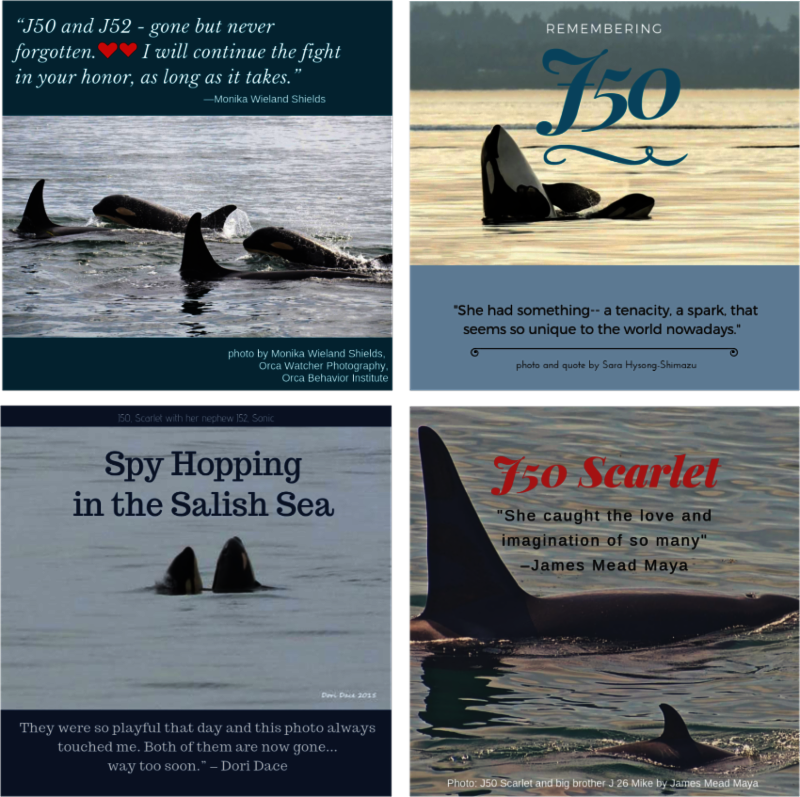
Along with the devastating loss of J35's baby, J pod suffered another heavy blow in June with the news that J50, Scarlet, the near four-year-old fiery little youngster was observed to be not doing well, and likely near death. An effort was launched to take samples to try to determine what was wrong with J50, and NOAA Fisheries attempted administering antibiotics, something never before done in the wild to a free swimming whale. But J50's health continued to deteriorate, and on September 13th the Center for Whale Research announced that J50 was missing and presumed dead.
With the loss of J50, the total number of Southern Resident killer whales now totals 74 whales.
"This is what extinction looks like, lack of reproduction and poor survival in the young age whales. We're witnessing it. If we want to avoid it, we start recovering the wild natural Chinook salmon that are essential to their diet."- Ken Balcomb
And while these tragedies were unfolding, the Governor's Task Force on Orca Recovery was meeting and learning and talking about how to help the orcas and the salmon they need. They have just released their DRAFT REPORT of potential recommendations and are ACCEPTING PUBLIC COMMENTS THROUGH OCTOBER 7th.
To help everyone to better digest and understand the Task Force document, we bring you:
A SIMPLIFIED GUIDE TO THE SOUTHERN RESIDENT ORCA TASK FORCE DRAFT REPORT PUBLIC COMMENT SURVEY
Compiled through a partnership between Orca Network and several other organizations, we are providing this guide to help you navigate the task force draft report and participate in the public survey. Click on the link above for a simplified, easily digestible version of the potential recommendations and an explanation of how to complete the survey.
It is important the Task Force hears our thoughts about proposed actions, and which actions are the most important to the survival of the Southern Resident orcas. We hope you will comment on the draft document.
There is no glossing over the events of these past months, no glossing over the losses and reality of their situation. We hold each of them in our hearts in love and prayer with determination to continue working on their behalf.
And the news is not all bad - there are several Southern Resident females who are in late term pregnancies, and there is hope yet for a new calf or two to be born in the months ahead. They have made their first two forays down into the inland waters of Puget Sound, the beginning of their fall/winter season following the chum salmon runs in Puget Sound. So we all watch and hope, and each do what we can in our own ways to save the Southern Resident orcas. To learn what you can do to contribute to recovery actions, please visit our Orca Network Action Page.
Your continued support to help us help the whales is appreciated now more than ever ~
Links:
Project reports on GlobalGiving are posted directly to globalgiving.org by Project Leaders as they are completed, generally every 3-4 months. To protect the integrity of these documents, GlobalGiving does not alter them; therefore you may find some language or formatting issues.
If you donate to this project or have donated to this project, you can receive an email when this project posts a report. You can also subscribe for reports without donating.