By Freya Hoffman-Terry | Office Manager
RAIN recognizes that education is the most powerful tool to counteract Niger’s high rates of child marriage, underage mothers, malnutrition, and extreme poverty – all of which trap entire families in poverty, and threaten the future of millions of rural Nigeriens. Girls who stay in school have more options when they graduate, have fewer children, make better decisions regarding the wellbeing of their children, and are more likely to enroll their children in school. (UNICEF, UNESCO). For these reasons, education is the vehicle through which we deliver all our programs and empower women to be active agents in deciding their own future.
Our Mentoring Sustainability Program uses an innovative, culturally sensitive approach to help women and girls in rural communities lift themselves and their families out of poverty. The program becomes self sustaining within four years; it utilizes savings & loans groups and herding initiatives to support mentors and fund their work with their mentees. Our mentors are trained to be education advocates for at-risk youth, 80% of whom are girls. As a result, communities see a reduced dropout rate for mentored compared to non-mentored youth, increased awareness of the risks of early marriage, wide-ranging improvements in health and wellbeing through mentor lessons, and increased income generating opportunities for women through savings & loans groups, entrepreneurial activities and goat herding.
We train women who serve in our Mentoring Program as mentors and education advocates for vulnerable youth – in financial literacy, economic principles, and sustainable herding practices. By equipping women with the tools and knowledge to build their own livelihoods, we also provide positive role models that younger girls can aspire to become. The income that our women mentors earn from their herds is also channeled into their mentoring work and lessons for their mentees.
To prepare women to use herding as a source of income our field agents train the women in practical skills and economic principles such as budgeting and saving to develop their financial literacy. Participants enter the program with a three-day training session where group fundamentals are established including savings, interest rates, and levels of fines for missing meetings and payments. These skills and lessons prepare women to effectively engage in the day-to-day activities of the goat herding initiative.
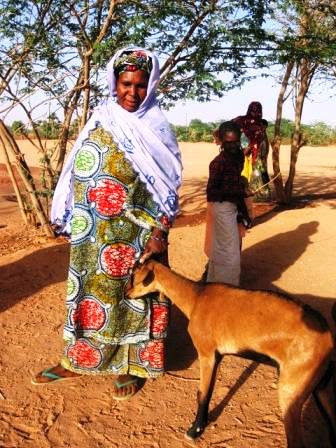
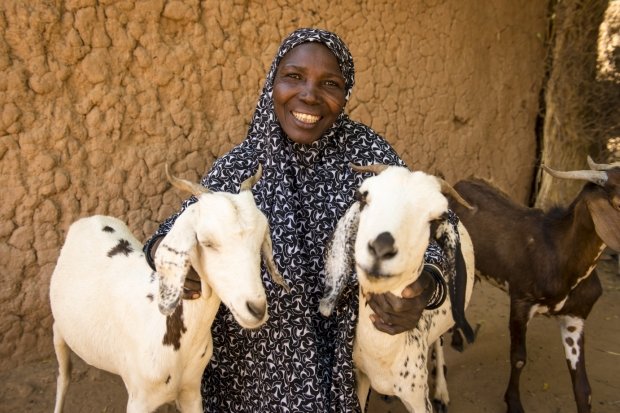
Herding is the primary way for our women mentors to put the economic principles they have learned into practice. Goats are the livestock of choice given their tenacity amidst Niger’s extreme weather conditions. We provide each mentor with four female goats and one male goat, vaccinations for the herd, and training in sustainable animal health and husbandry. For the first three years, RAIN provides mentors with a monthly stipend of $10 to ensure there is enough food to promote the health and successful breeding of their goats. During this phase, mentors develop a solid understanding of market economics and savings through their trainings and through the sale of livestock products such as milk and cheese, which contribute to their much-needed food security and income. Within four years, mentors grow their herd to a sustainable size, at which point the kids of the original goats can be sold for profit. This income, along with income from livestock products like milk and cheese, grows to replace the monthly stipends, which in turn renders the program self-sufficient.
Training and funding support is pared back in stages over the initial four-year timeline, ensuring that participants have the support they need, while encouraging autonomy and empowerment. By year four, earned income replaces funding from RAIN to cover mentor stipends, food, and vaccines for animals, resulting in the program’s self-sufficiency, long-term sustainability, and replicability. Group members are encouraged to replicate the project and start new mentorship groups in their communities, which builds the project into a grassroots and community-based movement. In this way, the herding initiative promotes financial literacy and independence while providing stable, sustainable economic growth for community education and mentorship.
When you support this program, you are making a world of difference in a mentor's life, who in turn makes a world of difference in the lives of their mentees. This effect can permeate a small community. Thank you for joining us in supporting these strong and resourceful communities.
Project reports on GlobalGiving are posted directly to globalgiving.org by Project Leaders as they are completed, generally every 3-4 months. To protect the integrity of these documents, GlobalGiving does not alter them; therefore you may find some language or formatting issues.
If you donate to this project or have donated to this project, you can receive an email when this project posts a report. You can also subscribe for reports without donating.


Support this important cause by creating a personalized fundraising page.
Start a Fundraiser