By Betty Gisore | Grants and Administrative Assistant
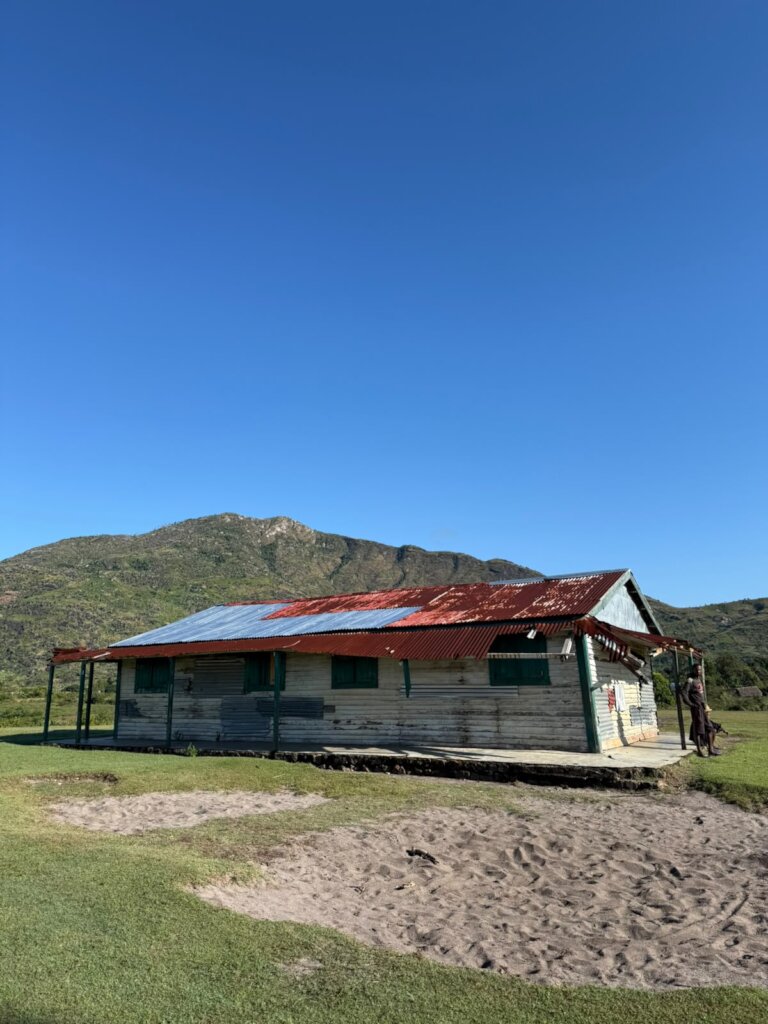
Tsiharoa Ambondro school was built by SEED using timber in 2007, prior to the transition to cyclone-resistant concrete school buildings and the development of SEED’s holistic Sekoly Programme. This integrated approach now includes the construction of teacher accommodation, MHM facilities, rainwater harvesting, and carbon offsetting. With only rudimentary repairs occurring over the last 16 years, the school building shows clear signs of aging and requires significant repair. As cyclones and other environmental shocks become more frequent in the region, damage sustained in previous years has become an increasing concern. SEED’s original development of the school in 2007 has supported ever growing enrolment, however this increase has left the 235 current students sharing only two classrooms. Such limited capacity has resulted in overcrowding, with students attending only half-day classes and preschool classes conducted outdoors, either under a tree or on the school’s veranda. Despite the school recently receiving new classroom benches from a QIT Madagascar Minerals (a joint venture mine between Rio Tinto and the Government of Madagascar) programme, the extremely overcrowded classrooms now leave little space for movement, with students and teachers having to climb on and over furniture in order to get in and out of their seats.
Students are unable to practise healthy behaviours due to the school’s lack of WASH facilities. The school currently has no operational latrines with only the concrete floor of the SEED-constructed latrine remaining. The lack of a private space particularly impacts menstruating students who cannot practice safe MHM at school, which can lead to increased absenteeism amongst girls. Such a lack of appropriate WASH facilities contributes to open defecation in the community, potentially contaminating water points and increasing the risk of communal disease transmission. While there is a well located near the school, it is used by the wider community for all water needs. As a result, students collect water from the well each day and store it in buckets at the school for use during school hours making it the only available source for practising appropriate WASH-related hygiene behaviours like handwashing
We thank you for you support and look forward to giving you an update on this school once it is started.
Project reports on GlobalGiving are posted directly to globalgiving.org by Project Leaders as they are completed, generally every 3-4 months. To protect the integrity of these documents, GlobalGiving does not alter them; therefore you may find some language or formatting issues.
If you donate to this project or have donated to this project, you can receive an email when this project posts a report. You can also subscribe for reports without donating.


Support this important cause by creating a personalized fundraising page.
Start a Fundraiser