By Emma Cohen and Iain Guest | Project coordinators in Nepal and the US
This report is being sent to 24 friends who have donated $5,438 to help establish a new academic center for the study and practice of transitional justice in Nepal – the Center for Human Rights and Victims of Violations (CHRV).
Your support has helped make this a very productive summer at CHRV, as we hope to show in this report! Capping it off, CHRV will host a major conference on November 21, the twentieth anniversary of the signing of the Comprehensive Peace Agreement (CPA) in 2006 that brought an end to the conflict. We have received expressions of interest from around the world and it promises to be a major event.
So, thank you!
Background
CHRV is the outcome of years of advocacy by our director Ram, whose father Tej Bahadur disappeared during the conflict on December 31, 2001.
Ram has dedicated himself to uncovering the truth of what happened not just to his father but to the more than 1,350 other Nepalis who also disappeared. He founded the Nepal Network of Families of the Disappeared (NEFAD), a partner of The Advocacy Project (AP) since 2015.
CHRV is a product of this long campaign by victims and survivors. Ram and Niraj laid the foundation in 2025 with help from three AP Peace Fellows – Emma, Shuyuan and Laila. All three described their fellowships through blogs.
Over the summer of 2025 we received the green light from Kathmandu University to establish CHRV within the prestigious School of Arts and create a new CHRV page on the university website. In July, we launched Survivor’s Record, a monthly newsletter for survivors and victims.
By the end of 2025 the stage was set for CHRV to join other institutions and organizations dedicated to transitional justice – only from the perspective of victims and survivors. This contrasts with mainstream human rights NGOs who work to defend legal standards.
A center is born!
Our goal for this year has been to turn CHRV into a working academic center. This has meant recruiting students and teachers who would help us to develop and test out a 6-week curriculum. We also invited several eminent academic friends to join an advisory board.
The task of recruiting international students was given to Emma, one of the three 2025 Peace Fellows. Emma had visited Nepal and met Ram during her undergraduate studies at Wellesley College. Her time as a Peace Fellow in 2025 further deepened her interest in transitional justice.
Emma visited several colleges and universities in the US this past spring and signed up five accomplished students for the CHRV inaugural classes in July. The cohort was rounded off by Chhime, a student of human rights who had met Ram while working at The Advocacy Forum in Kathmandu and was preparing to study for a PhD in the UK.
The Advocacy Project offered CHRV three stipends and joined CHRV to launch our appeal on GlobalGiving. Thanks to your swift and generous response, we had sufficient funds to start classes in early July!
A summer of achievement
Here is Emma’s summary of CHRV’s accomplishments over the past three months from Nepal.
1. Helping students understand survivor-led transitional justice
We have recruited six students from Tufts, Wesleyan, Wellesley College, Boston University, and a graduate from Geneva Academy. This gave us a wonderfully diverse group of students from Nepal, Kazakhstan, and the US. We hope to recruit from more universities next year.
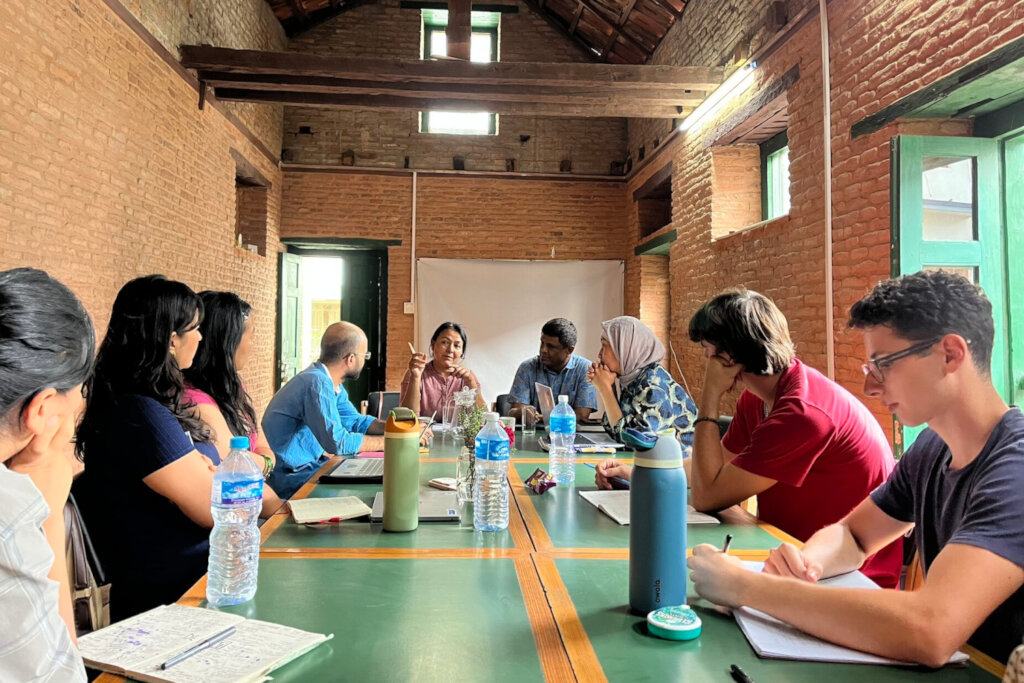
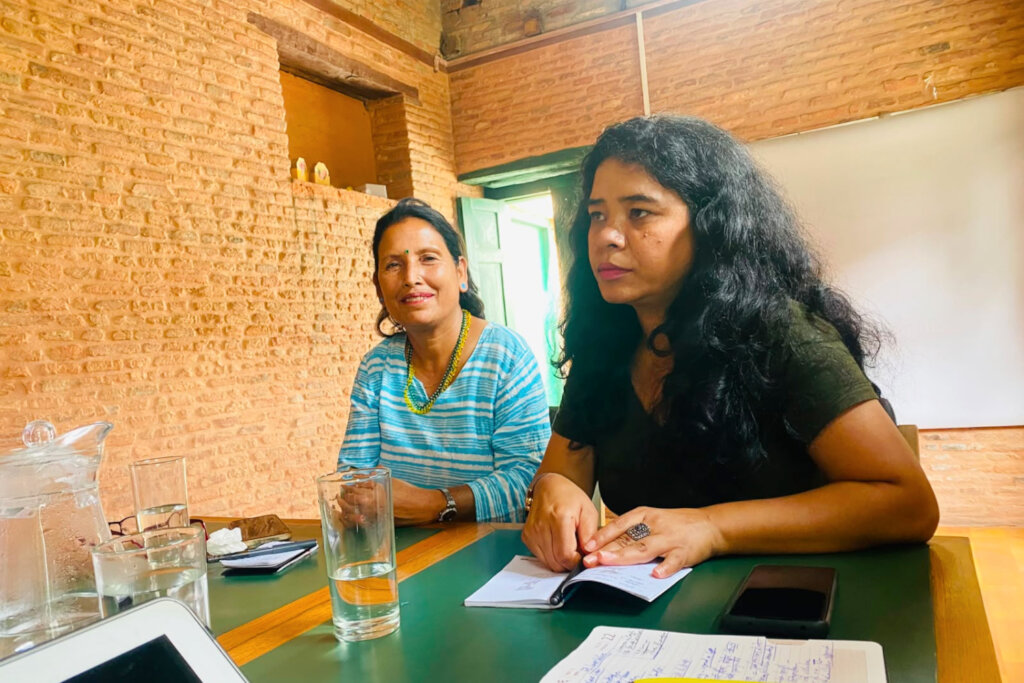
Our curriculum has been developed by our core team with feedback from international and Nepali advisors. We wanted our students to learn from survivors in person and invited 12 well-known survivor advocates to attend classes on topics such as local memorialization, conflict-related sexual violence, women’s leadership in the survivor movement, and conflict-related disability. Students also met with a local government official and an international survivor activist.
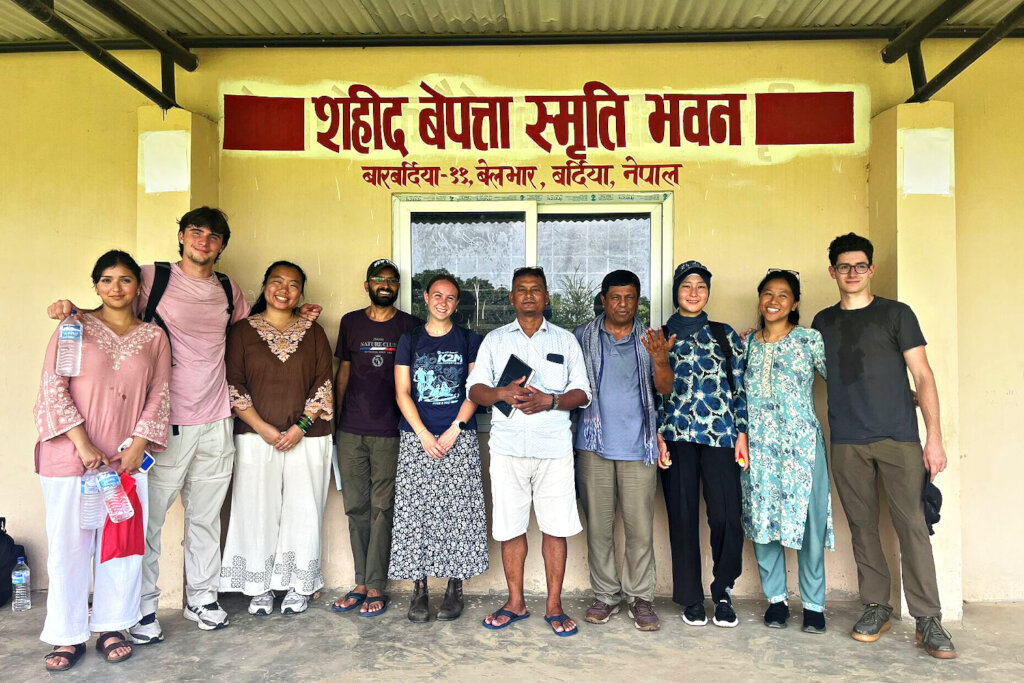
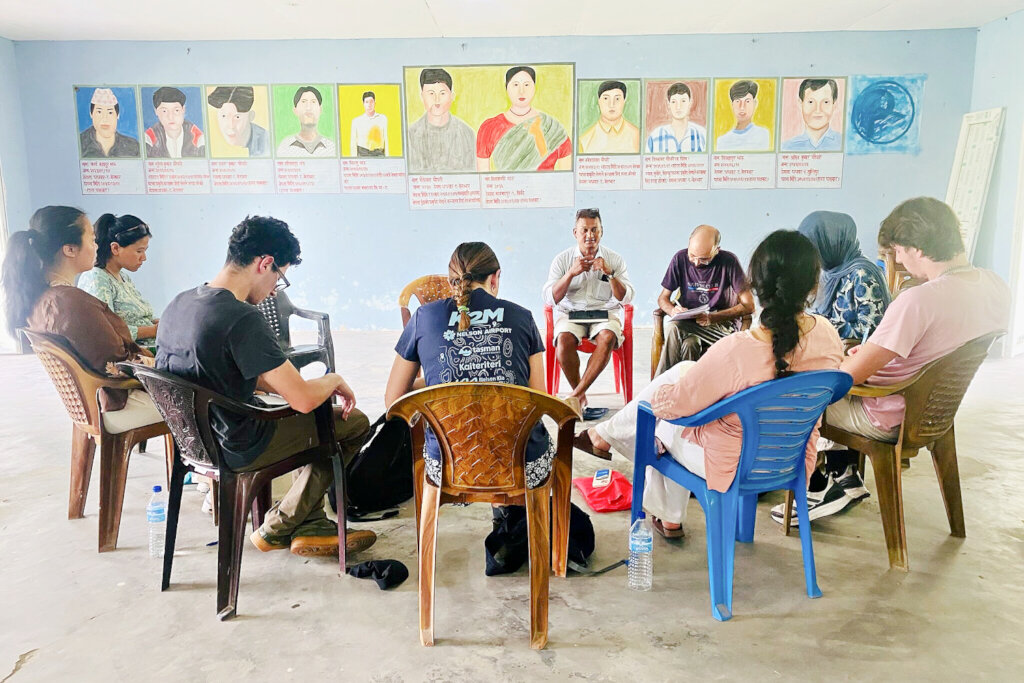
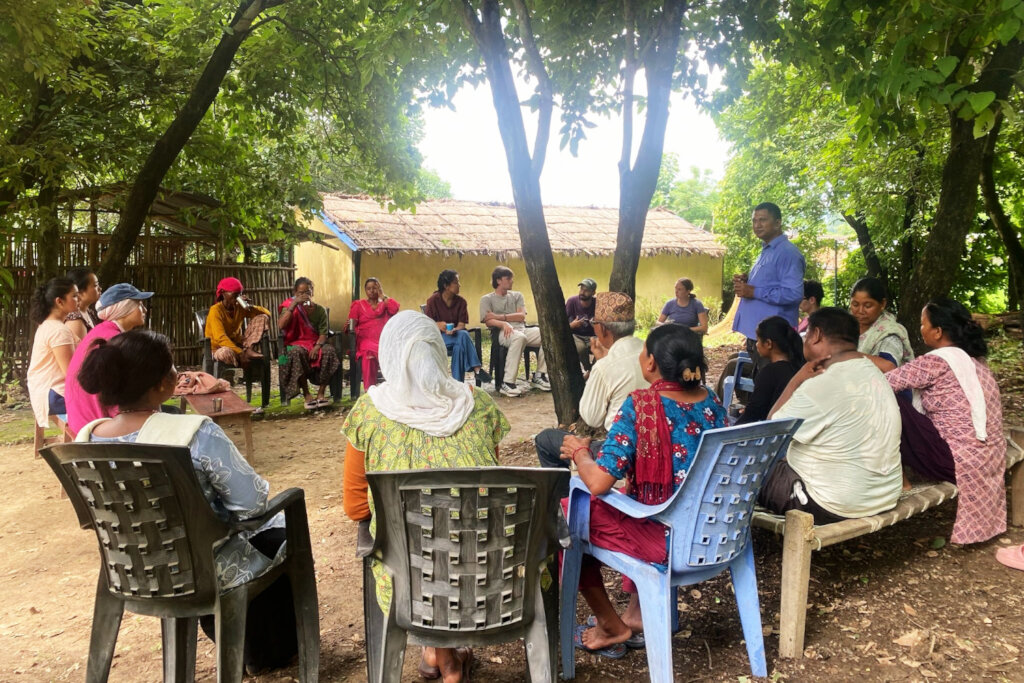
While much of the coursework took place in Kathmandu, our students also traveled to Bardiya, which suffered more disappearances than any other district in Nepal. Here we met with local survivor leaders and visited the Kumbharadda Disappeared Persons' Memorial Park, which has been collecting belongings of the disappeared from local families.
We helped Niranjan, the park founder, to create a digital archive of the park’s belongings and stories. We also recorded interviews with eight local family members who had donated belongings to the park. Once English and Nepali captions are added, the videos will be uploaded to a public digital platform.
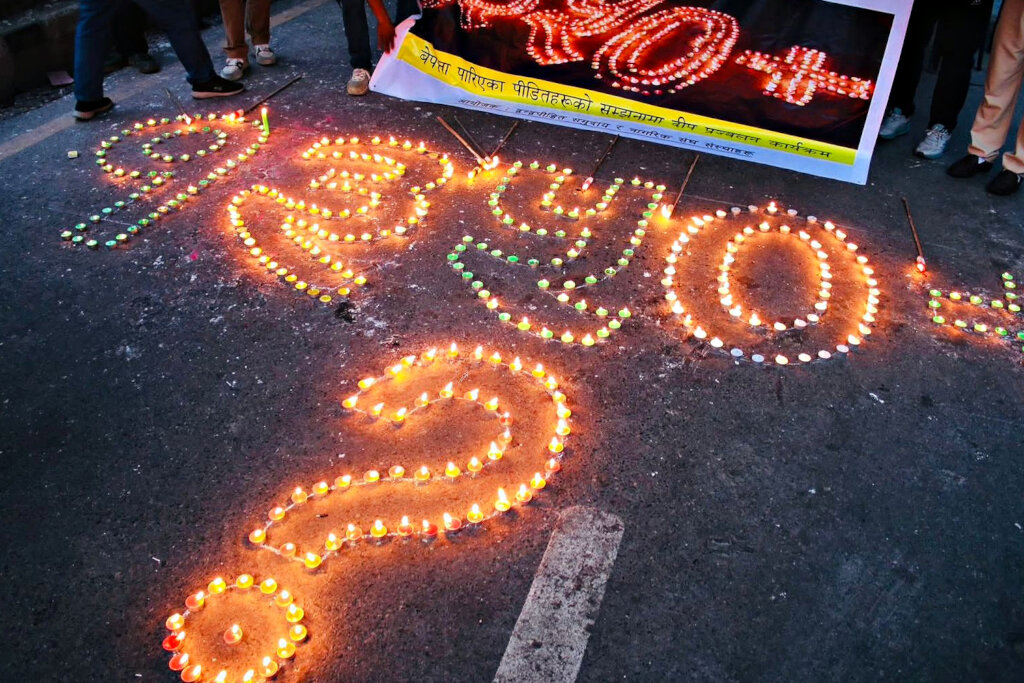
During their last week in Nepal, our students also attended events around the International Day of the Disappeared in Kathmandu. These included an interactive discussion and moving candlelight vigil (photo).
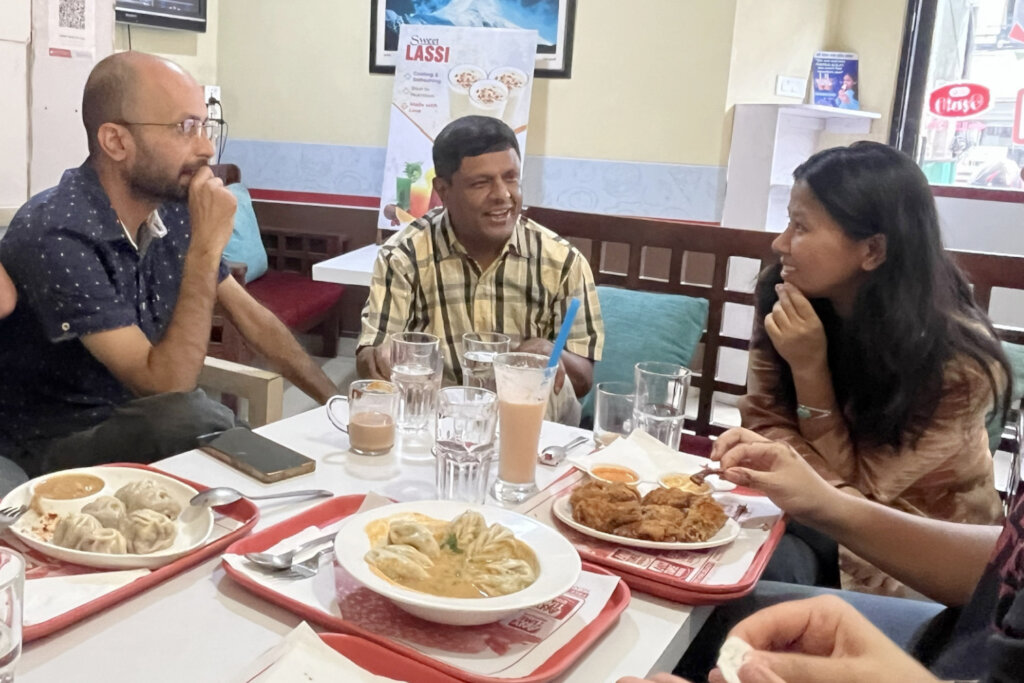
We rounded off this busy summer with a final review session at CHRV to reflect on what we had learned. All of the students have posted blogs on their summer which can be found here.
Student Feedback
The response from students has been enormously encouraging.
One noted: “My experience with CHRV was genuinely transformative. The program pushed me to think about transitional justice beyond legal and institutional frameworks and to understand it through the lived experiences of victims, families, activists, and communities.”
Another student writes: “I will never forget the survivors I met in Nepal and I have no doubt that I will continue to be inspired by their determination and compassion.”
A third student had this to say: “Transitional justice is an extremely unique field of human rights, and the experience of engaging with survivor-centered movements has already enabled me to take a critical lens to my studies of the existing order of international human rights law and its shortcomings. I imagine that as I continue my academic and professional career, what I have learned this summer will become increasingly valuable.”
All six students enrolled as 2026 Peace Fellows and are adding feedback to this page.
2. Increasing visibility at universities
Our summer students have now returned to their home universities and are sharing information about their experience with peers and professors through presentations, word of mouth, and writing. As a result, two students and one professor have already reached out for information. Once we finalize plans for 2027, we will ask our 2026 alumni to share information on their campuses.
3. Help academics, practitioners, and activists engage with survivors
We hope to build on this summer to expand CHRV’s network of international contacts and encourage them to embrace our vision of survivor-led transitional justice.
This is our goal for our conference on the 20th anniversary of the CPA (21-22 November). The number of conference submissions and presentations has already exceeded our expectations. We have invited 15 speakers from countries spanning the globe and they will include academics, practitioners, activists, and local survivor leaders. Their papers and presentations are organized into four categories: a) an analysis of two decades of TJ in Nepal; b) contested memory and historical narrative; c) lessons for Nepal from other contexts, and d) the future of TJ. We will compile and publish all written contributions.
We have also arranged for a keynote speech, multiple panels, and a session with the UNDP Transitional Justice Resource Center. Amnesty International, the ICRC, and UNDP are among several prestigious partners that have agreed to support the conference. We are expecting to host a large audience in person and virtually.
We will have further information closer to the time, but please contact us here for more information and register for the conference here. We hope to see you!
4. Engage with the Kathmandu community on human rights and transitional justice
We have launched several activities here in Nepal that we hope will reinforce CHRV’s reputation as a credible academic center.
These include a discussion series in partnership with a local human rights organization for academics, civil society, survivors, and community members. We also hosted Dr. Farah Mihlar for a guest lecture on decolonizing transitional justice, bringing academics, activists, civil society organizers, and community members together in conversation.
Finally, we participated in the second annual national memory conference, hosted by victim and civil society organizations in Kathmandu.
5. Expand CHRV’s network, reach and visibility
We are actively looking for new ways to increase CHRV's visibility by building partnerships with local organizations and communities, hosting community events, and attending survivor-led events. We are also working hard to build our presence on social media and have opened pages on Linkedin and Instagram. (Please follow us and share our posts!)
We have published fifteen issues of our monthly newsletter, Survivor’s Record, which is now going out to over 250 subscribers. Find back issues here.
*
After so much positive news, this report ends on a somber note.
The latest issue of Survivor’s Record carries a detailed account of the floods that swept through the north of Nepal in August and claimed thousands of lives.
This terrible tragedy has reminded us of the conflict and disappearances that gave rise to our new center. Of course the cause was different, but the impact on grieving families has been the same - a deep sense of loss and a need for closure. We grieve with them.
Thank you again for supporting our work! We are deeply grateful.
The CHRV team in Kathmandu and AP in the US
Project reports on GlobalGiving are posted directly to globalgiving.org by Project Leaders as they are completed, generally every 3-4 months. To protect the integrity of these documents, GlobalGiving does not alter them; therefore you may find some language or formatting issues.
If you donate to this project or have donated to this project, you can receive an email when this project posts a report. You can also subscribe for reports without donating.


Support this important cause by creating a personalized fundraising page.
Start a Fundraiser