By Aman Singh | Project Leader
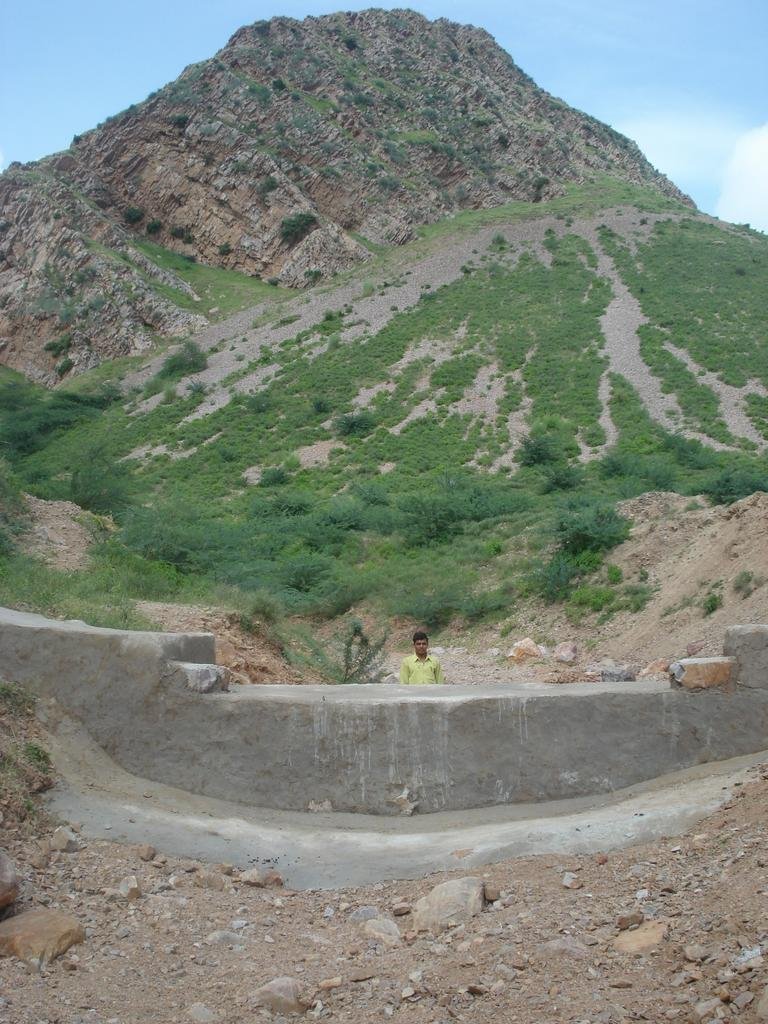
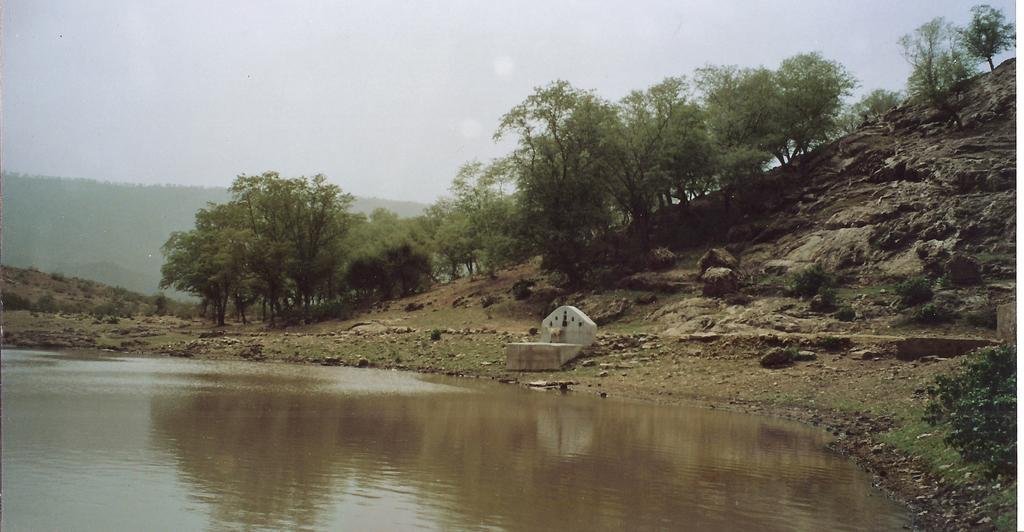
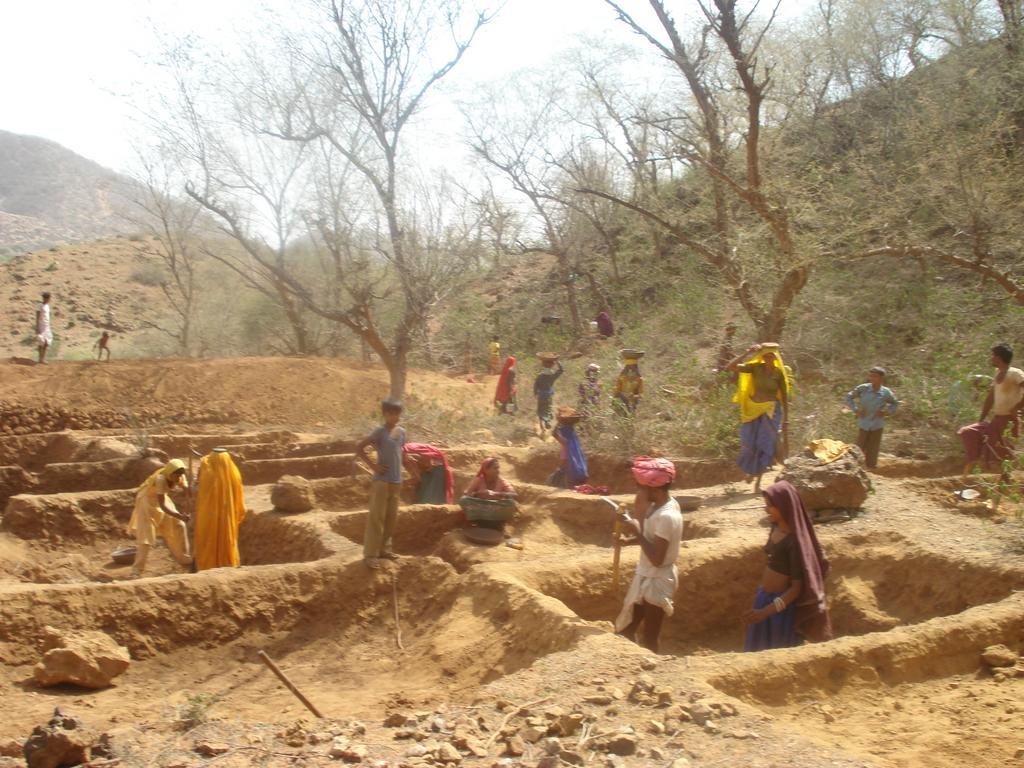
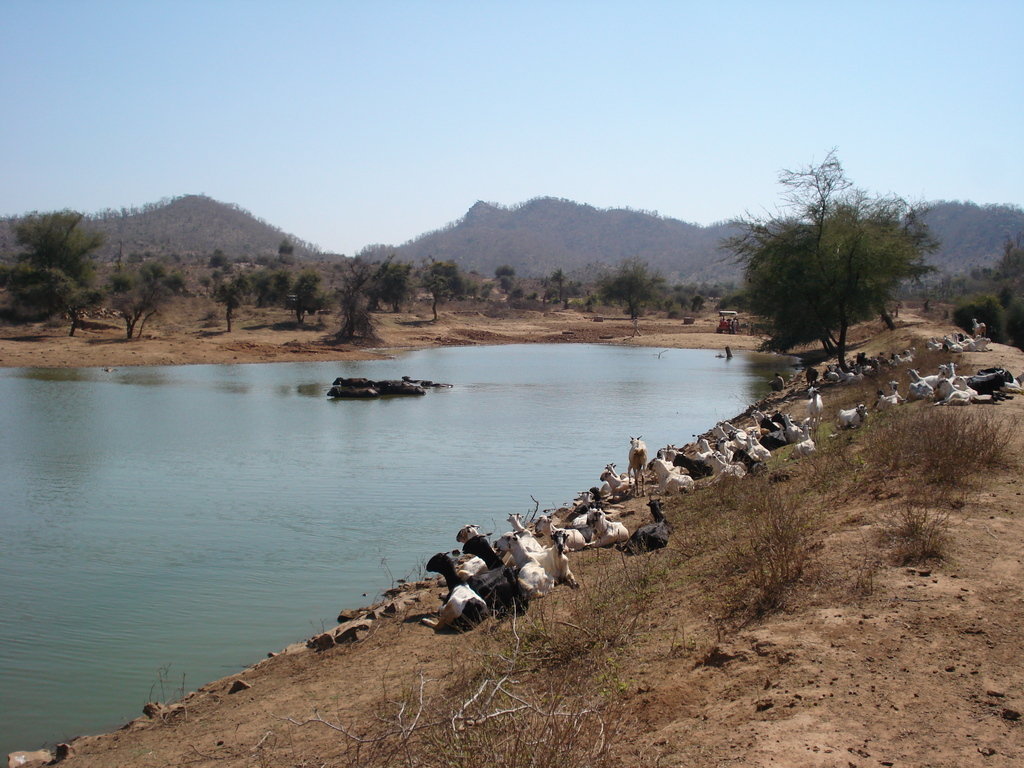
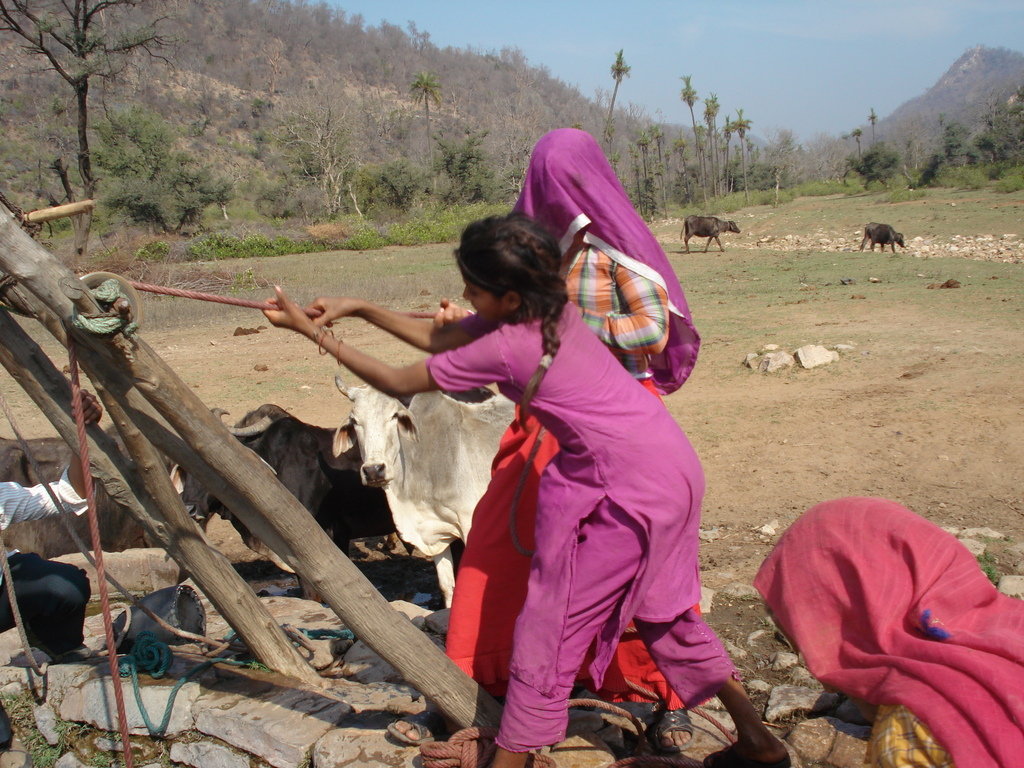
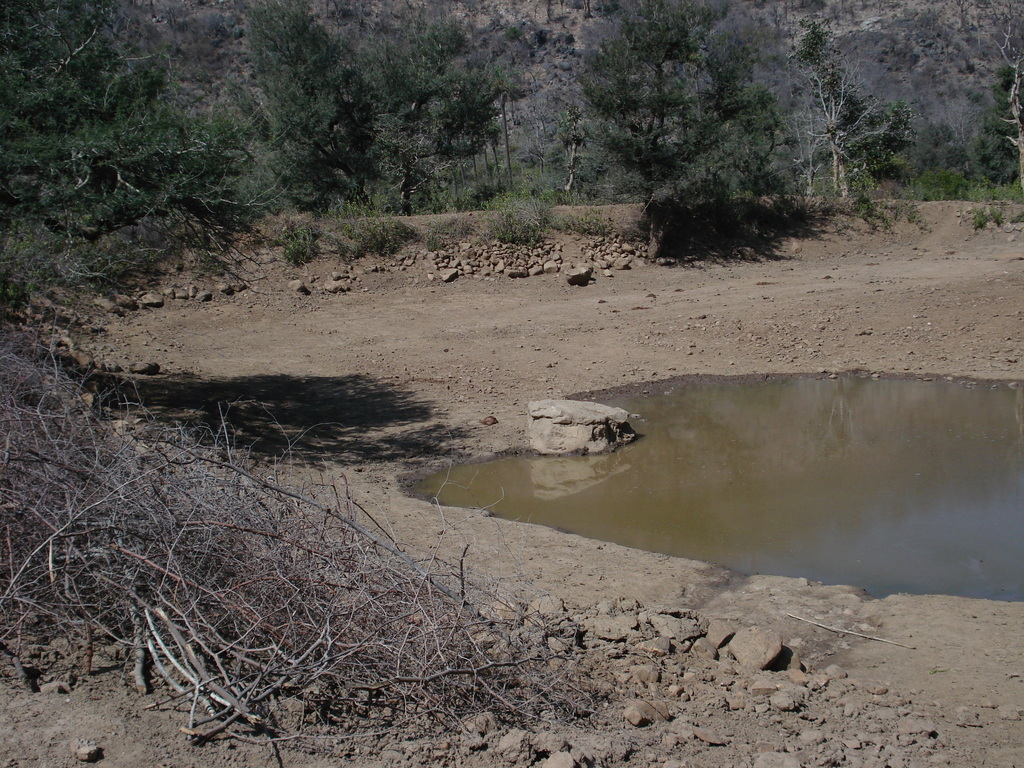
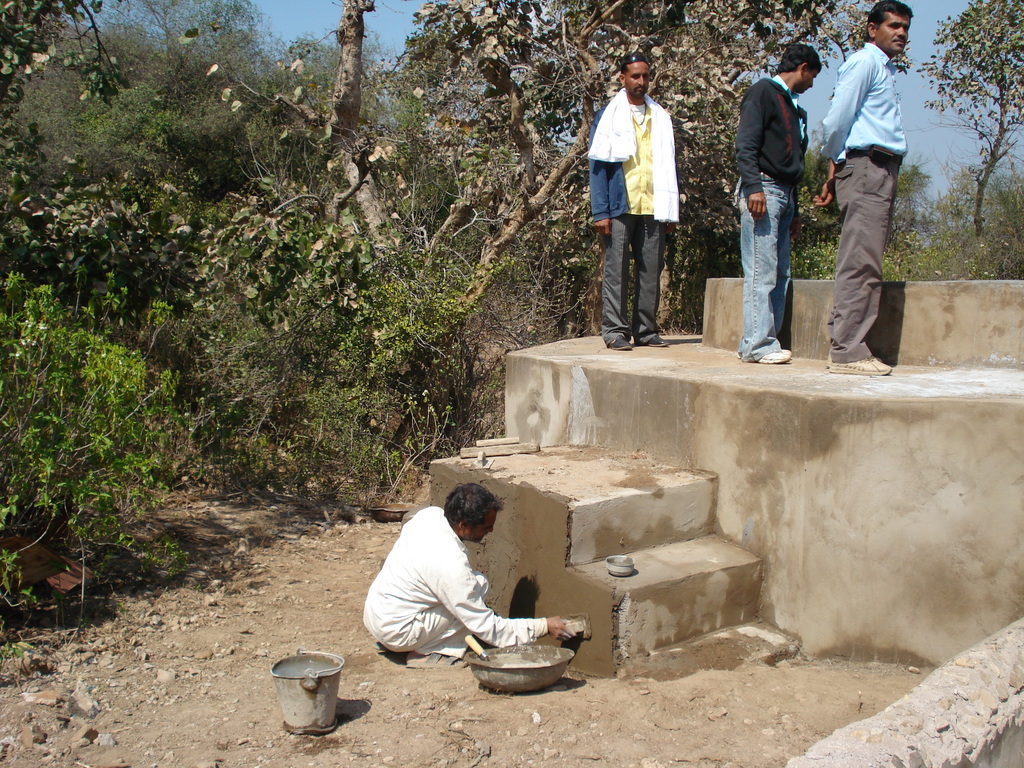
Most orans have sources of water, either small springs or rivulets running through them or a variety of ponds e.g. johad and nadis, tank, baori, well, tanka, kund etc. Indeed, from a water conservation standpoint, orans are hugely important for a state like Rajasthan. Thus we utilised traditional water-harvesting techniques in conjunction with modern scientific expertise (i.e. watershed approach, hydro-techniques, etc.) to rehabilitate or recreate water storage structures, named as ‘Oran Talab’ and thereby to provide optimal solutions to water dispersion in degraded lands. Talab is constructed at a place, which has maximum run-off contributing into it. The topography of the catchments is a square / circular and tributaries tend to come together and join the main stream somewhere near the centre of the area and thus water get collected into talab. This is important in terms of providing water for irrigation and drinking purpose. The Talab is constructed solely from local materials – clay, stone/ rock, grasses and buffalo dung - which serve to keep them affordable and replicable. In some cases, from the talab, lays pipelines to agricultural fields for the purposes of irrigation.
Project reports on GlobalGiving are posted directly to globalgiving.org by Project Leaders as they are completed, generally every 3-4 months. To protect the integrity of these documents, GlobalGiving does not alter them; therefore you may find some language or formatting issues.
If you donate to this project or have donated to this project, you can receive an email when this project posts a report. You can also subscribe for reports without donating.