By Dez Brooks | Operations Director
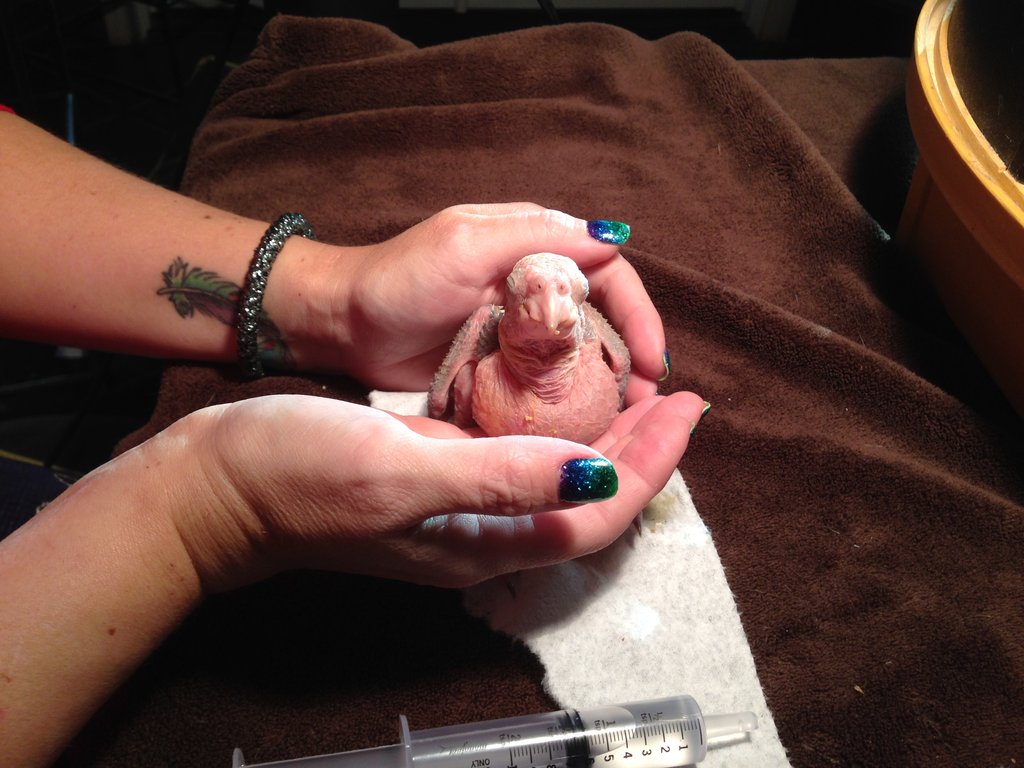
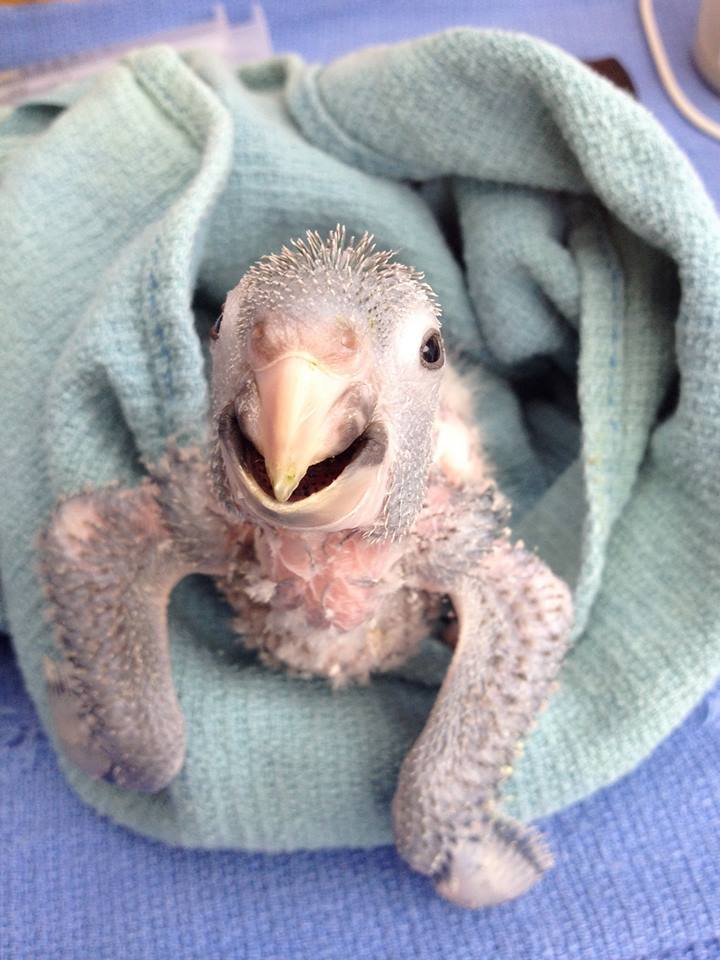
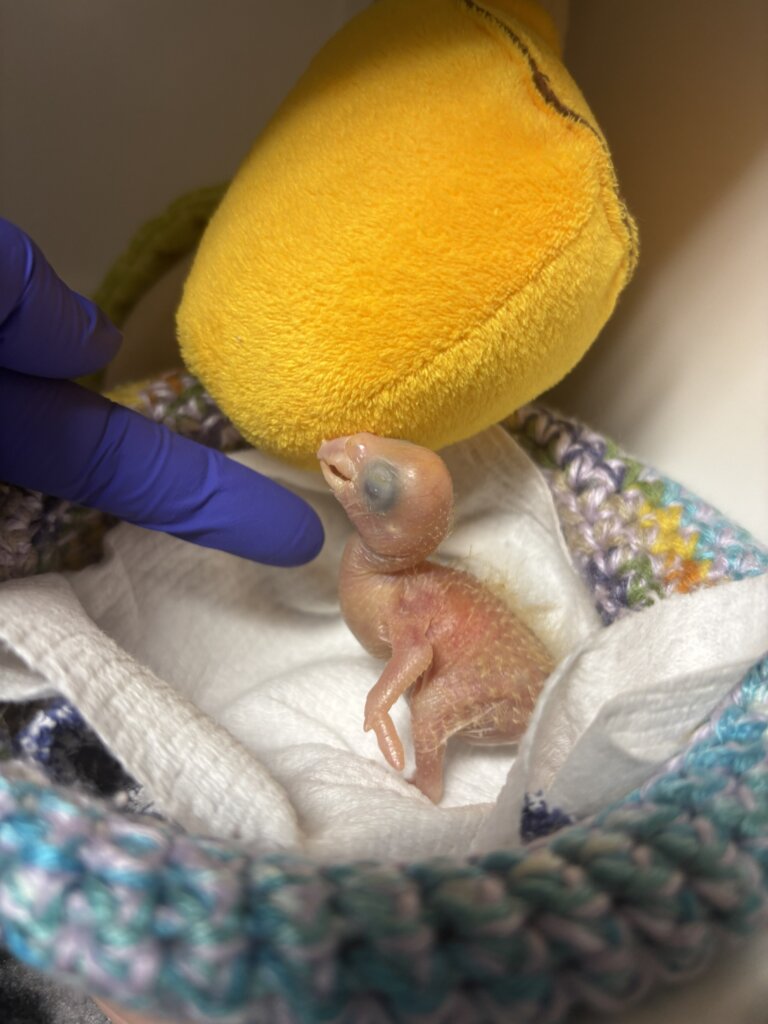
Hello SoCal Parrot supporters! As spring flew by and summer quickly approached, our team was eagerly anticipating the first baby parrot of the season. On May 6th, the call finally came. A very young parrot had fallen from its nest, and wasn't able to be reunited with its parents. We stepped in quickly, advising the finder on temporary care, and soon admitted the tiny hatchling to our rehabilitation center.
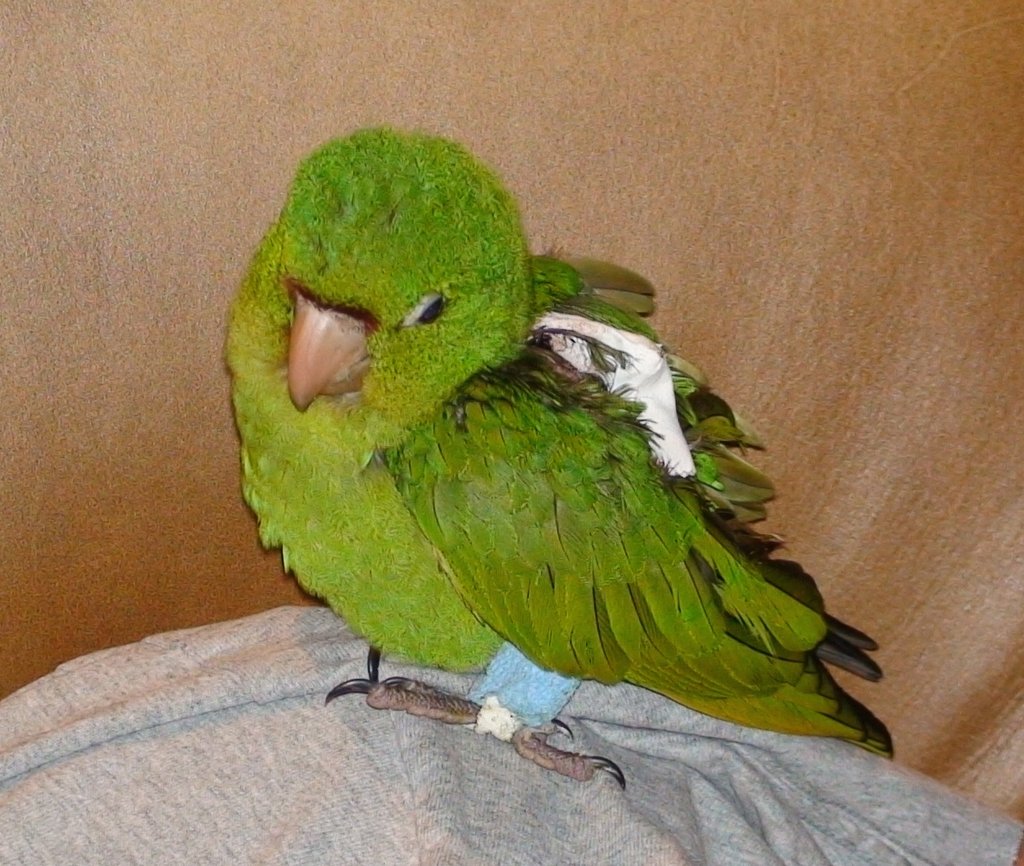
We knew this was a very young bird, likely only a few days old. But still, we were surprised by its size on intake, weighing just 17 grams (less than four nickles!). Given its size and weight, there was only one candidate for species identification: this must be a Yellow-Chevroned Parakeet! YCPAs are the only species of the genus Brotogeris to have well established populations in Southern California, and their range is usually limited to small populations on the west side of Los Angeles. Luckily, this hatchling was uninjured in the fall from the nest, and quickly began eating well and gaining weight under our expert care. Over the first 6 days in care, the parakeet gained 9 grams!
The prognosis for a successful release for such young parrots under human care is always guarded. Hatchlings and nestlings require around the clock specialized care, and our staff feed birds of this age from sunrise to sunset! We feed formula developed specifically for parrots, and are intensively trained on how to prevent feeding complications like aspiration. Habituation is also a major concern for our patients, as they need to maintain wild instincts and behavior to be successful after rehabilitation. We utilize a variety of techniques, like facial coverings and white noise machines, to ensure that young parrots don't become too comfortable with their human caregivers. We also provide cozy stuffed animals to snuggle up with if we don't have other patients of an appropriate age to house together.
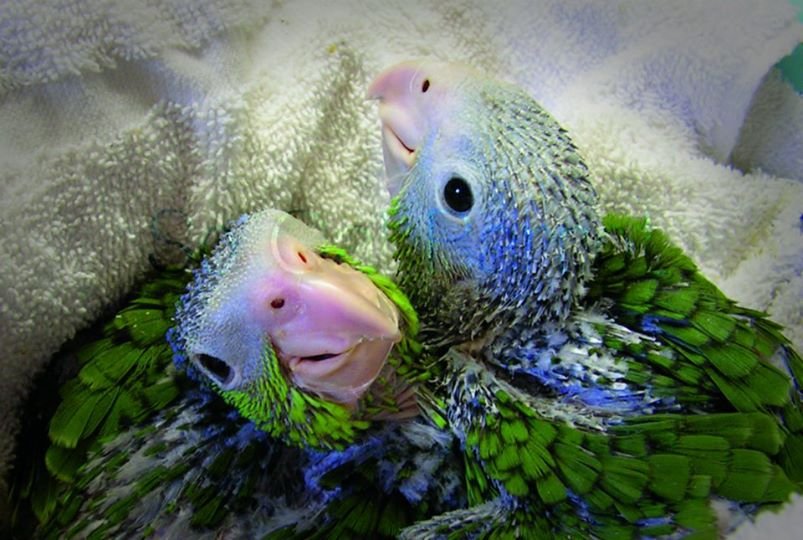
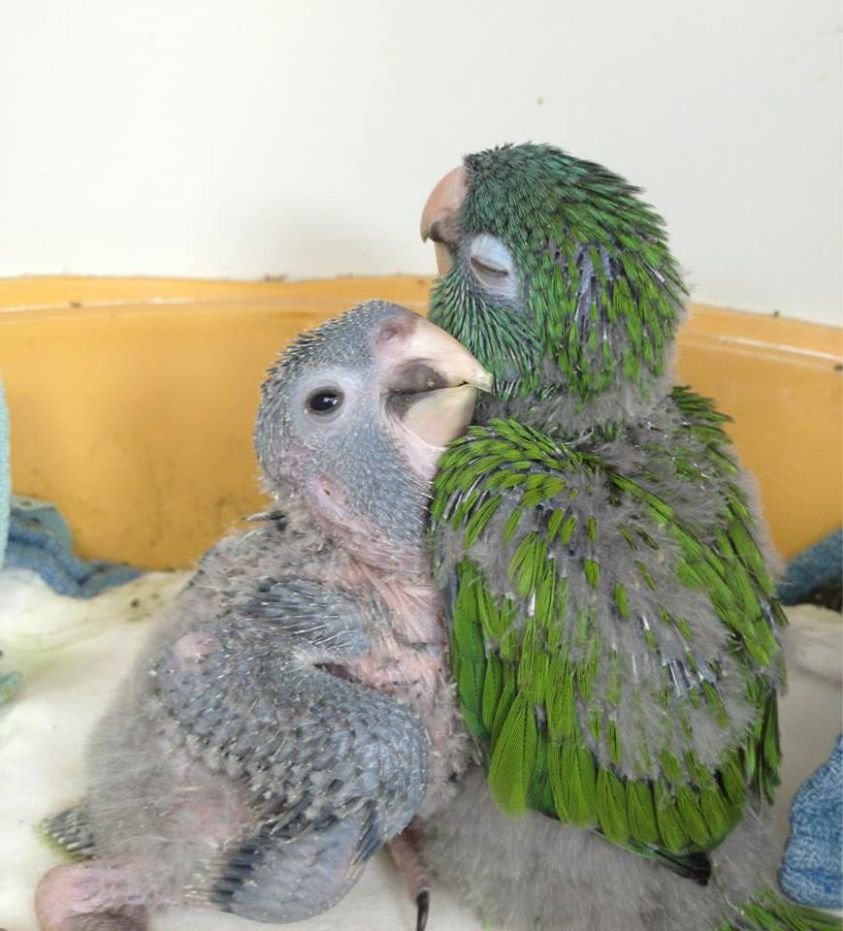
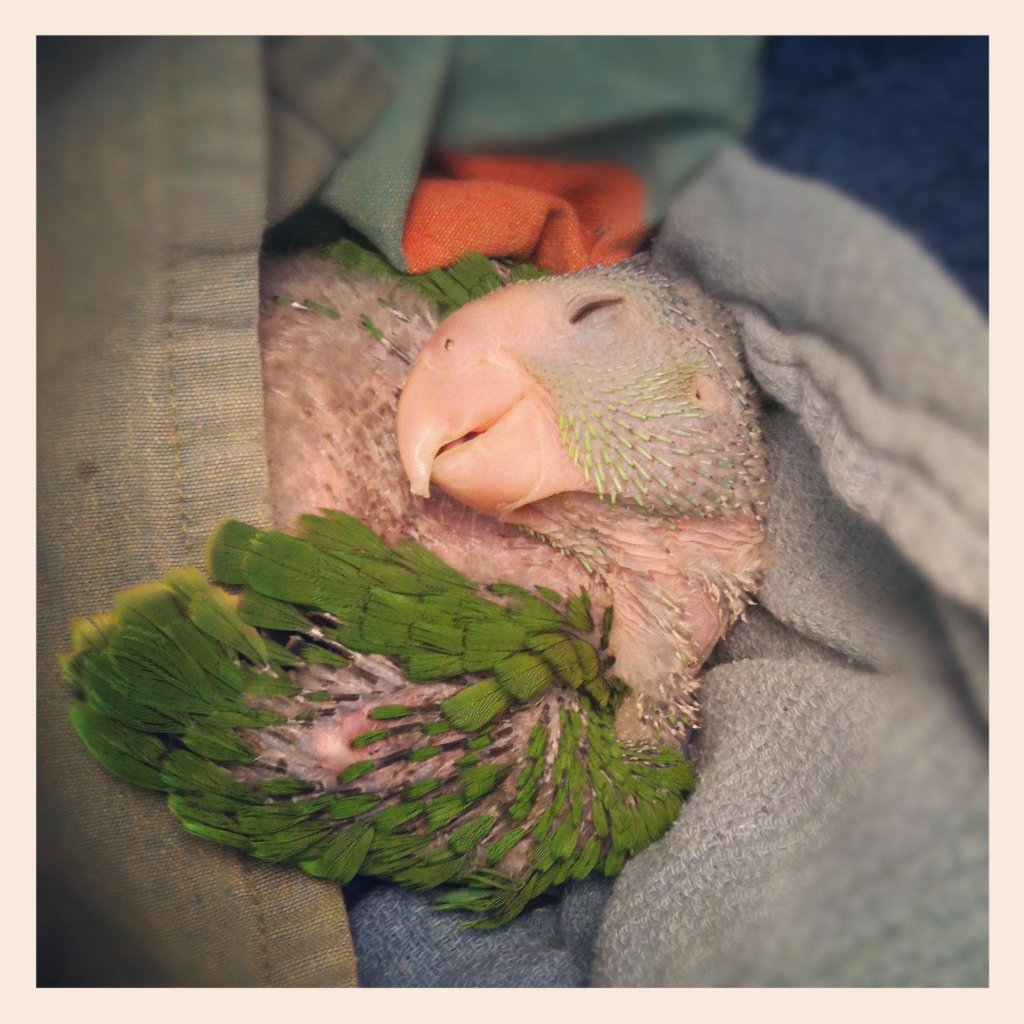
Since the Yellow-Chevroned Parakeet was only a few days old, we were concerned about the potential for habituation, as this patient will require months in care before it reaches the age of independence. So we were particularly excited when just one week later, we admitted two more nestling parakeets from Pasadena! While we always prefer parrots be raised by adults in the wild, growing up with other similarly aged birds drastically reduces the risk of habituation, and allows juveniles to develop social bonds. Now, these three youngsters are growing up together in a warm incubator, and we look forward to seeing their continued progression through rehabilitation.
The three parakeets are our first baby parrot patients of the year, but we anticipate treating more than 80 of different species throughout the summer! The busy baby season keeps us on our toes with constant hungry mouths to feed, but it's all worth it to see them soaring in the SoCal skies after release. We appreciate your continued support of our work in wild parrot rehabilitation!
Project reports on GlobalGiving are posted directly to globalgiving.org by Project Leaders as they are completed, generally every 3-4 months. To protect the integrity of these documents, GlobalGiving does not alter them; therefore you may find some language or formatting issues.
If you donate to this project or have donated to this project, you can receive an email when this project posts a report. You can also subscribe for reports without donating.



Support this important cause by creating a personalized fundraising page.
Start a Fundraiser