Behind every successful rescue, rewilding, and birth at Care for Wild lies an unseen, relentless blanket of protection. Safeguarding vast, protected landscapes against highly organized criminal networks requires constant vigilance, disciplined teamwork, and an integrated security model that never sleeps.
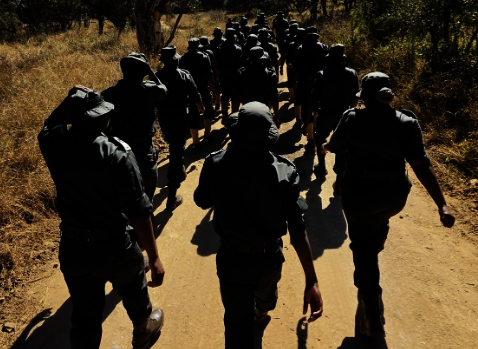
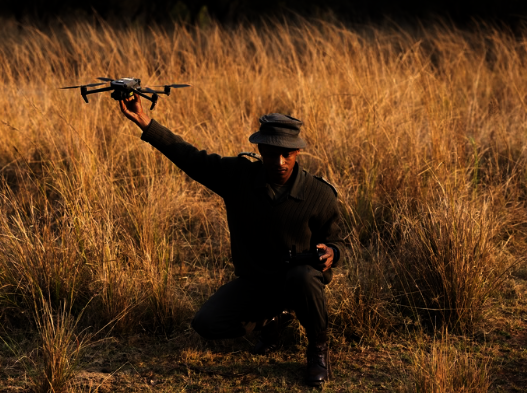
During this period, our frontline protection forces achieved a extraordinary milestone: 4,407 continuous days without incursions across our core sanctuary area. Maintaining 24/7 security over thousands of hectares is powered by a dedicated team of 80 operational rangers, including 6 female rangers, supported by 1,533 rhino monitor patrols covering more than 7,200 hours and 22,100 kilometers on foot. Our specialized units play an equally critical role; the K9 unit completed nearly 290 patrols with tracking and detection dogs Sheriff, Cooper, and Loony, while the Mounted Patrol Unit logged over 330 patrols across more than 4,500 kilometers of challenging terrain. These ground operations are reinforced by cutting-edge technology including 36 operational trap cameras, long-range bispectrum sensors, AI-driven drone surveillance, and real-time monitoring via EarthRanger.
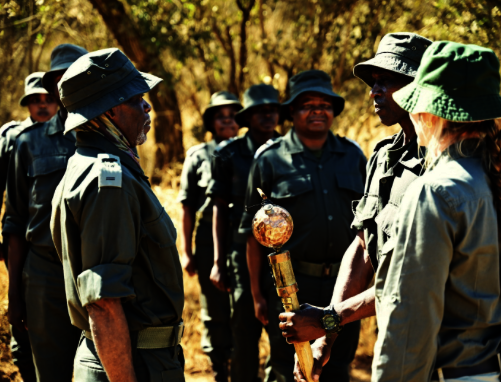
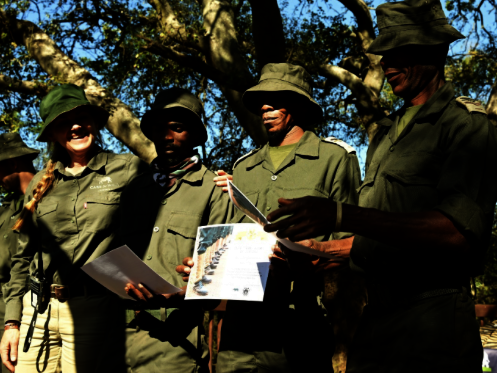
This dedication was central to our celebrations on World Ranger Day. Staff, rangers, and community members gathered for our traditional annual parade through the reserve, marching to the beat of African drums before standing together for the Ranger’s Pledge to the Rhino, a solemn commitment to uphold the honor, discipline, and integrity required to safeguard these landscapes. The day also featured our annual Rangers' Awards Ceremony, where team members recognized colleagues for courage, quiet sacrifices, and exceptional leadership in the field.
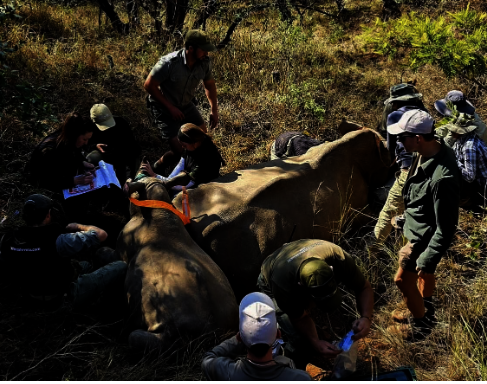
Protecting rhinos also requires making exceptionally difficult proactive decisions, including our sanctuary-wide dehorning operations. While no one in conservation ever desires to remove a rhino's horn, horn trimming remains one of the most effective deterrents to protect rhinos from poaching syndicates. Every rhino at Care for Wild successfully underwent horn trimming during this period, with all horns safely removed from the property. Beyond risk reduction, these carefully coordinated operations provided an invaluable opportunity for our veterinary teams to perform full health assessments, collect vital blood samples, check body conditions, and service or fit AI tracking collars.
From specialized ranger training and K9 patrols to proactive management measures, this multi-layered protection strategy ensures that every rhino in our care can live, heal, and raise the next generation in safety. None of this would be possible without your loyal support, thank you for standing with the rangers of Care for Wild.