By Communications | Arpan
The Month that was: August 2016
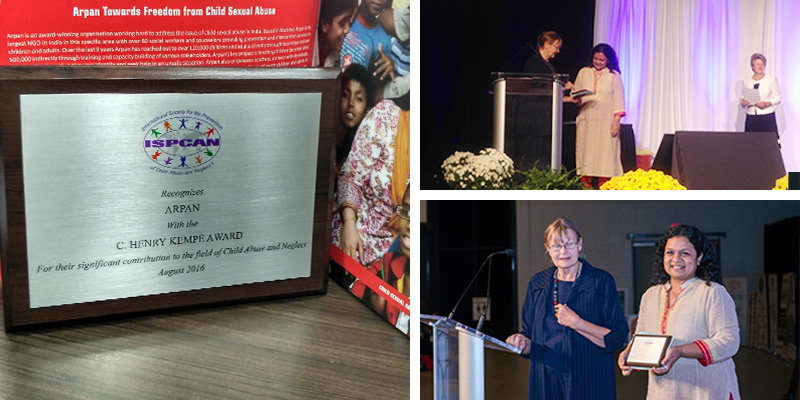
Arpan wins its 1st International Award
We are excited to share that Arpan received its first international award, the C. Henry Kempe Award by ISPCAN, USA for SIGNIFICANT CONTRIBUTION TO THE FIELD OF CHILD ABUSE AND NEGLECT. Members of the committee shared that it was elaborate process of shortlisting organizations.
The Kempe Award is presented to professionals and philanthropists who have contributed substantially to the community on behalf of children The award is given every two years by ISPCAN, The International Society for the Prevention of Child Abuse and Neglect, to a professional or organization working in any discipline in the field of child abuse and neglect.
We are extremely thankful that we were chosen for the award, it motivates us to continue working for children.
Last month, Arpan exhibited its resources and publications at the XXIst ISPCAN International Congress on Child Abuse and Neglect in Calgary, Canada.
We also participated at the CSR SHOW in Mumbai at the World Trade Centre. We showcased our work, publications and engaged in rich conversations about Child care and protection. Thank you for visiting our stall and giving us great feedback.
From the Personal Safety Education Team
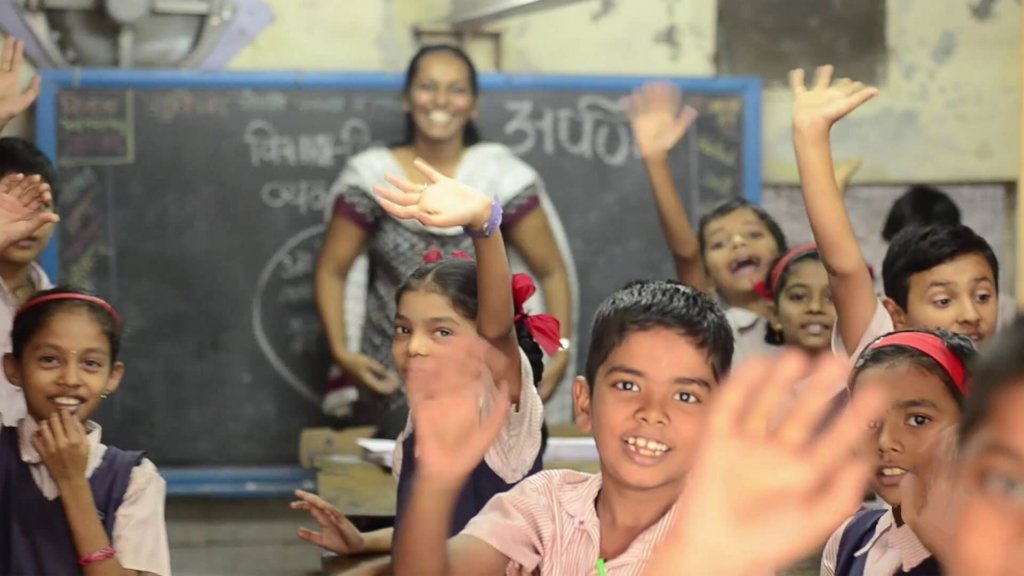
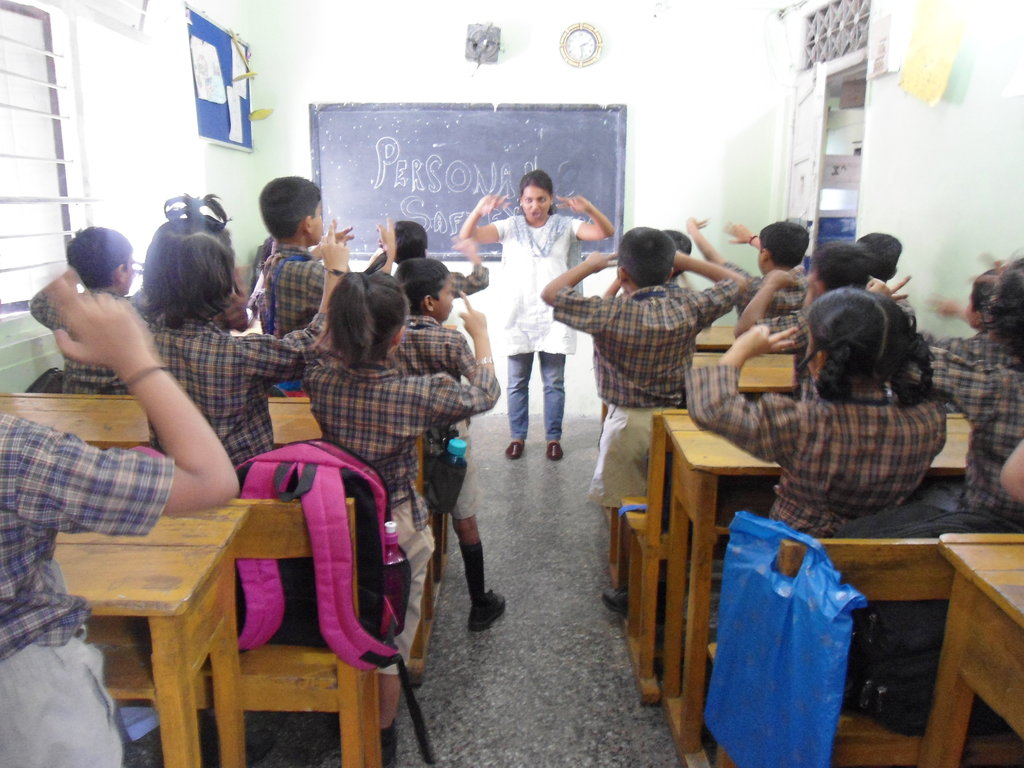
AS THE WORK WITH OLDER CHILDREN PROGRESSES, we learn new ways in which children express their motivation towards Personal Safety Education.
One girl from 10th Standard writes “the best part was how the Trainer behaved with us. She was like a friend to us. I want to be like her. I would love to be a part of your [Arpan’s] group.” It makes us very proud to be able to initiate such enthusiasm about safety in children.
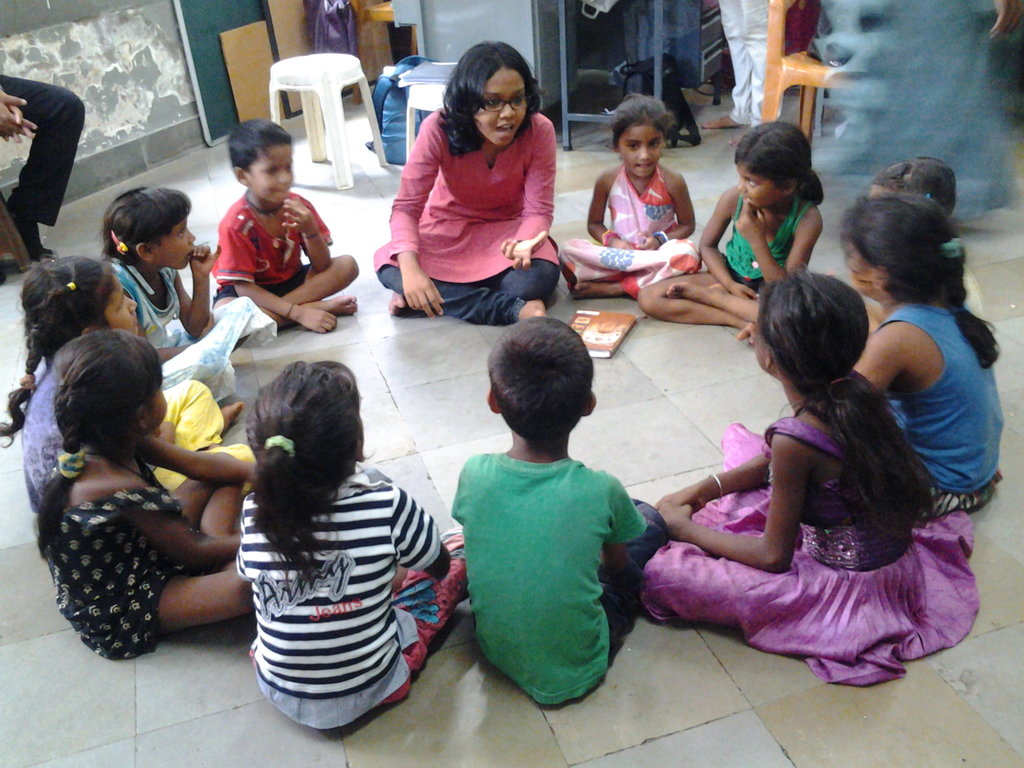
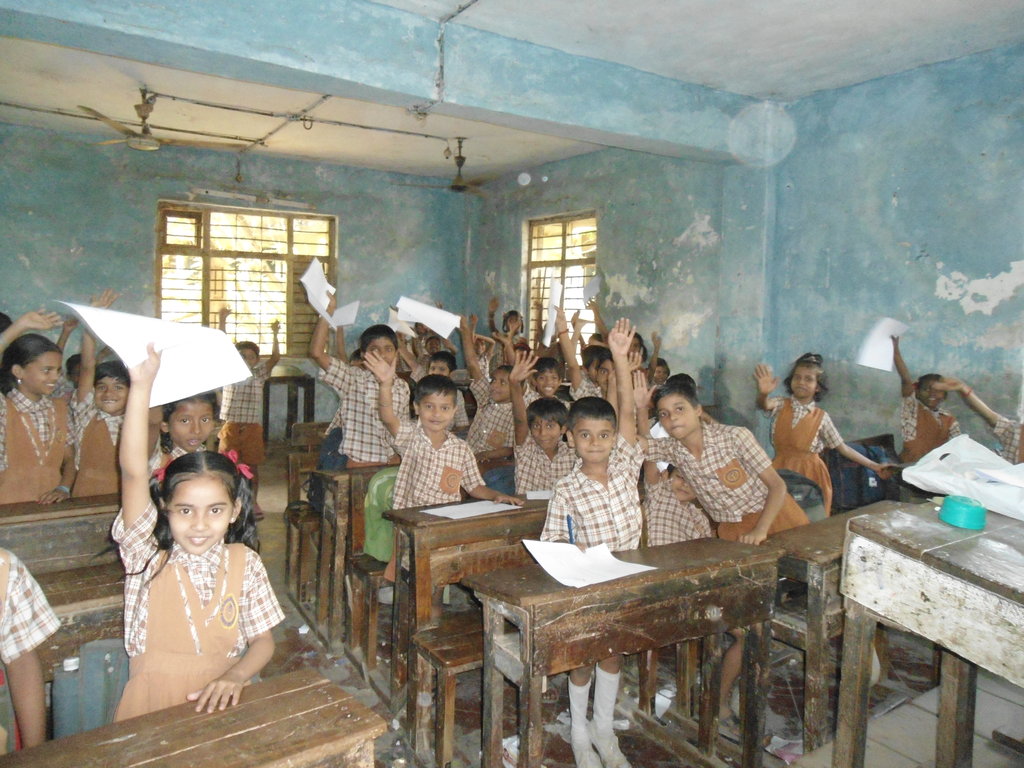
The Personal Safety Education program with younger children continues to provide awareness and skills to children about keeping themselves safe.
FROM THE TRAINING TEAM
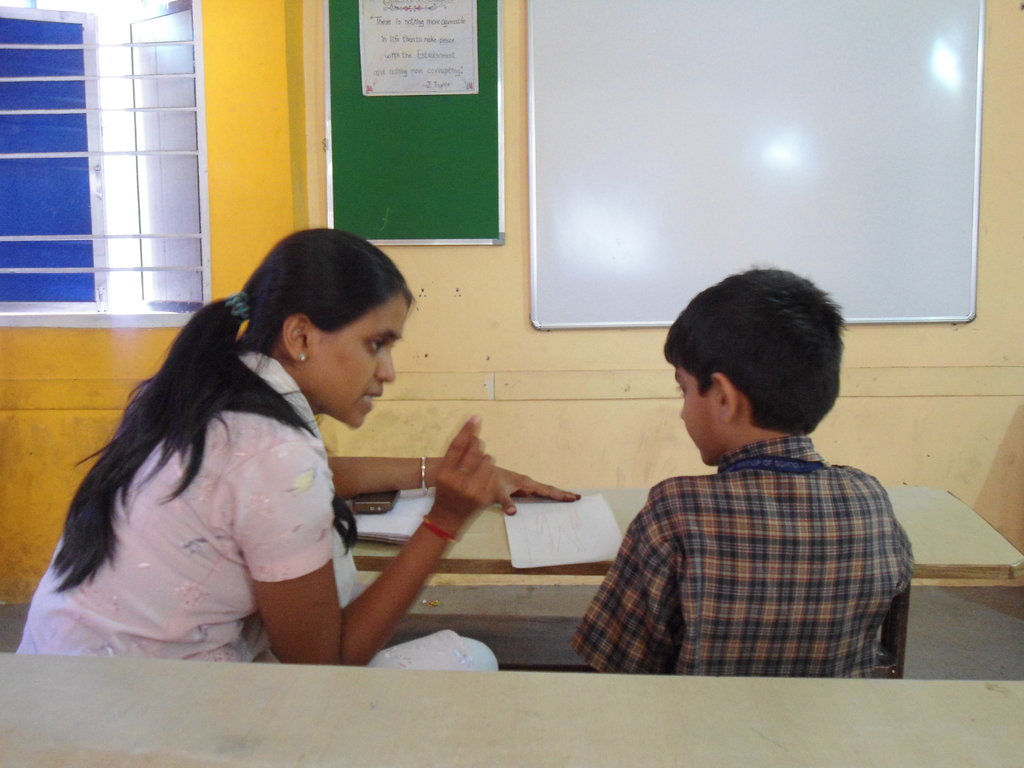
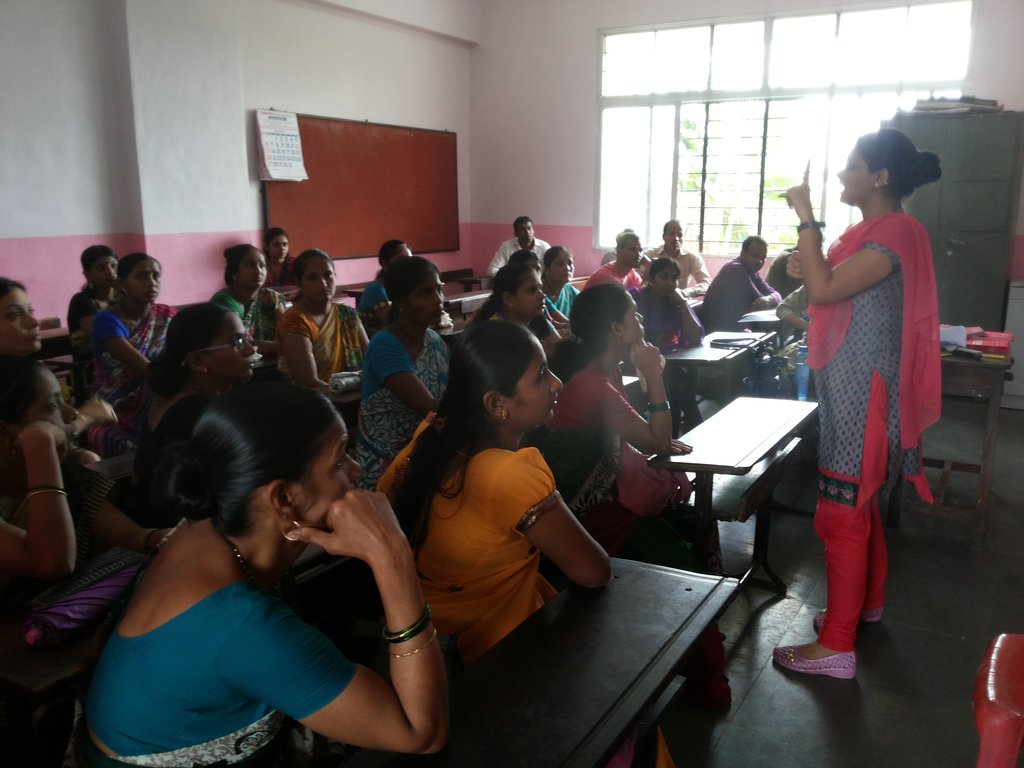
Our training team is focused empowering as many enthusiastic trainers as possible in understanding and dealing with CSA. This month has seen many school and NGO trainings across states.
In a training with a group in Delhi a participants observes “the trainer never once shared their personal opinion with us that has been extremely effective in believing what they are saying, because it is not from a position of any bias.”
As a society, we believe that CSA happens elsewhere and not in our homes. This mental block underlines the importance of the need to break the silence surrounding CSA. Awareness helps in dealing with the trauma. AFTER AN AWARENESS SESSION, a young adult shares her greatest takeaway:
"I was abused as a child but now after this session, I know how there was grooming involved and I don't have to blame myself"
Understanding Child Sexual Abuse - GROOMING
Grooming is the process by which an offender draws a victim into a sexual relationship and maintains that relationship in secrecy. The shrouding of the relationship is an essential feature of grooming.
The sexual offender must plan the entire process before sexually abusing the child. Sexual abuse is not about individual touching acts, but about relationships. In order to set up a relationship with the child, the perpetrator grooms the child and/or the family. Thus sexual offences begin far before the touching. Forensic psychiatrist Dr. Michael Welner explains the six stages that can lead up to sexual molestation.
Stage 1: Targeting the victim
The offender targets a victim by gauging up the child's vulnerability—emotional neediness, isolation and lower self-confidence. Children with less parental oversight are more desirable prey. It allows the offender to recognize the needs of the child that he/she can meet and develop a relationship with the child and possibly the family.
Stage 2: Gaining the victim's trust
The sex offender gains trust by watching and gathering information about the child, getting to know his needs and how to fill them. In this regard, sex offenders mix effortlessly with responsible caretakers because they generate warm and calibrated attention
Stage 3: Filling a need
Once the offender has identified the vulnerability of the child and the family, s/he will accordingly act by taking the role of father figure or a teacher or someone who cares either by giving chocolate/food/ clothes/attractive toys or though words and attention.
Stage 4: Isolating the child
The sex offender uses the special relationship with the child to create situation/s in which they are alone together. This isolation further reinforces a special connection.
Stage 5: Sexualizing the relationship
Desensitization occurs through taking, pictures, even creating situations (like going swimming/giving bath/cozy sitting opportunities ) in which they can be physically close. At that point, the adult exploits a child's natural curiosity, using feelings of stimulation to advance the sexuality of the relationship.
Stage 6: Maintaining control
Once the sex abuse is occurring, offenders commonly use secrecy and blame to maintain the child's continued participation and silence.
Links:
Project reports on GlobalGiving are posted directly to globalgiving.org by Project Leaders as they are completed, generally every 3-4 months. To protect the integrity of these documents, GlobalGiving does not alter them; therefore you may find some language or formatting issues.
If you donate to this project or have donated to this project, you can receive an email when this project posts a report. You can also subscribe for reports without donating.