By Carol Garrison | Online Communications Officer
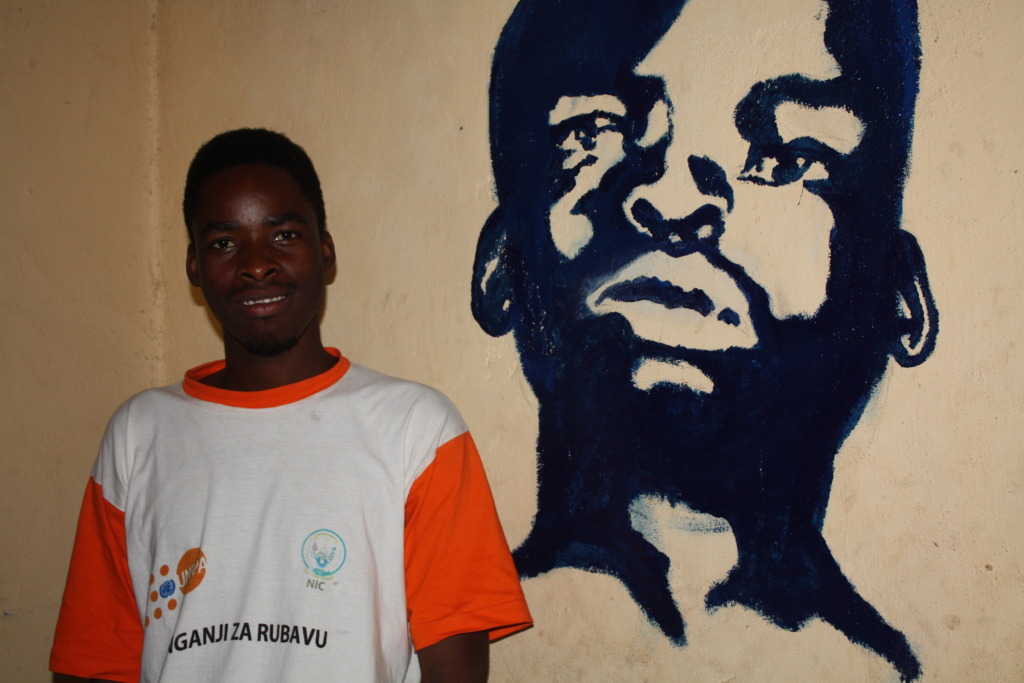
Joseph, is a young man who is comfortable behind a camera. He explains his dream is to “Become the best camera man!” It is clear that Joseph has a passion for life as well as some big dreams. But this was not always the case. Nine months ago Joseph was living in the Noel Orphanage and even though he was already 22 years old, he felt unsure of his future.
Joseph is one of more than 140 young adults who chose to live independently after leaving the Noel Orphanage. With the closure of the orphanage a variety of options were developed for the children and adults living there:
For many young adults, the idea of being reintegrated with a family can be very stressful. Even if the family members are related, being institutionalized for so many years can make returning to a family extremely challenging.
Psychologist Jean Sekamana has been working closely with some of the young adults who have left the Noel Orphanage. Many of these young people are ready and willing to start independent lives, but lack the life skills they need to function independently in the wider community. While the orphanage provides them with academic education, it does not teach them about living in the real world. As a result, young people leave the institution knowing very little about practical life issues, like how to pay bills, open a bank account or go shopping in the market.
Social worker, Moise Munyamariza, who has also worked with many of the young adults from Noel, explains the challenges that young adults who have been institutionalized for most of their lives face. “They were like someone who was from a prison. We help them overcome that fear and learn how to live with the community,” he says.
He further explains that the Noel Orphanage never developed a formal transition plan for the young adults who would eventually leave the institution. This is why many orphans remained at Noel into their early and mid-twenties. The Government of Rwanda recognizes that this is a problem. According to a countrywide survey conducted on institutional care (2011-2012) by the National Commission for Children, nearly 26% of the total population within Rwanda’s orphanages were aged 18 years old and above. At the Noel Orphanage that percentage was even higher – 238 of the 529 or 45 percent of residents were 18 years and over. This included a number of adults with disabilities.
This was the case for Joseph. He arrived at the orphanage when he was 13 years old with his younger sister Josiane. They had been living with extended family, but due to a change in circumstances, they felt that they could no longer support them. Their mother had died when Joseph was just five years old, and they had been living with their uncle and aunt who had six children of their own to support.
He relates the troubled story of his mother’s death. After his father was killed in a fight, their father’s brother who had been living with them kicked them out. His mother was forced to find a place to rent and he says the stress of the situation and raising two young kids alone was too much for her. She became sick and died.
As Joseph grew older he realized that one day he would have to leave the orphanage. He explains, “It was hard at first to understand that I would need to be independent.” In the orphanage everything you need is provided. “If you need food they give you food. If you need shoes, they give you shoes.” Despite this security, Joseph knew that something was missing. “I didn’t know the outside life…I didn’t know how to live independent, how to be a man.”
With the closure of the orphanage, Joseph and his sister made the decision not to return to their extended family as they wanted to try living on their own. He describes how the social workers supported them. They helped Joseph and Josiane find two small rooms to rent with a larger housing compound. Despite their meager accommodations, where they share a toilet with the other renters and use a hand pump for water, Joseph is proud of his new home.
Before leaving Noel, Joseph was able to take advantage of a vocational training program provided by the government. He studied photography and design. Josiane, who is now 19, is currently study at a boarding school with the support of the Catholic Church. But when she does return home to stay with her brother, Joseph makes sure the place is spotless for her.
An unexpected benefit of living independently with his sister is the closeness they have developed by having to rely on one another and work together. He describes how she taught him to cook and when she comes home from boarding school how they equally share all of the household chores. “My relationship with my sister has deepened… before all girls at the orphanage I treated like sisters, but now I have a special relationship with my own sister.”
In addition to the new relationship he has with his sister, he is also enjoying the friendships and camaraderie he has found with his new community. “I have many friends nearby and we rely on each other. If I need something I can ask them.” He explains how being in the orphanage actually made them more selfish and less trustful. “In the orphanage everything is shared and you are protective of what is yours.” He was pleasantly surprised by the openness he discovered when he moved into a community. “If I need salt, I just go to my neighbor and ask. If they need something they come to me.”
Right now, Joseph is earning money by performing small jobs, like hand painting signs for local businesses, but he has bigger plans. His goal is to someday open his own small photography studio. “For me, I have an American dream. I want to be the boss and I want to work very hard.”
Although the transition to independent living has not been completely easy for Joseph, he says he has no regrets. “I miss my friends at the orphanage. I miss school, but when I was there I was already thinking about life on the outside…In the orphanage you are always with the same people and you do not have the opportunity to learn new things. Now when I need something I have to work very hard, but I have no regrets.”
Links:
Project reports on GlobalGiving are posted directly to globalgiving.org by Project Leaders as they are completed, generally every 3-4 months. To protect the integrity of these documents, GlobalGiving does not alter them; therefore you may find some language or formatting issues.
If you donate to this project or have donated to this project, you can receive an email when this project posts a report. You can also subscribe for reports without donating.