By Luis Blandon | Special Reporter
The land was aromatic with plant life – unique to the species and the particular season. The fragrance of the flowering plants and the threat of showers mingled with the vaporous effects of aging cabbage and the repetitive buzz of insect life. We climbed up a dirt road, then followed a narrow path towards a sloping mountainside. Around a kitchen garden, we met the staff from Global Communities and partner organizations along with women from the community, all eagerly waiting to show us what they had learned and accomplished.
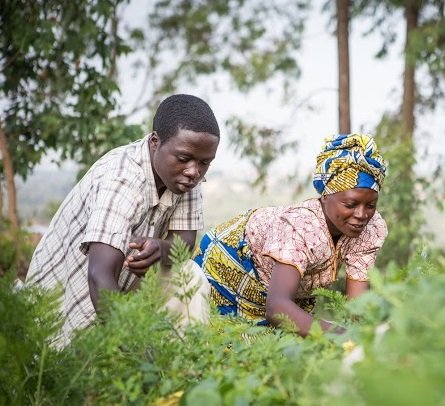
For the families and farmers who lived in these hills, you learned from example. That was the way in this poor area of Rwanda. Here at the Farmer Field School, high above a lake, it was a school without walls. There were different types of gardens, planted with a variety of crops to determine the optimum yields and learn what will produce best for each individual farmer and family. The bygone sounds of the shovel and spade, and the industry that reaped results for future generations, echoed in the background.
He was wearing bright yellow pants and a beige polo shirt, the logo of the sponsoring organizations etched in the front. He was our guide, a local resident, trained by Global Communities to be an agronomist serving his neighbors and as a by-product, teaching the visitors about subsistence farming on the minuscule plots they lived on. He knew everyone associated with the program, from the staff to the local farmers and families. He showed me why certain crops grew better in one type of garden, with less pest infestation and more water retention than the other two garden types. Maize works well with the elevated kitchen gardens. Cabbage works better with sunken plots. He demonstrated the importance of judiciously using and reclaiming water which led to larger yields. Irish potatoes, greens, carrots and a variety of crops produced in enough numbers could improve each family’s diet.
Through his training and the implementation of the program, he gave his community the chance to grow healthier foods and improve nutrition. His style was based on simple experimentation – helping farmers further improve their understanding of the relationships between land, nature and crops. More output, more food and less hunger. Simple. He was trained and now he trained his neighbors throughout these valleys and hills. Despite the stark conditions of daily life, he knew he was making a change for the better.
With the hum of activity around us, he articulated a clear overview of the kitchen garden, sunken beds, container garden, zaypits, mandala gardens, double deck beds, and so forth. I went to the watering hole that fed the gardens and pulled out my camera. He asked if he could use it, and I gave it to him. He took dozens of snapshots of me talking with the local women, the staff and the representative of the Rwandan government. I never saw a hint of emotion until I softly mentioned to him that the land he worked was part of his spirit. Then, just the faint line of a smile appeared.
In my time with the gentle agronomist, I learned the benefits and limitations of each garden, the uses of water and nutrition through his common sense approach. No wasted moves or words. We had the opportunity to eat the produce that the gardens generated. We talked more and he took more pictures. The demands of time drifted in; I had to move on to my next destination. We shook hands. He was getting closer to his destination and his passion was on full display. He had to go. There was another local community to teach, to check on and more land to dig.
Links:
Project reports on GlobalGiving are posted directly to globalgiving.org by Project Leaders as they are completed, generally every 3-4 months. To protect the integrity of these documents, GlobalGiving does not alter them; therefore you may find some language or formatting issues.
If you donate to this project or have donated to this project, you can receive an email when this project posts a report. You can also subscribe for reports without donating.